



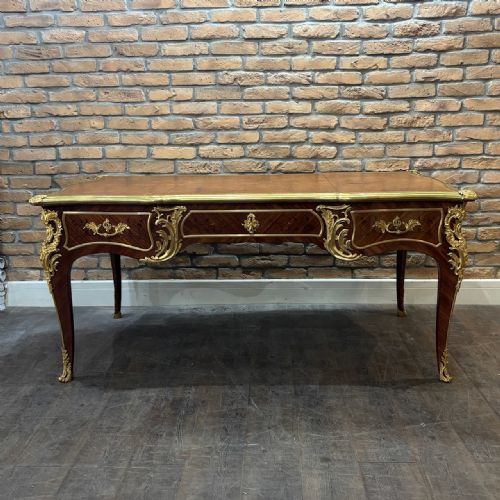
Victorian French Revival Desk
When you search for a victorian french revival desk, you enter a world of serpentine lines and rich walnut made for nineteenth-century studies and boudoirs.
Victorian French Revival Desk
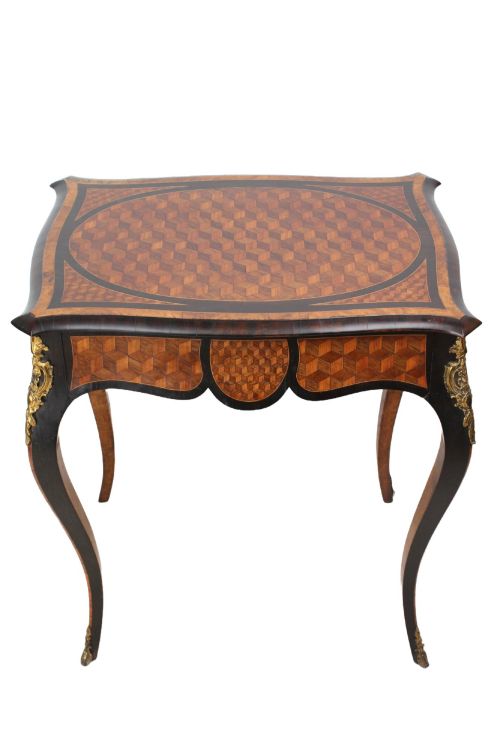
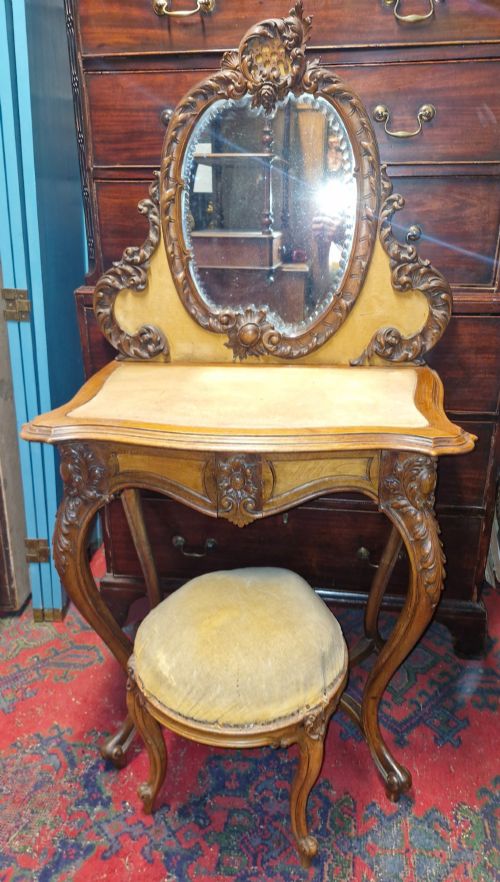
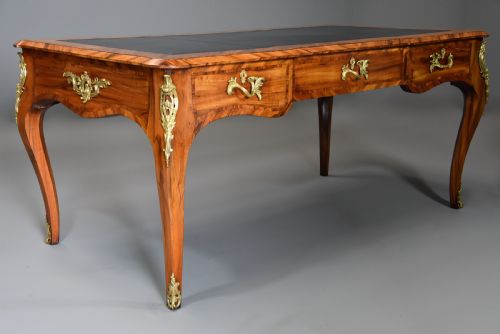
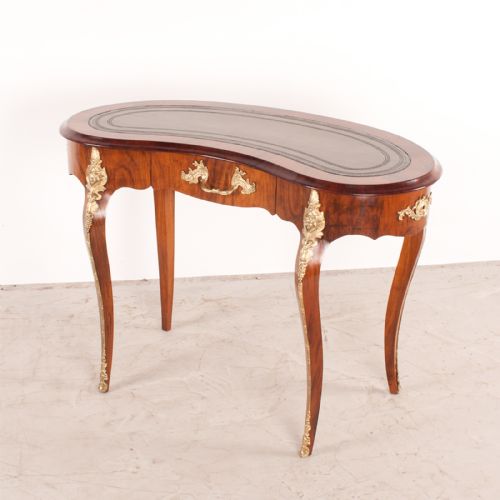
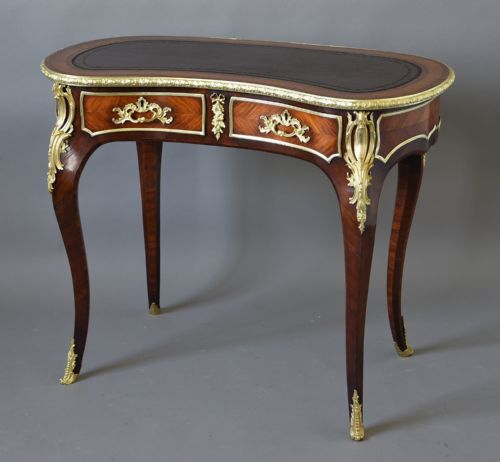
A victorian french revival desk brings together British cabinet-making and continental continental taste, drawing on nineteenth century styling that looks back to Louis XV models. These pieces appear as kidney shaped writing tables, bureau plat forms, and compact bonheur du jour variants.
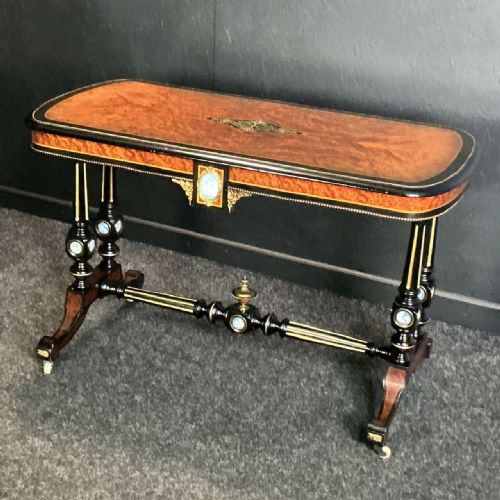
The domestic writing desk of this period serves formal correspondence and private study, adopting shapes that suit a parlour or drawing room. Walnut and burr walnut dominate the pieces listed here, often enhanced with marquetry, parquetry, and inlaid satinwood.
Makers of the era adapt French rococo curves to British proportions, producing freestanding centre tables and fitted writing surfaces. The form balances decorative gilt bronze mounts with practical drawers and leather lined writing pads.
Materials and construction
Workshops utilise walnut and burr walnut as the primary timber, complemented by satinwood and kingwood for decorative banding and inlay. Timber selection determines the grain pattern of the top surface, which often displays careful book matching.
Mounts and decorative details rely on cast ormolu and gilt bronze, fixed to corners, legs, and aprons to echo eighteenth century prototypes. Leather inserts form the working surface of the writing desks, bordered by gilt tooling.
Parquetry and marquetry panels introduce geometric patterns or floral motifs using contrasting wood veneers. Joinery employs traditional framing methods to support the serpentine outlines and curved cabriole legs typical of the revival style.
The site listings demonstrate that walnut is the predominant timber for these desks, frequently paired with ormolu mounts and leather writing surfaces.
Quality variations
The refinement of the ormolu mounts separates standard production from exceptional pieces, as finely chased bronze displays crisp detail while cast metal can appear soft and uniform. Artisans invest greater time in hand finishing the cast elements on superior examples.
Veneer selection and timber choice dictate the visual impact of the piece, with figured burr walnut and intricate parquetry requiring high skill to lay smoothly over curved surfaces. The precision of the inlay work indicates the workshop standard.
Structural integrity depends on the retention of original fittings, including locks, keys, and internal drawer linings. Pieces that maintain their matching timber and uncompromised joinery command greater respect among collectors.
JAS Shoolbred·Edward and Roberts·Donald Ross·D Munsey
The Victorian French Revival Desk Glossary
- Bureau plat
- A flat topped freestanding writing table with drawers, typically finished on all sides for placement in the centre of a room.
- Bonheur du jour
- A light lady's writing desk featuring a small cabinet or set of pigeonholes and drawers on the upper surface.
- Ormolu
- Gilt bronze mounted on furniture or clock cases, created by applying an amalgam of gold and mercury to copper.
- Parquetry
- Geometric mosaic woodwork formed by small pieces of veneer arranged in patterns such as cubes or chequers.
- Marquetry
- Decorative veneer work forming pictorial or scroll designs using various coloured woods and other materials.
Victorian French Revival Desk: Frequently Asked Questions
What is a bureau plat?
A bureau plat is a flat topped writing table finished on all sides so it can stand in the middle of a room.
These tables typically feature a leather writing surface and multiple drawers along the frieze.
Where were these desks placed?
Nineteenth century writers and correspondents placed these desks in drawing rooms, studies, and private boudoirs.
Freestanding forms allowed them to occupy the centre of the space rather than pushing against a wall.
How do I care for walnut veneer?
Keep wooden surfaces away from direct sunlight and steady temperature fluctuations to prevent the veneer from lifting.
Apply a light wax polish periodically to nourish the grain without building up a heavy residue.
What is the difference between a writing table and a bonheur du jour?
A standard writing table provides a flat surface with drawers beneath, whereas a bonheur du jour includes a superstructure with shelves and small compartments above the desk top.
Both serve writing tasks, but the bonheur du jour offers upright storage for stationery and letters.