

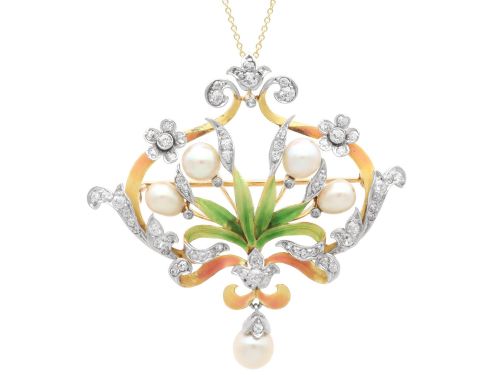


Victorian Foliate Pendant
These Victorian foliate pendant examples offer classic leaf and plant motifs set in precious metals, bringing genuine period character to your collection.
Victorian Foliate Pendant
A victorian foliate pendant captures natural leaf and floral motifs typical of nineteenth-century design. These pieces often incorporate hinged compartments or decorative drops designed to hold keepsakes or simply to adorn the neckline.
The selection on this page leans heavily towards Victorian and Edwardian examples, occasionally crossing into Georgian styles. You will encounter lockets, necklaces, and pendants featuring organic themes executed in precious metals.
Many variants combine gold or silver with seed pearls, amethysts, and enamel work to highlight the foliate patterns. These items range from simple engraved lockets to elaborate jewelled drops complete with original boxes.
Materials and Construction
Makers utilised various grades of gold, including nine-carat, fifteen-carat, and eighteen-carat compositions, alongside silver and platinum. These metals provided a durable yet malleable framework for intricate leaf engravings and gemstone settings.
Gems such as diamonds, amethysts, and seed pearls were meticulously hand-set into the metal mounts. Enamel work and glass elements frequently added contrasting colour to the organic designs.
Individual components often featured hand-engraved foliate details, showcasing the craftsmanship of the period workshops. Hinged mechanisms on lockets and specialised mounts required precise metalworking skills.
Victorian Foliate Pendant Retail Price Guide 2026
Typical asking prices for victorian foliate pendant among the pieces listed under this phrase on Sellingantiques today, from the lower quarter to the upper quarter. They describe what is for sale here now, not the wider market.
Some pendants double as watch fobs, proving that Victorians loved finding multiple uses for a single tiny leaf.
Assessing Quality and Execution
The distinction between standard pieces and exceptional work lies in the depth and crispness of the hand-engraving on the foliate motifs. Finer examples display precise detailing that brings the leaf patterns to life without mechanical stiffness.
Material composition also dictates the grade of the piece, with higher carat golds and superior gemstones elevating the overall standard. The presence of original packaging, such as fitted boxes, adds notable provenance and completeness.
Hamilton & Co
The Victorian Foliate Pendant Glossary
- Foliate
- Decorated with leaf or plant motifs. This style draws inspiration directly from natural forms popular during the nineteenth century.
- Locket
- A small ornamental case hinged to open and reveal a space for a portrait or lock of hair. These often form the central body of a pendant.
- Seed pearl
- A very small natural or cultured pearl, often unperforated or half-drilled. Makers used them to trace delicate outlines in Victorian jewellery.
- Mourning jewellery
- Pieces worn to commemorate a deceased person, frequently incorporating hair, black enamel, or specific stones like amethysts. They reflect the sentimental customs of the Georgian and Victorian eras.
Victorian Foliate Pendant: Frequently Asked Questions
What is a foliate pendant?
A foliate pendant is a piece of jewellery shaped or engraved to resemble leaves and plant life. These designs were immensely popular during the Victorian period.
They often incorporate precious metals and stones to emphasise the naturalistic theme.
How do I date a Victorian pendant?
Dating relies on examining the specific hallmarks, metal types, and stylistic cues present in the piece. Reference points like 1880 or the Edwardian transition help narrow down the timeframe.
Constructive elements like hinge styles and engraving techniques also provide clues to the exact manufacturing era.
Were these pendants used as lockets?
Many examples on this page double as functional lockets designed to hold photographs or small mementos. The hinged compartments were a standard feature for keeping loved ones close.
Other versions served purely as decorative pendants or watch fobs.
What stones are common in these pieces?
Amethysts, seed pearls, and diamonds frequently appear alongside enamel and silver or gold mounts. These materials were chosen for their colour and ability to complement organic designs.
Coloured stones often denoted specific sentiments or simply added vibrant contrast.
How should I care for antique jewellery?
Gentle handling and proper storage away from moisture will preserve the delicate enamel and seed pearls. Avoid harsh chemical cleaners that can damage soft organic gems.
Storing pieces in their original boxes helps protect the metalwork and hinged mechanisms.