


Victorian Foldover Card Table
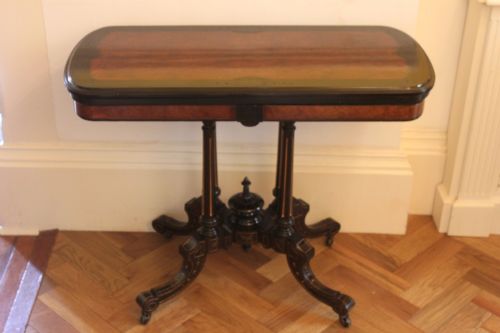
A victorian foldover card table brings exceptional timber figure and clever pivoting tops into a sitting room.
Victorian Foldover Card Table
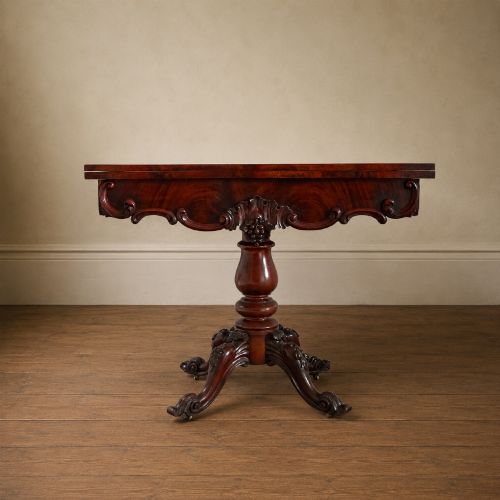
A victorian foldover card table serves as a dual-purpose piece designed for evening entertainment and formal display. The surface rotates and unfolds to reveal a baize-lined playing area for cards or chess.
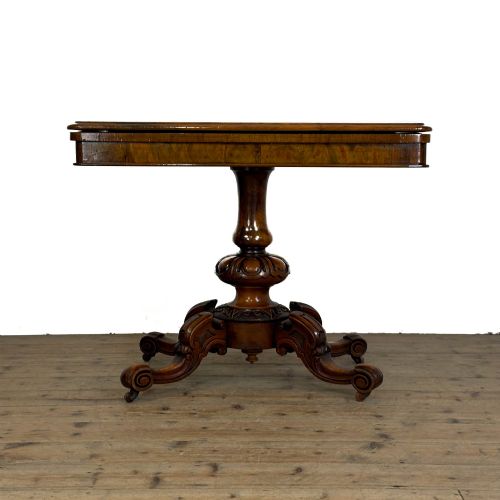
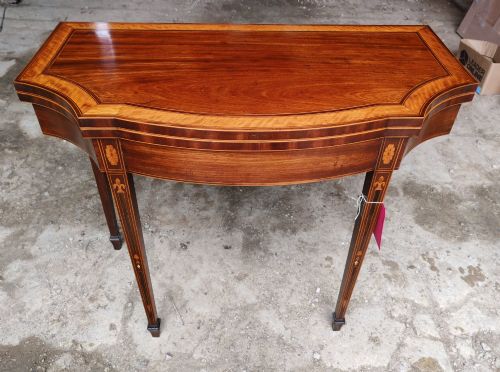
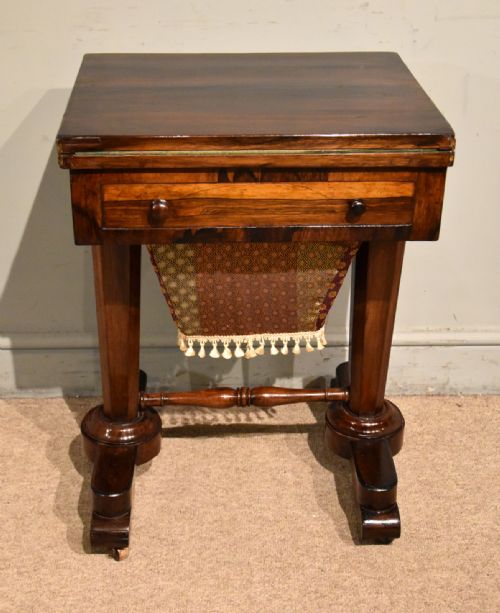
Most examples found here date from the Victorian era and the broader nineteenth century. They appear in forms such as tea tables, games tables, and pedestal card tables.
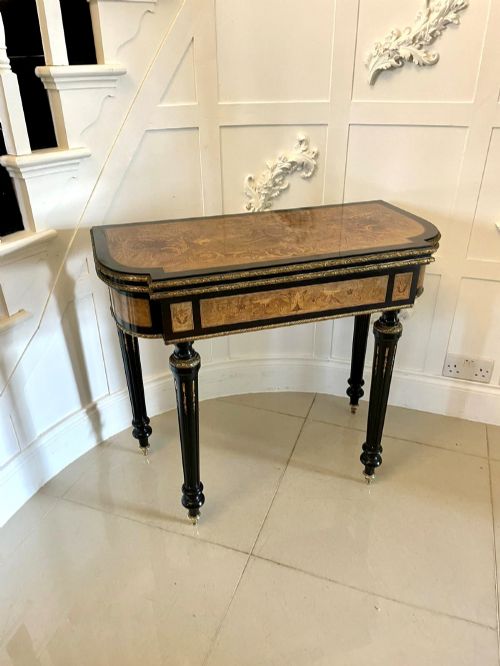
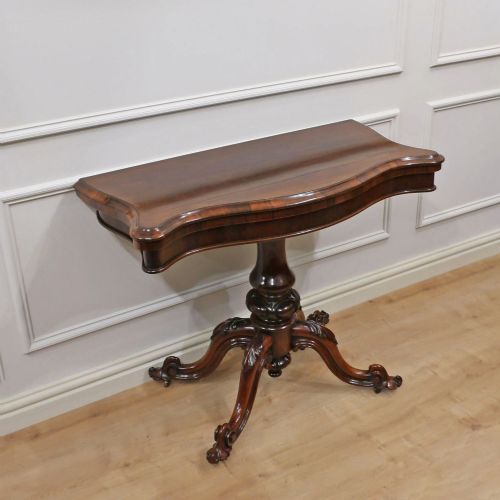
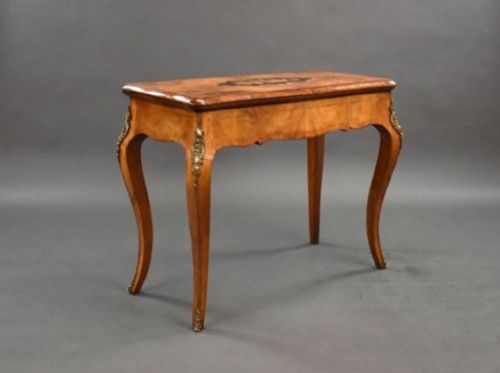
Timbers span from burr walnut and figured mahogany to rosewood and ebonised wood. Styles range from plain Victorian to French Napoleon III and Sheraton Revival.
How they were made
Cabinet makers utilised dense native and exotic timbers, laying striking veneers like burr walnut and satinwood over stable secondary woods. Marquetry inlay, brass mounts, and mother-of-pearl detail frequently decorate the friezes and tops.
The clever hinge and pivot mechanisms allow the heavy top to swing open and rest securely on a swivel frame. Pedestal bases and serpentine legs distribute the weight evenly.
Object forms span tea tables, games tables, and pedestal card tables utilising ebonised wood, ormolu, and brass.
What varies in quality
The refinement of the timber figure largely dictates the distinction between standard and superior pieces, particularly with burr walnut and figured mahogany. Finely executed marquetry inlay and crisp carving show the hand of a skilled workshop.
Construction integrity in the pivoting mechanism ensures the folded top remains level and firm during use.
Edwards & Roberts·S&H Jewell
The Victorian Foldover Card Table Glossary
- Burr walnut
- A prized timber harvested from walnut tree growths, showing intricate swirling grain patterns.
- Foldover
- A hinged tabletop design that doubles the surface area when opened.
- Marquetry
- Decorative veneer work forming intricate pictures or geometric patterns using various coloured woods.
- Serpentine
- A gently undulating curved line often seen on table edges and fronts.
- Baize
- A coarse woolen fabric traditionally used to line the playing surfaces of gaming tables.
Victorian Foldover Card Table: Frequently Asked Questions
How do I open the table?
The top section lifts and pivots on a central hinge mechanism, swinging through ninety degrees to reveal the hidden compartment underneath.
once rotated fully, the leaf unfolds flat to rest securely upon the base frame.
What were these tables used for?
These pieces functioned primarily as social furniture for hosting evening card games, chess, or draughts.
when closed, they served as decorative side or tea tables against a drawing-room wall.
How do I care for the timber?
Keep the wood away from direct sunlight and heat sources to prevent the burr walnut or rosewood veneers from drying out.
apply a traditional beeswax polish occasionally to nourish the polished surface.
How do I distinguish Victorian from Georgian styles?
Victorian examples frequently display rich burr walnut veneers, serpentine shaping, and revival influences like the French Napoleon III style.
Georgian tables tend to rely on solid mahogany with simpler structural lines.