

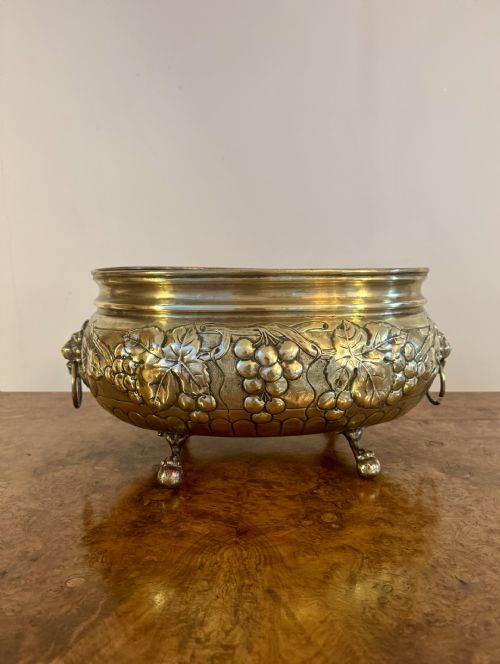
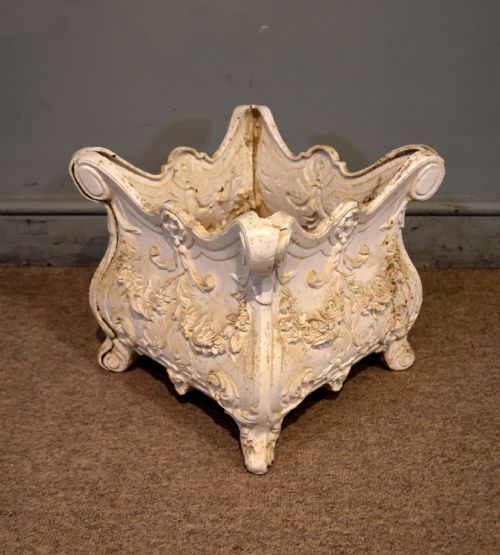


Victorian Flower Trough
A victorian flower trough brings botanical charm indoors or onto a terrace, offering a sturdy yet graceful home for seasonal planting.
Victorian Flower Trough
A victorian flower trough and its associated planters encompass a range of garden vessels and indoor jardinieres designed to hold greenery or floral displays. Buyers exploring this search phrase encounter pieces fashioned as garden urns, plant stands, and trough-like vessels.
The objects span multiple eras and influences, including Georgian wirework, 19th-century cast iron, and walnut carved in the art nouveau taste. These vessels serve practical horticultural purposes while acting as decorative focal points for patios, gardens, and interior rooms.
Materials and construction
Metalworking dominates the selection, utilising cast iron, wrought iron, and brass to achieve both heavy structural integrity and delicate decorative detail. Foundries shaped iron into robust garden urns and planters designed to weather the elements.
Organic materials also feature prominently, with carved walnut utilised for refined indoor display pieces influenced by art nouveau aesthetics. Wirework construction provides lighter, intricate framing suitable for specialised plant stands.
Victorian Flower Trough Retail Price Guide 2026
Typical asking prices for victorian flower trough among the pieces listed under this phrase on Sellingantiques today, from the lower quarter to the upper quarter. They describe what is for sale here now, not the wider market.
Several heavy iron troughs spent generations holding stubborn geraniums before finding their way onto the antiques market.
Assessing the craftsmanship
Quality rests upon the crispness of the casting in iron and brass items, where sharper relief and finer surface finishing distinguish superior pieces. Substantial weight and the integrity of joining techniques separate robust garden furniture from lighter decorative alternatives.
The selection of timber and the depth of carving dictate the refinement seen in wooden pieces, with fluid art nouveau lines requiring high skill from the maker. Weathering and patination add character to metal surfaces over decades of exposure.
The Victorian Flower Trough Glossary
- Jardiniere
- An ornamental pot or stand for plants and flowers. This term often applies to indoor ceramic or metal vessels.
- Urn
- A vase-shaped vessel, typically with a decorative base or pedestal, used historically for ornamental garden planting.
- Wirework
- Metal manipulated into openwork mesh or decorative scroll frames. This technique creates lightweight plant stands and holders.
- Patina
- The surface appearance acquired by materials through age, use, and exposure to the atmosphere. It signals authentic historical wear.
Victorian Flower Trough: Frequently Asked Questions
What is a victorian flower trough used for?
These vessels serve to display live plants, flowers, or trailing greenery in domestic spaces or garden settings.
They function as decorative architectural elements that elevate simple planting arrangements into prominent focal points.
Can these metal planters stay outside?
Cast iron and wrought iron pieces naturally withstand outdoor elements, developing characteristic surface patination over time.
Lighter brass or copper items generally suit indoor display to preserve their polished finishes against weathering.
How do I identify a period piece?
Examine the manufacturing method, such as early casting techniques or hand-wrought iron construction typical of nineteenth-century workshops.
Stylistic cues like art nouveau carving or Georgian wirework patterns also help date the item accurately.
Are these troughs heavy?
Many examples forged from cast iron or carved from solid walnut possess considerable weight and require careful placement.
Wirework and certain brass designs offer lighter alternatives that remain straightforward to reposition.