


Victorian Flower Brooch
A Victorian flower brooch captures organic botanical detail through enduring metalwork and gem-set petals.
Victorian Flower Brooch
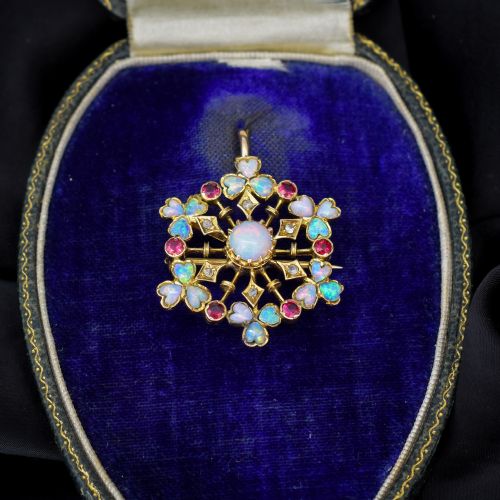
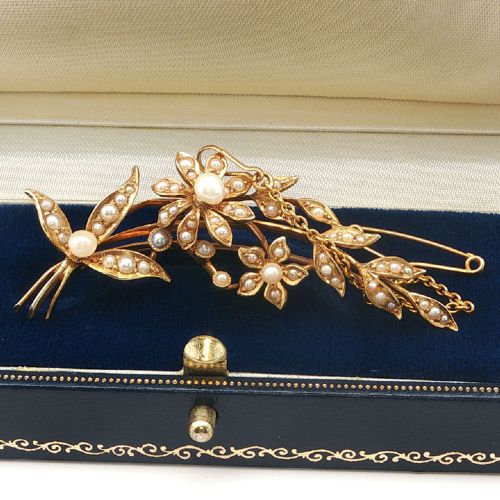
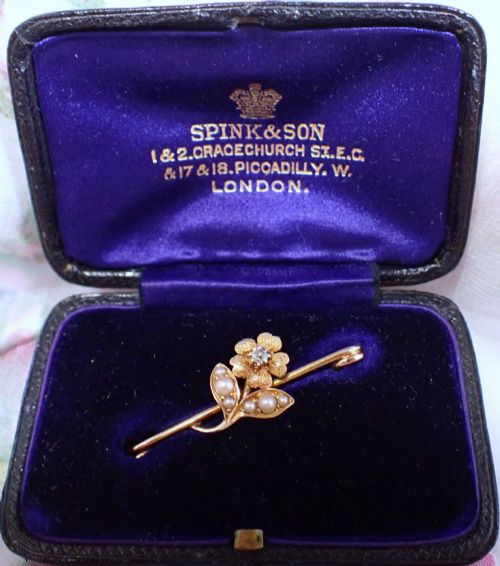
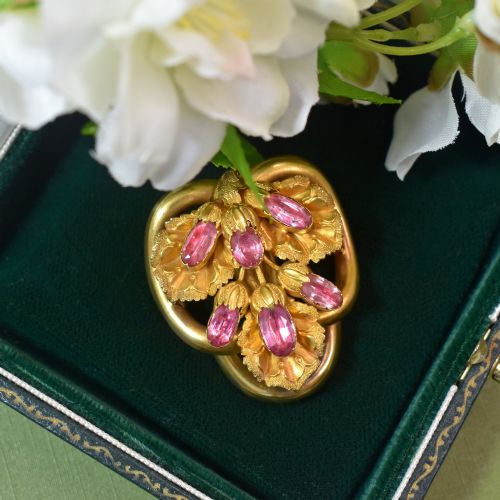
A victorian flower brooch takes the form of floral sprays, single blossom heads, and structured baskets rendered in precious metals. These pieces draw upon naturalism, capturing petals, stems, and leaves through varied gem-setting techniques.
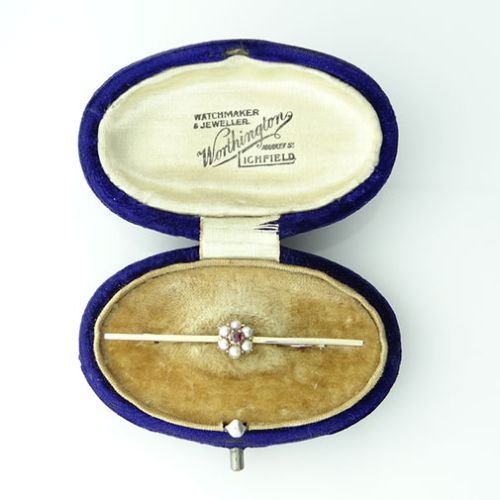
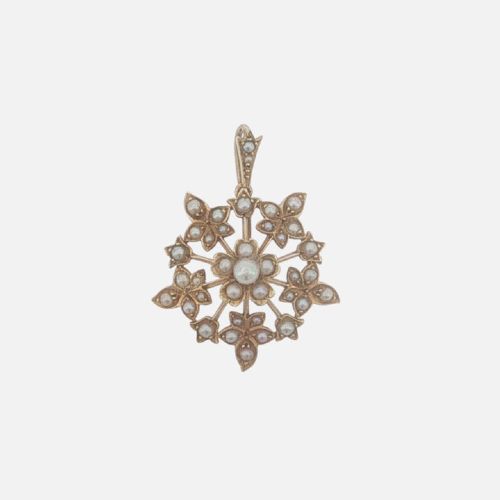
The materials span solid gold standards, silver-topped settings, and combinations involving yellow and rose gold hues. Gemstones such as diamonds, seed pearls, almandine garnets, and colourful paste stones define the floral centres and petals.
Many surviving examples double as pendants, featuring integrated loops or folding bails behind the pin mechanism. This dual functionality allows pieces to transition easily from lapel wear to neck chains.
Materials and construction methods
Goldsmiths utilised 15ct gold alongside 9ct, 18k, and 22ct standards, often combining yellow and rose gold within a single mounting to give naturalistic depth to leaves and stems. Silver frequently topped gold or formed independent mounts to hold old-cut and rose-cut diamonds in bright relief.
Natural stones including diamonds, sapphires, rubies, and opals were secured alongside seed pearls, turquoise, and almandine garnets. Foil-backed topaz and colourful glass paste stones also appear, providing vivid hues within floral spray and basket formats.
Some floral brooches smugly double as horse shoes or buckles, ensuring your lapel brings double the botanical and equestrian luck.
Distinctions in quality and execution
Quality rests upon the delicacy of the botanical rendering and the structural integrity of the metalwork. Master jewellers achieved lifelike movement in stems and petals, whereas simpler pieces rely on stiff geometric layouts.
The selection and matching of stones dictate refinement, with uniform seed pearls or well-matched old-cut diamonds elevating the piece. The integration of convertible pendant fittings and secure pin mechanisms further separates standard production from finer workshop output.
The Victorian Flower Brooch Glossary
- Giardinetti
- Little garden. This style depicts small flower pots or formal floral arrangements set with various gemstones.
- Seed pearl
- Very small natural or cultured pearls, often half-drilled and glued or pegged onto tiny pins within floral clusters.
- Rose-cut
- An antique diamond cut featuring a flat base and a domed crown with triangular facets, resembling an unopened rosebud.
- Carbuncle
- A cabochon-cut garnet or other red gemstone polished smooth rather than faceted, showing a deep crimson glow.
- Silver-topped gold
- A historical technique where a thin layer of silver is soldered to a gold backing to reflect white light through diamonds.
Victorian Flower Brooch: Frequently Asked Questions
How can I wear a brooch as a pendant?
Many period pieces feature a hidden loop or hinged bail tucked behind the floral cluster or pin stem. This allows a chain to thread directly through the fitting.
Alternatively, specific converters exist that grip the pin stem securely without damaging the antique metalwork.
What is the difference between old-cut and modern diamonds?
Old-cut diamonds display hand-cut facets tailored under candlelight, featuring smaller tables and higher crowns. They create a softer, warmer sparkle than modern brilliant cuts.
These stones match the authentic manufacturing period of nineteenth-century jewellery.
Are seed pearls fragile to maintain?
Seed pearls set in nineteenth-century pieces require careful handling because they are often held by tiny pegs or weak adhesives. Moisture and cosmetics can degrade the pearl nacre and underlying materials over time.
Keep these items dry and store them away from other hard gemstones to prevent surface scratching.