

Victorian Fainting Sofa
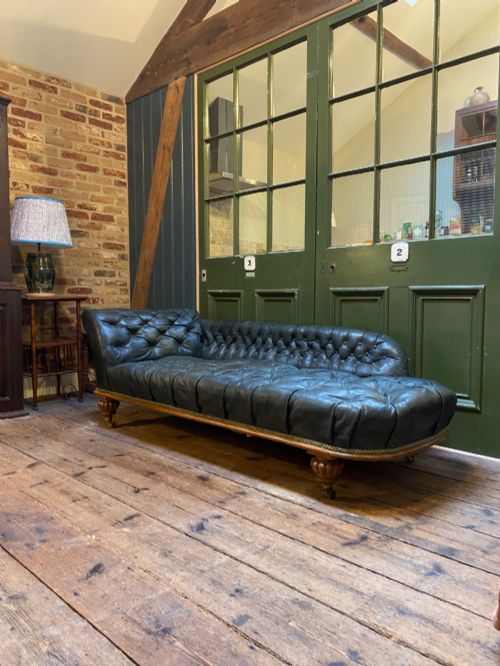
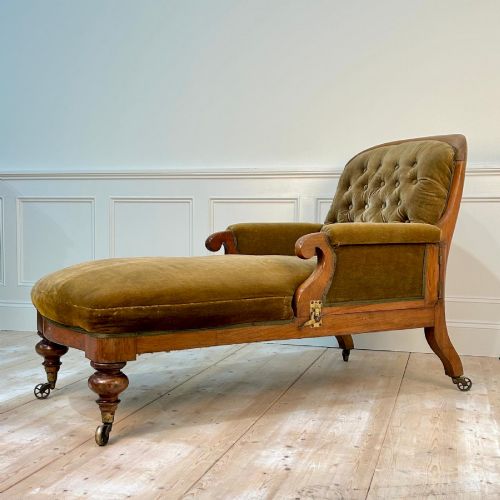
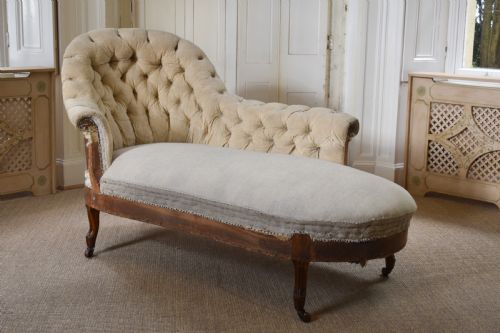
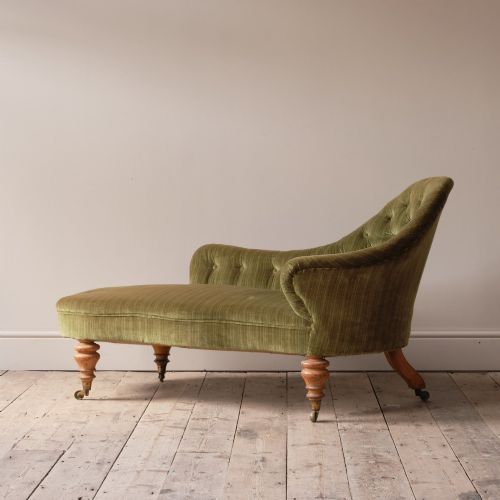
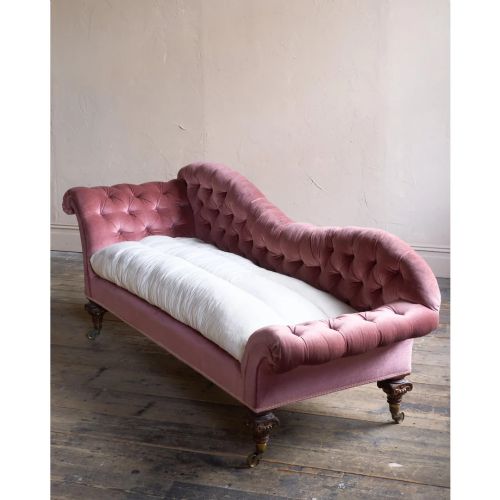
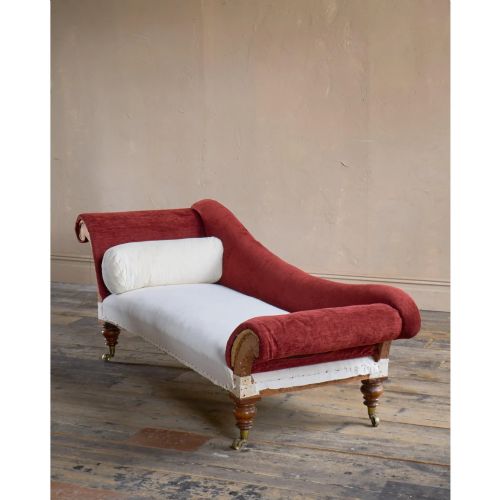
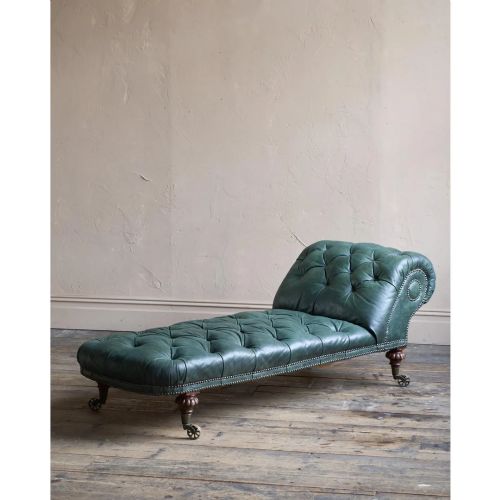
A victorian fainting sofa provides an asymmetric, reclining seat built for resting in an upright dress.
Victorian Fainting Sofa
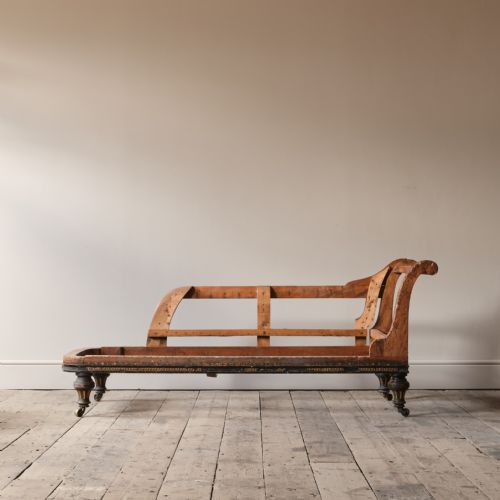
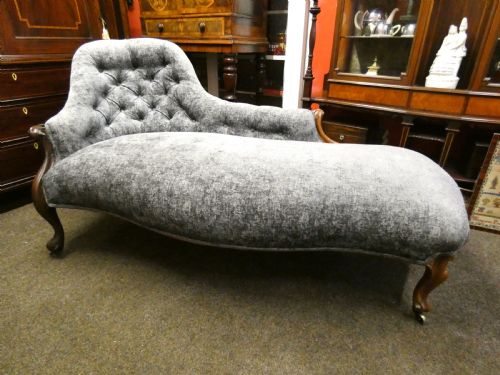
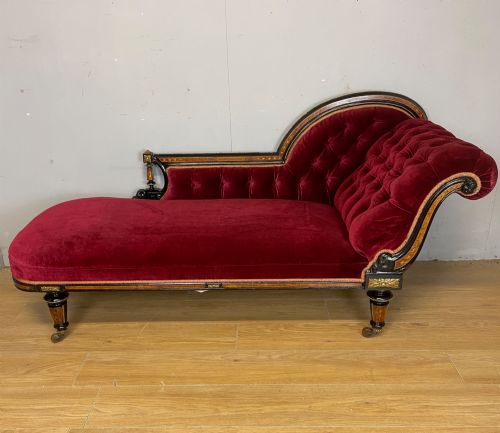
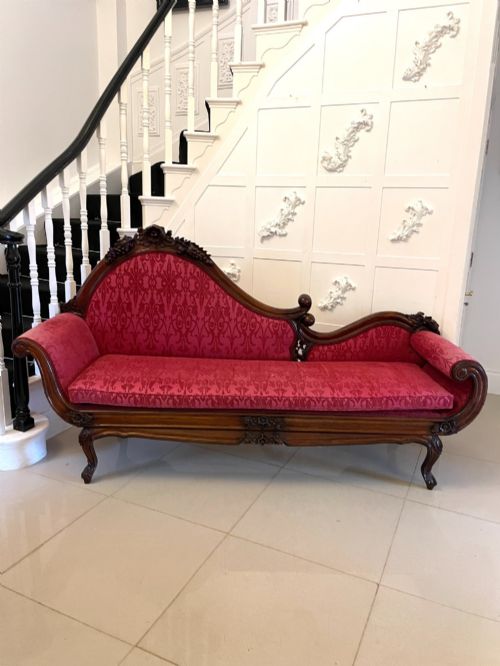
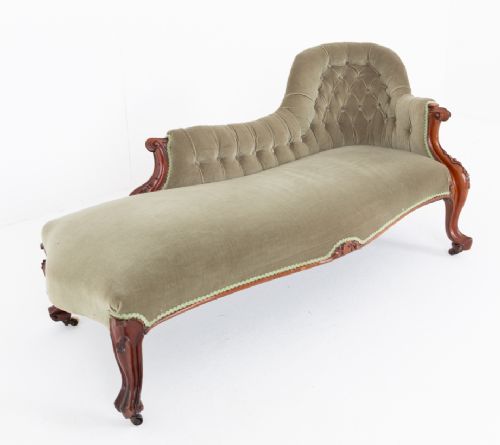
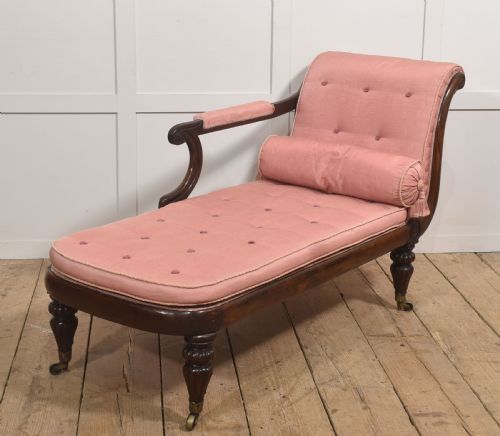
A victorian fainting sofa combines the low back and single raised end of a chaise longue with deep upholstery designed for reclining. Most examples on this page date from the nineteenth century, including pieces from the Victorian and William IV periods.
The form appears in various timber frames such as mahogany, rosewood and walnut, often shaped with carved details or scroll arms. Makers and workshops of the era produced these daybeds and settees for drawing rooms and boudoirs.
How they were made
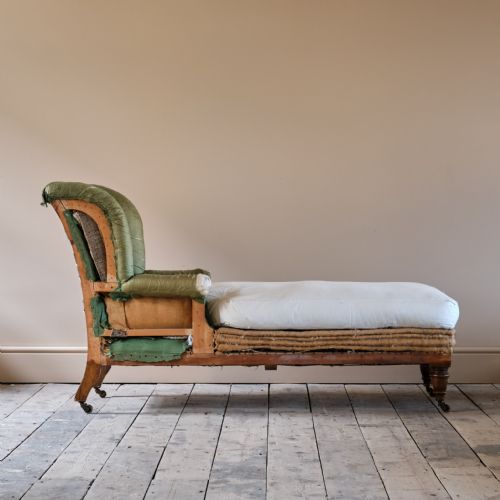
Cabinet makers built the structural frames using solid hardwoods like mahogany, walnut and rosewood, sometimes applying ebonisation or brass and ormolu mounts. Frames range from plain timber to elaborately carved scroll arms and column legs.
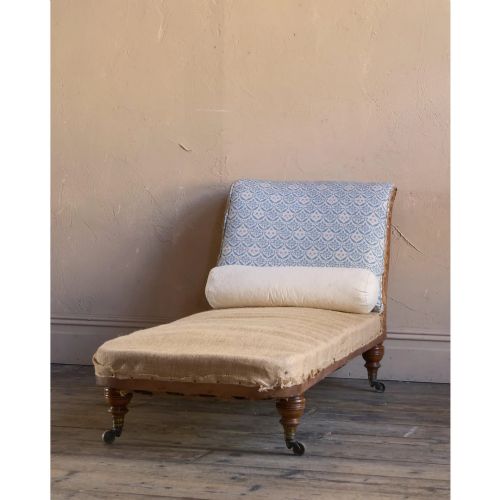
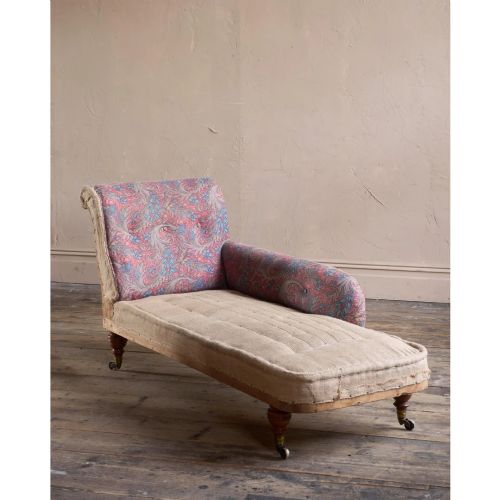
Upholstery relies on traditional stuffing fixed to wooden bases, finished in velvet, leather, damask or cane seating. Metal castors often support the turned legs for mobility across carpets.
Victorian Fainting Sofa Retail Price Guide 2026
Typical asking prices for victorian fainting sofa among the pieces listed under this phrase on Sellingantiques today, from the lower quarter to the upper quarter. They describe what is for sale here now, not the wider market.
Listings feature nineteenth-century daybeds utilising mahogany, rosewood, walnut and brass, spanning styles from Regency to Edwardian.
What varies in quality
The depth and vigour of the timber carving separate standard production from high workshops. Crisp foliage, defined scrollwork and substantial rosewood or mahogany frames indicate superior craftsmanship.
The integrity of the frame construction and the original joinery dictate the durability of the piece. Attribution to known firms such as Holland and Sons or Howard and Sons elevates the standing of a daybed.
Holland and Sons·Howard and Sons·Jas Shoolbred·H. Goodall and Sons
The Victorian Fainting Sofa Glossary
- Chaise Longue
- A long reclining chair or daybed designed for one person to stretch out.
- Ormolu
- Gilded bronze ornamentation applied to furniture frames for decorative contrast.
- Scroll Arm
- A curved, volute-shaped armrest typical of nineteenth-century seating furniture.
- Caning
- Woven rattan material used to form light, breathable seats on wooden frames.
Victorian Fainting Sofa: Frequently Asked Questions
What is a victorian fainting sofa used for?
These long seats allowed nineteenth-century occupants to recline comfortably without fully lying down, particularly while wearing restrictive corsets.
They served primarily in drawing rooms, bedrooms and private boudoirs as decorative yet functional daybeds.
How do I identify a William IV daybed?
William IV examples typically display heavy scrolling woodwork, robust mahogany or rosewood frames, and classical architectural motifs such as ionic column legs.
They sit slightly earlier in the nineteenth century than standard high Victorian pieces and carry a heavier, solid proportion.
Are these daybeds comfortable to use daily?
Most rely on firm period padding and traditional sprung or webbed bases that offer substantial support rather than soft modern sinking.
The single high end supports the head and shoulders, making them well suited for reading or resting.
What woods were used for the frames?
Mahogany and rosewood dominate the selection, alongside walnut and ebonised timber finishes.
Some simpler country house pieces use mixed secondary woods beneath their upholstered surfaces.