


Victorian Etagere
A victorian etagere brings tiered elegance and practical display space to a room, offering multiple open shelves for precious objects.
Victorian Etagere
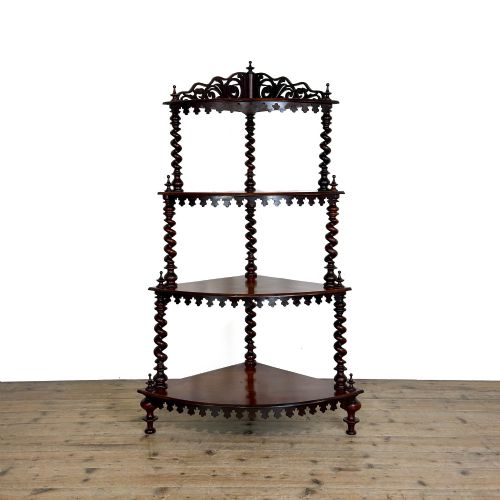
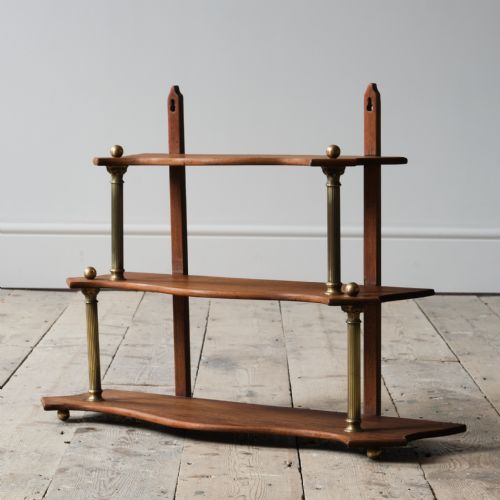
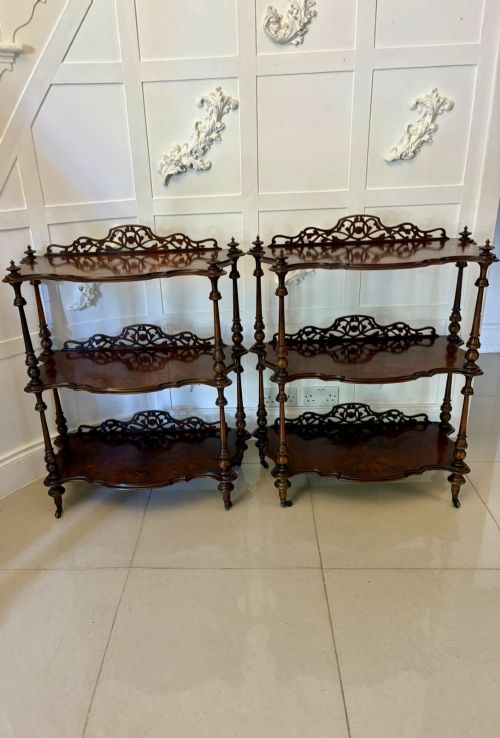
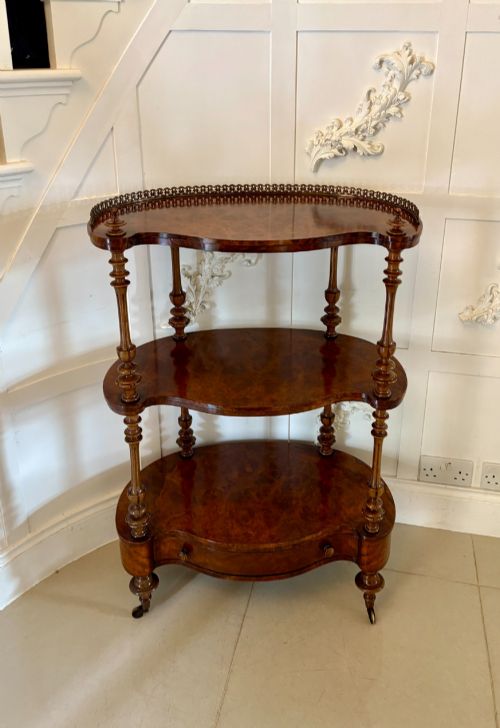
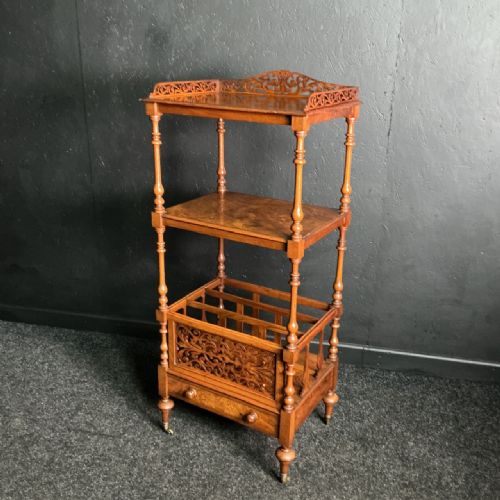
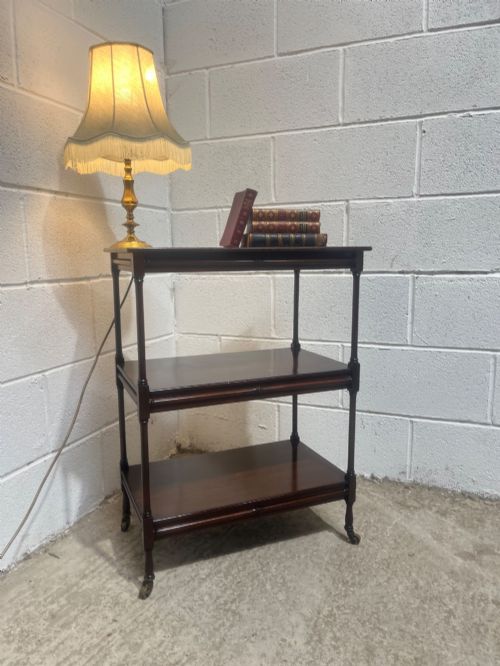
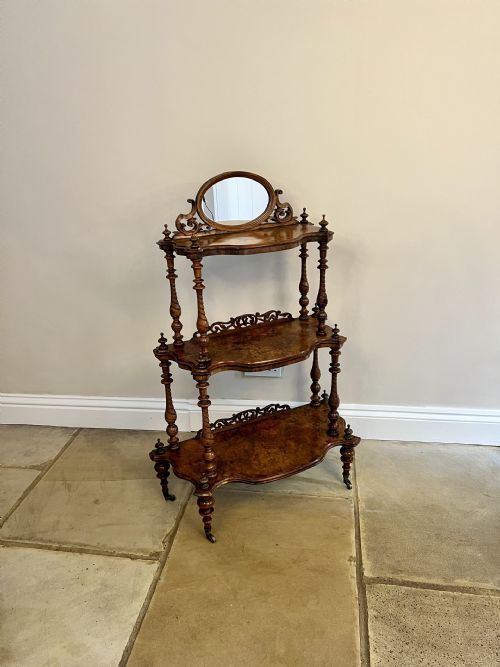
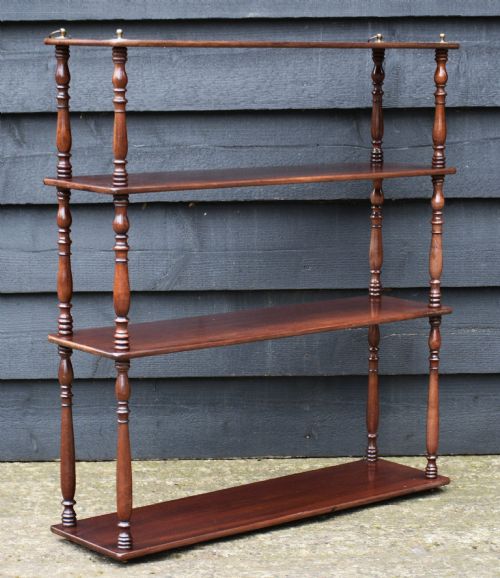
A victorian etagere functions primarily as an open multi-tiered shelving unit or display stand designed to hold decorative items, books, and small collectables. These pieces appear frequently in walnut, mahogany, and rosewood, often taking the form of three or four graduated tiers supported by turned columns or slender uprights.
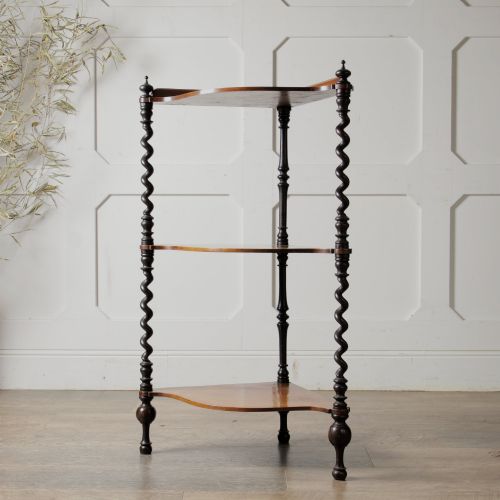
Makers of the period also produced specialised variants such as corner etageres, wall-hanging shelves, and rolling trolleys or dumb waiters. The inventories show a heavy representation of freestanding walnut and mahogany pieces dating from the middle to the late nineteenth century.
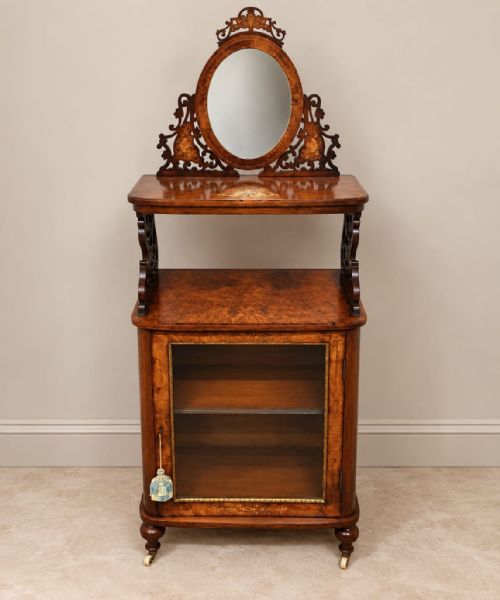
Makers frequently combined the etagere format with related terms such as whatnot or buffet, reflecting how nineteenth-century households utilised open tiered furniture for varied domestic storage. These items range from compact two-tier bedside tables to tall serpentine-fronted cabinets with mirror backs.
How they were made
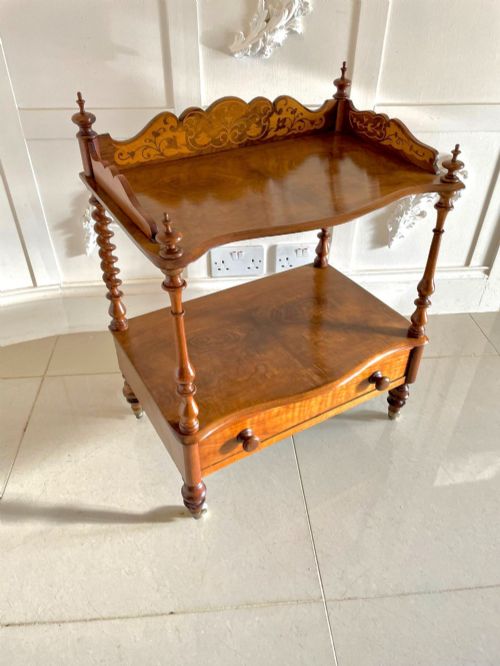
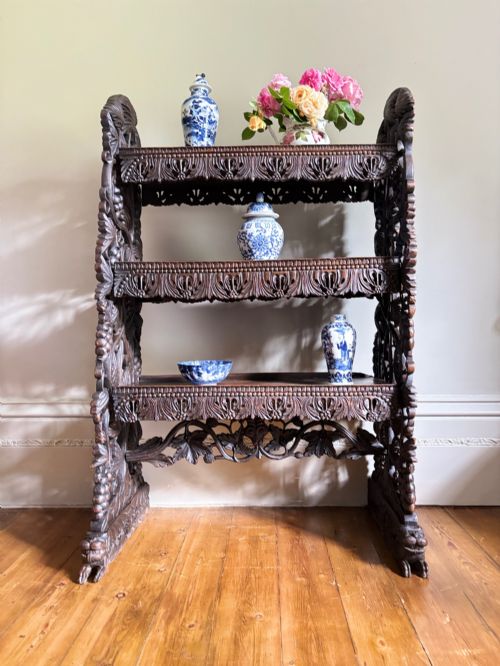
Cabinet makers constructed these multi-tiered frames using dense timbers like mahogany, rosewood, and burr walnut, frequently applying fine marquetry inlay, brass mounts, or ebonised finishes to enhance the surfaces. Structural stability relied on precise joinery within the upright supports and tiered platforms, sometimes incorporating slender bamboo or turned barley-twist columns.
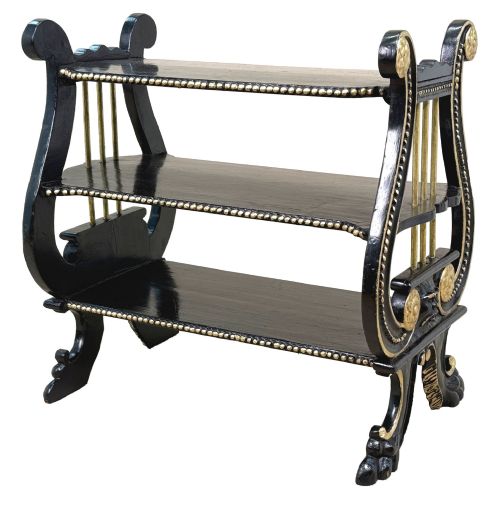
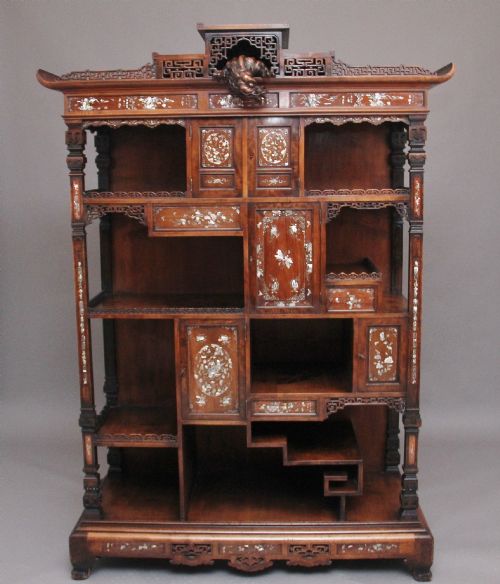
Decoration often involved contrasting veneers, boxwood stringing, japanning, and parcel gilding, drawing upon French rococo revival, aesthetic, and japonaise influences popular during the period. Surviving examples demonstrate how craftsmen balanced delicate visual proportions with the structural weight required to support stacked shelves.
Some Victorian etageres doubled as music cabinets, proving that nineteenth-century households loved combining sheet music storage with knick-knack display.
What varies in quality
Quality rests upon the selection of timber veneers, such as richly figured burr walnut or dense grain mahogany, alongside the crispness of any marquetry inlay or ormolu mounts. Finer examples display meticulous attention to detail in the turning of the supporting columns and the seamless integration of enclosed drawer units.
Construction rigidity separates superior pieces from standard domestic furniture, as tall tiered structures demand robust joinery to prevent swaying across the shelves. The presence of specialised forms, such as serpentine shapes or complex multi-tier configurations with original brass fixtures, marks out the higher tier of production.
Gabriel Viardot·Edwards and Roberts
The Victorian Etagere Glossary
- Etagere
- A piece of furniture consisting of a set of open shelves for displaying small objects or ornaments. Originating in France, these tiered stands became popular in British homes during the nineteenth century.
- Whatnot
- A nineteenth-century multi-shelved stand used for storing or displaying ornaments and books. The terms whatnot and etagere were frequently used interchangeably in period inventories.
- Marquetry
- Decorative woodwork where pieces of veneer are fitted into a ground to form ornamental patterns. Makers utilised contrasting timbers like boxwood and satinwood to create elaborate floral or geometric designs on shelf tops.
- Japanning
- A European imitation of East Asian lacquerwork applied to furniture surfaces. This technique involved layering dark varnishes and curing them to produce a glossy black finish.
- Ormolu
- Gilded bronze mounts applied to the edges and supports of fine furniture. These metallic decorative elements were common on high-status French and English revival pieces.
Victorian Etagere: Frequently Asked Questions
What is the difference between an etagere and a whatnot?
While both terms describe open-shelved tiered furniture from the nineteenth century, an etagere often implies a lighter, more decorative French-influenced display piece. A whatnot typically refers to the sturdy English multi-tier shelving unit used for general domestic display.
In historical listings, makers and retailers applied both names to identical furniture forms. Collectors today generally treat the words as synonyms unless the piece exhibits specific stylistic traits like French marquetry or bamboo construction.
How were etageres used in Victorian homes?
These tiered stands served as focal points in drawing rooms and parlours for displaying ceramics, small sculptures, and bound volumes. Their open design allowed homeowners to exhibit prized possessions from multiple angles.
Some variants included enclosed cupboards or drawers at the base for auxiliary storage. Others functioned as movable tea tables or bedside stands depending on their size and tier count.
Where should I place an etagere in a modern room?
An etagere functions best against a solid wall or tucked into an empty room corner where its open shelves can create vertical interest without dominating the floor space. Corner models make efficient use of otherwise neglected room angles.
Keep the surrounding area clear to let the timber grain and turned columns remain visible. Avoid placing delicate rosewood or walnut pieces in direct sunlight to protect the aged finish.
How do I identify a nineteenth-century piece?
Look for construction markers such as hand-cut dovetails in any drawers, timber shrinkage patterns, and the distinct weight of solid mahogany, rosewood, or walnut framing. Period hardware, including slotted brass screws and hand-beaten mounts, provides additional chronological clues.
Stylistic indicators like barley-twist columns, aesthetic movement ebonising, or marquetry inlay align with Victorian manufacturing techniques. Compare the piece against documented examples from the mid to late nineteenth century to confirm its period.