


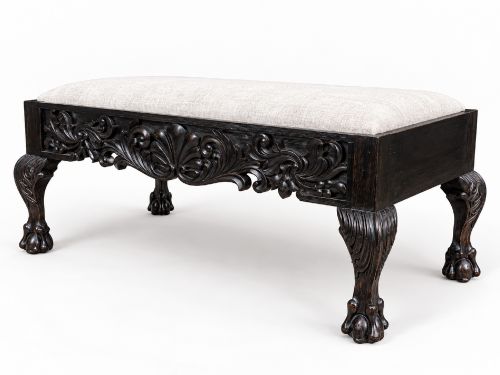


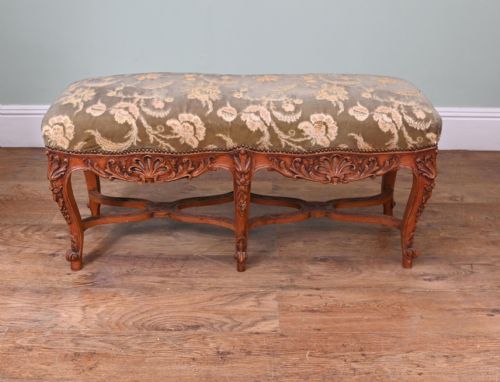


Victorian End of Bed Bench
A victorian end of bed bench brings practical seating and period character to a bedroom, anchoring the space with classic woodwork and upholstery.
Victorian End of Bed Bench
Buyers encountering this group will frequently find walnut and mahogany frames paired with recent textile upholstery such as linen, velvet, and patterned fabrics. These items serve both functional resting points and decorative furniture pieces at the foot of a bed.
How they were made
Cabinetmakers utilised solid timbers such as mahogany, walnut, oak, and rosewood to construct the structural frames of these seats. Woodwork often displays carved details, cabriole legs, or fluted supports characteristic of nineteenth-century joinery.
Upholstery techniques combine traditional stuffing methods with contemporary fabric coverings like Liberty velvet, Robert Kime prints, and neutral linens. Brass fixings and detailed woodwork finish the construction of these window seats and ottomans.
Victorian End of Bed Bench Retail Price Guide 2026
Typical asking prices for victorian end of bed bench among the pieces listed under this phrase on Sellingantiques today, from the lower quarter to the upper quarter. They describe what is for sale here now, not the wider market.
What varies in quality
The standard of timber selection and the crispness of hand-carved woodwork set superior frames apart from simpler production. Carved walnut and figured mahogany command attention through the depth of grain and the precision of the joinery.
The quality of the upholstery work and the choice of covering fabric significantly influence the character of each piece. Expert re-upholstery using high-grade textiles elevates a historic frame while respecting its original period design.
The Victorian End of Bed Bench Glossary
- Window seat
- A narrow bench traditionally designed to fit within a window recess, offering low seating without obstructing the view. These items feature upholstered tops and sturdy wooden frames.
- Ottoman
- A low, upholstered seat or footstool without a back or arms, often used at the end of a bed for storage or seating. They appear in various timber frames from the nineteenth century.
- Cabriole leg
- A furniture leg that curves outward and then tapers inward, inspired by the shape of an animal leg. This stylistic choice appears frequently on seats from the period.
Victorian End of Bed Bench: Frequently Asked Questions
Where should I place a victorian end of bed bench?
These benches sit naturally at the foot of a bed to provide a practical surface for dressing or placing clothes. They also function well in hallways or beneath windows as occasional seating.
Selecting the right placement depends on the length of the room and the clearance needed around the base of the bed.
How do I care for antique wood and upholstery?
Keep wooden frames away from direct sunlight and strong heat sources to prevent the timber from drying out or splitting. Dust the carved surfaces regularly with a soft, dry cloth.
Vacuum upholstered fabric gently using a low suction attachment to remove surface dust without disturbing the textile weave.
Are these benches comfortable for daily sitting?
Most pieces feature padded upholstery that provides firm, supportive seating for putting on shoes or resting briefly. Comfort levels vary depending on the firmness of the internal padding and the height of the frame.
Many historic frames have been newly upholstered to ensure modern comfort while retaining their original nineteenth-century proportions.
How can I identify a nineteenth century piece?
Look for traditional construction methods, dense hardwoods like mahogany and walnut, and period-specific stylistic details such as hand-carved cabriole legs. Construction traits often indicate the approximate decade of manufacture.
Comparing the timber finish and hardware against known nineteenth-century examples helps confirm the age of the frame.