



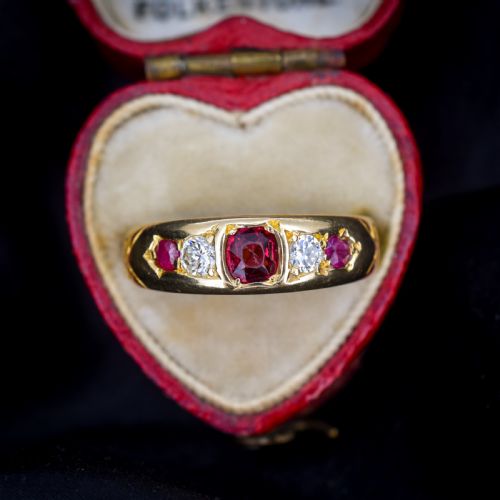
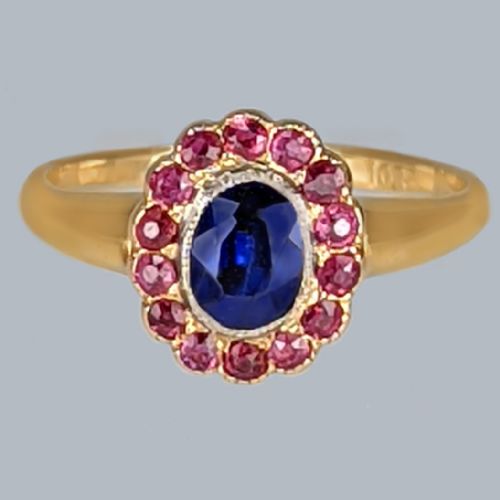


Victorian Edwardian Ruby Ring
A victorian edwardian ruby ring brings together rich red stones and period gold, offering enduring character for everyday wear.
Victorian Edwardian Ruby Ring
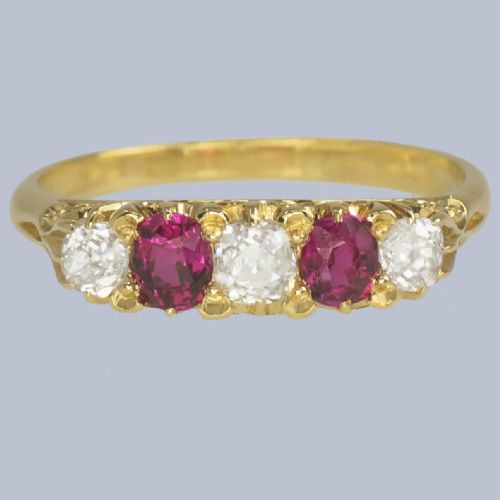
A victorian edwardian ruby ring combines deep red gemstones with gold bands, creating distinctive finger ornaments that span multiple decades of design. These jewels reflect the aesthetic shifts from nineteenth century ornamentation to early twentieth century refinement.
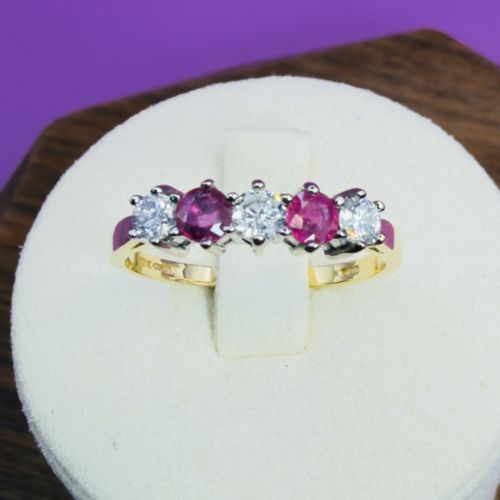
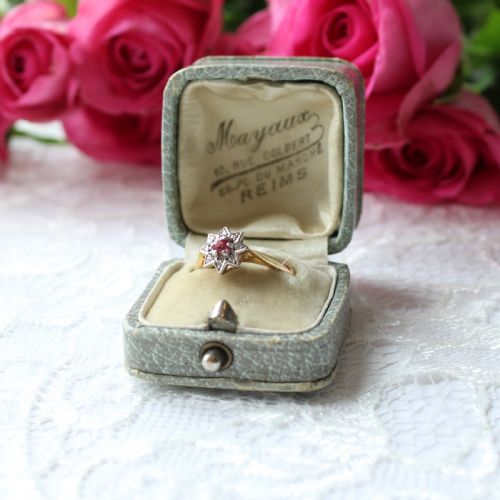
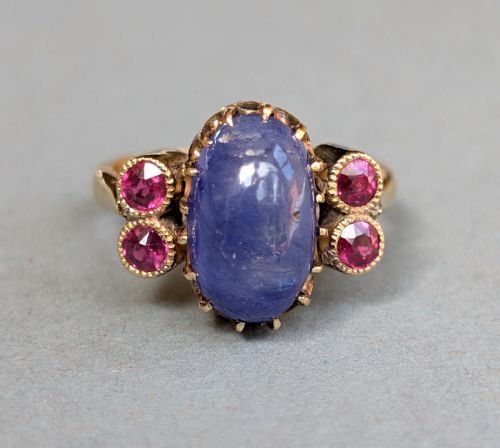
The most common examples on this page are set in eighteen carat gold and feature combinations of rubies alongside diamonds, pearls, or sapphires. Forms range from starbursts and three stone configurations to cluster and gypsy settings.
Pieces hail from distinct periods including the Victorian era, Edwardian years, and early twentieth century decades. Makers utilised traditional mountings that secure the red stones within yellow or rose gold bands.
Materials and construction
Goldsmiths worked primarily with eighteen carat gold and fifteen carat gold to form the bands and settings of these rings. Yellow gold dominates the selection, accompanied by occasional examples in rose gold.
Gemstone mounting relies on hand setting techniques, securing natural rubies alongside old mine cut diamonds, seed pearls, and sapphires. Settings incorporate starburst motifs, gypsy flush mounts, and clustered arrangements to showcase the stones.
Quality differences
The standard of a victorian edwardian ruby ring depends upon the depth of colour in the central ruby and the matching clarity of accompanying diamonds. Finer examples display balanced stone proportions and secure, intricate metalwork without excessive wear.
Distinction also lies in the integrity of the original setting and the clarity of hallmarks indicating assay office origins such as Chester or Birmingham. Pieces retaining their initial stone arrangements and uncompromised band thickness command greater attention.
The Victorian Edwardian Ruby Ring Glossary
- Gypsy ring
- A ring style where gemstones are flush set directly into a thick tapering gold band. This mounting style protects the stone edges during everyday use.
- Old mine cut
- An early diamond cut shape featuring a square outline with rounded corners, a high crown, and a small table facet. These stones display distinctive hand faceted patterns particular to nineteenth century work.
- Trilogy ring
- A ring featuring three principal gemstones arranged in a row to represent past, present, and future. They frequently pair a central ruby with flanking diamonds.
- Starburst
- A decorative engraved or channel set metal pattern radiating outward from a central gem. This technique enhances the visual spread of smaller surrounding stones.
- Seed pearl
- A very small natural or cultured pearl used as an accent stone in period jewellery. These delicate elements are typically arranged in clusters or borders around a ruby.
Victorian Edwardian Ruby Ring: Frequently Asked Questions
How do I care for my ring?
Clean these antique rings gently using warm soapy water and a soft brush, avoiding harsh ultrasonic cleaners that might dislodge pearls or softer gems.
Store them separately in a fabric lined box to prevent the gold bands and diamonds from scratching the softer ruby surfaces.
Are these rings suitable for daily wear?
Many of these pieces were constructed for regular use, featuring sturdy gold bands and flush or bezel settings that protect the gems.
However, rings containing seed pearls or delicate claws require mindful removal during heavy manual tasks to ensure longevity.
How can I tell Victorian from Edwardian pieces?
Victorian examples often display heavier, warmer yellow gold settings with gypsy or cluster motifs and substantial stone weights.
Edwardian pieces tend towards lighter, more delicate openwork arrangements, frequently incorporating platinum accents or seed pearls alongside the rubies.
What do hallmarks tell me?
Hallmarks stamped inside the band indicate the gold purity, such as eighteen carat or fifteen carat, confirming the metallic composition.
They can also reveal the specific assay office and year of testing, offering a precise date for when the ring was completed.