


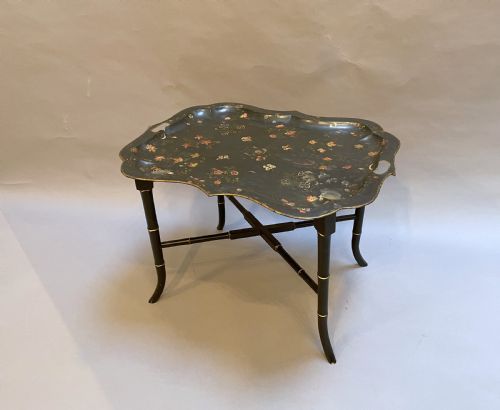


Victorian Ebonised Coffee Table
These victorian ebonised coffee table selections bring dark, polished surfaces and decorative detail into a room, offering both practical utility and distinct period character.
Victorian Ebonised Coffee Table
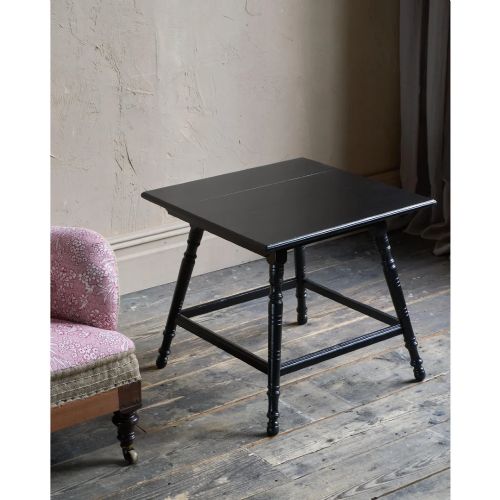
When you search for a victorian ebonised coffee table, you encounter low tables adapted from earlier forms such as trays on stands, side tables, and games tables. The pieces on this page span the nineteenth century, including works from the eighteen-seventies through to nineteen hundred.
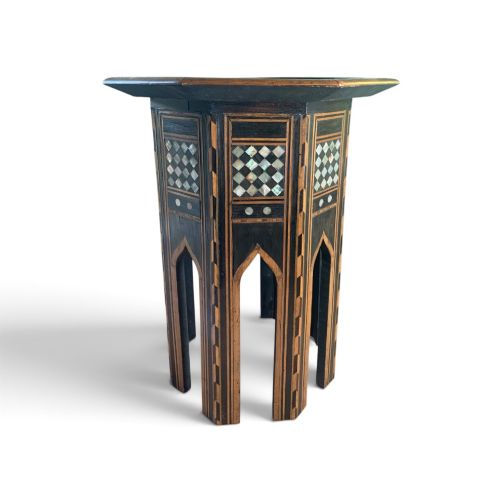
Many examples reflect the design movements of the period, including Aesthetic Movement, Japonisme, and Moorish Revival styles. You will find occasional tables, nests, and tray tables finished with dark surfaces alongside inlaid or painted details.
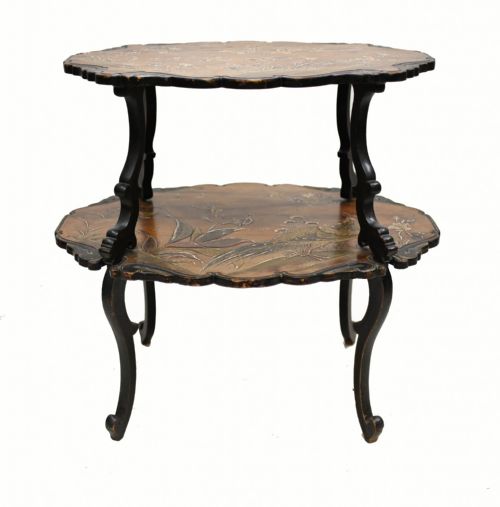
Makers and retailers like Liberty and Co. and Hindley and Sons appear in the records, alongside pieces in the manner of Daniel Cottier. Forms range from octagonal occasional tables to papier-mâché trays mounted on stands.
How they were made
Makers used hardwood, walnut, and birch, treating the timber to achieve a dense, blackened finish known as ebonising. This process mimics the look of ebony on more accessible woods.
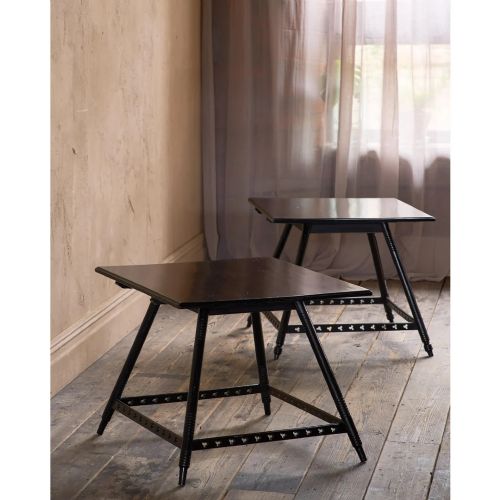
Certain pieces incorporate woven reed and bamboo, or cast solid brass sabots on the legs. Inlay work draws on Moorish and Anglo-Indian traditions, combining wood with intricate geometric patterns.
Several trays served as butlers' companions before finding new life elevated on folding wooden stands.
What varies in quality
The refinement of the surface finish distinguishes the work, from simple painted timber to labour-intensive japanning and hand-polished ebonised wood. The crispness of the hand-painted Chinoiserie or floral motifs on papier-mâché trays also separates standard production from finer examples.
Construction methods affect durability, seen in the stability of tray stands and the precision of joinery on occasional and games tables. Integrated elements such as cast brass sabots or genuine mother-of-pearl inlay indicate higher workshop standards.
Hindley and Sons·Liberty and Co·Daniel Cottier
The Victorian Ebonised Coffee Table Glossary
- Ebonised
- Wood finished to resemble ebony through staining, painting, or polishing. This dark surface was popular in nineteenth-century furniture design.
- Japanning
- European emulation of East Asian lacquerwork, built up in layers and often cured by heat. It creates a hard, glossy decorated surface.
- Papier-mâché
- A composite material made of paper pulp or sheets mixed with glue, pressed and dried into rigid forms. It provided a smooth base for painted trays.
- Sabot
- A metal sleeve fitted to the foot of a furniture leg for protection and decoration. Brass examples appear on finer nineteenth-century tables.
- Chinoiserie
- European decorative motifs inspired by Chinese art and design. It appears frequently on Victorian trays and occasional tables.
Victorian Ebonised Coffee Table: Frequently Asked Questions
Are these tables actually coffee tables?
Most of these pieces started life as side tables, games tables, or serving trays on stands rather than low coffee tables. Lower proportions and sturdy construction make them suitable for modern living rooms.
Tray tables lift off their bases, a feature originally intended for serving drinks or food. Games tables often include folding tops or compartments for pieces.
How do I identify an Aesthetic Movement piece?
Aesthetic Movement tables often combine ebonised wood with bamboo, woven reed, or gilt decoration. The design prioritises visual harmony and draws on Japanese or Anglo-Indian motifs.
These pieces date from the late nineteenth century and avoid heavy Victorian carving in favour of clean structural lines.
How should I care for ebonised wood?
Dust ebonised surfaces regularly with a soft, dry cloth to prevent scratching the dark finish. Avoid using harsh chemical polishes or placing the table in direct sunlight.
Wax can be applied sparingly if the finish requires nourishment, following the grain of the wood.