





Victorian Dressing Bureau
A victorian dressing bureau combines the practical storage of a small chest with a surface for writing or grooming.
Victorian Dressing Bureau
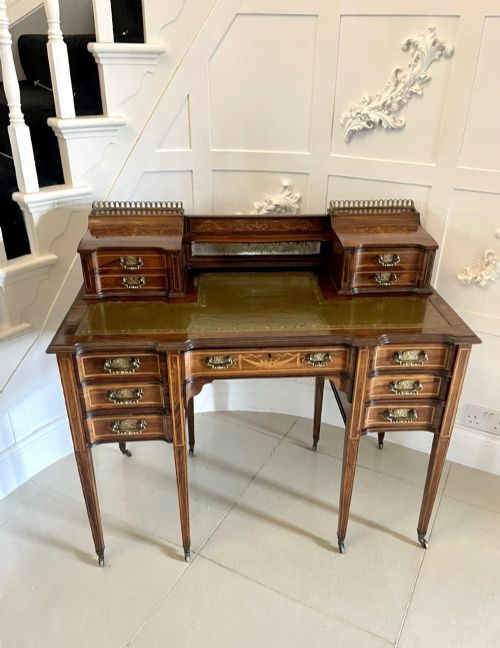
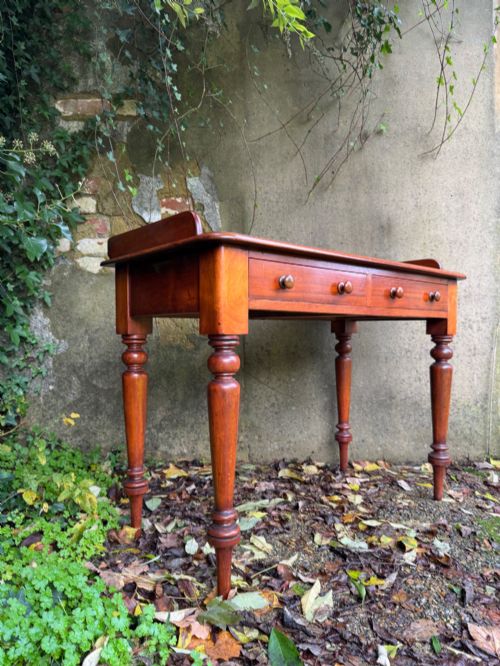
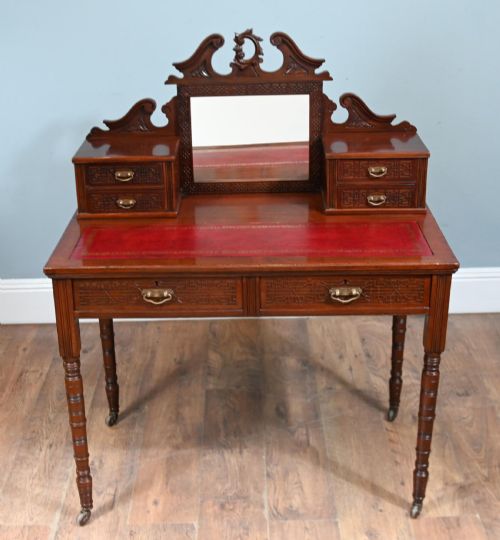
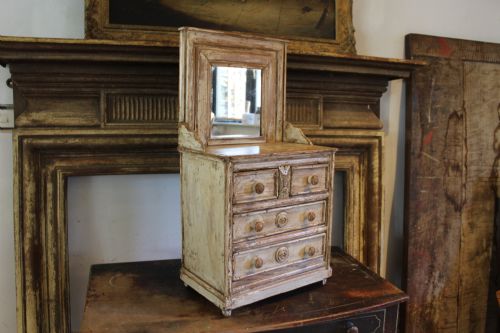
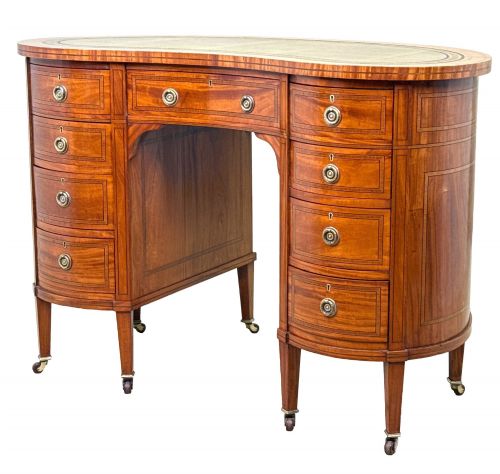
When searching for a victorian dressing bureau, a buyer encounters a diverse group of compact furniture designed for personal writing and grooming tasks. These pieces frequently appear as kneehole desks, kidney-shaped writing tables, and table mirrors fitted with small bureau compartments.
The most common examples on this page are constructed from mahogany and walnut, often taking the form of ladies' writing tables or compact desks. Originating mainly across the nineteenth century and into the Edwardian era, these items served intimate domestic spaces like bedrooms and boudoirs.
How they were made
Cabinet makers utilised dense hardwoods such as mahogany, walnut, and satinwood for the primary frames, frequently adding contrasting veneers and inlaid details. Structural durability relied on traditional joinery methods combined with turned wooden supports or slender cabriole legs.
Surface treatments included polished wood finishes alongside hand-decorated or painted panels, complemented by brass handles and inset leather writing surfaces. Specialised items incorporated bevelled glass mirrors and fitted interior compartments for stationery and cosmetics.
Victorian Dressing Bureau Retail Price Guide 2026
Typical asking prices for victorian dressing bureau among the pieces listed under this phrase on Sellingantiques today, from the lower quarter to the upper quarter. They describe what is for sale here now, not the wider market.
Listings feature items built from mahogany, satinwood, walnut, oak, and satin birch across the nineteenth and early twentieth centuries.
What varies in quality
The distinction between standard domestic pieces and superior examples lies in the selection of figured timber veneers and the intricacy of inlay work. Finer items exhibit precise cabinet construction with well-fitted internal drawers and carefully matched grain patterns across the primary surfaces.
Makers known for high-standard production incorporated superior brass hardware, delicate hand-painting, and harmonious proportions. The presence of original fitted compartments and undamaged leather inserts further elevates the character of a piece.
Edwards and Roberts·Heal and son·Harris Lebus
The Victorian Dressing Bureau Glossary
- Bonheur du jour
- A light lady's writing desk featuring a small tiered cabinet or super-structure on top. This French form gained popularity in various revival styles during the nineteenth century.
- Kneehole desk
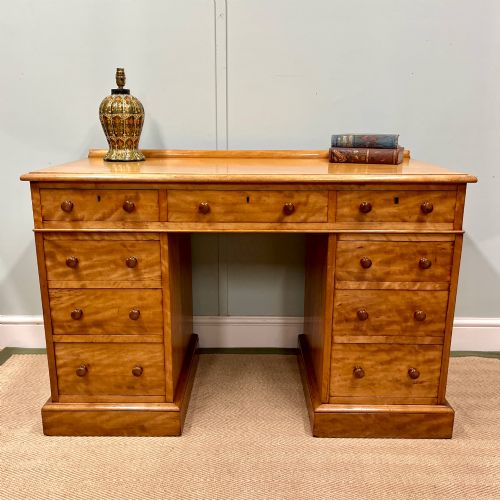
- A compact desk featuring a recessed central space for the legs, flanked by pedestals of small drawers. This form allows a seated user to work comfortably in smaller rooms.
- Bureau fitment
- A small internal arrangement of pigeonholes, small drawers, and compartments designed for organising letters and writing materials. It often sits behind a folding writing flap or beneath a table mirror.
- Satinwood
- A lustrous, yellow-toned hardwood native to India and Sri Lanka, utilised for fine cabinetmaking and decorative veneer work. It provides a bright contrast when used in banded or inlaid borders.
- Aesthetic Movement
- A late nineteenth-century design style emphasising simplicity, artistic refinement, and simplified forms often drawing inspiration from Japanese motifs.
Victorian Dressing Bureau: Frequently Asked Questions
What is a bureau fitment?
A bureau fitment refers to the internal arrangement of small drawers and pigeonholes designed for holding stationery.
These compartments are typically integrated into table mirrors or the upper section of a small desk.
How were these desks used?
These pieces served multiple domestic functions, including personal correspondence, diary writing, and grooming tasks.
Owners kept them in private sitting rooms and bedrooms for daily organizational duties.
Are these desks suitable for home offices?
Many compact nineteenth-century writing tables fit modern home office spaces well due to their modest dimensions.
Their shallow depth and integrated drawer storage provide a practical surface for laptop use.
How do I identify a Victorian piece?
Victorian furniture is identified through characteristic timber choices like mahogany and walnut, alongside period construction methods.
Stylistic influences range from plain utilitarian designs to Sheraton revival and Aesthetic Movement details.