


Victorian Drawer Pedestals
Victorian drawer pedestals are robust nineteenth-century storage pieces that anchor a room while keeping correspondence and daily essentials orderly.
Victorian Drawer Pedestals
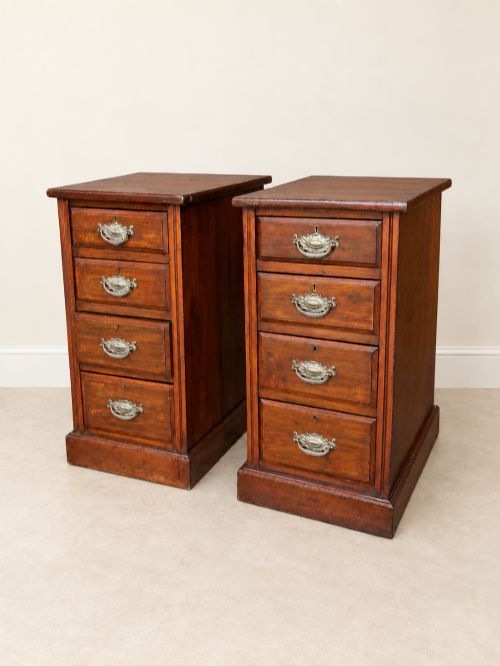
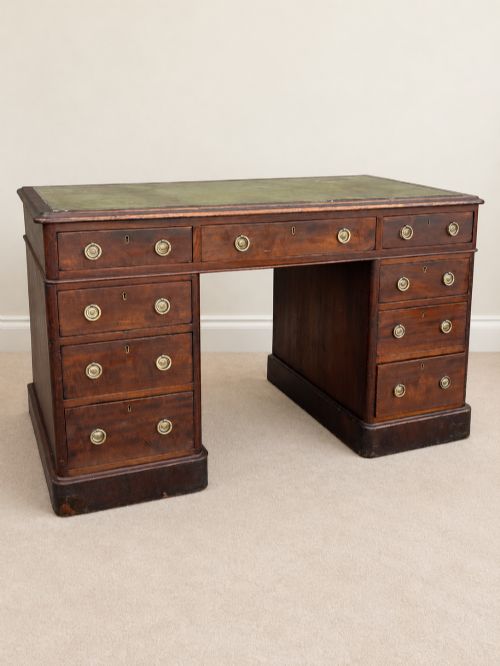
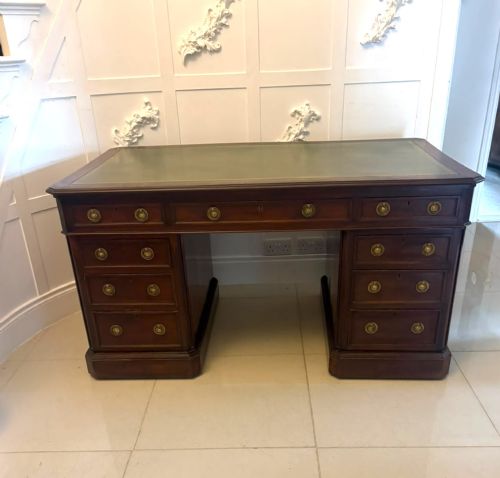
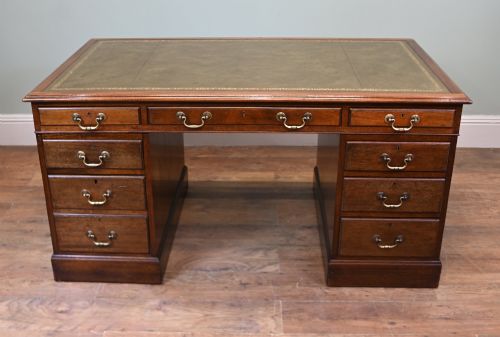
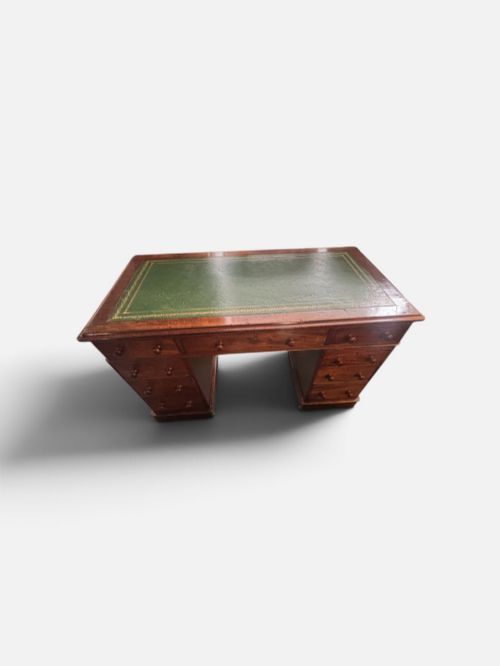
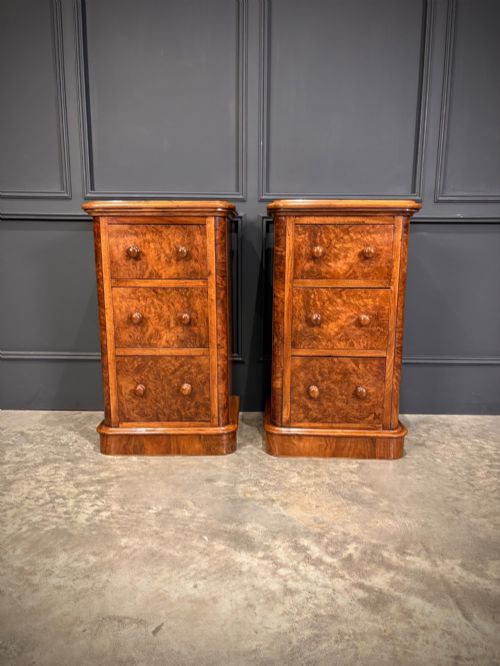
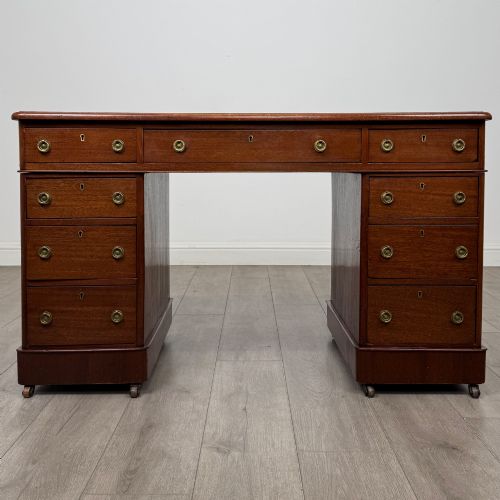
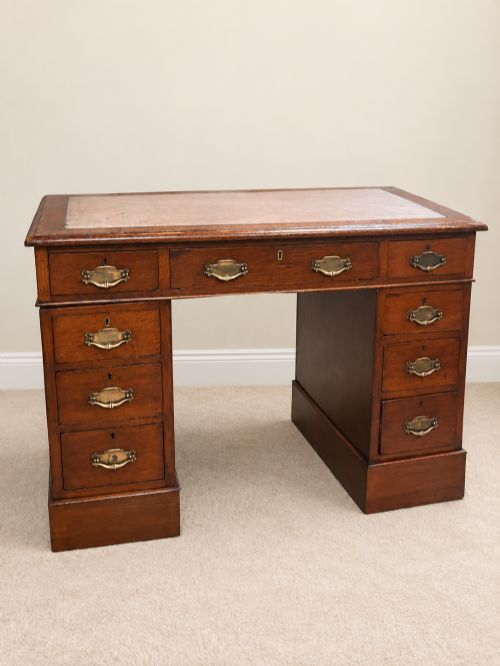
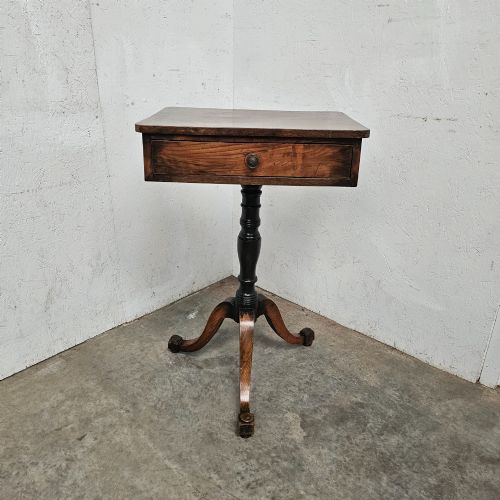
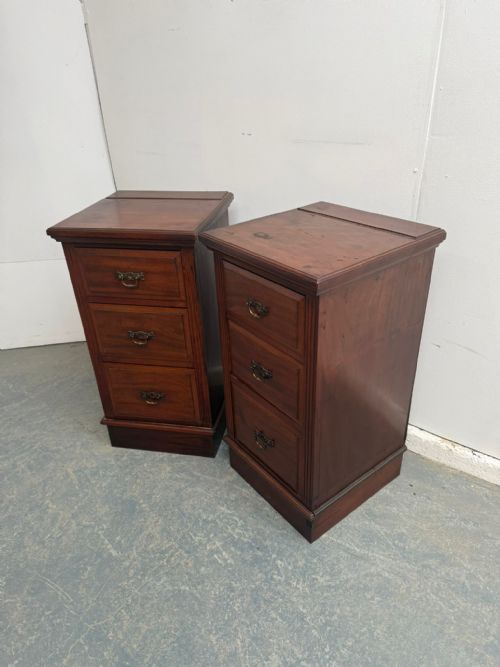
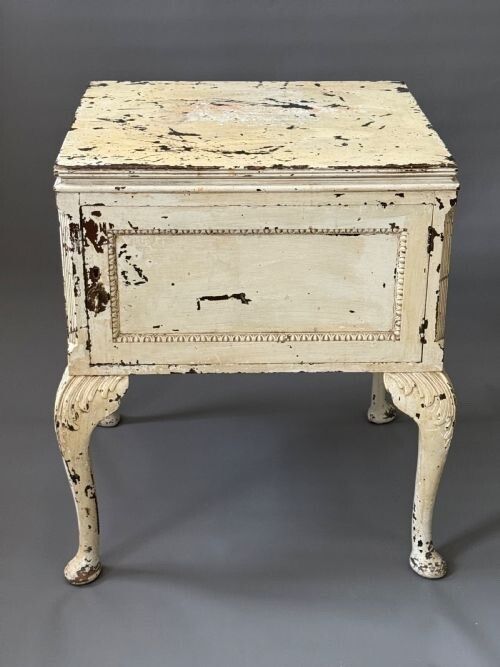
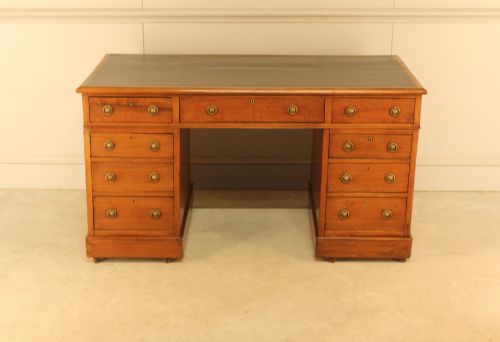
Victorian drawer pedestals encompass a variety of multi-drawer forms from the nineteenth century, most commonly seen here as kneehole desks, pedestal desks, and bedside chests. These items range from compact bedside pairs to large nine-drawer partner or kneehole writing desks designed for serious correspondence.
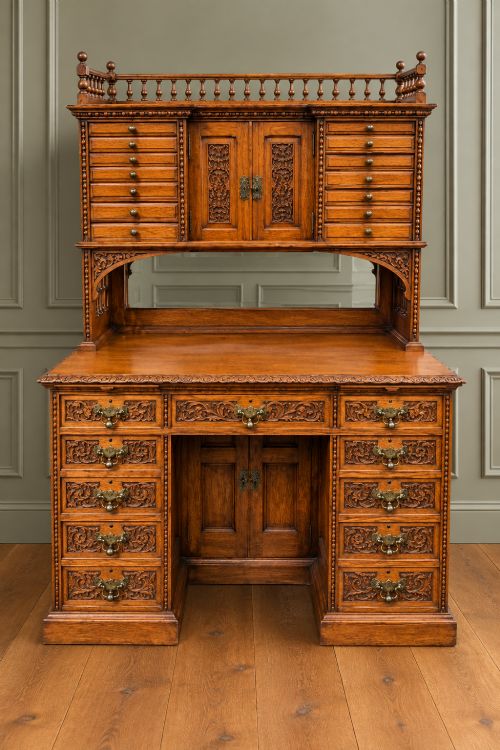
The material palette is decidedly nineteenth century, spanning dense hardwoods like mahogany and walnut, figured burr walnut, and robust oak alongside pitch pine and occasional lighter woods. Many pieces incorporate fitted interiors, such as stationery drawers and writing slides, alongside leather inset writing surfaces.
Stylistic influences stretch from classical revivals to utilitarian country pieces, reflecting the diverse manufacturing origins of the Victorian era. Whether configured as a freestanding desk or a pair of bedside nightstands, each piece serves a distinct functional purpose.
How they were made
Construction relies heavily on solid mahogany, oak, and walnut, often faced with highly figured burr walnut or rosewood veneers to enhance the visual depth of the exterior surfaces. Cabinetmakers utilised traditional dovetailed joinery for the drawer boxes and solid timber linings to ensure durability over generations of daily use.
Surface finishes typically include waxed or polished treatments that highlight the natural grain patterns of the wood, complemented by brass handles, pulls, and occasionally inset tooled leather writing panels. Secondary timbers such as pine appear in concealed structural elements and drawer carcases.
The inventory spans standard bedside chests up to large nine-drawer kneehole desks.
What varies in quality
The grade of a Victorian pedestal rests largely on the choice of timber and the complexity of its preparation, such as book-matched burr walnut veneers versus plain utility pine or oak. Superior examples display meticulous attention to secondary details like original brass hardware, fitted interior stationery compartments, and integrated writing slides.
Structural integrity also separates standard utility pieces from high-end cabinet work, visible in the precision of the drawer dovetails, the snugness of the kneehole framing, and whether the piece is finished on all sides for freestanding placement.
Edwards & Roberts·Hobbs & Co.·Mein of Kelso·Maple & Co
The Victorian Drawer Pedestals Glossary
- Kneehole desk
- A writing table featuring a central recess for the legs, flanked by two vertical stacks of drawers. These items provide substantial storage while maintaining a formal architectural symmetry.
- Burr walnut
- A highly prized timber veneer harvested from the gnarled growths of walnut trees, yielding swirling, organic patterns. Cabinetmakers utilised it on the primary facades of finer Victorian cabinetry.
- Pedestal desk
- A heavy freestanding desk supported by two independent banks of drawers that rest directly on the floor. They form the structural base of many nineteenth-century office and library interiors.
- Writing slide
- A pull-out wooden shelf positioned above the drawers to provide extra surface area for paperwork. Users tucked them away when not actively writing.
- Dovetail
- A traditional interlocking joint used to connect drawer sides to drawer fronts. Fine, tight spacing indicates skilled hand woodworking.
Victorian Drawer Pedestals: Frequently Asked Questions
How do I use a pedestal desk?
These desks serve as functional workspaces in studies or libraries, offering deep drawer storage for documents and stationery. Many include pull-out slides to extend the usable surface area while writing.
Positioning them freestanding allows the finished back panels to remain visible in the centre of a room. Pairing them with a comfortable antique chair completes the traditional workspace arrangement.
Are these pieces made of solid wood?
Most pieces combine solid structural framing with decorative wood veneers applied to stable core timbers. Premium hardwoods like mahogany and oak form the structural framework.
Finer decorative surfaces often utilise burr walnut or rosewood veneers over secondary woods. This technique prevented warping while displaying intricate natural grain patterns.
How do I care for leather desk tops?
Leather inserts require gentle cleaning with a soft, dry cloth to prevent dust accumulation. Specialist leather balms help maintain suppleness and prevent the material from drying out over time.
Avoiding direct sunlight prevents the leather from fading and cracking. Keeping moisture away from the surface preserves the tooled gold leaf borders.