

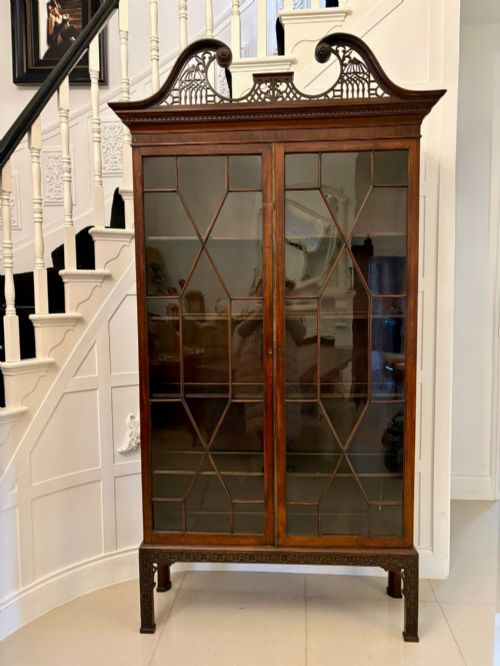
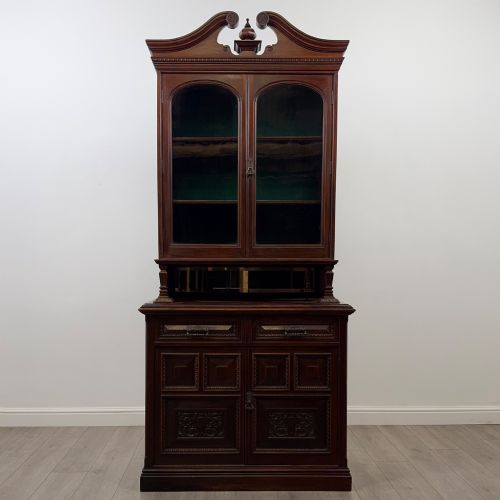
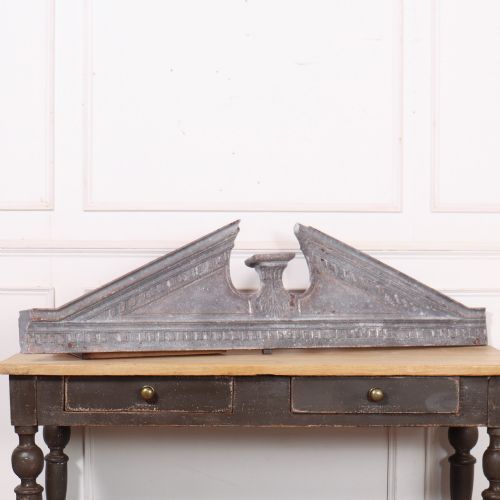
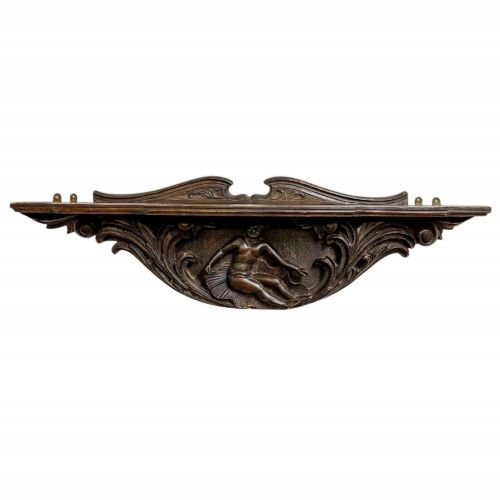
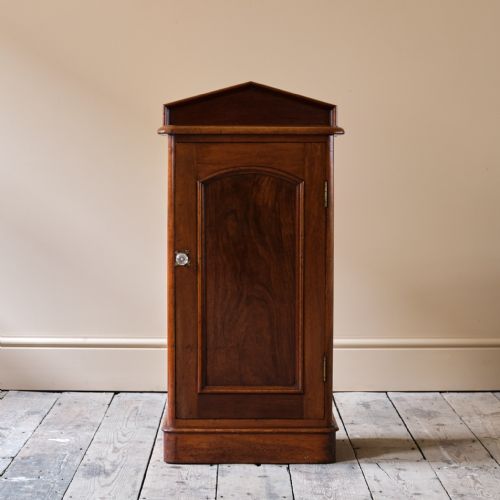


Victorian Door Pediment
These architectural salvage pieces bring grand nineteenth-century dignity to an interior, salvaged from above grand doorways and finished in rich timbers.
Victorian Door Pediment
A victorian door pediment sits above a doorway to frame an entrance with architectural presence, drawing the eye upward in a room. These decorative caps originate from nineteenth-century buildings, offering a distinct sense of period gravity.
The versions most commonly found here include large architectural overdoors carved from timber, occasionally featuring an integrated shelf or fine wood inlay. Forms span straightforward oak and mahogany panels to elaborate French chateau and revival styles.
Originating during the 19th century, these architectural salvage pieces transition naturally into modern domestic settings as striking wall decor or dramatic structural accents above interior openings.
Materials and construction
Cabinetmakers and joiners constructed these architectural elements from dense hardwoods like mahogany and oak, often enriching surfaces with intricate wood inlay or carved relief work. Selected pieces incorporate glass, zinc, and lead elements within their broader architectural frameworks.
Construction techniques rely on traditional joinery suited to heavy architectural salvage, utilising seasoned timbers designed to endure decades above busy entryways. Artisans shaped the wood through careful hand carving, resulting in the distinct profiles seen in neoclassical and gothic revival styles.
Victorian Door Pediment Retail Price Guide 2026
Typical asking prices for victorian door pediment among the pieces listed under this phrase on Sellingantiques today, from the lower quarter to the upper quarter. They describe what is for sale here now, not the wider market.
Some overdoors come fitted with a tiny display shelf, presumably for a modest bust or a very patient canary.
Assessing quality and craftsmanship
Quality rests in the crispness of the timber carving and the architectural ambition of the design, distinguishing standard joinery from exceptional artisanal execution. Finer examples display meticulous wood inlay and deep, purposeful relief work rather than shallow surface decoration.
The choice of primary timber also dictates the character of the piece, with figured mahogany and Pollard oak sitting at the upper end of the material scale. Proportions remain crucial, as balanced symmetry and harmonious neoclassical or gothic details separate superior architectural fragments from plain timber boards.
The Victorian Door Pediment Glossary
- Pediment
- An architectural crowning feature placed above a door, window, or bookcase. This element creates a formal focal point at the top of a structure.
- Architectural salvage
- Building components rescued from older structures for reuse in interior design. Salvaged pieces retain historical patina and authentic period manufacturing marks.
- Overdoor
- A decorative panel or pediment positioned directly above a door frame. These pieces elevate the perceived scale and grandeur of an interior threshold.
- Wood inlay
- Pieces of contrasting timber fitted into a recessed surface to form decorative patterns. This technique demands precise woodworking skills to achieve a flush, seamless finish.
- Neoclassical
- A style drawing inspiration from classical antiquity, featuring restrained symmetry and formal ornamentation. This aesthetic dominated much of the nineteenth century alongside gothic revivals.
Victorian Door Pediment: Frequently Asked Questions
How were these pediments originally used?
Carpenters mounted these decorative timber elements directly above interior or exterior doorways to give important thresholds a sense of monumental scale.
They served primarily as visual markers of status within a nineteenth-century home, drawing attention to high ceilings and formal rooms.
How can I hang a heavy timber pediment?
Due to the substantial weight of solid mahogany or oak, secure wall mounting requires fixing directly into wall studs or using heavy-duty masonry anchors.
Many examples feature integrated shelves or flat backing surfaces that assist in stable installation against a wall.
How do I identify a nineteenth-century piece?
Examination of the timber reveals period-specific tool marks, dry patination, and the natural oxidation of woods like oak and mahogany over generations.
Stylistic cues such as Victorian gothic revival motifs or neoclassical symmetry further anchor the object firmly in the 19th century.
Can these architectural salvage pieces be used outdoors?
Most timber and cast iron architectural salvage pieces listed here were designed for interior domestic spaces and lack weatherproof exterior sealants.
Placing them outside exposes vulnerable wood grain and joinery to moisture, risking rapid structural deterioration.