




Victorian Dog Picture
A victorian dog picture captures canine character through oil on canvas, delicate works on paper, and textured needlework.
Victorian Dog Picture
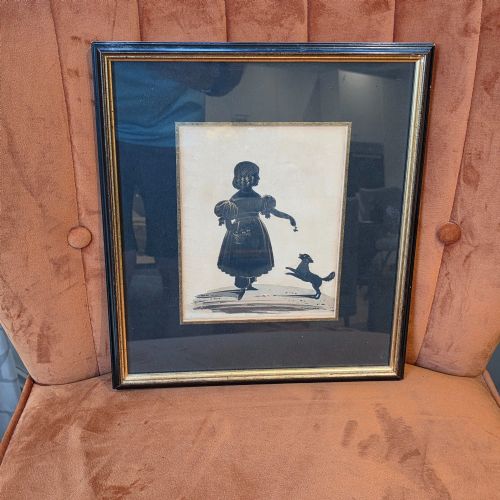
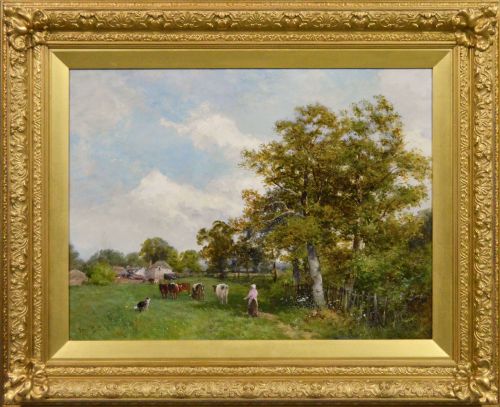
A victorian dog picture spans formal sporting art, intimate pastoral scenes, and detailed breed portraits created during the nineteenth century. Buyers encounter oil paintings on canvas or board alongside paper works such as lithographs, etchings, engravings, and silhouettes.
The selections range from individual studies of terriers and retrievers to larger hunting compositions featuring hounds and gun dogs in landscapes. Many pieces reflect the era's fascination with domestic animals and working dogs set within pastoral or rural environments.
Materials and Technique
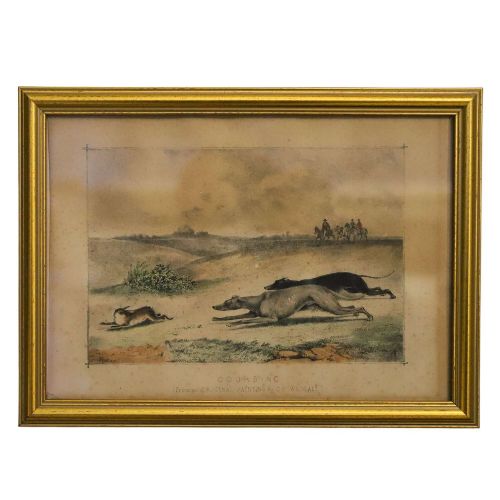
Artists employed oil paint on stretched canvas or wooden panels, applying rich glazes to render animal coats and naturalistic backgrounds. Works on paper utilised lithography, etching, engraving, and watercolor, frequently housed behind glass within original wooden or gilt frames.
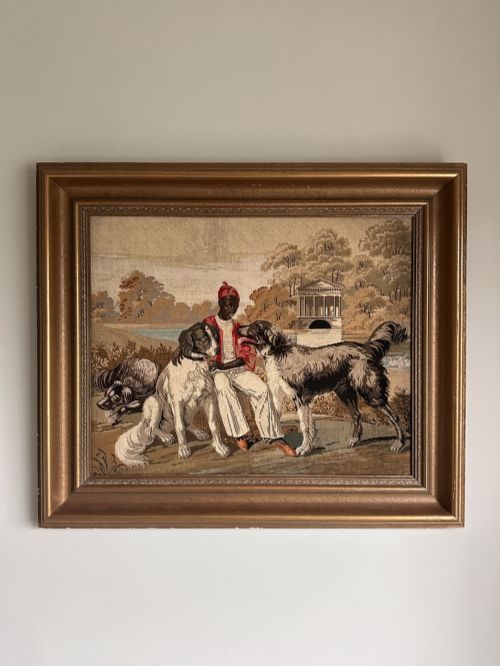
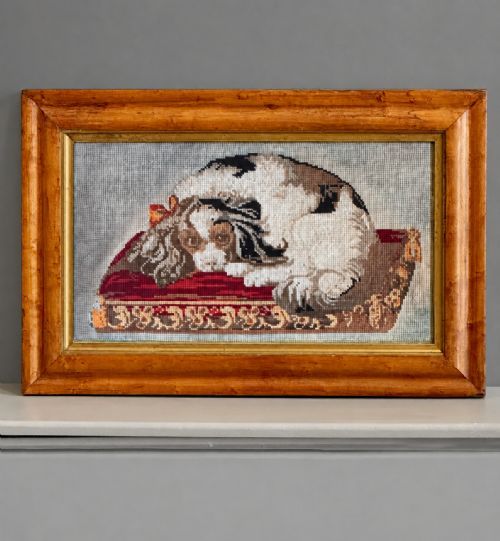
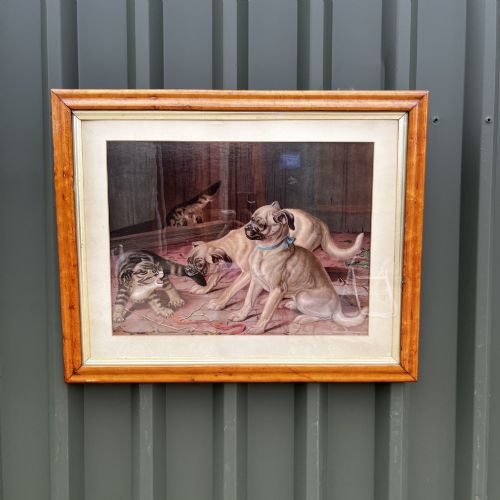
Alternative media appear in needlework textiles using Berlin wool work and cut paper silhouettes mounted on card. Surviving pieces often retain their period framing, utilising burr maple or gilded wood enhanced with gold leaf.
Victorian Dog Picture Retail Price Guide 2026
Typical asking prices for victorian dog picture among the pieces listed under this phrase on Sellingantiques today, from the lower quarter to the upper quarter. They describe what is for sale here now, not the wider market.
Listings feature works from the nineteenth and early twentieth centuries, spanning oil on canvas, paper prints, and needlework textiles.
Assessing the Workmanship
Quality rests upon anatomical precision, expressive handling of the animal's coat, and the vitality of the composition within its landscape. Finer works demonstrate a sure command of light and texture that elevates the subject beyond a mere record.
The preservation of the original surface, whether unlined canvas or crisp paper margins, alongside period framing contributes significantly to the integrity of the piece.
William James Hubard·David Bates·C. H. Weigall·Horatio Henry Couldrey·Claude Cardon·John Emms·Arthur Wardle·Herbert Dicksee·Augustin Edouart·Sir Edwin Landseer·Colin Graeme Roe·Alfred Duke·Robert Cleminson·Charles Burton Barber·Frank Dadd·Thomas Blinks·John Parry·Samuel Fulton·Samuel John Egbert Jones
The Victorian Dog Picture Glossary
- Chromolithograph
- A multi-coloured print produced through lithography, allowing for vibrant reproduction of original paintings. This technique gained popularity during the nineteenth century for mass-producing accessible artwork.
- Berlin Work
- A style of needlework embroidered in wool on canvas using charted patterns. Victorian examples often depict animals and pastoral scenes in rich polychrome threads.
- Etching
- A printmaking process where lines are bitten into a metal plate with acid before being inked and pressed onto paper. The resulting image offers fine linear detail and tonal depth.
- Lithography
- A planographic printing method based on the repulsion of oil and water on a limestone or metal plate. It enabled accurate translation of drawings and paintings onto paper sheets.
Victorian Dog Picture: Frequently Asked Questions
How do I identify a Victorian dog painting?
Look for period framing materials such as burr maple or heavy gilt wood that match nineteenth-century manufacturing techniques. Canvas types, stretcher bars, and handwritten inscriptions on the reverse often provide clues to the age.
Examine the style of clothing or landscape elements depicted in the background, which typically reflect Victorian aesthetic conventions and sporting traditions.
Were these pictures meant for framing?
Most works, including oil paintings, watercolours, and finished prints, were intended to be framed and displayed within domestic interiors. Engravings and lithographs were frequently purchased unbound and framed according to individual taste.
Needlework pieces and silhouettes were likewise mounted and glazed to protect the delicate textiles and paper from dust and environmental damage.
How should I care for an antique dog painting?
Keep works out of direct sunlight to prevent fading in paper, watercolours, and oil pigments. Maintain a stable indoor climate to protect wooden frames and canvas from warping or cracking.
Dust surfaces gently with a soft, dry brush and avoid using chemical cleaning agents on the painted canvas or the antique framing.
What is the difference between an oil painting and a chromolithograph?
An oil painting is a unique, hand-painted artwork created with pigment suspended in drying oil applied directly to canvas or board. Brushstrokes and texture remain visible upon close inspection.
A chromolithograph is a printed reproduction created by applying multiple coloured inks in layers, resulting in a smooth surface pattern designed to mimic the appearance of a painting.