





Victorian Dial Barometer
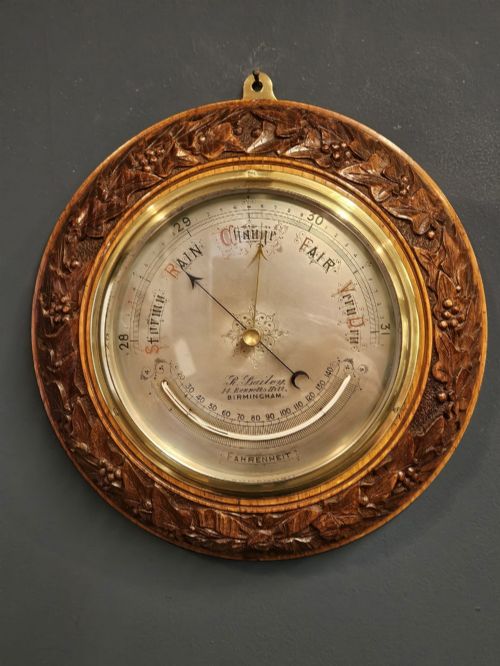
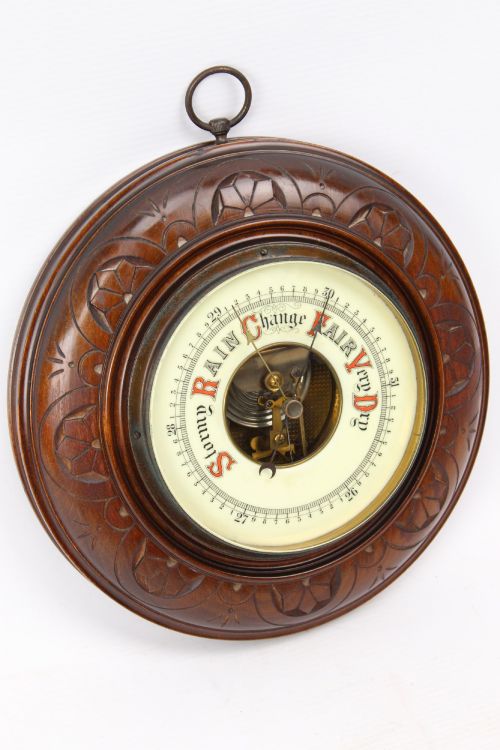
A victorian dial barometer measures atmospheric pressure while anchoring a room with polished timber and engraved metal.
Victorian Dial Barometer
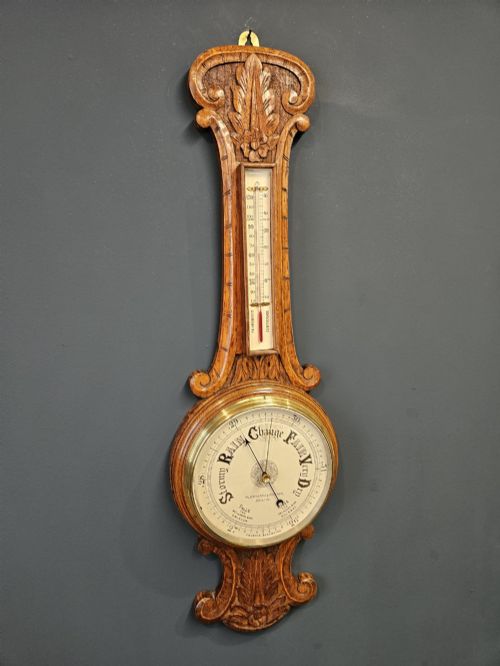
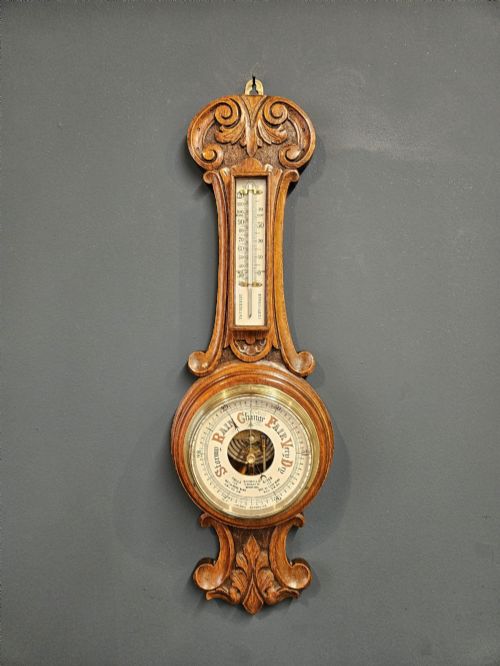
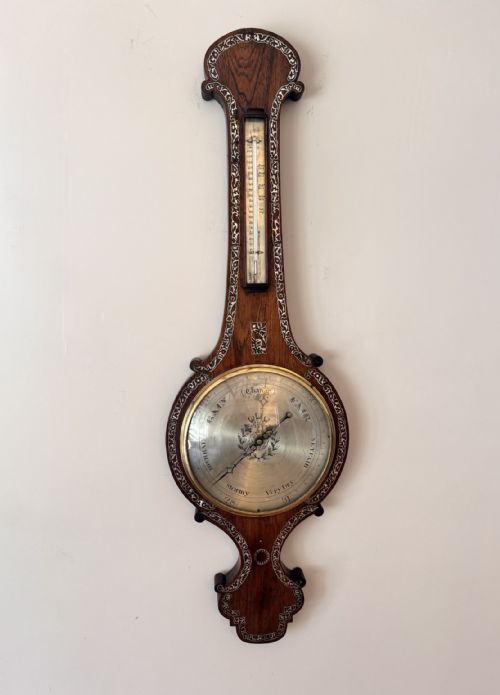
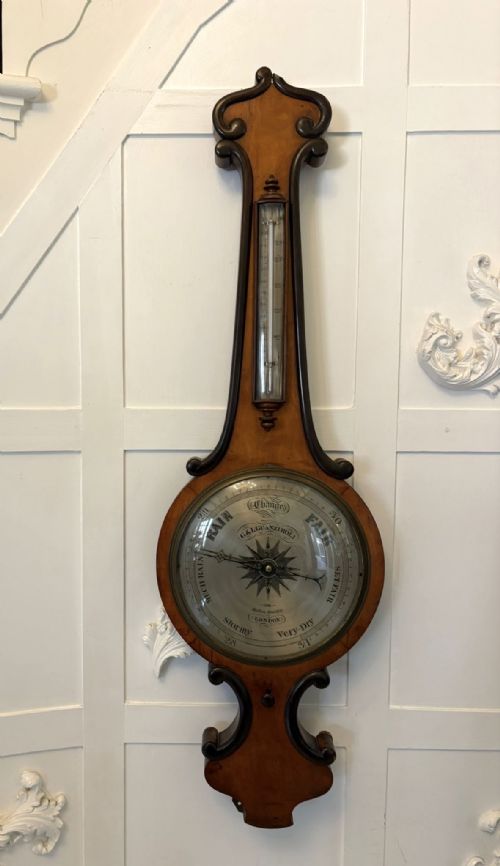
A victorian dial barometer sits primarily in wheel or banjo configurations, displaying weather changes on a circular engraved plate rather than a long vertical column. These instruments emerge predominantly from the nineteenth century, spanning decades from the eighteen-fifties through the Edwardian transition.
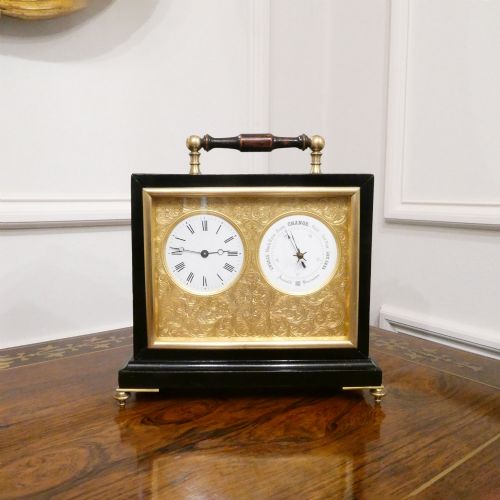
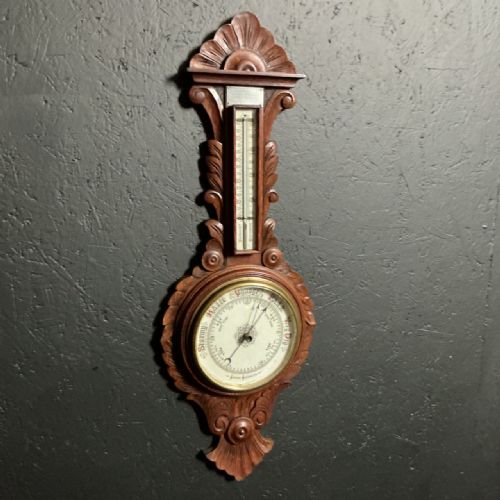
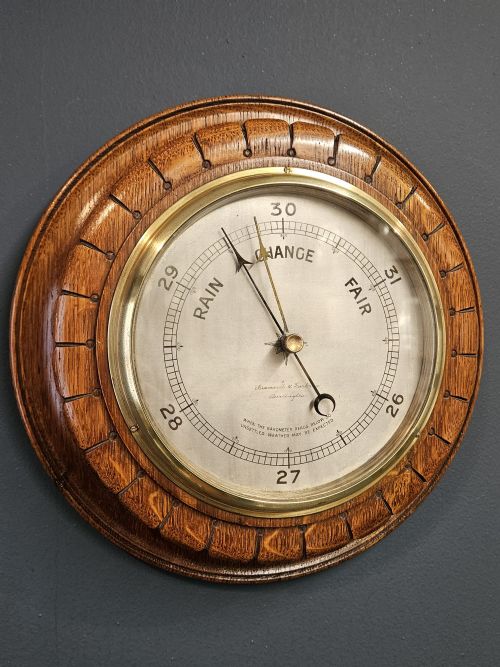
Makers housed these movements in domestic wall pieces alongside ships instruments and desk compendiums, adapting the dial format for various interior settings. Oak, rosewood and mahogany predominate the timber chassis, often featuring carved motifs or mother of pearl inlay.
Materials and Construction
Workshops combined dense hardwoods like mahogany, walnut and rosewood with precision brass mechanisms and protective bevelled glass lenses. Cabinetmakers shaped the timber housings into curving banjo profiles or robust carved oak wall cases.
Dials utilised silvered metal, ceramic or porcelain, carrying engraved numerical scales and descriptive weather legends driven by mercury tubes or aneroid capsules.
Victorian Dial Barometer Retail Price Guide 2026
Typical asking prices for victorian dial barometer among the pieces listed under this phrase on Sellingantiques today, from the lower quarter to the upper quarter. They describe what is for sale here now, not the wider market.
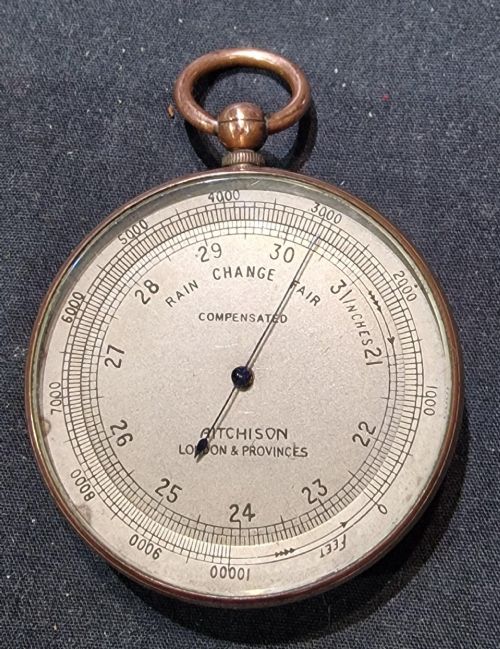
The evidence records desk compendiums, banjo barometers, stick barometers, and combined clock and barometer instruments from the Victorian era.
Standards of Execution
Distinction in these instruments rests upon the crispness of the dial engraving, the depth of the cabinet timber carving, and the overall integrity of the movement. Finer examples retain original mercury columns or clean aneroid linkages alongside unpolished brass bezels.
Makers who signed their dials contributed to higher standing, as demonstrated in surviving pieces bearing maker inscriptions from London and regional centres. Secondary quality appears in simpler casework with mechanical replacements or worn dial silvering.
Short and Mason·G and L Guanziroli·Bramwell and Harbron·Maple and Co·Callaghan and Co·Blake and Son·Dollond of London·M Pillischer·Negretti and Zambra·James Murray
The Victorian Dial Barometer Glossary
- Aneroid barometer
- An instrument that measures air pressure using an expanding metal capsule without liquid mercury. This design allowed smaller, portable formats for desk and wall use.
- Banjo barometer
- A wall instrument shaped like a banjo where the upper dial connects to a lower bulbous cistern cover. This silhouette dominated nineteenth-century domestic weather instruments.
- Silvered metal
- A brass plate treated with a silver coating then engraved with graduations and lettering. The contrast makes pressure readings legible against the metallic background.
- Wheel barometer
- A mercurial instrument where a float inside the tube connects to a pulley and needle on a circular dial. Changes in mercury height rotate the pointer across the face.
Victorian Dial Barometer: Frequently Asked Questions
How do I read a dial barometer?
The pointer indicates barometric pressure in inches of mercury or descriptive weather terms engraved on the dial face. Tapping the glass gently settles the linkage to show the true reading.
Rising pressure points toward fair weather while falling pressure indicates approaching rain or storm conditions.
Can these barometers be calibrated?
Most aneroid models feature a small adjustment screw on the back to match local barometric readings obtained from a standard meteorological source. Mercurial instruments generally rely on fixed glass tubes set during initial assembly.
Moving an instrument to a different altitude requires resetting this calibration to ensure accurate local forecasts.
Where should I hang a wall barometer?
Select an interior wall away from direct sunlight, heating radiators and heavy vibrations from doors. Consistent ambient temperature prevents undue stress on the internal metal linkages and wood case.
Ensure the hanging bracket securely supports the weight of the timber and glass housing.
What is the difference between mercury and aneroid?
Mercury barometers use a column of liquid metal balancing against atmospheric pressure in a traditional glass tube. Aneroid versions utilise a sealed corrugated metal box that flexes with pressure changes.
Aneroid mechanisms appeared more frequently in smaller or portable formats during the later nineteenth century.