

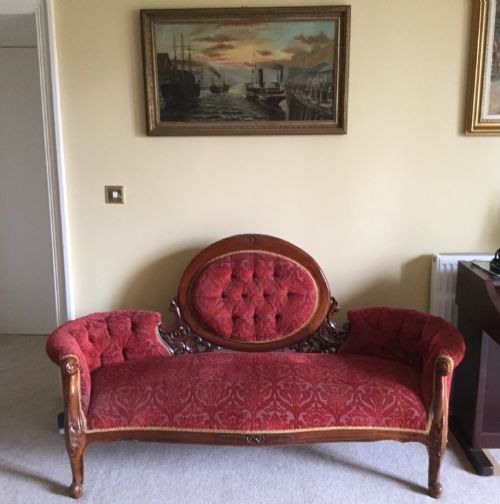
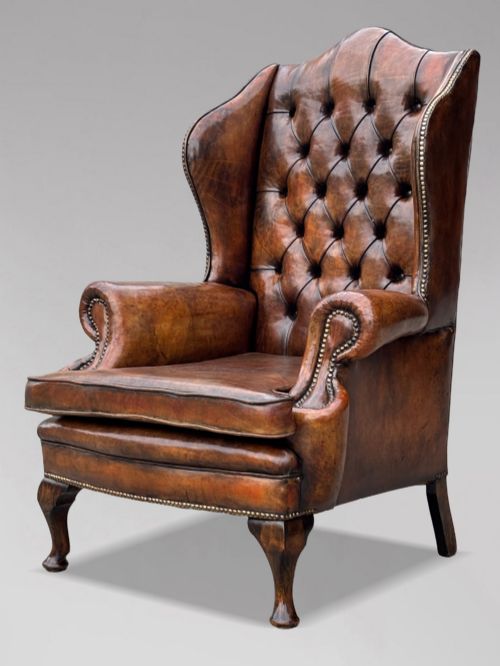
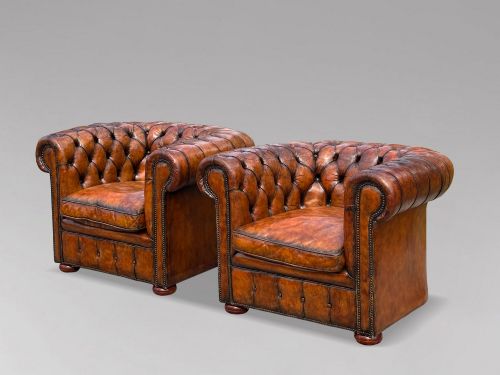
Victorian Deep Button Chair
When you search for a victorian deep button chair, you are looking at substantial upholstered seating designed for deep comfort and formal rooms.
Victorian Deep Button Chair
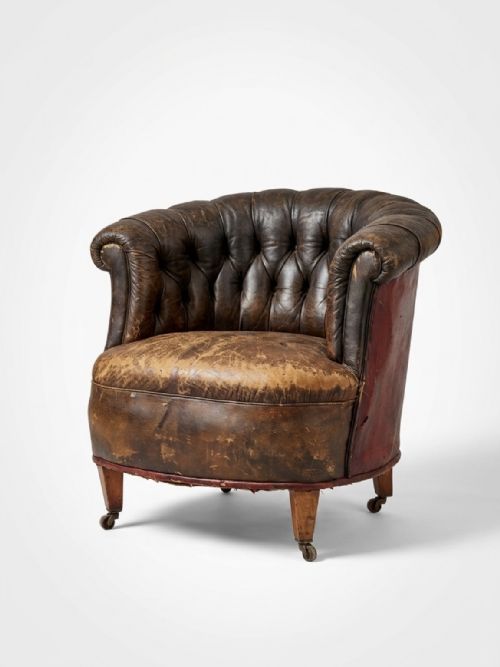
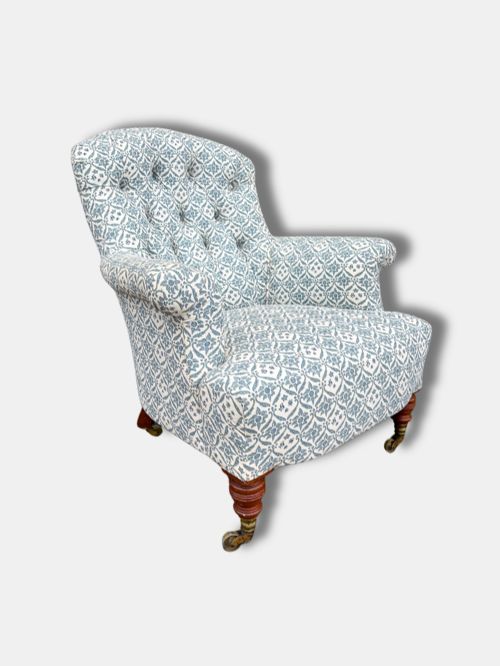
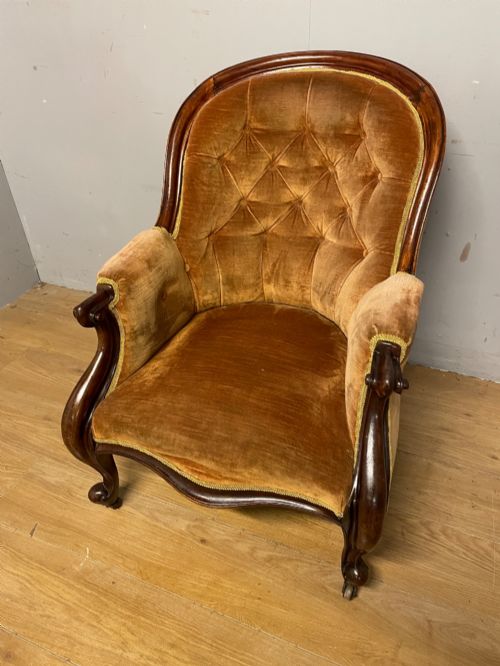
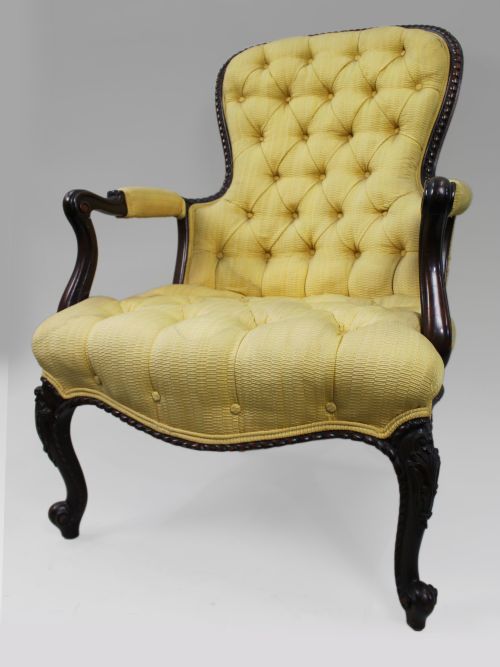
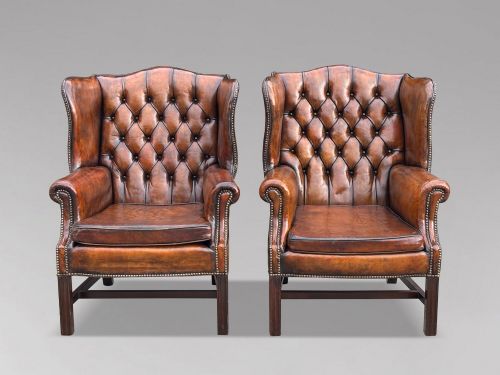
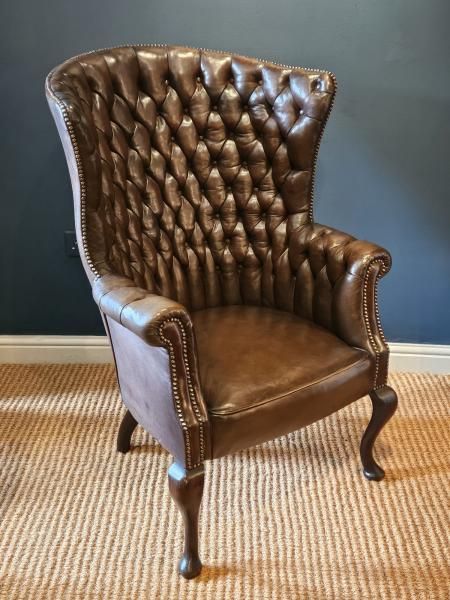
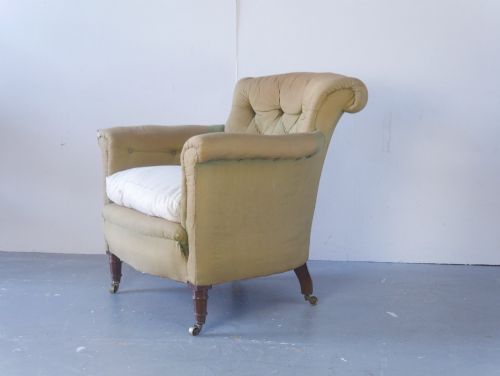
A victorian deep button chair covers a wide variety of domestic seating, from library armchairs and club chairs to low nursing chairs and compact tub chairs. Most pieces on this page originate from the nineteenth century, spanning Victorian, Regency, and Edwardian periods.
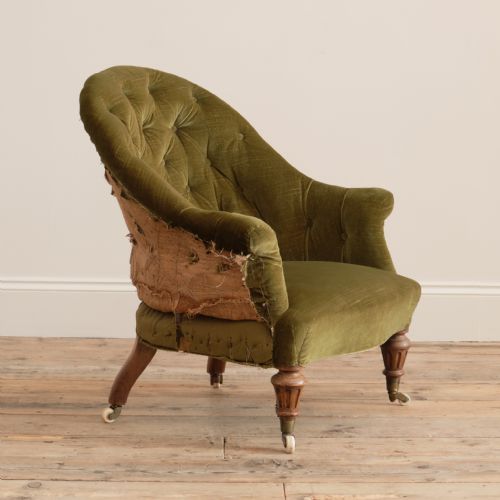
Makers often utilised mahogany, oak, walnut, and rosewood for the exposed wooden frames, whilst upholstery ranges from supple brown and green leather to heavy velvet, brocade, and calico.
Materials and Technique
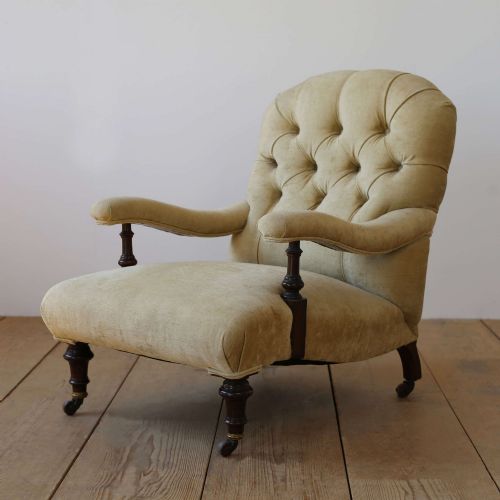
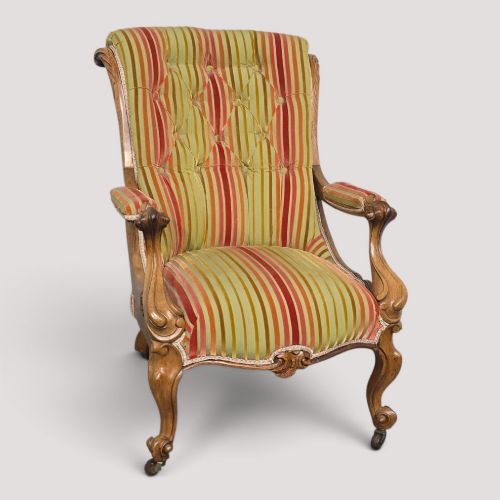
Frames were constructed from solid timbers such as mahogany and oak, shaped with carved details or supported by brass castors and turned wooden legs. The signature buttoning technique involves pulling the upholstery tight with twine and securing it deep into the stuffing to create distinct geometric diamond patterns.
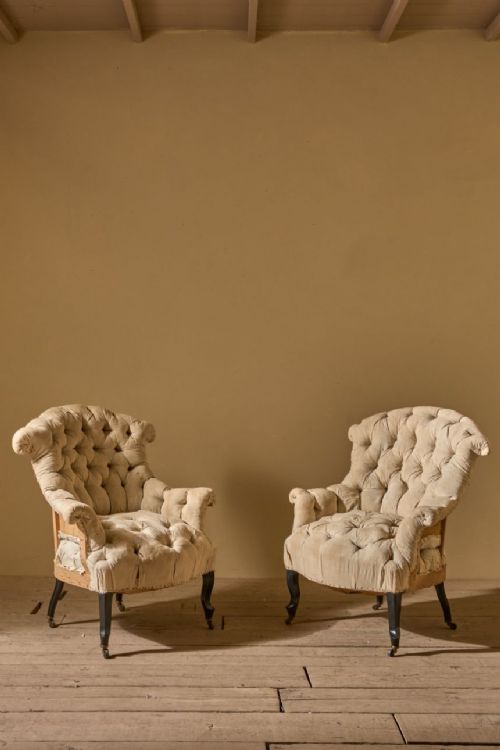
Traditional stuffing materials like horsehair and hessian were layered over sprung seat bases to provide durable support and resilience for everyday use.
Some nineteenth-century makers even adapted faux bamboo beech to create surprisingly sturdy rocking chairs.
Quality and Construction
The distinction between standard commercial production and finer workshops lies in the integrity of the internal springing and the precision of the timber frame. Pieces originating from prominent makers display superior carving work and heavier gauge timber beneath the upholstery.
Upholstery execution separates ordinary items from superior examples, visible in the tension of the leather or fabric and the uniform depth of the buttoning across the back.
Howard and Sons·Holland and Sons·Gillows Of Lancaster·Mellier and Co
The Victorian Deep Button Chair Glossary
- Deep buttoning
- An upholstery method where tufting buttons are pulled tightly through the padding and secured to the frame, creating recessed dimples. This technique keeps the internal stuffing firmly distributed.
- Library armchair
- A sturdy, wide-seated chair designed for reading rooms and studies, frequently upholstered in dark leather. These pieces prioritise robust wooden frames and padded armrests.
- Nursing chair
- A low-seated Victorian chair originally designed for nurseries and bedrooms, allowing the sitter to tend to children comfortably. They often feature spoon backs and diminutive proportions.
- Tub chair
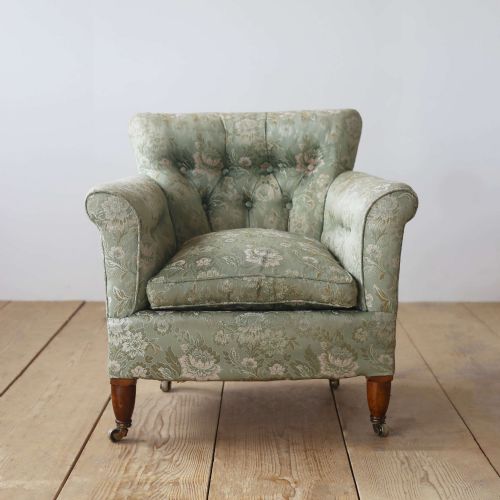
- An enclosed armchair where the curved backrest flows seamlessly into the arms. This style wraps around the sitter to block drafts.
- Chesterfield
- A traditional heavily upholstered form characterised by arms and back of the same height. These large pieces usually feature deep buttoning and leather hides.
Victorian Deep Button Chair: Frequently Asked Questions
What is a deep button chair?
A deep button chair is nineteenth-century upholstered seating featuring tufted buttons pulled deep into the padding to form diamond shapes. This method secures the internal stuffing and creates a firm, supportive surface.
Such chairs appear across various domestic forms, including reading armchairs, low nursing seats, and gentleman's club chairs.
How were these chairs used originally?
These chairs served as principal seating in Victorian libraries, drawing rooms, and studies where comfort and formal appearance mattered equally. Heavy leather versions suited masculine smoking rooms and offices, while velvet or fabric models filled domestic parlours.
Low varieties like nursing chairs were placed in bedrooms and private family spaces for ease of sitting.
How do I care for leather upholstery?
Leather-upholstered examples benefit from regular dusting with a dry cloth and occasional treatment with appropriate leather balms to prevent drying out. Direct sunlight and heat sources should be avoided to preserve the hide.
Maintaining a stable room climate prevents the natural timber frame from shifting and loosening the joinery.
How can I tell Victorian pieces apart from later copies?
Original Victorian pieces display period construction methods, including hand-carved solid mahogany or walnut frames, traditional joinery, and horsehair stuffing beneath hessian covers. Examining the underside often reveals age-darkened timber and hand-hammered tacks.
Later reproductions frequently utilise modern synthetic webbing, machine-made screws, and lighter modern woods.