


Victorian Decanter Caddy
A Victorian decanter caddy secures your finest spirits under lock and key while displaying cut crystal with unmistakable Victorian theatre.
Victorian Decanter Caddy
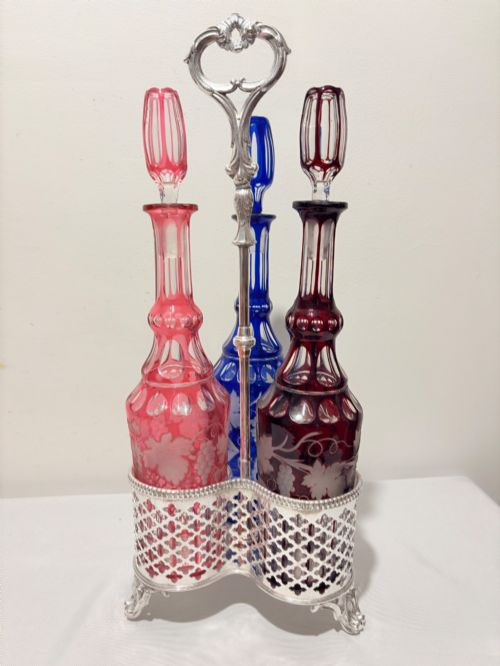
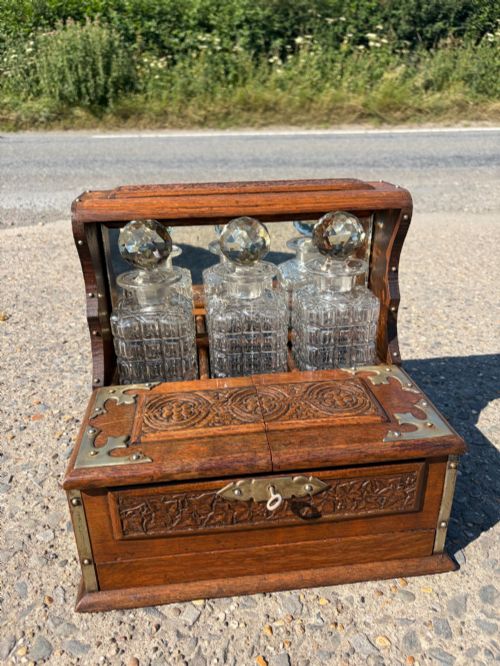
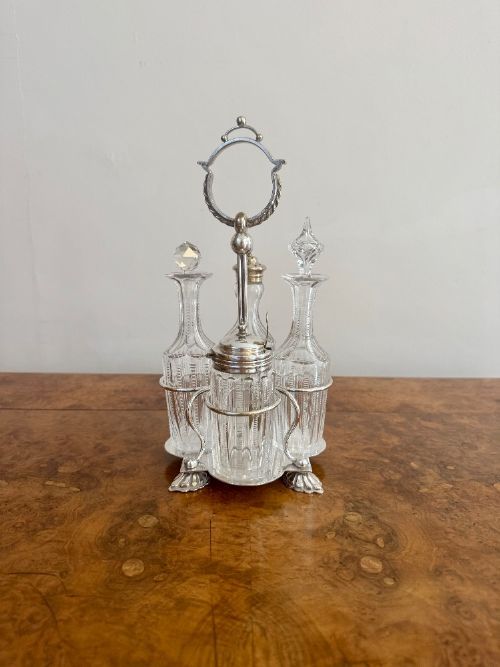
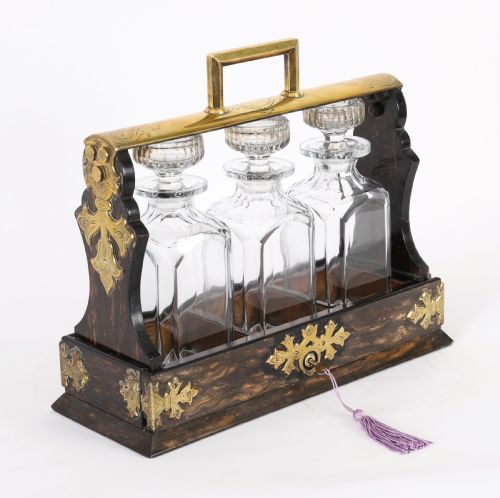
A Victorian decanter caddy brings together secure housing and spirit storage, frequently appearing on this page as an oak or coromandel wood tantalus fitted with cut crystal bottles. These pieces span the Victorian and Edwardian periods, alongside related barware forms such as silver plated cruet sets, liqueur stands, and barrel dispensers.
The primary forms range from lockable wooden frames designed to thwart thirsty household staff to open silver plated stands that showcase ornate decanters. Oak and coromandel dominate the wooden chassis, often reinforced with brass mounts, while silver plate provides the gleaming framework for bottle holders.
Alongside standard tantalus designs, the selection includes Black Forest cave de liqueur boxes, ceramic whisky carafes, and multi-bottle decanter frames. Each variation serves the fundamental purpose of entertaining guests with accessible yet secure hospitality.
Materials and Construction
Makers built the structural frames using solid timber like oak and walnut, frequently veneered with rich coromandel wood or inlaid with decorative motifs. Metal components relied on heavy silver plating over a base metal, paired with cast brass mounts to secure the locking mechanisms.
The glass elements - ranging from cut crystal decanters to frosted barrels and cranberry liquor bottles - utilised heavy-walled blowing and precise wheel-cutting techniques. Artisans integrated these fragile vessels into rigid metal or wooden frameworks lined to protect the glass from friction.
Distinctions in Quality
Quality rests in the weight of the silver plating and the depth of the hand-cut crystal facets on the decanters. Superior pieces employ dense hardwoods like coromandel and feature complex, fully operational locking mechanisms with working keys.
Refinement shows in the harmony between the metal mounts and the fitted timber chassis, where brass handles and shields fit flush against the wood. Lesser examples rely on thinner plated surfaces and simpler geometric glass moulding without hand polishing.
The Victorian Decanter Caddy Glossary
- Tantalus
- A locking drink cabinet that holds decanters securely within a metal bar preventing removal until the lock is opened. This clever device derived its name from the mythological figure of Tantalus, keeping the spirits tantalisingly visible yet out of reach.
- Coromandel Wood
- A dense, heavily grained exotic timber from Asia utilised for high-end Victorian cabinet work. Its dark brown colour and striking black stripes made it a favourite for luxury caddies and games boxes.
- Cruet Set
- A matched collection of glass bottles mounted in a metal frame for holding condiments, oils, or vinegars at the dining table. They share similar silver plated frameworks with smaller drink and liqueur stands.
- Cave de Liqueur
- A French-style liqueur casket containing a set of matching decanters and small glasses fitted neatly inside. These portable cellars often feature elaborate marquetry or carved wooden exteriors.
Victorian Decanter Caddy: Frequently Asked Questions
How does a tantalus lock work?
A vertical metal bar slides down over the stoppers of the decanters to block their removal from the wooden base. Turning a key in the integral lock raises this retaining bar, freeing the bottles for pouring.
Most mechanisms require the decanters to sit in precise positions before the locking bar can engage properly. Original keys add considerable authenticity to these pieces.
What is the difference between a tantalus and a caddy?
A tantalus specifically incorporates a locking mechanism that traps the decanter stoppers beneath a metal bar. A decanter caddy or stand generally holds the bottles in an open frame without necessarily locking them away.
Both forms belong to the broader category of Victorian barware designed to display and dispense spirits. Caddies often include built-in compartments for games or glasses alongside the bottles.
How do I date a silver plated decanter frame?
Dating relies on stylistic clues such as the weight of the base metal, the depth of the silver plating, and the cut of the glass decanters. Pieces from the 1870s often feature heavier cast mounts and distinct diamond registration marks.
Edwardian examples from around 1900 tend to show lighter construction and different aesthetic proportions. Examining the specific cabinet hardware helps narrow the manufacturing window.
Were these pieces used in dining rooms?
Victorian households placed these stands on sideboards in dining rooms, libraries, or smoking rooms to serve after-dinner drinks. They allowed hosts to offer spirits to guests while restricting unmonitored access by domestic staff.
The locking feature maintained control over expensive imported wines and spirits during an era of large domestic establishments.