
Victorian Davenport
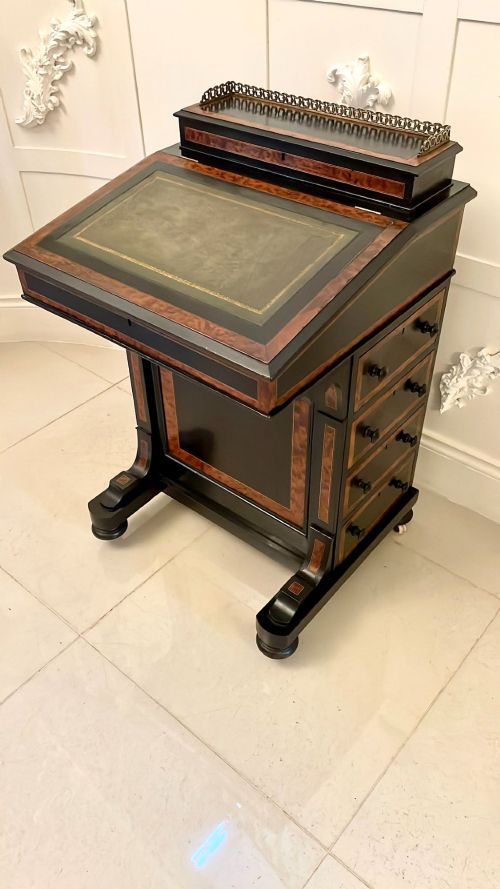
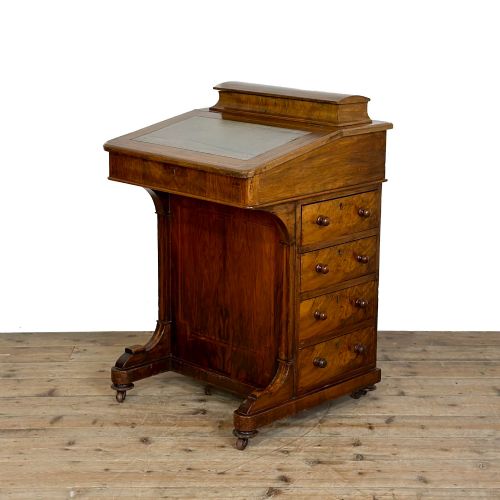
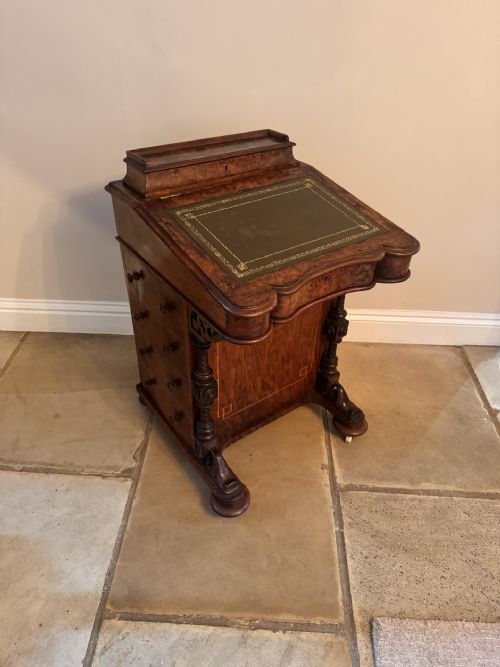
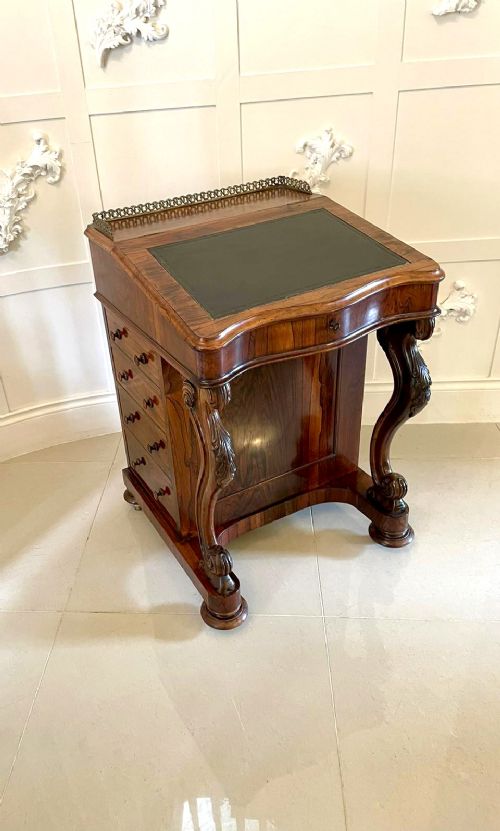
A Victorian davenport is a compact writing desk offering practical stationery storage and a sloping leather-lined surface beneath a stationary superstructure.
Victorian Davenport
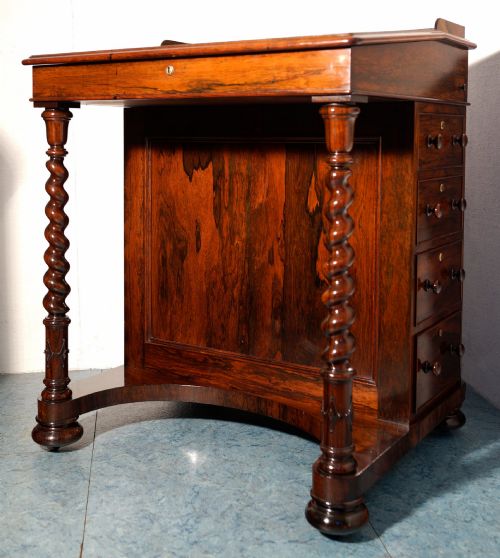
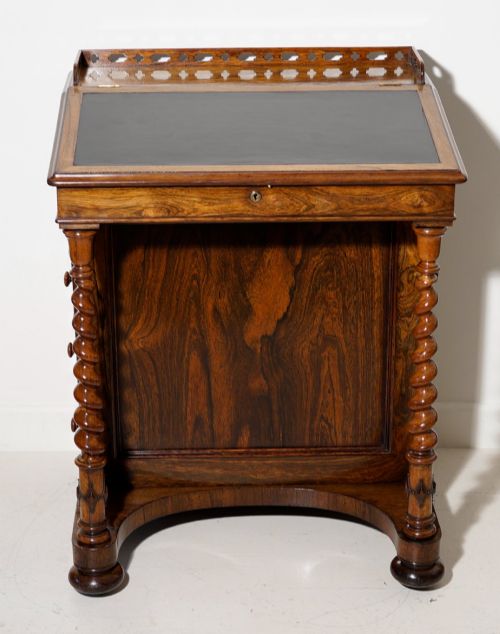
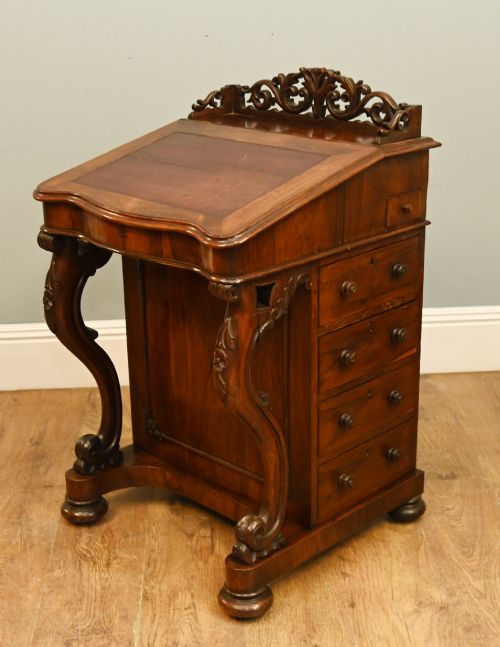
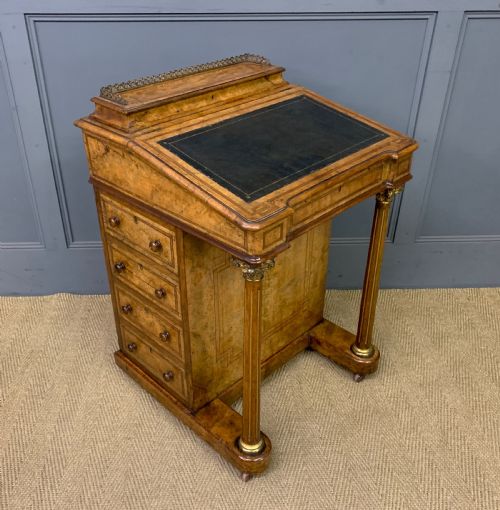
A Victorian davenport is a small writing desk developed during the nineteenth century, combining a compact workspace with integrated drawer storage. The pieces encountered on this page belong primarily to the Victorian period, alongside related examples from the Regency and William IV eras.
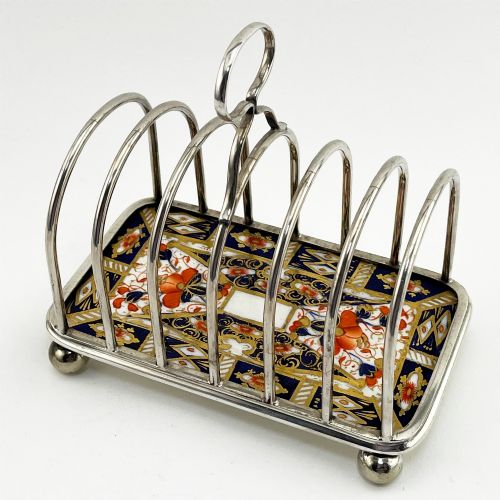
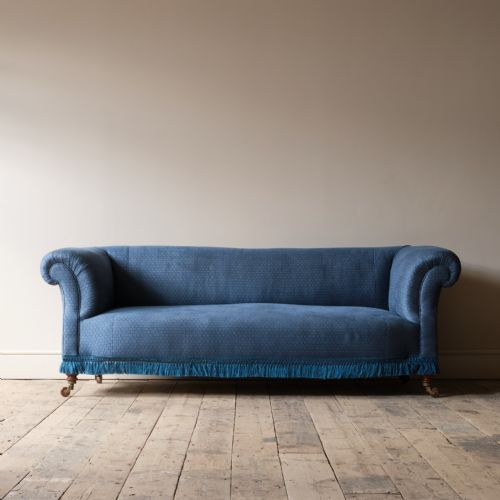
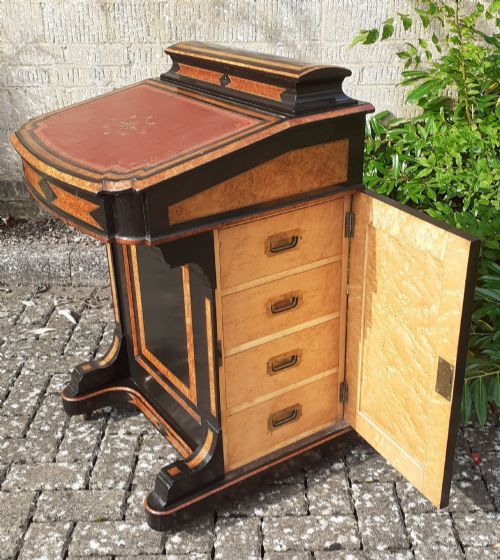
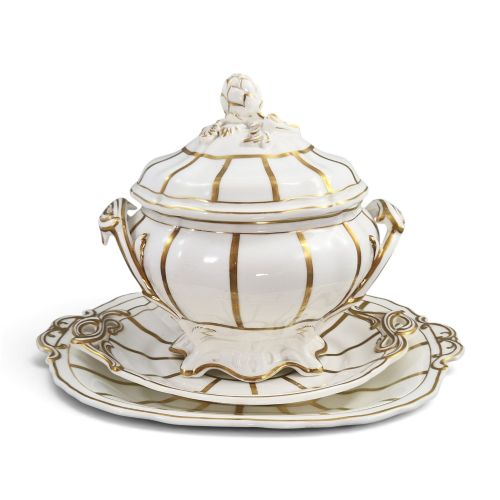
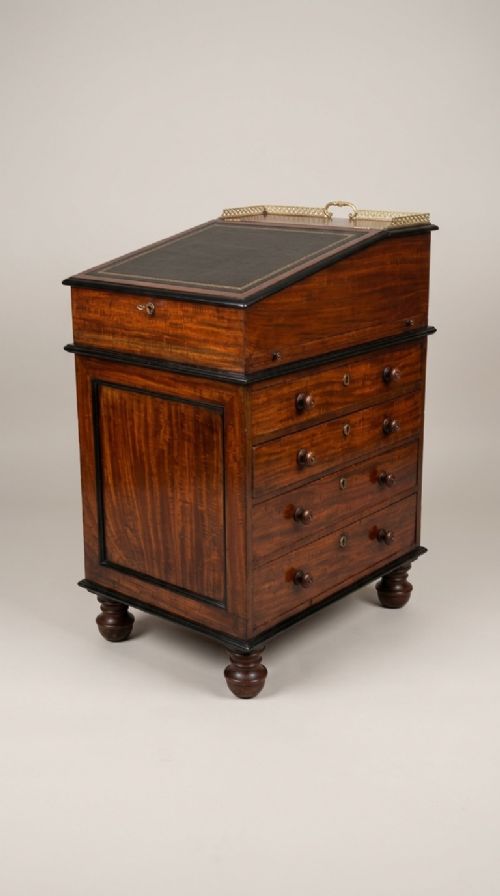
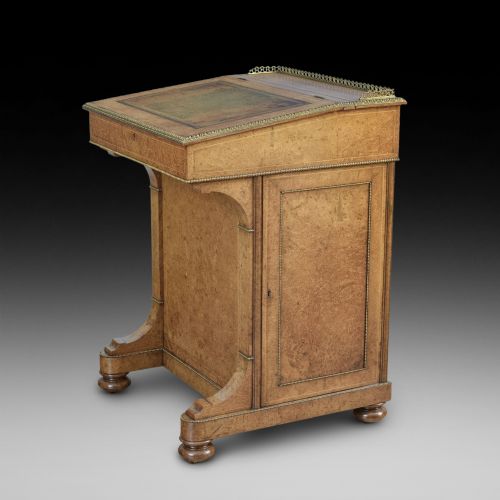
Most entries are freestanding writing desks featuring a sloping top, often accompanied by stationary compartments, interior satinwood fittings, or side drawers. Alongside desks, the evidence encompasses occasional divergent forms such as sofas, toast racks, and sauce tureens.
Materials and Technique
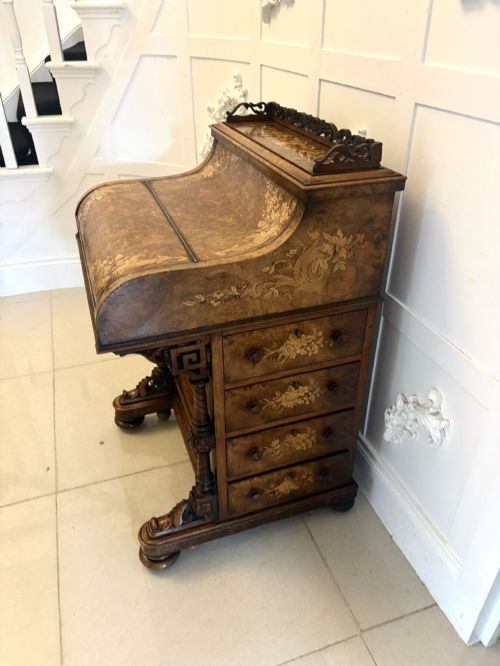
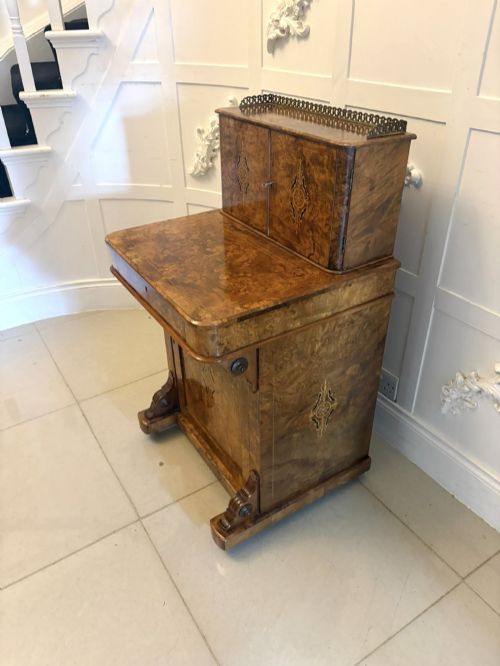
Cabinet makers utilised dense hardwoods such as mahogany, rosewood, walnut, and burr walnut, frequently applying crossbanding, ebonised accents, or floral marquetry to enrich the exterior surfaces. Brass mounts and leather writing inserts provide functional contrast to the polished timber.
Internal construction incorporates fitted stationary cabinets, pull-up mechanisms, and sets of drawers arranged along the sides. Structural variety spans standard pedestals to specialised piano-top formats and compact olivewood constructions.
Recorded forms include writing desks, Davenport desks, sofas, toast racks, and china sauce tureen sets.
Craftsmanship and Material Selection
Excellence in these desks rests on the choice of timber figures, such as burr walnut or figured mahogany, matched with precise inlay and crossbanding. The integration of secondary woods and the neatness of internal satinwood joinery distinguish superior pieces.
Design complexity also defines the tier of a piece, separating straightforward pedestal writing desks from elaborate pop-up variants or items bearing documented maker attribution.
Gillows·Gillows of Lancaster·Gillow and Co·Hampton and Sons
The Victorian Davenport Glossary
- Crossbanding
- A strip of veneer applied perpendicularly to the grain of the primary surface to frame a panel. This technique creates a neat border on desktop lids.
- Marquetry
- Pieces of veneer arranged in decorative patterns or floral motifs across a wooden surface. Such decorative work appears frequently on burr walnut models.
- Secretaire
- A desk featuring a pull-out or drop-front writing surface concealing internal pigeonholes and small drawers. It forms a core component of many writing cabinets.
- Satinwood
- A pale, durable exotic timber prized for contrasting interior drawer linings and small compartments. Cabinet makers deployed it to brighten desk interiors.
- Pedestal
- A box-like support structure containing drawers that underpins the writing surface on one or both sides. This arrangement maximises storage within a compact footprint.
Victorian Davenport: Frequently Asked Questions
How do I use a davenport desk?
Sit before the sloping lid, which provides a comfortable angle for handwriting while concealing your writing implements within the interior.
Store paper and envelopes in the superstructure or side drawers to keep your workspace tidy when the lid is closed.
Where were davenports placed in a room?
Because many examples are finished on all sides as freestanding pieces, they sat comfortably away from walls in Victorian parlours or drawing rooms.
Their compact proportions allowed them to occupy corners or tight spaces where larger partner desks would not fit.
How do I distinguish early Victorian from late Victorian models?
Early Victorian and William IV examples often rely on solid mahogany or rosewood with restrained decorative carving.
Later Victorian pieces increasingly favour burr walnut, ebonised details, marquetry, and complex pop-up stationery mechanisms.
Why do some davenports have side drawers?
Side drawers accommodate the kneehole space and allow the writer to remain seated while accessing stationery without standing up.
False drawers frequently balance the opposite side to maintain symmetry on freestanding desks.