




Victorian Crystal Vases
Victorian crystal vases bring the heavy brilliance and deep colours of the nineteenth century straight to a mantelpiece or table centre.
Victorian Crystal Vases
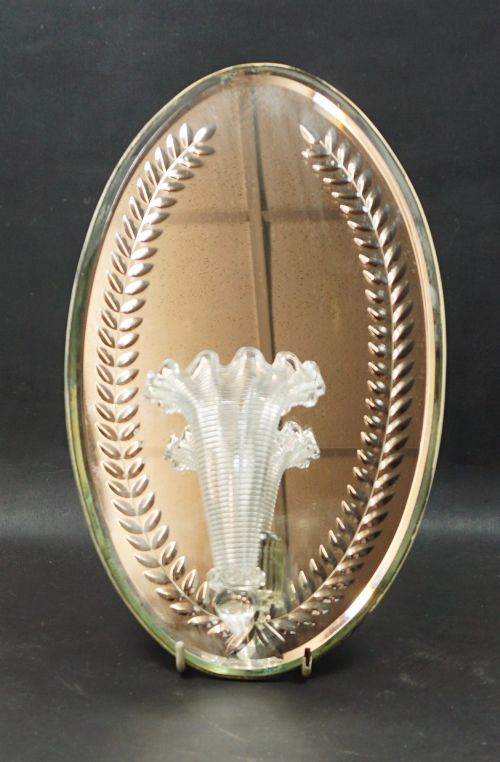
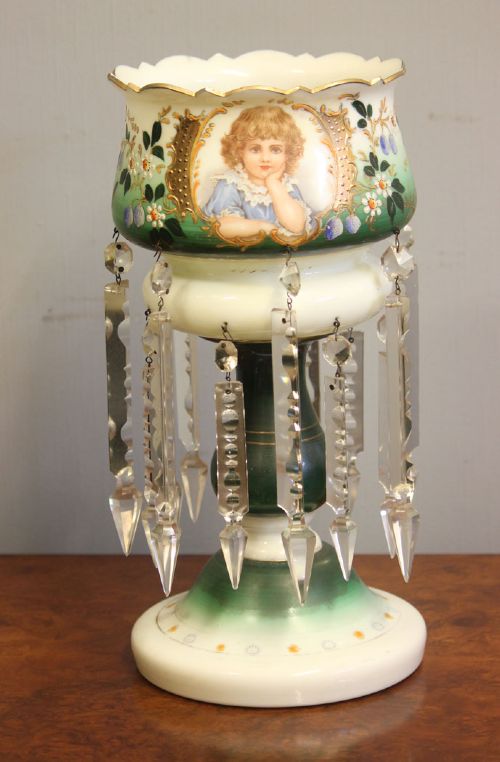
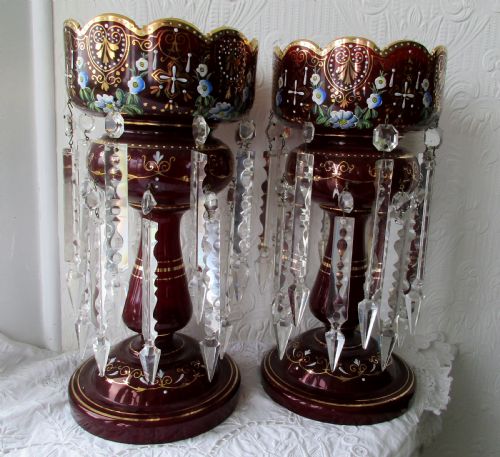
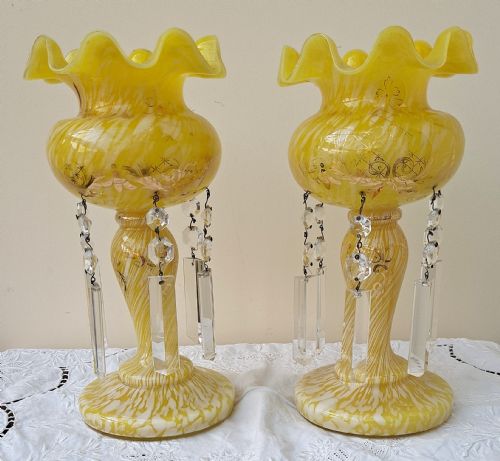
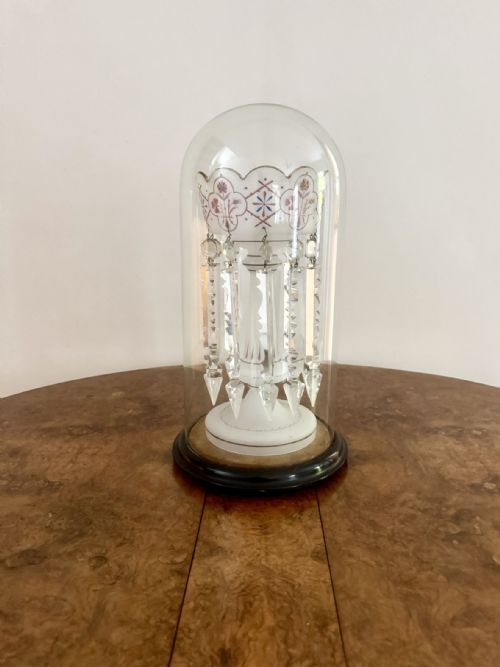
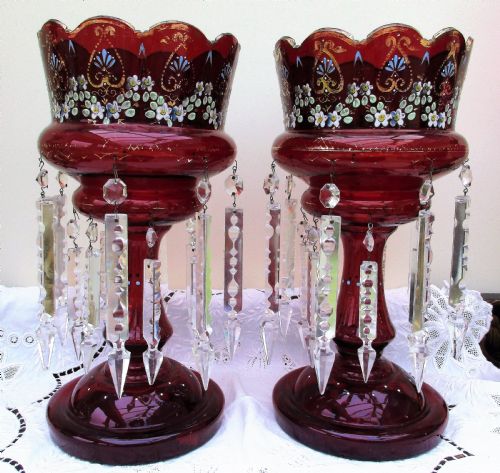
When you search for victorian crystal vases, you meet a range of heavy glass vessels that includes tall lily vases, lidded urns, and especially mantel lustres hung with glass prisms. These pieces span the nineteenth century, drawing on English, French, and Bohemian traditions of glassmaking.
The version you are most likely to encounter here is the ruby, cranberry, or green glass lustre designed to sit on a mantlepiece and catch the light. Alongside these stand cut crystal vases, overlay glass, and table centrepieces mounted with gilt bronze or carved wood.
How they were made
Makers shaped these heavy vessels from lead crystal and coloured glass, often utilising flash glass techniques where a thin layer of coloured glass covers a clear crystal base. Artisans then cut, etched, or wheel-engraved the surface to expose the clear glass underneath.
Many pieces incorporate applied details such as gold leaf, enamel, white cane decoration, and pink trails. Lustres and centrepieces frequently feature cast metal mounts, silver plating, or gilt bronze fittings alongside dangling crystal prisms.
Victorian Crystal Vases Retail Price Guide 2026
Typical asking prices for victorian crystal vases among the pieces listed under this phrase on Sellingantiques today, from the lower quarter to the upper quarter. They describe what is for sale here now, not the wider market.
Prisms occasionally swap homes over the decades, meaning some lustres wear mismatched crystal pendants that still chime in the draught.
What varies in quality
The standard of cutting and engraving separates simpler vessels from finer examples. Deep, crisp wheel-engraving and precise facet-cutting show the hand of a skilled artisan, whereas softer edges indicate a more commercial output.
Colour depth and the quality of the glass body also determine the rank of a piece. Rich, saturated ruby and cranberry glass, clean overlay layers, and complete matching sets of original crystal prisms elevate the standing of a lustre or vase.
Baccarat Crystal·Stuart for Liberty·Powell or Nazeing
The Victorian Crystal Vases Glossary
- Lustre
- A decorative vase fitted with a ring of hanging glass prisms that catch and refract the light. These pieces typically sat on mantelpieces or tables during the Victorian period.
- Overlay glass
- A technique involving two or more distinct layers of glass fused together, where the outer layer is partially cut away to reveal the contrasting colour beneath.
- Flash glass
- A thin coating of coloured glass applied over a clear crystal or white glass body before cutting. This method allows deep colour saturation while keeping the vessel workable.
- Epergne
- A large table centrepiece featuring multiple branching holders or vases for fruit, flowers, or sweetmeats. They often combine crystal glass with carved wood or gilt metal stands.
- Cane
- A rod of coloured or patterned glass heated and drawn out to apply as a decorative trail or section within a vessel. It appears frequently in English lily vases.
Victorian Crystal Vases: Frequently Asked Questions
What is a mantel lustre?
A mantel lustre is a decorative glass vase fitted with a removable rim that suspends cut crystal prisms. They were designed to sit on fireplace mantels, where the hanging prisms would glitter in the candlelight and gaslight of nineteenth-century rooms.
Most examples are found in pairs, serving as formal garniture alongside clocks or candelabra. The design allows light to bounce through the room while displaying rich colours like ruby red, cobalt blue, and forest green.
How do I clean a crystal vase?
Cleaning these nineteenth-century vessels requires lukewarm water and mild soap, avoiding harsh chemicals or sudden temperature changes. Old crystal and coloured glass can crack under thermal shock, so water must remain comfortable to the touch throughout.
Prisms on lustres should be washed individually and dried with a soft lint-free cloth before reattaching them with their original wire or thread. Metal mounts, gold leaf, and enamel work need careful handling to prevent any rubbing or moisture damage.
What is flash glass?
Flash glass is a method where a gather of clear or white glass is dipped into a pot of molten coloured glass, creating a thin outer skin. When the glassblower cuts facets into the surface, the clear body shows through in sharp contrast to the saturated colour.
This technique provided the intense ruby, green, and cranberry hues seen on Victorian lustres without making the entire vessel from heavy, costly coloured batch. It allowed makers to achieve precise depth and brilliance in cut patterns.
Where did these pieces originate?
These decorative glass objects come from several major European manufacturing centres active during the nineteenth century. English makers in Stourbridge and London produced fine engraved vases and lily vessels, while Bohemian workshops specialised in heavy overlay glass and flash lustres.
French makers contributed opaline glass and gilt bronze mounted centrepieces. Trade and international exhibitions spread these styles widely across homes in Britain and beyond.