

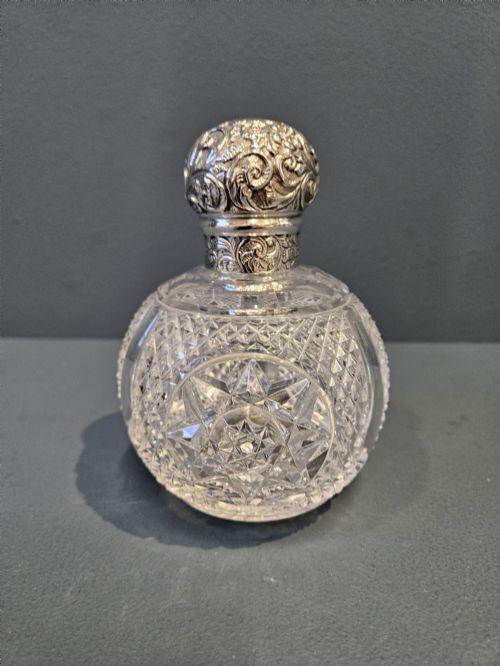
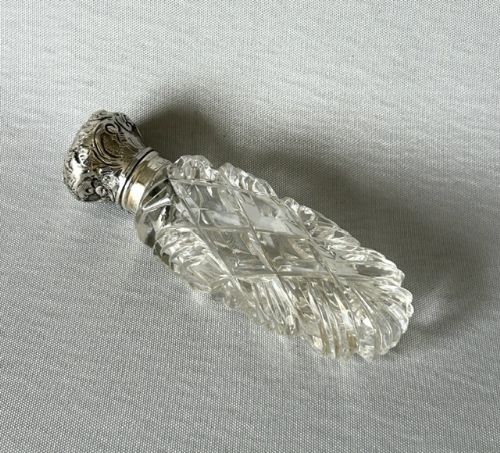


Victorian Crystal Perfume Bottle
A victorian crystal perfume bottle is a vanity accessory designed to hold fragrance, offering heavy facets and precious metal mounts.
Victorian Crystal Perfume Bottle
A victorian crystal perfume bottle brings together cut glass bodies and metal mounts for dressing table use. These objects range from single pocket scent flasks to matched pairs housed in travelling boxes.
The selections on this page span the nineteenth century and extend into the early twentieth century, taking forms such as heart-shaped glass, green overlay glass, and ruby glass scent bottles.
Buyers encounter individual scent bottles alongside vanity cases and dressing table accessories that retain their original silver or silver gilt collars and stoppers.
How they were made
Craftsmen shaped heavy lead crystal and glass through cutting and engraving techniques to produce deep facets and decorative patterns that catch the light. Molten glass was blown into moulds or free-blown before undergoing cold-working.
Mounts and collars utilised sterling silver, silver gilt, and tortoiseshell, secured to the glass necks with specialised adhesives or threaded collars. Leather and velvet lined the fitted travelling cases designed to protect these fragile vessels.
Victorian Crystal Perfume Bottle Retail Price Guide 2026
Typical asking prices for victorian crystal perfume bottle among the pieces listed under this phrase on Sellingantiques today, from the lower quarter to the upper quarter. They describe what is for sale here now, not the wider market.
Listings feature cut crystal, sterling silver, silver gilt, tortoiseshell, and velvet across the nineteenth and early twentieth centuries.
What varies in quality
The clarity and weight of the lead crystal establish the foundational standard of the vessel, alongside the precision of the hand-cut facets and engraved details. Thick, resonant glass distinguishes finer examples from simpler pressed glass alternatives.
The material and execution of the mount dictate the upper tier of quality, particularly where hallmarks confirm specific silversmiths or intricate repousse work adorns the silver and tortoiseshell lids.
S. Morden and Co·Asprey
The Victorian Crystal Perfume Bottle Glossary
- Cut Crystal
- Heavy glass containing lead oxide, shaped by grinding wheel to create sharp facets. This process increases the refractive index, making the glass sparkle.
- Sterling Silver
- An alloy of silver containing 92.5 percent pure silver and 7.5 percent other metals, typically copper. It provides the durable metal used for bottle caps and collars.
- Silver Gilt
- Silver that has been coated with a thin layer of gold on its surface. This treatment prevents tarnish and gives a warm, rich tone to the interior or exterior mounts.
- Overlay Glass
- Glass created by casing one layer of coloured glass over a clear or contrasting base layer. Cutting through the outer layer reveals the contrasting colour underneath.
- Dressing Table Accessories
- Small functional objects designed for personal grooming and vanity display. These groupings include scent bottles, jars, and trays housed together.
Victorian Crystal Perfume Bottle: Frequently Asked Questions
How do I clean a scent bottle?
Residue inside historical bottles requires gentle treatment without harsh scrubbing. Warm water and soft bottle brushes preserve the interior glass.
Silver mounts need careful polishing to avoid contact with the glass and any remaining paper labels. Keeping moisture away from old cork stoppers prevents structural breakdown.
Were these bottles meant for travel?
Many examples were manufactured for transport within fitted leather travelling cases or heavy boxes. Lockable gentleman's cologne bottles kept contents secure during transit.
Smaller pocket flasks featured tight screw caps or hinged silver lids with internal glass stoppers to prevent leaks.
How are different periods identified?
Silver hallmarks stamped onto the metal collars provide exact dates and assay office locations. Stylistic shifts in glass cutting and mount design also point to specific decades.
Victorian pieces often display heavy multi-faceted cutting, whereas later Edwardian items lean toward slimmer profiles and delicate engraving.
What is overlay glass?
Overlay glass consists of a clear or contrasting glass body covered by a thin skin of coloured glass. Cutting through the outer coloured layer creates geometric patterns of contrast.
Green and ruby glass variants appear frequently among nineteenth-century examples utilising this double-layer technique.