


Victorian Credenza with Glass
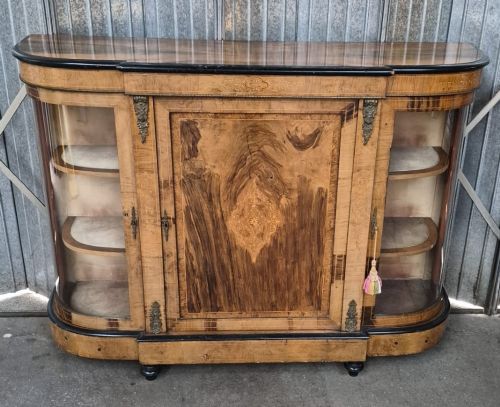
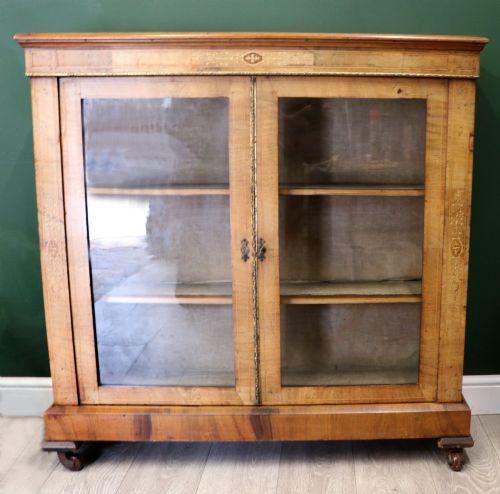
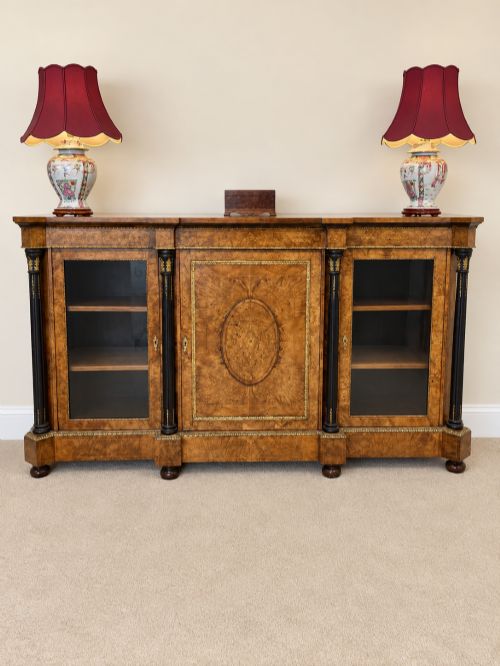
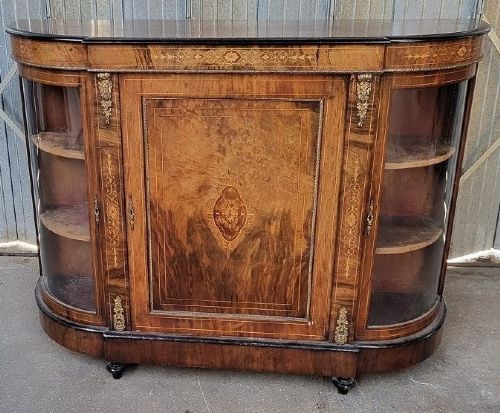
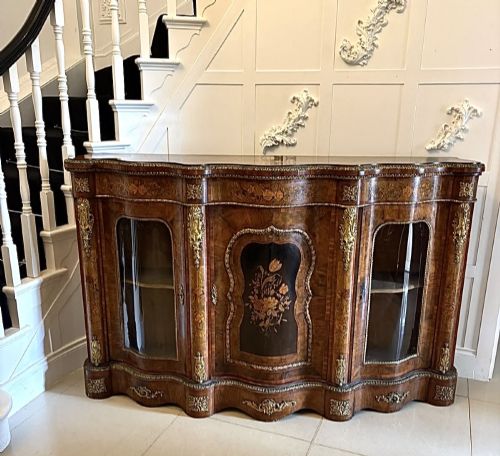
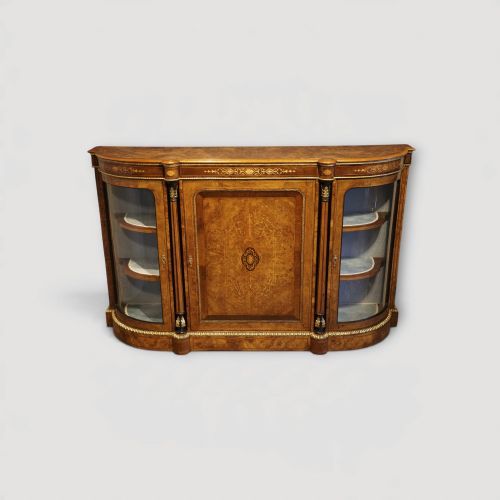
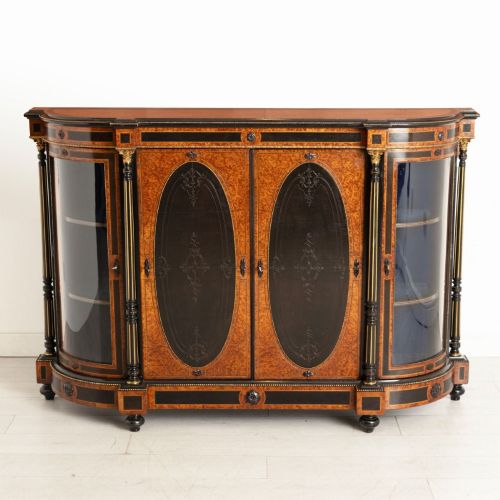
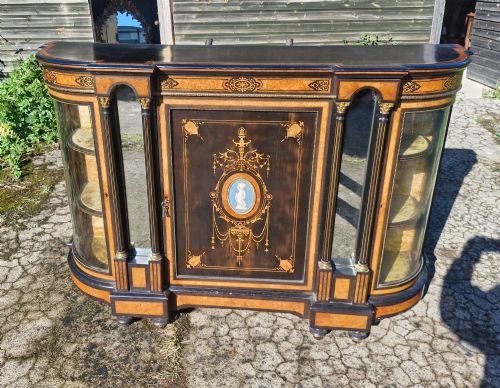
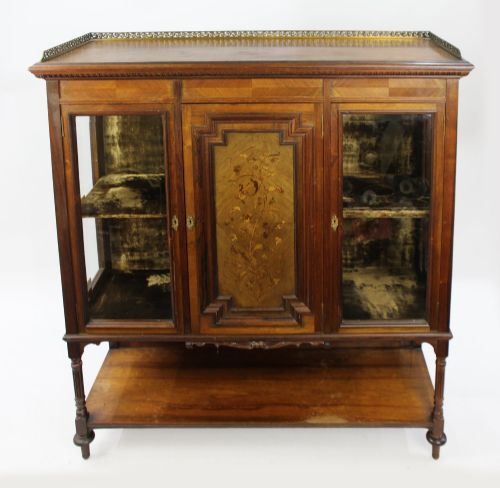
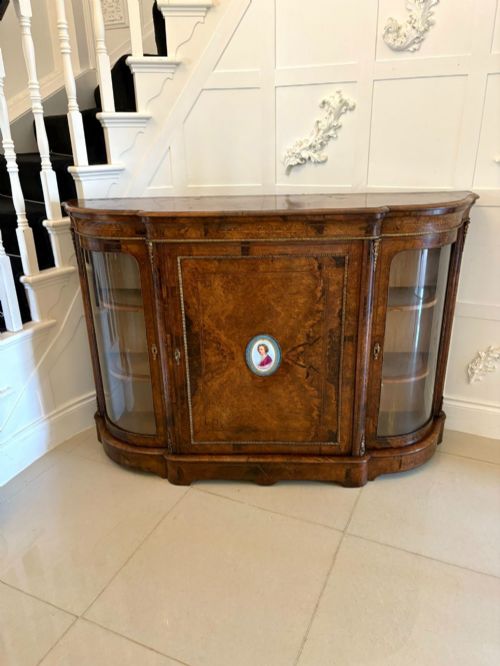
These Victorian credenzas with glass are substantial nineteenth-century display cabinets featuring glazed doors and polished timbers, offering a commanding presence in a drawing room.
Victorian Credenza with Glass
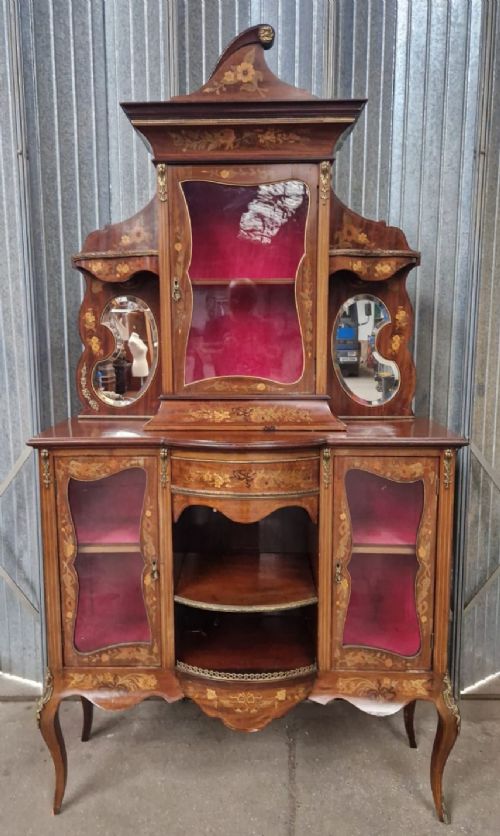
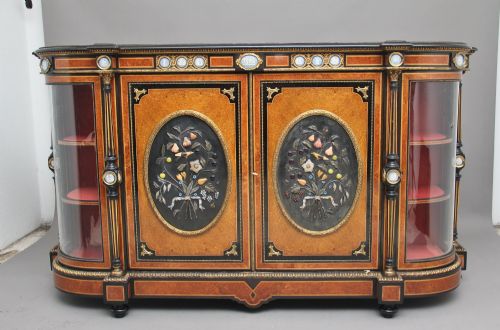
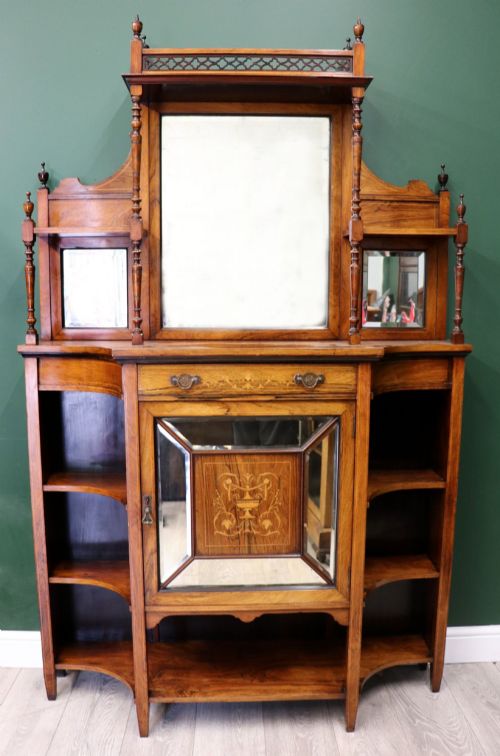
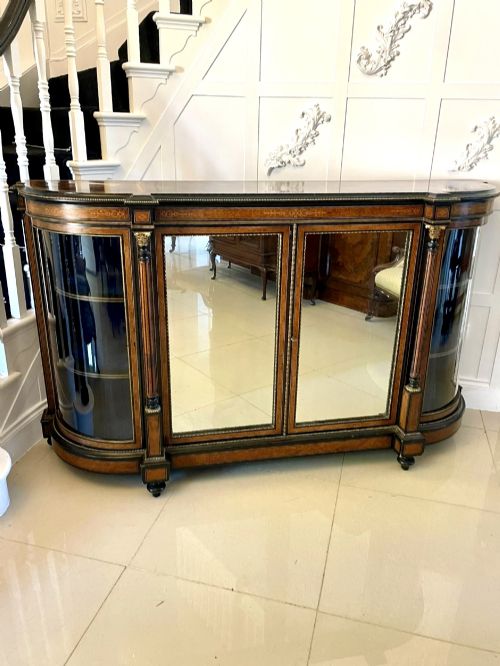
A Victorian credenza with glass combines low-profile cabinet work with glazed central or flanking doors designed to display prized possessions. These pieces date principally from the nineteenth century, including periods around eighteen-sixty, eighteen-seventy, and eighteen-eighty.
The form frequently appears alongside closely related pier cabinets and sideboards sharing similar glazed display functions. Examples range from serpentine-fronted shapes to breakfront formats and mirrored-back compositions.
Materials and construction
Cabinet makers utilised choice timbers such as burr walnut, figured walnut, and rosewood, often enhanced by ebonised wood and amboyna. Inlays of marquetry, tulipwood, and ebony add intricate decorative detail across the surfaces.
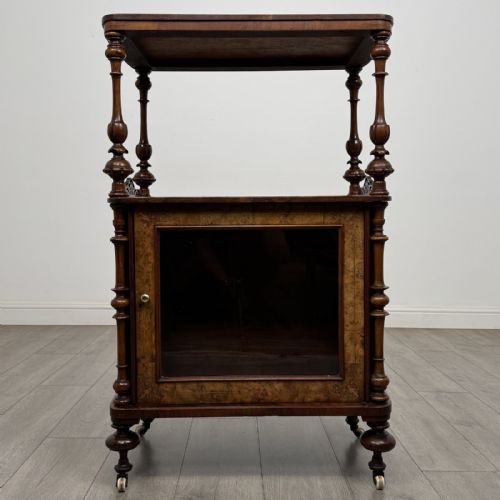
Structural embellishments rely on cast ormolu mounts, brass details, and porcelain plaques, complemented by original glass panels in the doors and turned columns such as barley twist supports.
Victorian Credenza with Glass Retail Price Guide 2026
Typical asking prices for victorian credenza with glass among the pieces listed under this phrase on Sellingantiques today, from the lower quarter to the upper quarter. They describe what is for sale here now, not the wider market.
Listings feature nineteenth century pieces incorporating burr walnut, rosewood, ebonised wood, and ormolu mounts.
Gradations in quality
Finer examples display superior timber selection, notably highly figured burr walnut or meticulously matched veneers, paired with precise marquetry work. The execution of cast ormolu mounts and the inclusion of Sevres porcelain plaques distinguish grander commissions.
Construction intricacy, such as serpentine or breakfront contours and the preservation of original glass and internal fabric linings, marks the distinction between standard production and exceptional workshop output.
Maison Gagneau·Druce And Co
The Victorian Credenza with Glass Glossary
- Credenza
- A low cabinet, frequently featuring glazed central doors flanked by curved glass cabinets. This form became a principal drawing room display piece during the nineteenth century.
- Ormolu
- Gilded bronze used for decorative mounts and framing elements. Makers applied these cast metal ornaments to accentuate architectural lines on walnut and ebonised surfaces.
- Marquetry
- The art of applying decorative veneer pieces in geometric or floral patterns. Craftsmen utilised contrasting timbers like tulipwood and ebony to create detailed surface designs.
- Pier Cabinet
- A narrow display cabinet built to stand against the wall space between windows. These glazed pieces often match the decorative vocabulary of larger credenzas.
Victorian Credenza with Glass: Frequently Asked Questions
What is a Victorian credenza with glass?
A Victorian credenza with glass is a low nineteenth-century display cabinet featuring glazed doors designed for showcasing decorative items in principal rooms.
These pieces typically combine timber carcases with glass panels, ormolu mounts, and marquetry inlay.
How were these cabinets used originally?
In Victorian drawing rooms, these cabinets served to display porcelain, curiosities, and valued objects behind protective glass doors.
The surface top provided additional space for ornaments while the lower cupboards housed collections.
How do I live with a credenza?
Placing a credenza in a dining room or drawing room provides both surface display space and enclosed storage.
Keep them away from direct sunlight to protect the polished burr walnut and rosewood veneers.
How can I tell the period?
Dating relies on stylistic markers such as serpentine fronts, ebonised finishes, and specific inlay materials recorded across nineteenth-century cabinet work.
Construction methods and timber choices further align these items with periods from eighteen-fifty onwards.