
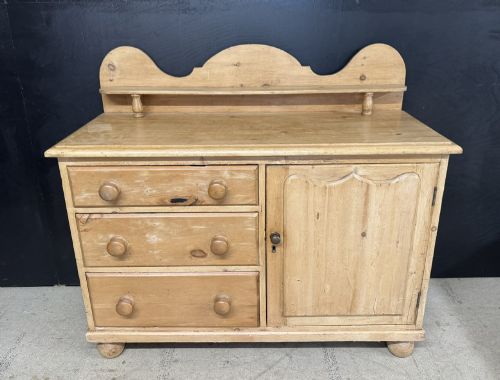
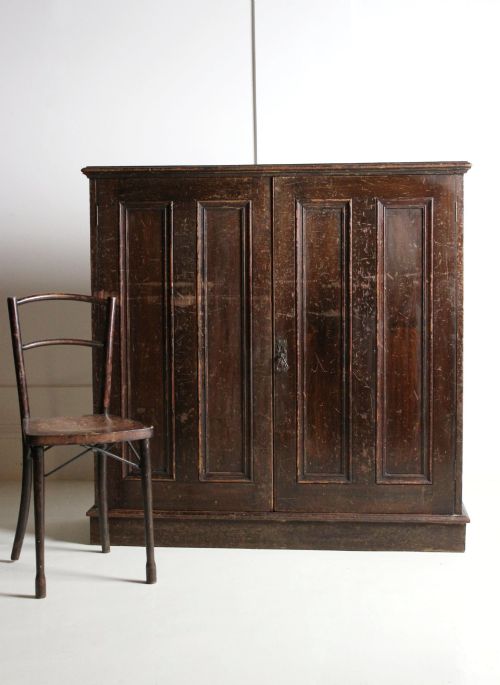
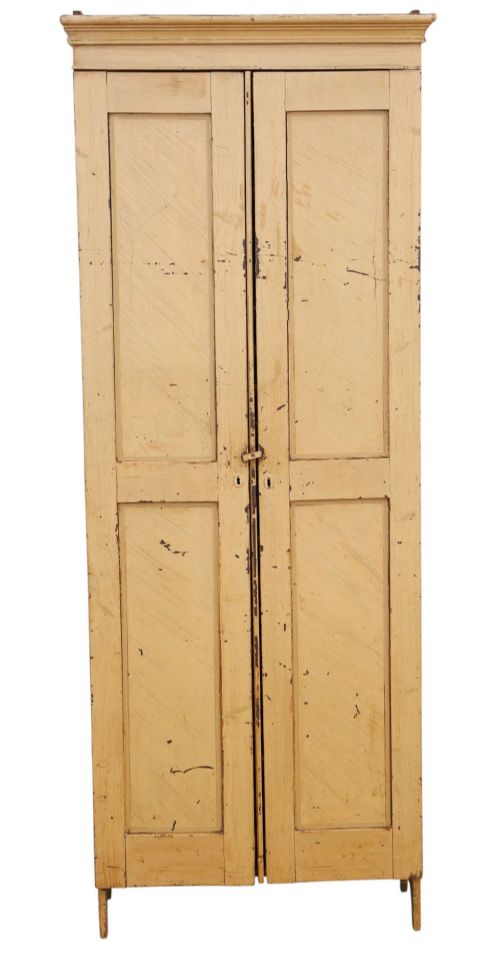
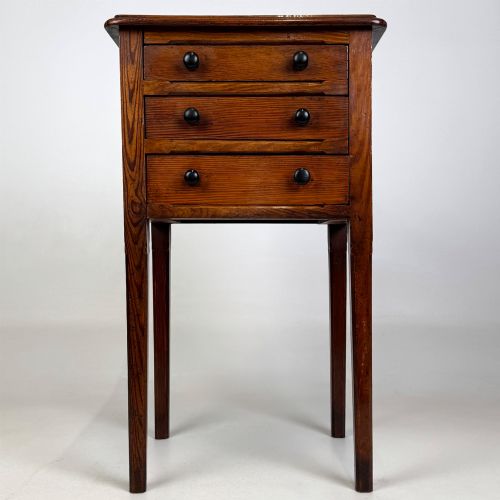
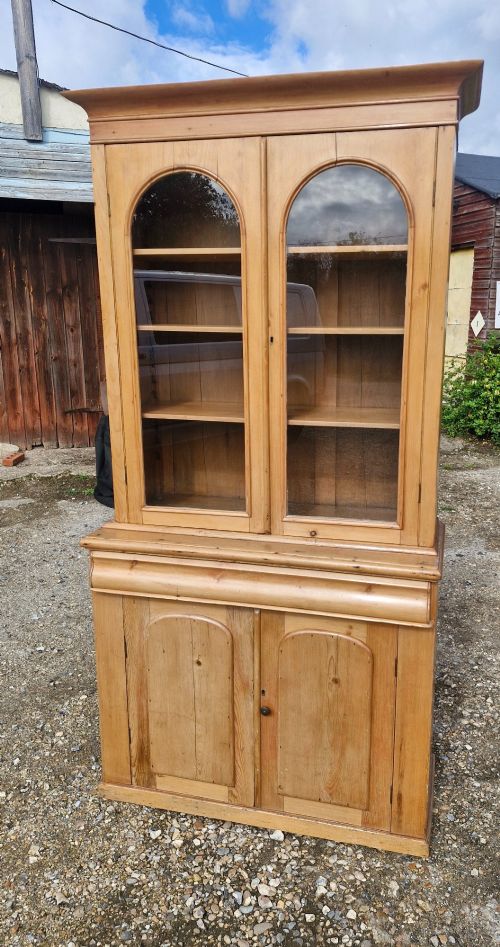
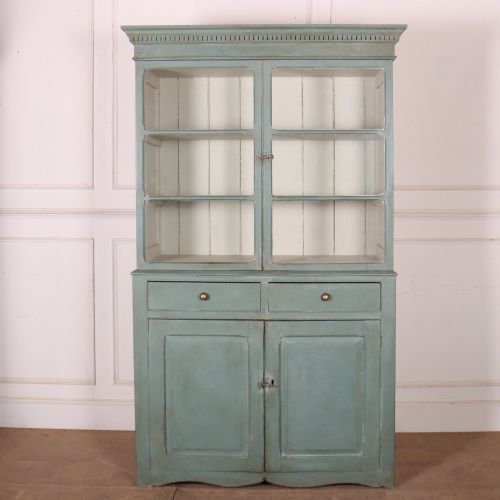
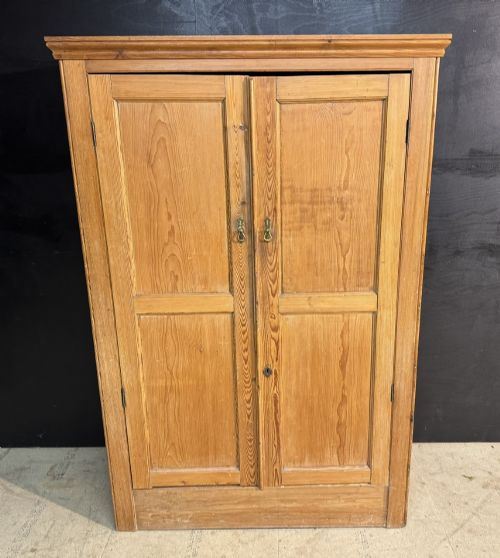
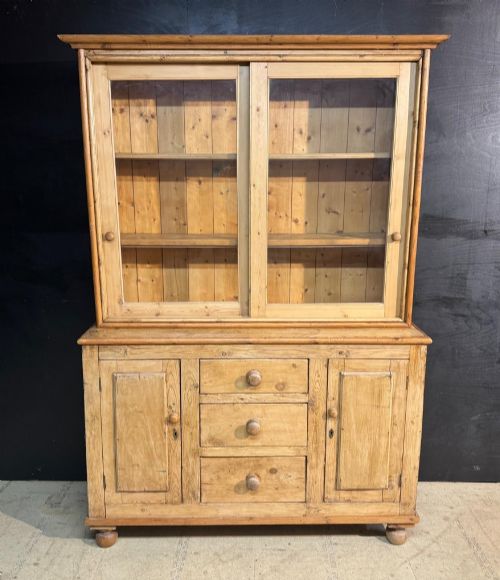
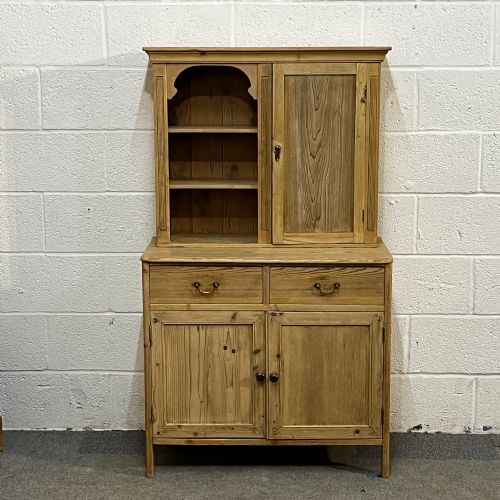
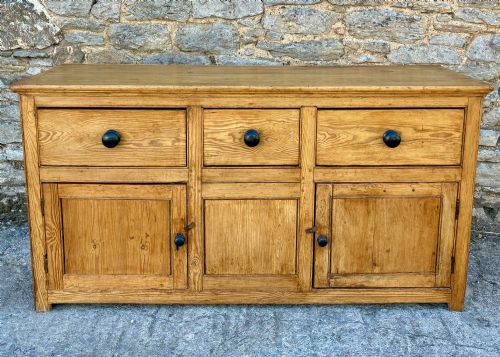
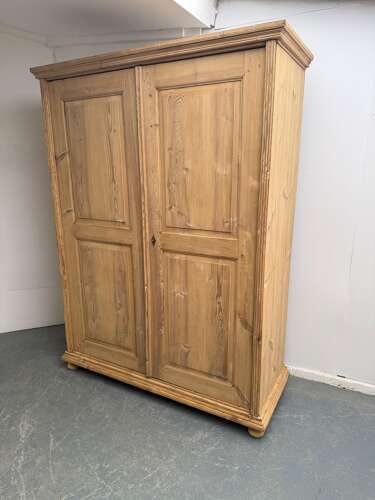
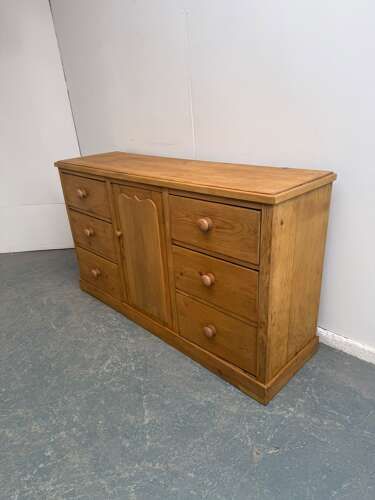
Victorian Country Pine Cabinet
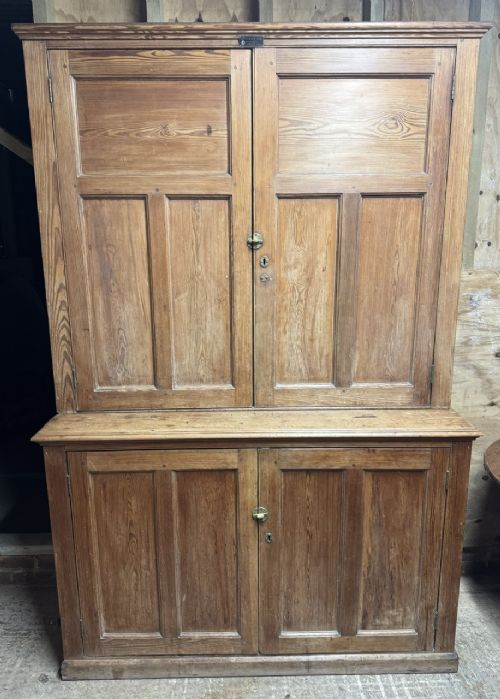
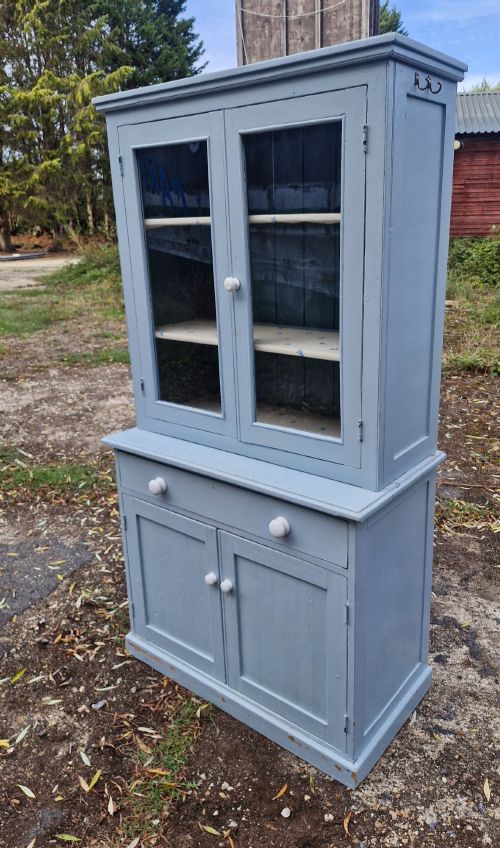
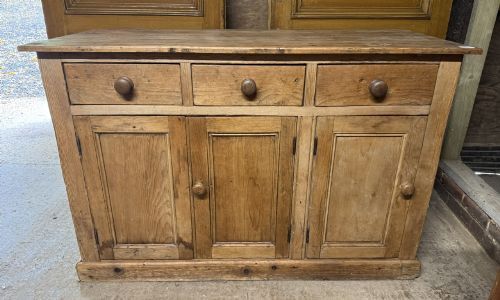
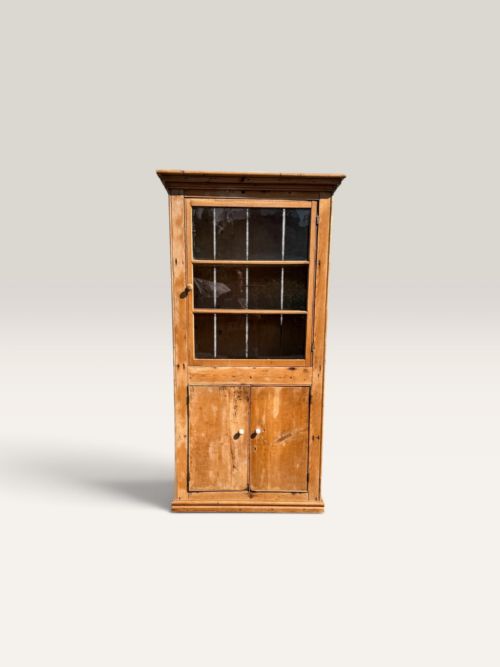
A victorian country pine cabinet brings practical utility and domestic charm to a room, offering sturdy storage fashioned from honest softwood.
Victorian Country Pine Cabinet
A victorian country pine cabinet encompasses a range of domestic utility storage, from tall kitchen dressers and housekeepers cupboards to small corner units and bedside pieces. Buyers searching this phrase look for functional furniture originating from nineteenth-century rural households rather than formal urban drawing rooms.
The pieces appearing on this page span diverse regional traditions, including Welsh, Scottish, and English country forms. Kitchen dressers with display racks, glazed kitchen cabinets, and larder cupboards form the most common varieties encountered here.
Dating primarily from the Victorian era and the broader nineteenth century, these pieces range from simple two-part glazed cupboards to robust storage units fitted with drawers and panelled doors.
Materials and Construction
Construction relies primarily on pine and pitch pine, selected for accessibility and workability in regional workshops. Secondary elements incorporate iron, brass, and glass for hardware, hinges, and glazed cabinet doors.
Surfaces frequently show historical treatments such as wax finishing, scumble paint, or original layers of paint. Joinery techniques reflect utilitarian workshop standards of the nineteenth century, designed for daily endurance in country kitchens and sculleries.
Certain nineteenth-century kitchen dressers feature built-in spice drawers, offering tiny compartments for bygone culinary secrets.
Distinctions in Quality
Quality in a victorian country pine cabinet rests on the integrity of its original form, timber selection, and surface preservation. Pitch pine examples often display tighter grain and greater structural density than standard softwood pieces.
The presence of original paint, scumble finishes, or untouched hardware distinguishes pieces retaining their historic character from those subjected to modern alterations or excessive stripping.
The Victorian Country Pine Cabinet Glossary
- Pitch pine
- A resinous North American and European pine variety known for distinct grain patterns and durability. It provides robust construction for nineteenth-century storage furniture.
- Scumble paint
- A decorative surface technique involving translucent glaze manipulated over a base coat to imitate finer woods or create textured patterns. It appears frequently on period country furniture.
- Housekeeper cupboard
- A large utilitarian storage unit traditionally used for linen, dry goods, or china in country houses. These pieces often feature multiple doors and drawers.
- Dresser base
- The lower section of a kitchen dresser, functioning as a sideboard with drawers and cupboards beneath a flat top. Some examples survive without their original upper display racks.
- Dog kennel cabinet
- A regional dresser variant featuring a central open recess situated between lower cupboards. The term originates from the traditional low central space beneath the drawers.
Victorian Country Pine Cabinet: Frequently Asked Questions
What rooms suit these cabinets?
These cabinets suit kitchens, dining rooms, and hallways where practical storage and domestic character are desired. Their utilitarian origins make them adaptable for everyday use in modern homes.
Smaller corner cupboards and bedside cabinets fit well in bedrooms or compact spaces, while larger dressers serve as focal points for storing tableware.
How do I care for waxed pine?
Waxed pine requires periodic application of traditional furniture wax to maintain the finish and protect the timber. Avoid placing these pieces near direct heat sources or in damp environments.
Cleaning should be done with a soft, dry cloth rather than wet solutions to preserve the natural patina developed over the nineteenth century.
Are painted finishes original?
Some pieces retain original layers of paint or scumble decoration applied during the Victorian period. Other examples have been stripped down to bare timber or repainted at later dates.
Examining surface wear and paint adherence helps determine whether a painted finish dates from the nineteenth century or a more recent intervention.
What is pitch pine?
Pitch pine is a harder, more resinous timber utilised during the nineteenth century for furniture requiring extra strength. It displays a prominent grain and a warm reddish-brown tone.
Cabinets constructed from pitch pine often feel heavier and more resilient than standard white pine equivalents.