

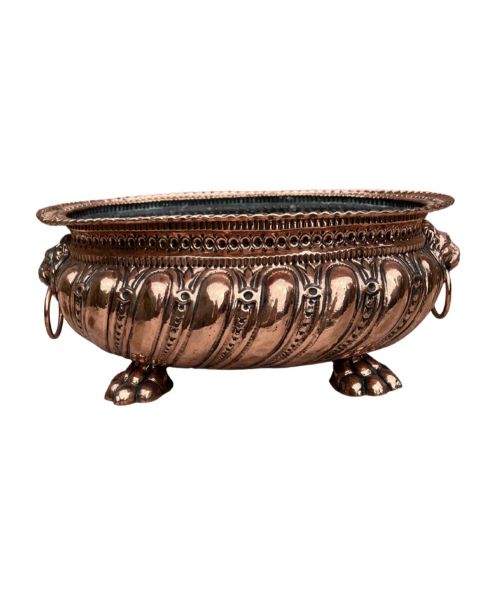
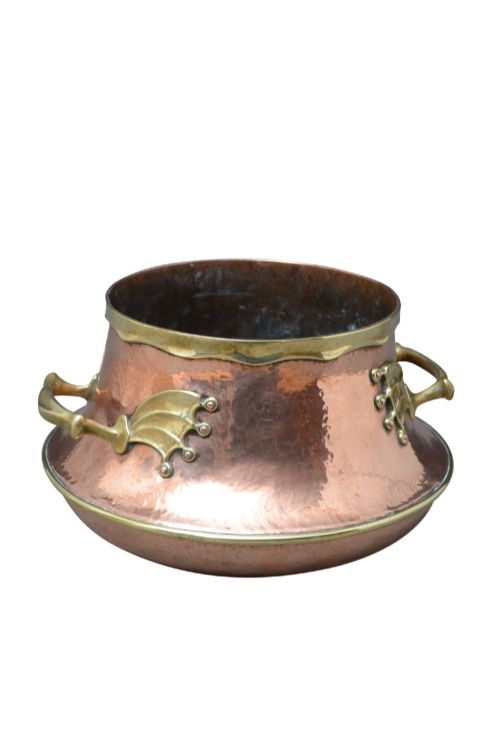
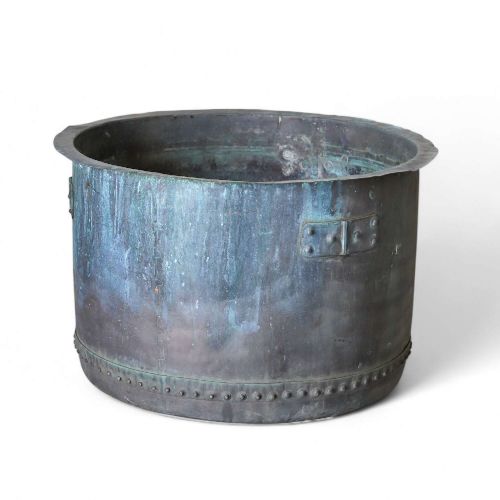
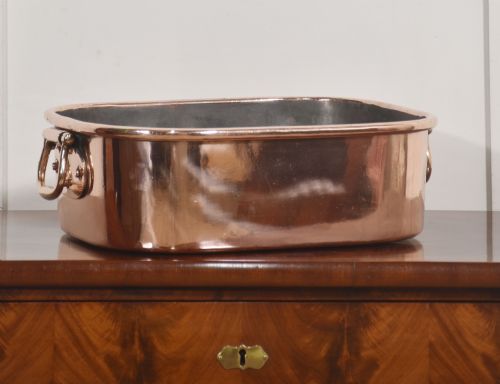

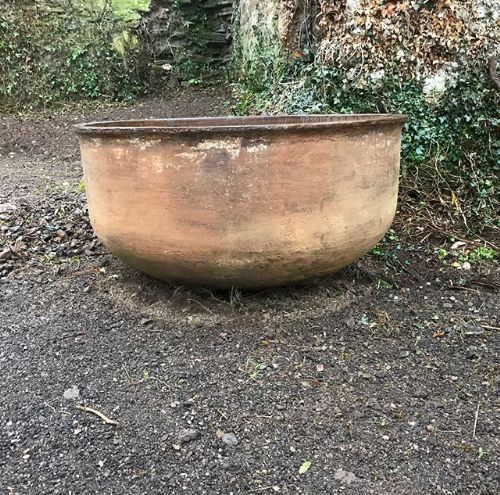


Victorian Copper Trough
These robust victorian copper trough vessels bring warmth and utility to interior spaces through honest metalwork.
Victorian Copper Trough
A victorian copper trough takes the form of a long rectangular planter, jardiniere, or utilitarian vessel intended for botanical display and household service.
Most examples encountered here span the nineteenth century and the Edwardian period, often reflecting rustic farmhouse, industrial country, or Arts and Crafts sensibilities.
Makers shaped these objects for practical horticultural use, resulting in sturdy forms that now function primarily as decorative interior containers.
How they were made
Workshops constructed these pieces from sheet copper, joining the metal seams with hand-driven rivets to ensure structural strength.
Manufacturers frequently incorporated brass handles, iron fittings, or steel elements to reinforce the main copper body and aid handling.
Victorian Copper Trough Retail Price Guide 2026
Typical asking prices for victorian copper trough among the pieces listed under this phrase on Sellingantiques today, from the lower quarter to the upper quarter. They describe what is for sale here now, not the wider market.
Current listings feature copper alongside brass, iron, and steel across various nineteenth-century utilitarian and Arts and Crafts forms.
What varies in quality
The standard of a piece rests on the integrity of the hand-riveted joints and the thickness of the original metal sheet used by the maker.
Subtleties in the natural surface patina and the careful integration of brass or iron mounts elevate finer examples above standard utility wares.
The Victorian Copper Trough Glossary
- Jardiniere
- An ornamental pot or trough designed to hold growing plants or flowers indoors. These vessels often feature decorative riveted seams.
- Patina
- The surface sheen and colour acquired by copper over decades of exposure to air and handling. A rich natural skin denotes age.
- Riveted
- Joined together using metal pins hammered flat to secure overlapping plates of copper. This technique provides both strength and visual texture.
Victorian Copper Trough: Frequently Asked Questions
How were these troughs originally used?
Households utilised these metal vessels primarily as indoor plant holders and jardinieres to display foliage within domestic rooms.
Some heavier forms also served practical kitchen or utility functions before transitioning to purely decorative roles.
How do I clean a copper planter?
Dust the surface gently with a soft dry cloth to preserve the accumulated surface character.
Avoid harsh chemical polishes that strip away the aged skin which collectors value.
Are all these troughs from the nineteenth century?
The majority date from the nineteenth century and the Victorian era, though related examples extend into the Edwardian period and nineteen thirty.
Construction details and stylistic cues help distinguish between these adjacent eras.
Can I plant directly inside the trough?
Direct planting introduces moisture that can accelerate internal metal wear over long periods.
Using a secondary inner pot helps protect the historic copper from constant dampness.