



Victorian Copper Ornaments
These victorian copper ornaments bring heavy warmth to a room through genuine period craft.
Victorian Copper Ornaments
Victorian copper ornaments encompass a diverse selection of decorative items fashioned from metal and ceramic, spanning from the nineteenth century into the early twentieth century. You will encounter familiar domestic figures alongside maritime and architectural pieces.
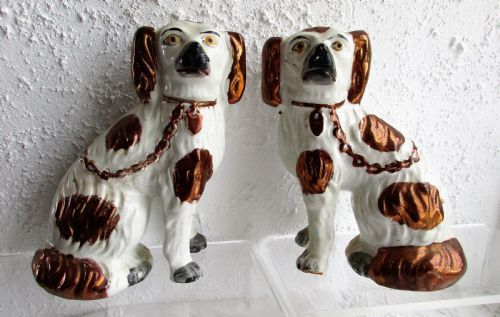
Staffordshire pottery featuring copper lustre glaze forms a prominent part of these listings, particularly pairs of spaniel dogs. These ceramic animals display metallic sheens applied across earthenware bodies.
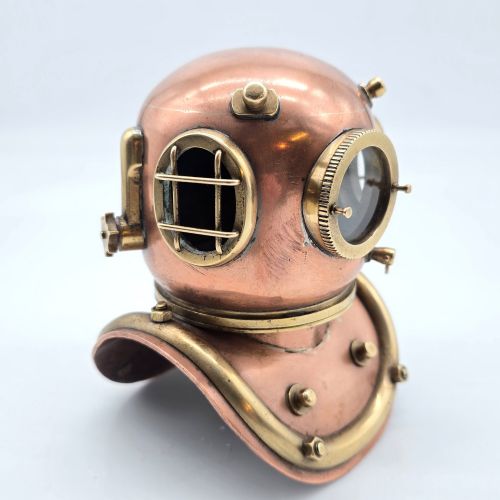
Metalwork items such as fireside ornaments, scale models of divers' helmets, architectural finials, and folk art weathervanes represent the broader physical scope of these objects. Combinations of copper and brass appear regularly in functional display pieces.
How they were made
Potters shaped earthenware bodies into animal figures and lions before applying copper lustre glaze to achieve metallic reflectivity. Artisans also utilised hand painting to add facial details and collar markings on ceramic dogs.
Metalworkers constructed scale models, weathervanes, and finials using sheet and cast copper, frequently incorporating brass components. Engineers fashioned intricate miniature items such as divers' helmets with careful soldering and riveting.
Victorian Copper Ornaments Retail Price Guide 2026
Typical asking prices for victorian copper ornaments among the pieces listed under this phrase on Sellingantiques today, from the lower quarter to the upper quarter. They describe what is for sale here now, not the wider market.
An engineer made a miniature brass and copper diver's helmet just thirteen centimetres high.
What varies in quality
Engineering precision distinguishes metalwork, particularly in miniature scale models and architectural finials where crisp edges and secure joints show the maker's hand.
The Victorian Copper Ornaments Glossary
- Copper lustre
- A ceramic glaze incorporating metallic copper that produces a reflective, coppery sheen upon firing. This technique was widely utilised on nineteenth-century Staffordshire pottery.
- Earthenware
- A porous clay body fired at lower temperatures, commonly used for nineteenth-century decorative figurines. It requires glazing to become impermeable.
- Weathervane
- A movable device mounted on a roof to show the direction of the wind, often fashioned from sheet copper in folk art traditions. These pieces combine utility with decorative sculpture.
- Finial
- An architectural ornament that marks the highest point of a roof or gable, frequently rendered in copper during the nineteenth century. It adds a decorative flourish to structural exteriors.
Victorian Copper Ornaments: Frequently Asked Questions
What are victorian copper ornaments made of?
These pieces incorporate earthenware ceramics finished with copper lustre glaze, alongside solid copper and brass metalwork.
Makers combined clay bodies and metallic elements to create both domestic figurines and architectural items.
Where were fireside ornaments placed?
Fireside ornaments sat on the hearth or mantelpiece to enhance the appearance of nineteenth-century rooms.
Pieces shaped as boots combined copper and brass materials for domestic display.
How do you date copper weathervanes?
Dating relies on the style of the metalwork, construction methods, and material patination.
Nineteenth-century examples show specific folk art craftsmanship distinct from later industrial production.