

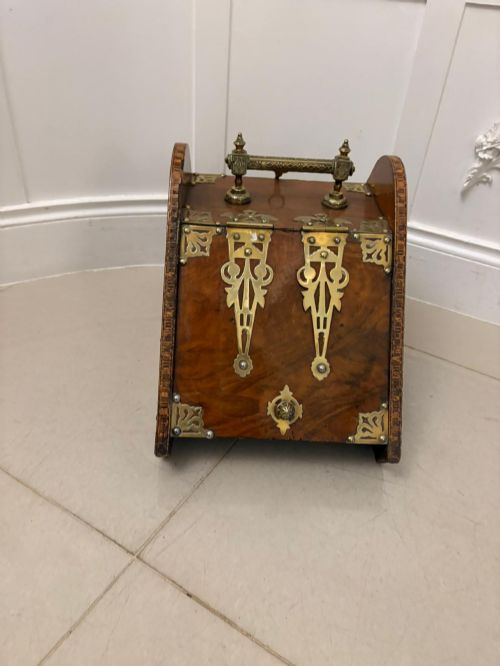



Victorian Coal Box Mounts
Victorian coal box mounts secure the handles, hinges, and corner guards on fireside storage, adding functional weight and polished metallic detail to period hearths.
Victorian Coal Box Mounts
Victorian coal box mounts include brass, copper, and ormolu hardware fitted to wooden scuttles and purdoniums during the Victorian and Edwardian eras. These metal fixtures reinforce the corners, secure the drop-front panels, and provide sturdy handles for carrying heavy fuel to the fireplace.
The versions most commonly encountered on this page combine polished brass mountings with timber bodies in oak, walnut, or mahogany. They appear on traditional coal boxes, purdoniums, and log bins designed to sit beside the hearth.
The style spans plain utilitarian corner brackets to decorative Rococo Revival cast brass mounts and figural designs. Each piece reflects the nineteenth-century domestic interior, where functional fireside equipment also served as decorative furniture.
Materials and construction
Makers utilised cast and stamped brass, copper, and ormolu to create the structural mounts and decorative handles that reinforce each coal box. These metal components were secured to timber bodies using slot-head screws.
The wooden bodies are constructed from dense hardwoods like oak, walnut, and mahogany, often shaped into curved scuttles or box purdoniums with fitted metal liners. Selected examples feature inlaid details or applied metal plaques to enhance the visual appeal.
Victorian Coal Box Mounts Retail Price Guide 2026
Typical asking prices for victorian coal box mounts among the pieces listed under this phrase on Sellingantiques today, from the lower quarter to the upper quarter. They describe what is for sale here now, not the wider market.
Some fireside coal boxes were disguised as biscuit barrels, proving the Victorians enjoyed hiding their fuel in polite company.
Assessing quality and craftsmanship
The standard of a mounted coal box depends on the weight and crispness of the metalwork, with heavier cast brass and detailed ormolu mounts sitting at the upper end of the range. Lighter stamped sheet metal and plain fixtures indicate simpler utility pieces.
Consideration is also given to the integration of the hardware with the timber body, where neatly fitted corner mounts and original liners demonstrate better workshop practice than replacement fittings.
The Victorian Coal Box Mounts Glossary
- Purdonium
- A specialised coal box featuring a sloping front door that drops forward to release fuel. This cabinet design concealed the coal scuttle within a decorative wooden housing.
- Ormolu
- Finely chased and gilt bronze or brass mounts applied to furniture and decorative objects. The technique creates a rich gold-coloured metallic finish.
- Scuttle
- A metal or wood container designed for holding and carrying coal to a fireplace. They frequently feature a hinged lid and a sturdy carrying handle.
- Planter
- A vessel adapted for holding potted plants, often sharing identical construction and metal mounts with coal scuttles.
- Liner
- The removable inner vessel, usually made of metal, that sits inside a wooden coal box to contain dirt and debris.
Victorian Coal Box Mounts: Frequently Asked Questions
How were these coal boxes used?
These boxes stored coal near the hearth for daily fireplace maintenance. The metal mounts and handles allowed servants or homeowners to carry fuel safely without damaging the timber body.
Many examples included matching shovels stored in dedicated side brackets or compartments, keeping all necessary fireside tools together in one place.
How do I care for brass mounts?
Brass mounts require gentle dusting and occasional cleaning with a non-abrasive metal polish to maintain their brightness. Care should be taken to avoid getting polish onto the surrounding wood.
Allowing a natural patina to develop on the brass is preferred by many collectors, as it highlights the age and handling of the piece.
Are original liners important?
Original metal liners help maintain the completeness of a vintage coal box. They prevent coal dust and moisture from damaging the interior wood of the box.
While many pieces survive without their original inserts, having the matching liner and shovel adds to the historical integrity of the item.