




Victorian Chippendale Dining Set
When you search for a victorian chippendale dining set, you are looking at substantial suites of carved seating built to anchor a formal dining room.
Victorian Chippendale Dining Set
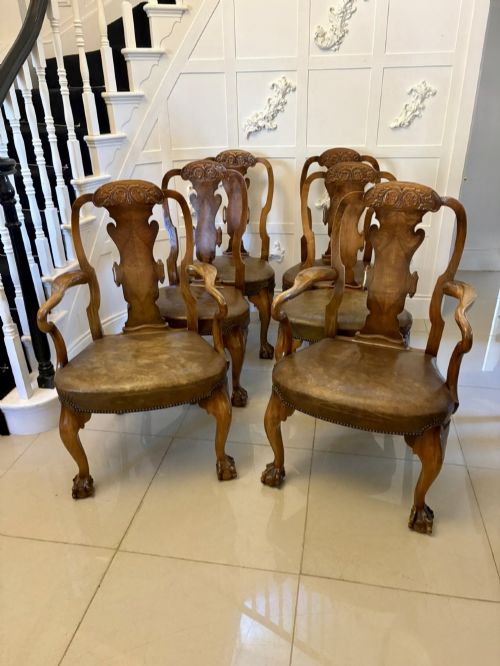
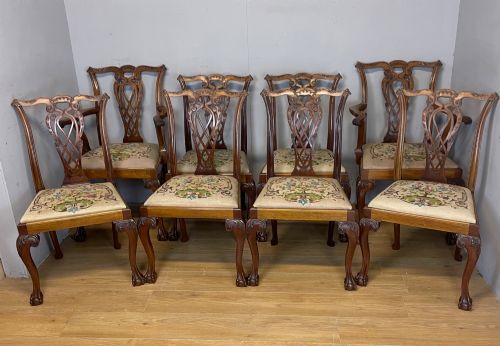
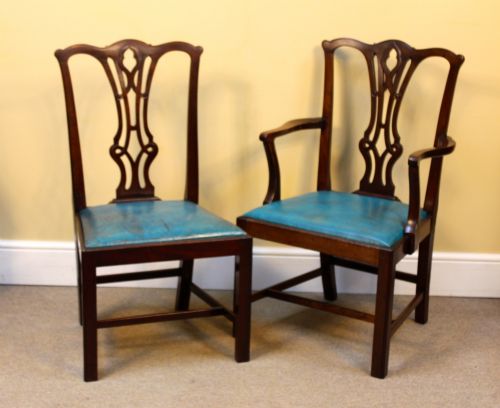
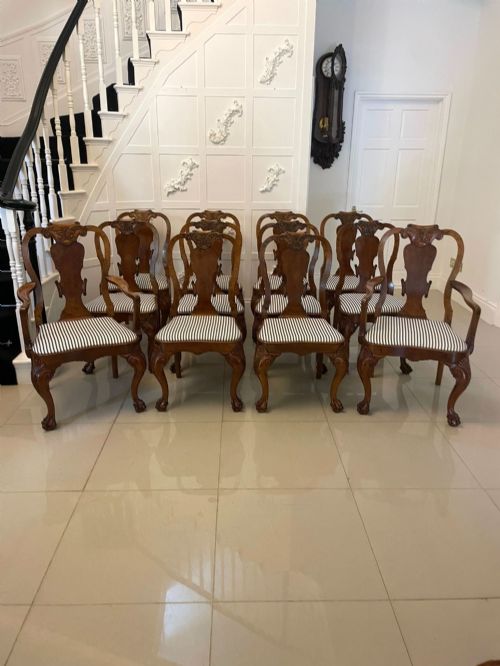
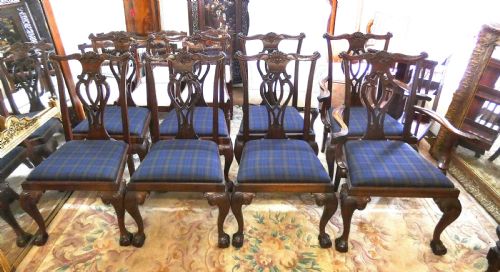
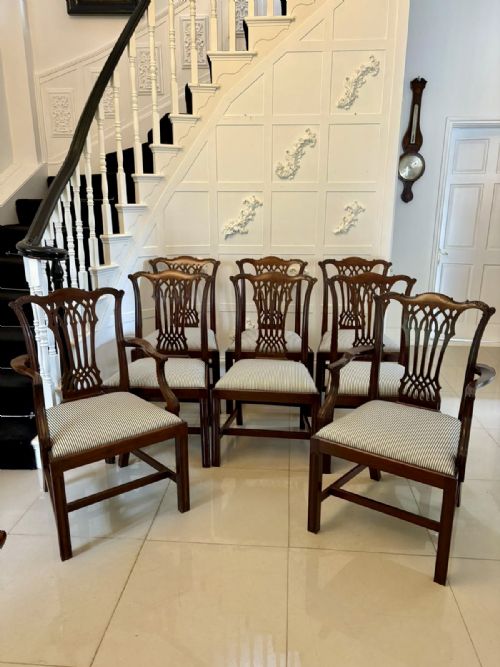
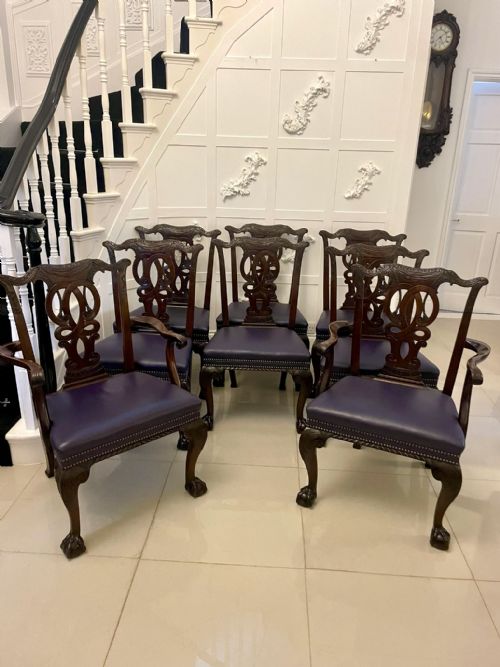
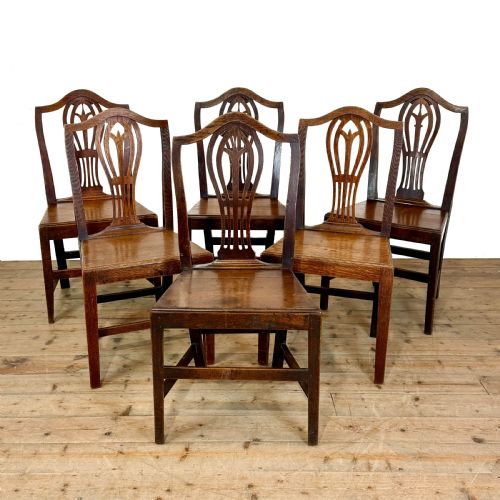
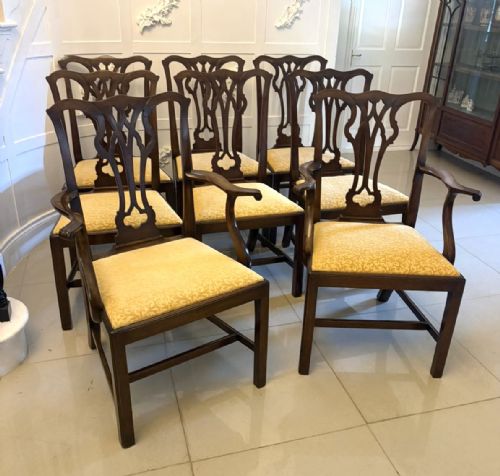
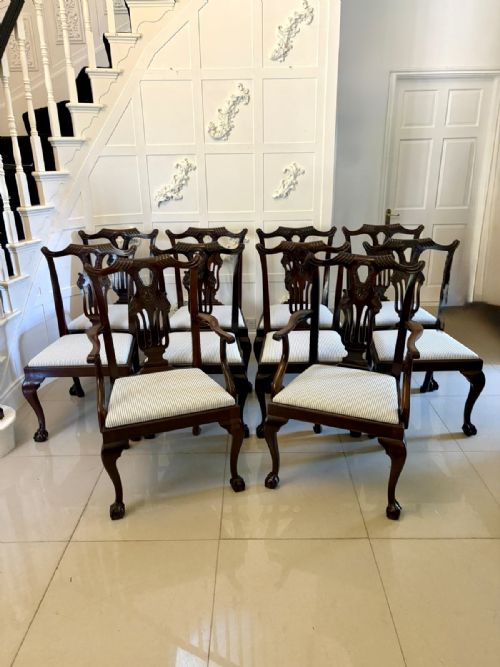
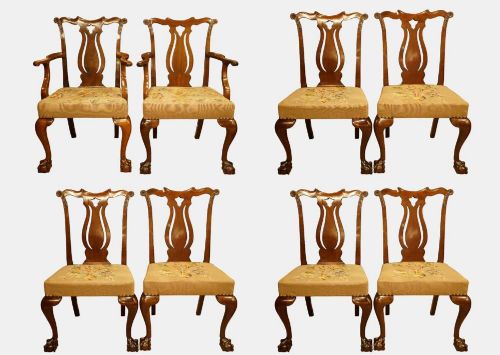
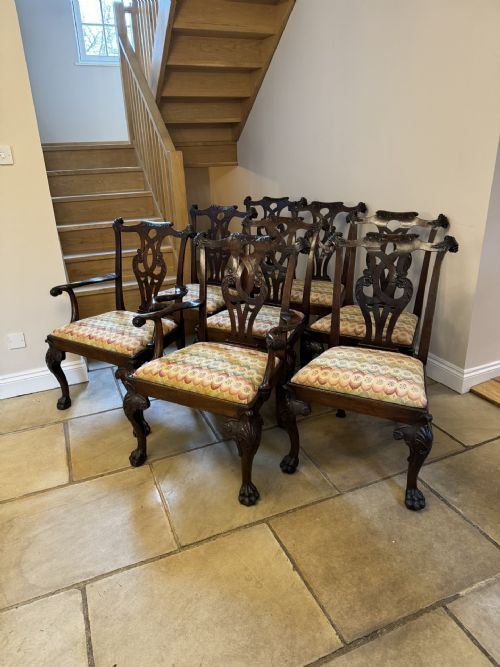
A victorian chippendale dining set consists of matching groups of dining chairs, frequently numbering six, eight, ten, or twelve pieces, and often including larger carver armchairs for the heads of the table. These suites reflect the nineteenth-century revival of eighteenth-century design principles, translating earlier aesthetics into heavy, durable dining furniture.
The evidence records these seating arrangements spanning the nineteenth century, with strong representation from the 1850s through to 1900, alongside later revival examples. They take the form of dining chairs produced in mahogany, walnut, and oak, frequently displaying the classic motifs associated with Thomas Chippendale's revived pattern books.
How they were made
Makers relied heavily on solid mahogany and walnut, selected for structural strength and rich grain, alongside occasional use of oak. These woods were shaped into substantial frames, often featuring intricate carved details such as ball and claw feet or ribbon backs.
Upholstery formed an integral part of the construction, utilising materials like leather, fabric, and original tapestry textiles secured over traditional padding. Brass accents occasionally appeared in the hardware and structural reinforcement of the seating.
Listings demonstrate that mahogany is the primary timber utilised, complemented by walnut and oak across the nineteenth-century pieces.
What varies in quality
The standard of carving distinguishes different tiers of these dining suites, ranging from shallow, mechanical surface work to deeply undercut, spirited ornamentation executed by skilled hands. The crispness of details like ball and claw feet or pierced splats indicates the level of craftsmanship invested in the set.
Consistency across a large number of chairs affects the overall cohesion of a suite, particularly in larger sets of ten or twelve where uniformity in timber selection and joinery matters immensely. The survival of original upholstery materials, such as period tapestry or leather, also elevates the integrity of the grouping.
Warings·William Walker and Sons·Marsh Jones and Cribb
The Victorian Chippendale Dining Set Glossary
- Carver
- An armchair designed with armrests, traditionally placed at the head and foot of a dining table. These frequently accompanied larger sets of single chairs.
- Chippendale Revival
- A nineteenth-century movement reinterpreting the mid-eighteenth-century designs of Thomas Chippendale. It brought ornate splats and carved legs back into fashionable dining rooms.
- Ribbon Back
- A chair back design featuring a central carved splat woven to resemble fluttering silk ribbons. This ornate technique required exceptional skill from the woodcarver.
- Ball and Claw
- A foot motif depicting a bird's talon clutching a ball, commonly carved onto the terminating point of cabriole legs. It remains a hallmark of formal antique seating.
- Splat
- The vertical wooden strip running down the centre of a chair back, offering structural support and decorative surface area. In these sets, they are frequently pierced or intricately carved.
Victorian Chippendale Dining Set: Frequently Asked Questions
How many chairs come in a set?
Sets typically range from four to twelve pieces, frequently including a mix of single chairs and larger carvers for the table ends.
Larger groupings of ten or twelve chairs reflect the scale of grand nineteenth-century dining rooms and are less commonly encountered than smaller sets of six or eight.
What wood are they made from?
Mahogany is the predominant timber seen across these listings, valued for its deep reddish-brown tone and strong grain.
Walnut, burr walnut, and oak also appear, offering varied colour palettes and distinct textural finishes within the revival style.
How do I care for the upholstery?
Many pieces retain leather, fabric, or tapestry textile seats that require gentle cleaning appropriate to their specific textile type.
Condition varies from newly recovered surfaces to original period fabric, which benefits from careful preservation rather than aggressive restoration.
Are these chairs comfortable for daily use?
Designed with high backs and supportive upholstered seats, these chairs were built for extended formal dining.
Their solid wood construction and generous proportions provide a sturdy seat, though modern users should consider seat heights relative to contemporary tables.