

Victorian Chain Bracelet
A victorian chain bracelet brings substantial weight and articulated movement to the wrist, formed from solid gold links that span the nineteenth and early twentieth centuries.
Victorian Chain Bracelet
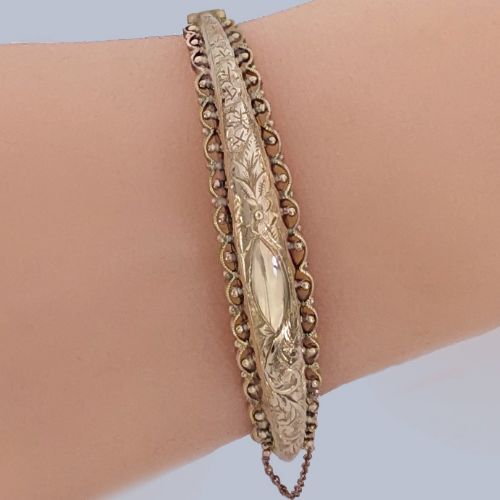
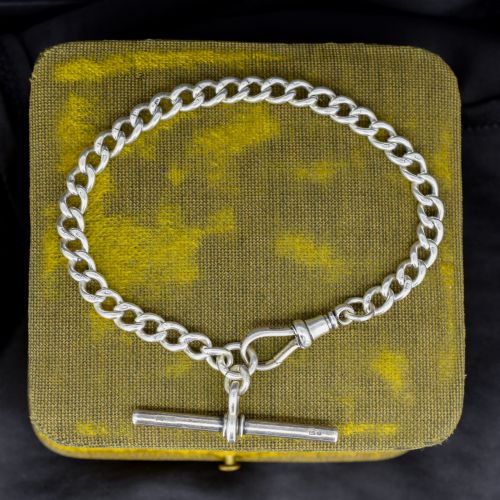
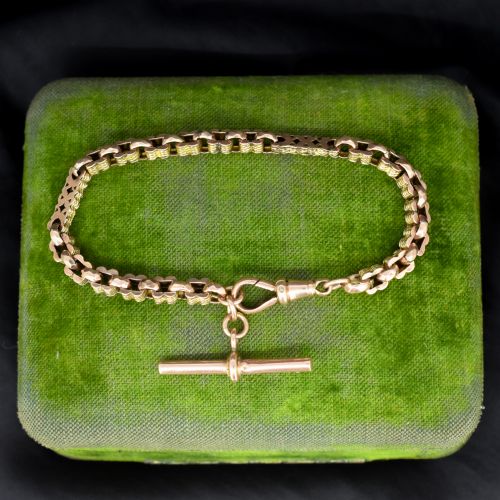
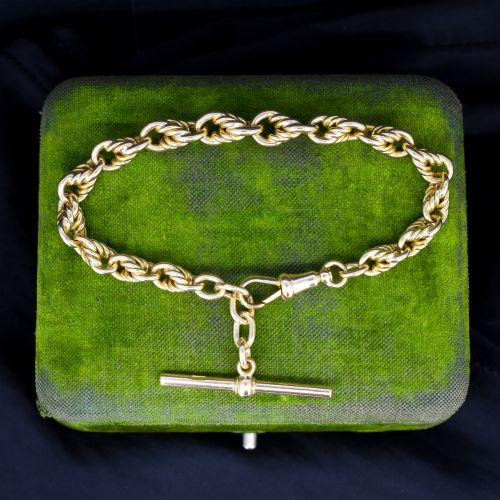
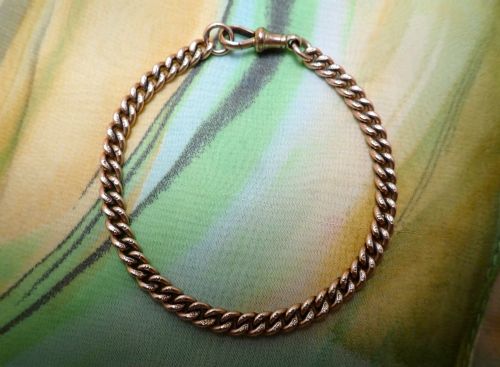
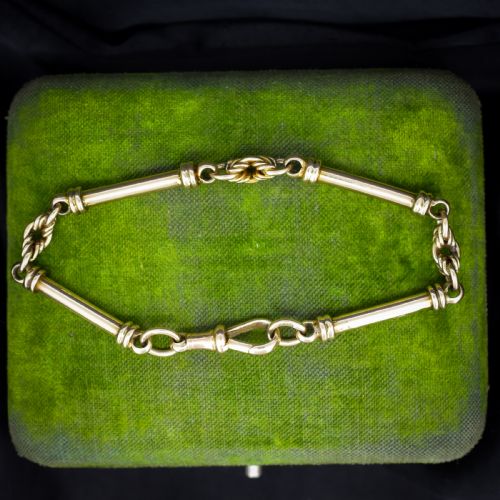
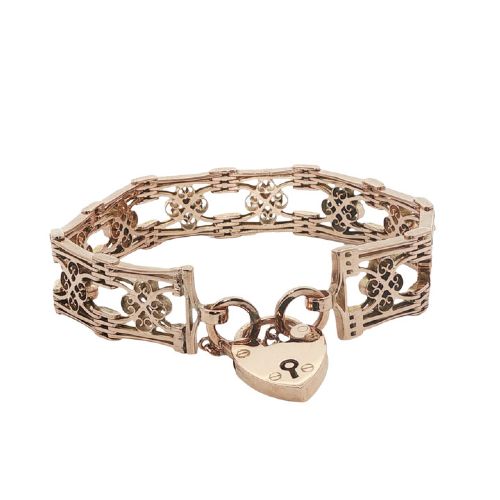
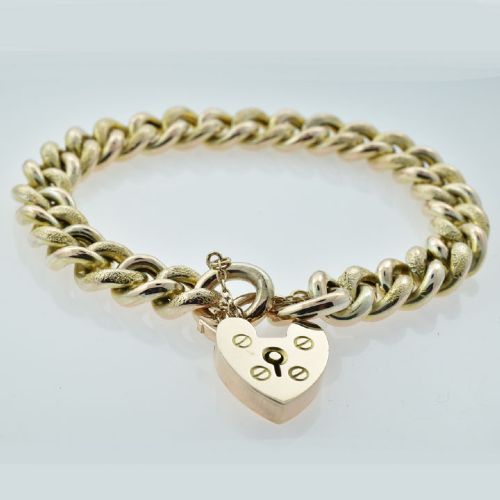
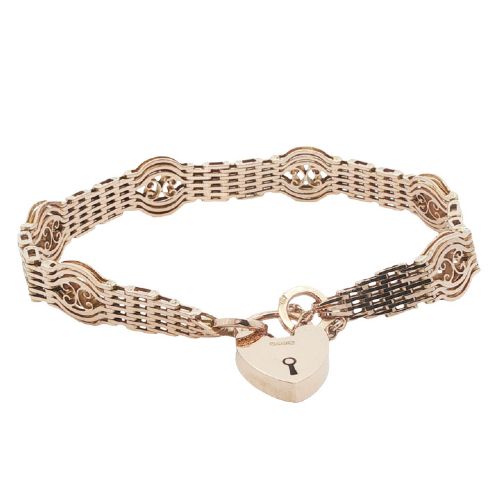
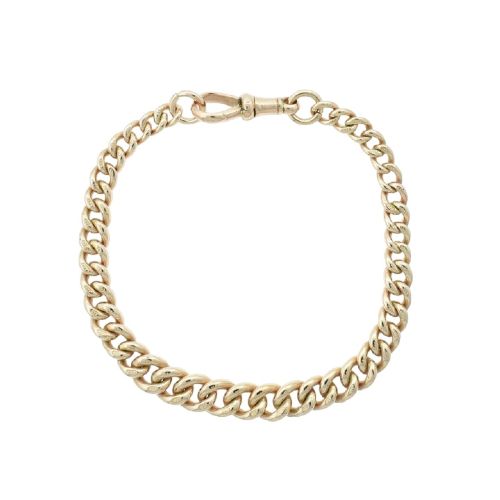
A victorian chain bracelet spans robust curb links, ornate gate links, and modified watch chains complete with t-bars and dog clips. These pieces originate across the Victorian, Edwardian, and early twentieth-century periods, capturing diverse stylistic turns from plain utility to intricate aesthetic engraving.
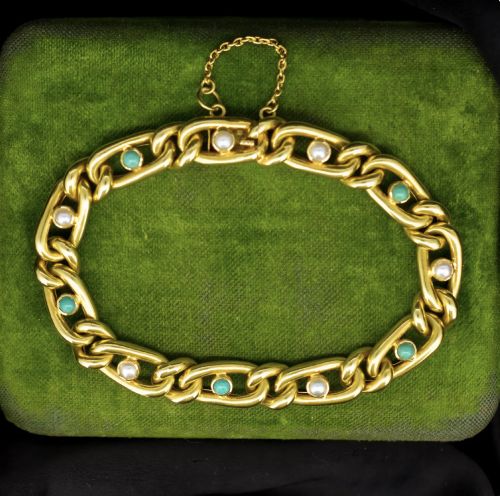
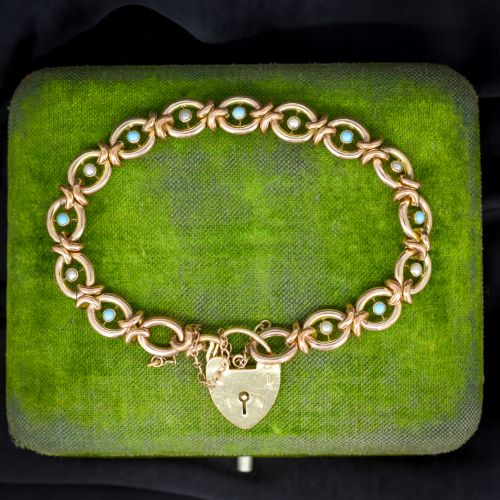
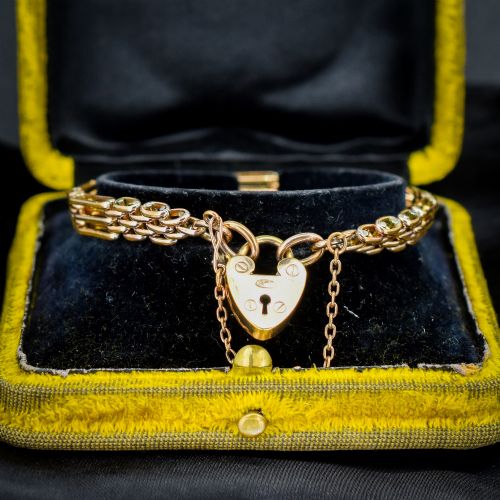
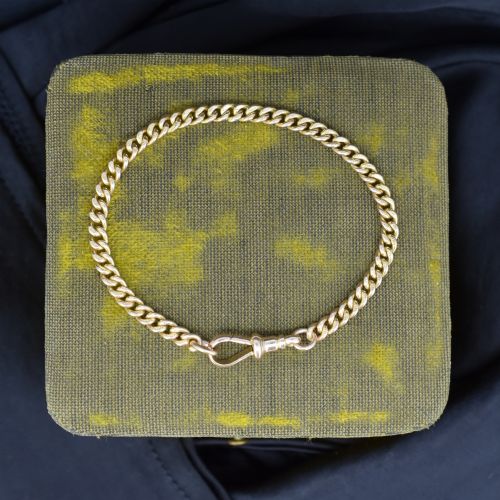
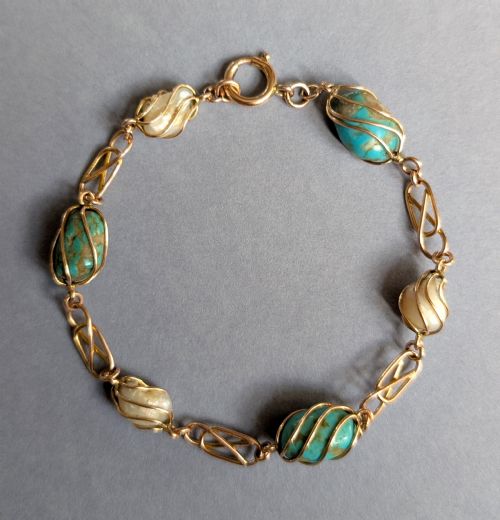
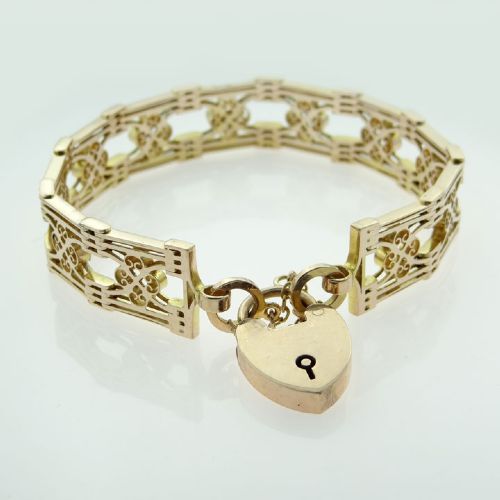
The most common formats met on this page include heavy curb links secured by heart padlocks and graduated albert chains adapted for wrist wear. Link variations range from tubular bars and love knots to solid gate designs set with pearls, turquoise, and various coloured stones.
Materials and Technique
Construction relies heavily on nine-carat and fifteen-carat rose, yellow, and occasionally eighteen-carat gold, alongside sterling silver and niello components. Links are individually formed, soldered, and assembled by hand to create flexible bands that drape the wrist.
Surface decoration involves hand engraving, half-engraved patterns, and the integration of functional clasps such as dog clips, spring rings, and secure heart padlocks. Gemstones including pearls, turquoise, rubies, amethysts, and sapphires are flush or bezel set into the link structures.
Victorian Chain Bracelet Retail Price Guide 2026
Typical asking prices for victorian chain bracelet among the pieces listed under this phrase on Sellingantiques today, from the lower quarter to the upper quarter. They describe what is for sale here now, not the wider market.
Some bracelets hide secret compartments or concealed clasps, keeping their fastening mechanisms discreetly out of sight.
Distinctions in Standard
Quality rests in the substantial weight of the metal and the crispness of the hand-engraved details across the links. Pieces with higher gold carat ratings and dense, solid construction display superior durability and presence on the arm.
Integration of original components, such as matching safety chains, functional dog clips, and secure heart padlocks, elevates the integrity of the piece. The selection of quality gemstones, from matched pearls to natural sapphires and opals, distinguishes finer examples.
The Victorian Chain Bracelet Glossary
- Curb link
- A type of chain formed by interlocking, twisted links that lie flat against the wrist. This sturdy construction forms the base of many heavy bracelets.
- Dog clip
- A spring-loaded snap hook traditionally used on watch chains that functions securely as a bracelet clasp. It allows the chain to attach to rings or links.
- T-bar
- A transverse bar attached to a short drop chain, originally designed to secure a pocket watch through a waistcoat buttonhole. On bracelets, it serves as a decorative pendant feature.
- Gate link
- A patterned link structure resembling miniature metal gates, joined in parallel rows to create wide, flexible bands. This form is frequently paired with a heart padlock clasp.
- Niello
- A black metallic alloy of sulphur, silver, lead, and copper used to fill engraved designs on metal surfaces. It creates stark visual contrast against silver or gold backgrounds.
Victorian Chain Bracelet: Frequently Asked Questions
How do I wear a victorian chain bracelet?
These bracelets secure around the wrist using built-in clasps like dog clips, spring rings, or heart padlocks. Many designs incorporate safety chains to prevent accidental loss during daily wear.
Because these pieces possess significant weight and solid metal links, they sit comfortably alongside other jewellery or stand alone as a primary wrist ornament.
Were these bracelets originally watch chains?
Many examples began life as albert watch chains or pocket watch attachments before being adapted for the wrist. Jewellers often reconfigured these chains by adding padlocks or adjusting lengths to suit wrist measurements.
Evidence of this origin appears in the retention of t-bars and dog clips on pieces designed for wear on the arm.
What is a heart padlock clasp?
A heart padlock is a decorative and functional fastening shaped like a padlock, frequently opened via a small internal spring mechanism. These clasps secure the ends of curb and gate link bracelets together.
They often feature hand engraving, matching the decorative work found on the primary chain links.
How do I date these bracelets?
Dating relies on stylistic markers, construction techniques, and hallmarks stamped into the metal links. Pieces span the Victorian era, Edwardian period, and early twentieth century up to the nineteen-twenties.
Graduated links, niello work, and specific gemstone pairings like turquoise and pearls point to distinct periods of manufacture.