







Victorian Cased Bird
A victorian cased bird brings the colours of the natural world indoors, preserved behind glass in domestic settings.
Victorian Cased Bird
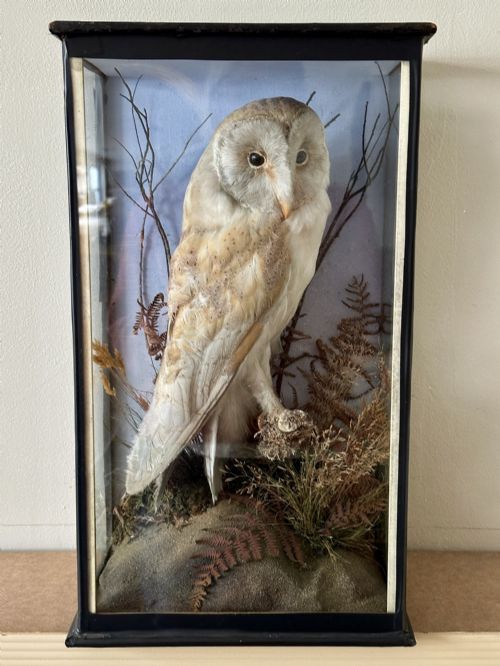
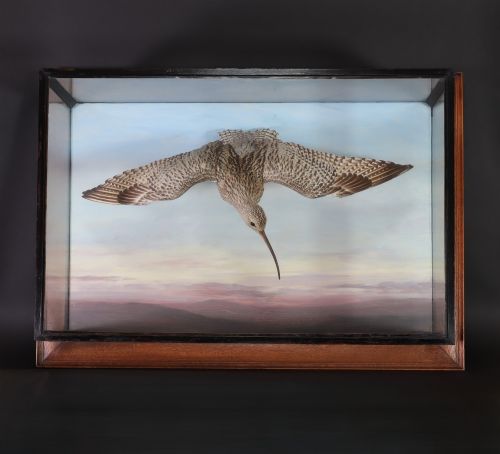
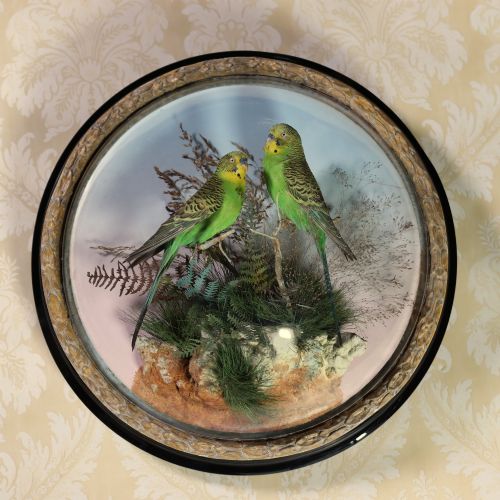
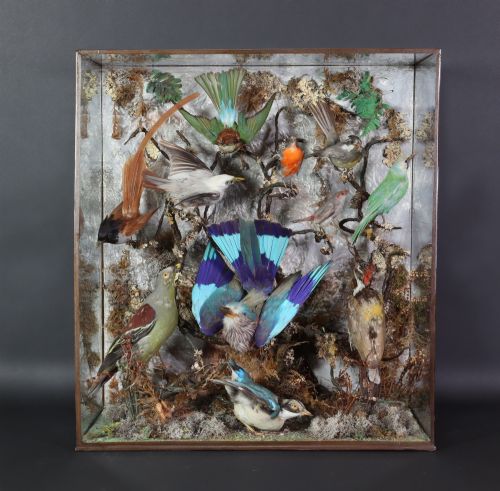
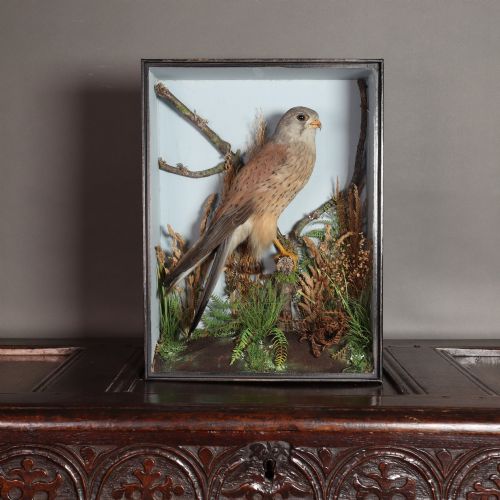
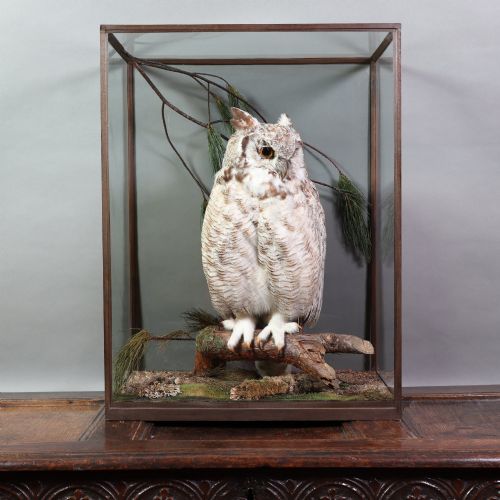
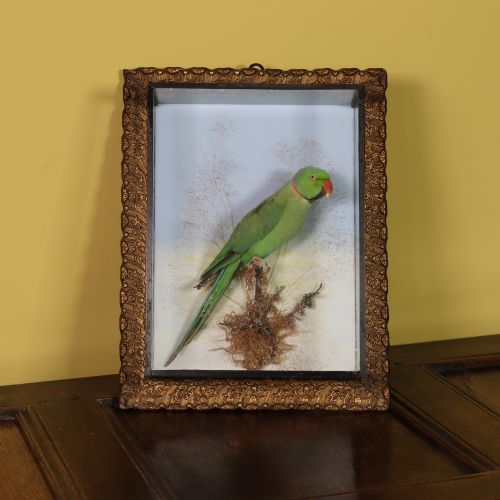
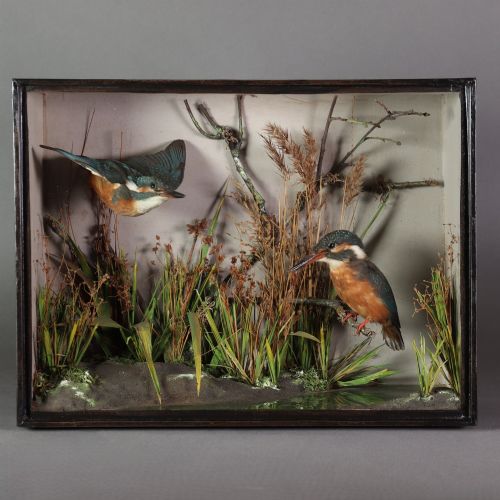
A victorian cased bird is a preserved avian specimen housed in a glass dome, wall frame, or wooden display case to protect delicate plumage from dust and damage. These pieces capture mid-to-late nineteenth-century natural history interests, ranging from single specimens like a kestrel or white pheasant to complex compositions of mixed colourful birds from distant regions.
Buyers on this page will most frequently encounter framed mounts, flat-sided domes, and table cases enclosing native and exotic species. The selection includes work by prominent provincial and London taxidermists from the Victorian, Edwardian, and Meiji periods.
Materials and Construction
The taxidermy process relies on preserved specimens mounted over internal armatures, arranged alongside natural elements such as moss, paper, flora, and painted snow scenes to mimic a living habitat. Wood provides the structural backing and frames, while ebonised wood often finishes the outer surrounds of shadow boxes and display cabinets.
Glass domes and glazed front panels seal the arrangement completely, protecting the feathers and paper components from atmospheric decay. Some compositions incorporate heavy cast silver or sterling silver elements alongside the taxidermy or within associated case work.
Victorian Cased Bird Retail Price Guide 2026
Typical asking prices for victorian cased bird among the pieces listed under this phrase on Sellingantiques today, from the lower quarter to the upper quarter. They describe what is for sale here now, not the wider market.
Listings feature taxidermy cases and domes spanning the Victorian, Edwardian, and Meiji periods, utilising glass, wood, feathers, and preserved specimens.
Judging Quality and Execution
Quality in a victorian cased bird rests upon the taxidermist's ability to render a realistic, lifelike posture rather than a stiff or distorted form. The preservation of the plumage, the natural fall of the feathers, and the botanical accuracy of the surrounding moss and flora distinguish superior Victorian natural history work from simpler examples.
The complexity of the composition elevates a piece, whether through a pair of birds interacting in a snow scene or a multi-species display of exotic specimens. Furthermore, the presence of maker signatures from established practitioners adds historical weight to the finished case.
P. Spicer of Leamington Spa·Cullingford of Durham·J Griffiths of Burford·Rowland Ward Ltd·T. E. Gunn·William Bazeley & Sons·James Gardner·W.F. Homer London
The Victorian Cased Bird Glossary
- Ebonised wood
- Timber treated with a dark stain or finish to imitate true ebony, commonly used for nineteenth-century display frames and bases.
- Dome
- A blown glass cover shaped to sit over a wooden base, protecting delicate taxidermy displays from dust and handling.
- Preserved specimen
- An animal skin prepared and mounted by a taxidermist for scientific study or interior display.
- Flora
- Plant life arranged inside the glass case to recreate the natural habitat of the avian specimen.
- Taxidermy
- The art of preparing, stuffing, and mounting the skins of animals for display in realistic poses.
Victorian Cased Bird: Frequently Asked Questions
What is a victorian cased bird?
A victorian cased bird is a preserved avian specimen enclosed within a glass dome, wall frame, or wooden display cabinet.
These pieces served as decorative items and natural history displays in nineteenth-century homes, protecting delicate feathers from dust.
How should I display my cased bird?
Place your cased bird away from direct sunlight to prevent the vibrant feather colours from fading over time.
Keep the glass clean using a soft cloth and maintain a stable indoor temperature to protect the antique wood and internal mounts.
How do I identify the taxidermist?
Look inside the case or on the backing board for paper trade labels, handwritten signatures, or makers' stamps.
Prominent practitioners often placed their business cards or printed labels directly onto the wooden base or interior glass.
Are these pieces from the Victorian era?
The listings span the Victorian period, the Edwardian era, and the late nineteenth century, reflecting popular natural history collecting habits.
Materials like ebonised wood, antique paper, and hand-blown glass help indicate the age of the housing.