






Victorian Cased Bird Specimen
These Victorian cased bird specimen pieces are preserved natural history displays bringing vibrant avian life into the nineteenth-century drawing room.
Victorian Cased Bird Specimen
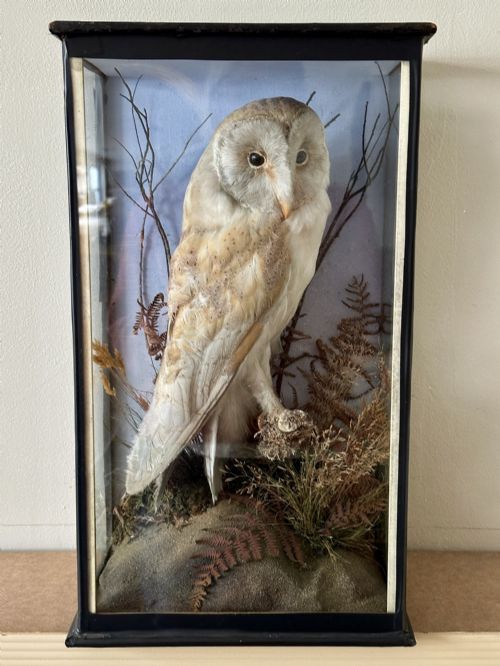
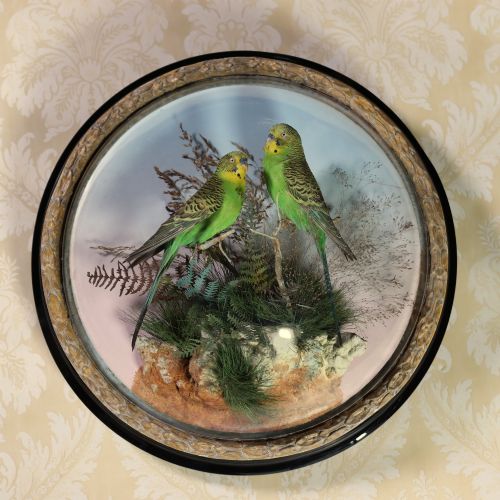
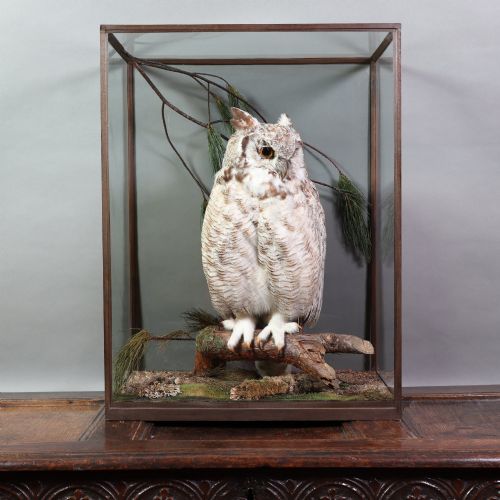
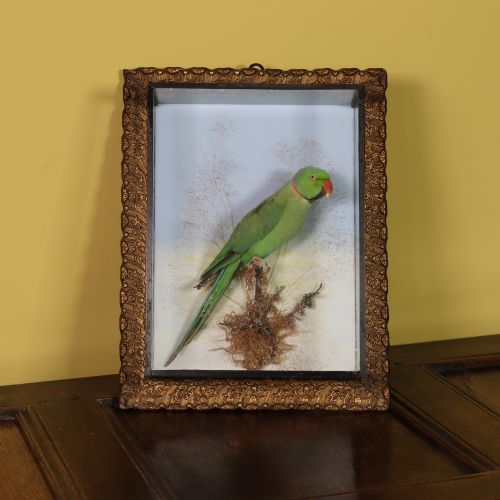
When you search for a victorian cased bird specimen, you enter a distinct realm of nineteenth-century natural history decoration where avian subjects are preserved behind glass. The pieces on this page span the Victorian and Edwardian eras, taking the form of wall-hung picture frame cases, wooden display boxes, and glass domes.
Compositions range from single specimens such as kingfishers, owls, and herons to elaborate multi-bird groupings featuring exotic parrots, bantams, and mixed foreign birds. These assemblies served as both scientific curiosities and domestic ornaments during a period captivated by the natural world.
Materials and construction
Taxidermists utilised preserved specimens mounted amidst artificial foliage, dried moss, and painted backgrounds to recreate natural habitats within timber enclosures. Glazed fronts and glass domes protected the delicate feathers from dust and insect damage while allowing uninterrupted observation.
Enclosing frames and bases were typically constructed from wood, sometimes accented with gilt details, housing the paper linings and labels that often identified the maker or the origin of the birds.
Victorian Cased Bird Specimen Retail Price Guide 2026
Typical asking prices for victorian cased bird specimen among the pieces listed under this phrase on Sellingantiques today, from the lower quarter to the upper quarter. They describe what is for sale here now, not the wider market.
Listings feature pieces spanning the Victorian and Edwardian eras, incorporating materials such as glass, wood, feathers, moss, and paper.
Distinctions in quality
The standard of a victorian cased bird specimen rests primarily upon the anatomical accuracy and natural posture achieved by the taxidermist. Skilled practitioners maintained lifelike proportions and plumage condition, whereas lesser examples display stiffness or anatomical distortion.
The complexity of the composition and the preservation of the surrounding habitat materials also determine distinction. Elaborate multi-species arrangements or signed works by notable practitioners demonstrate superior workshop execution.
J Griffiths of Burford·Rowland Ward Ltd·William Bazeley and Sons·James Gardner·W F Homer London
The Victorian Cased Bird Specimen Glossary
- Taxidermy
- The art of preparing, stuffing, and mounting the skins of animals for display. In these pieces, it involves recreating lifelike avian forms.
- Dome
- A rounded glass cover set upon a wooden base used to enclose and protect delicate bird specimens. It offers a 360-degree view of the interior composition.
- Specimen
- An individual animal or part of an animal collected for scientific study or display. These examples showcase particular bird species preserved from the nineteenth century.
- Case
- A wooden enclosure with a glass viewing panel designed to house taxidermy displays. Picture frame variants allowed wall mounting for domestic display.
Victorian Cased Bird Specimen: Frequently Asked Questions
Where should I place taxidermy in my home?
Position cases away from direct sunlight to prevent the fading of delicate bird plumage and painted backgrounds. Stable room temperatures protect the dried organic materials inside.
Place them on sturdy surfaces or hang picture frame cases securely on walls capable of supporting timber and glass.
How do I identify a Victorian bird case?
Examine the construction methods, framing timber, and interior paper linings typical of nineteenth-century workshop practices. Hand-written labels or maker stamps often provide specific dates and locations.
Stylistic cues such as naturalistic moss arrangements and specific framing formats distinguish Victorian pieces from later reproductions.
Why are some birds arranged in groups?
Multi-bird compositions allowed taxidermists to showcase exotic species alongside familiar British birds within a single decorative landscape. These arrangements reflected Victorian fascination with global exploration and natural history.
Compositions varied from simple pairs to complex displays containing colourful specimens from New Guinea, South America, and Australia.