




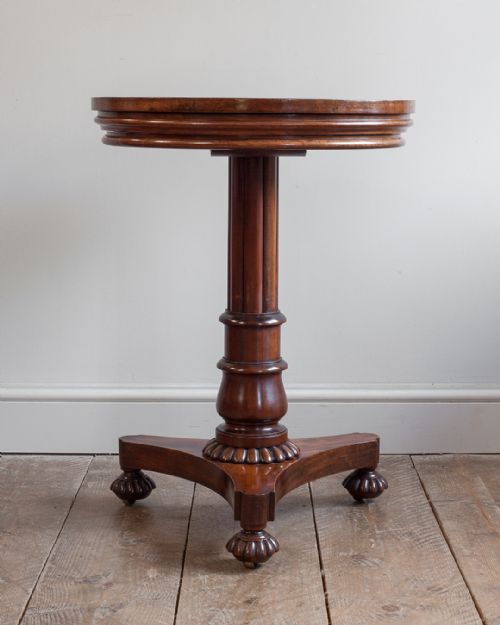
Victorian Carved Tripod Base
A victorian carved tripod base brings steady balance and distinct nineteenth-century form to a room.
Victorian Carved Tripod Base
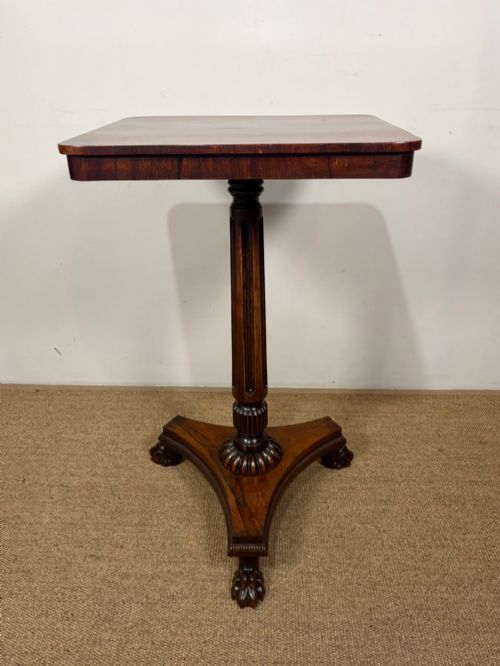
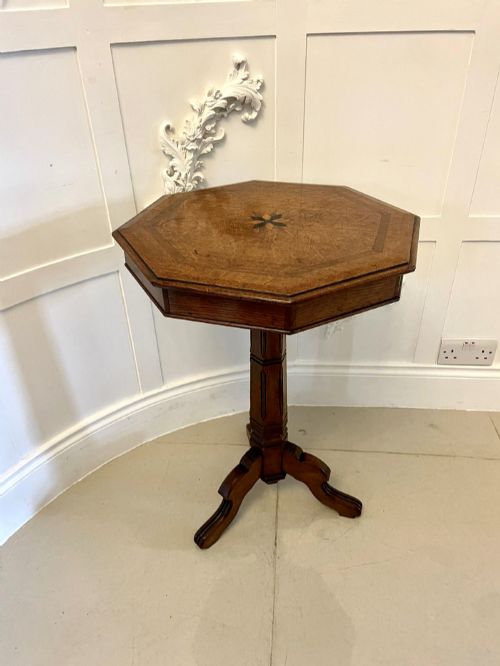
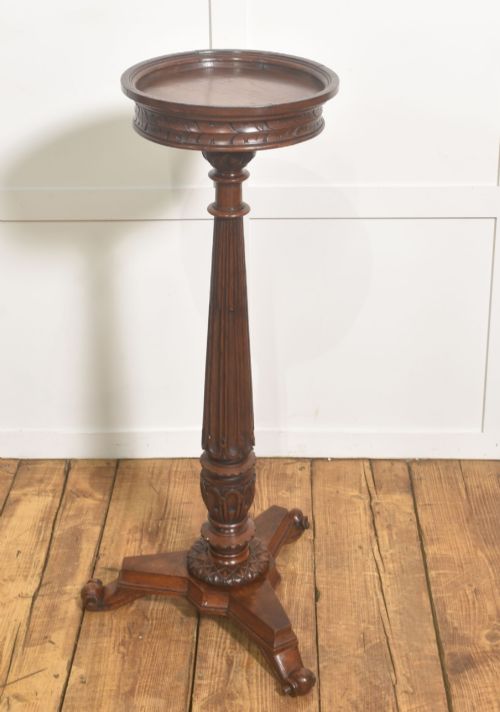
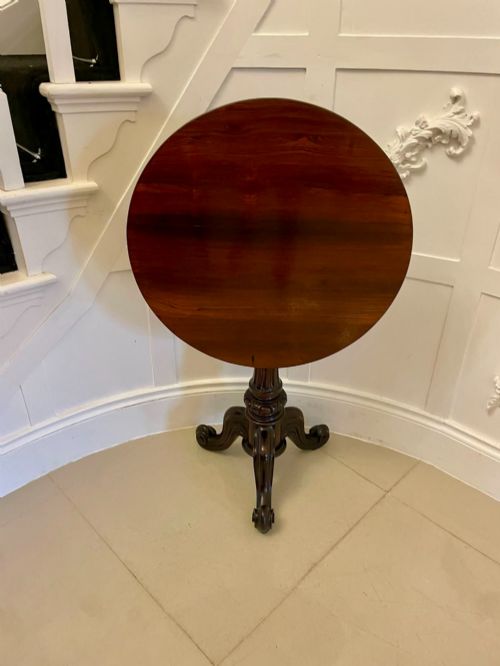
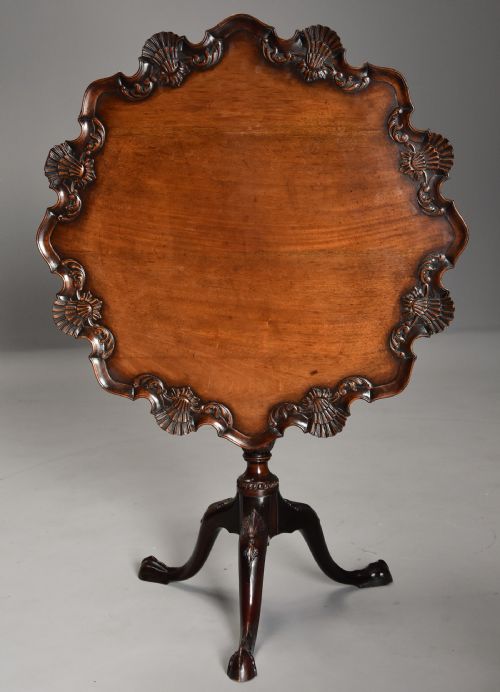
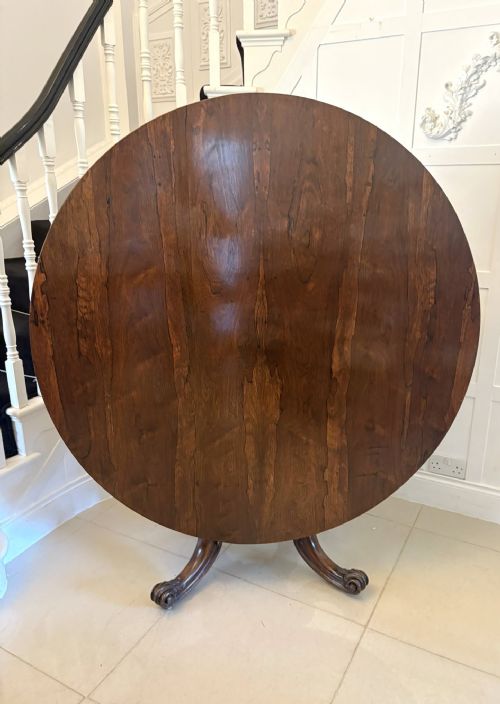
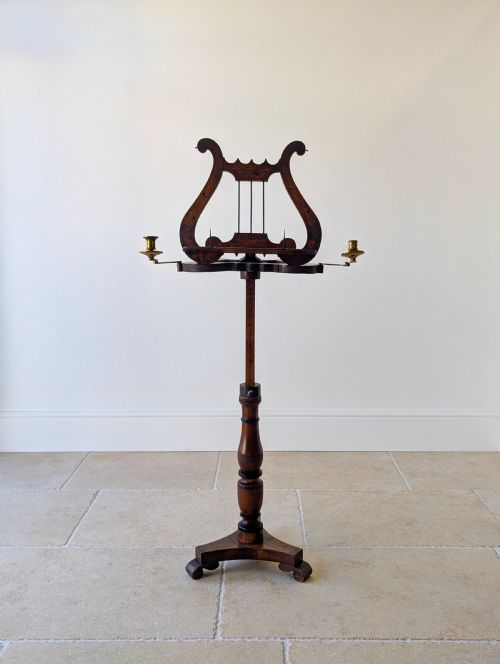
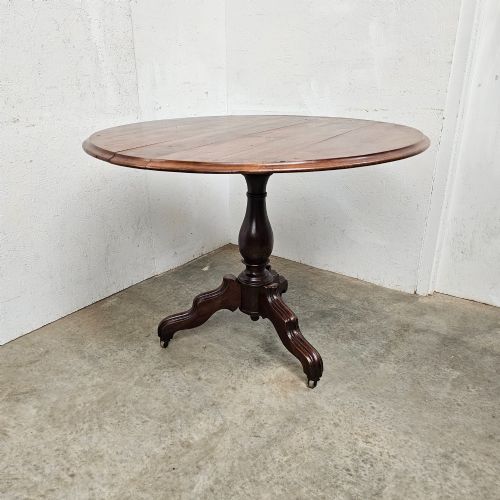
When you search for a victorian carved tripod base, you encounter a specialised form of nineteenth-century support used primarily for small tables, music stands, fire screens, and plant pedestals. These pieces anchor domestic spaces through three-legged stands that frequently feature turned columns and carved cabriole legs.
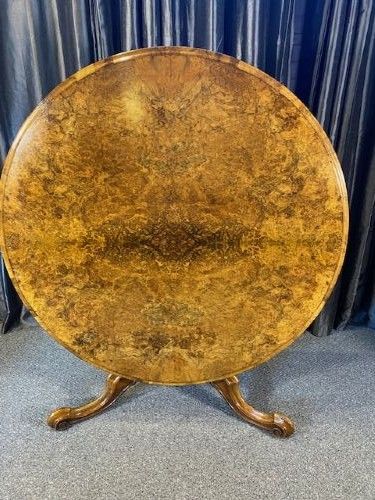
The selections on this page draw from the wider nineteenth century and the Victorian era, alongside related revivals like William IV and Chippendale styles. You are most likely to meet circular lamp tables, occasional tables, and centre tables resting upon these sculptural wooden supports.
Makers of the period utilised these sturdy three-point foundations to ensure stability on uneven floors while allowing ornamental carving to take centre stage beneath a usable top surface.
Materials and Construction
Cabinet makers relied heavily on dense hardwoods such as mahogany, rosewood, walnut, and burr walnut, selecting timber that could accept deep, crisp hand-carving without splitting. Exotic materials like padauk, satinwood, and ebony also appear in colonial and Anglo-Indian works.
The characteristic three-legged base connects to a central pillar through strong joinery, often incorporating tilt mechanisms, revolving tiers, or adjustable screws for music stands and dumb waiters.
Victorian Carved Tripod Base Retail Price Guide 2026
Typical asking prices for victorian carved tripod base among the pieces listed under this phrase on Sellingantiques today, from the lower quarter to the upper quarter. They describe what is for sale here now, not the wider market.
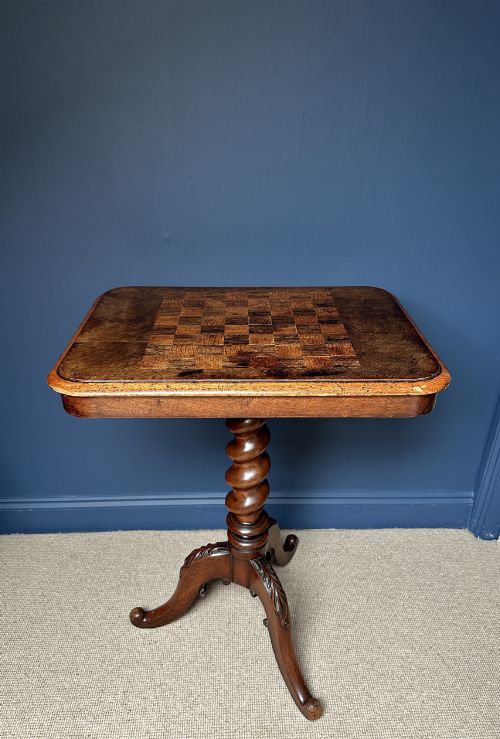
Some nineteenth-century tables hide chess boards inlaid right into the top, ready for an impromptu parlour match.
Judging Quality
The distinction between ordinary and exceptional pieces lies in the crispness and depth of the hand-carving on the knees and feet of the tripod base. Superior examples display harmonious proportions between the top surface, the turned column, and the spread of the legs.
Material selection dictates the upper tier of the range, where finely figured burr walnut, rosewood veneers, or solid padauk retain rich natural grain and patination without excessive modern restoration.
The Victorian Carved Tripod Base Glossary
- Tripod base
- A furniture support consisting of three legs radiating from a central pillar. This design provides natural stability on uneven floor surfaces.
- Tilt top
- A table top hinged to the pedestal so it can tilt vertically when not in use. This clever mechanism saved valuable floor space in nineteenth-century interiors.
- Pole screen
- An upright stand holding an adjustable shield of fabric or tapestry. It protected a seated person's face from the intense heat of an open fireplace.
- Teapoy
- A small stand or box designed to hold tea canisters. These often sat atop elaborately carved pillar and tripod bases in colonial and English drawing rooms.
- Torchiere
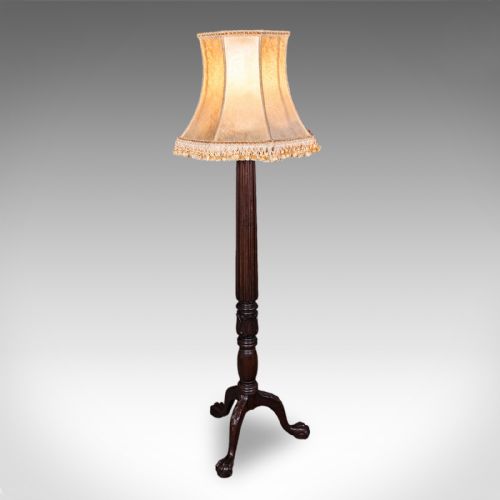
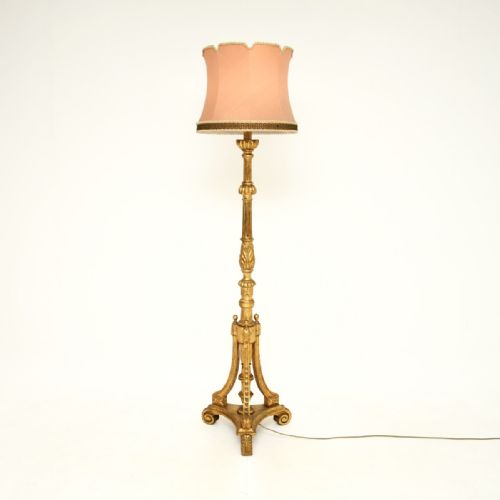
- A tall stand or floor lamp designed to hold a light source high above the ground. Nineteenth-century versions frequently incorporated heavily carved wooden tripod supports.
Victorian Carved Tripod Base: Frequently Asked Questions
What is a tripod base table used for?
These versatile pieces served various domestic functions, from holding bedside lamps and afternoon tea to displaying decorative plants and sewing equipment.
Their compact footprint made them exceptionally useful for moving around nineteenth-century drawing rooms and parlours as needed.
How do I identify a Victorian tripod base?
Look for characteristic nineteenth-century timber choices such as mahogany, rosewood, and walnut combined with turned central pillars and carved cabriole legs.
Details like tilt mechanisms, hand-carved acanthus leaf motifs, and pegged joinery help confirm the period of manufacture.
Are these bases strong enough for daily use?
The three-legged engineering was specifically designed to distribute weight evenly and prevent wobbling on historic floors.
While robust, they respond best to careful handling when moving them across rooms rather than dragging them by the top.
Can I use a pole screen as a lamp?
Many historic pole screens retain their original tripod bases and adjustable brackets, which some owners adapt to hold modern lighting fixtures.
The sturdy three-legged foundation provides an ideal secure base for floor-standing illumination.