
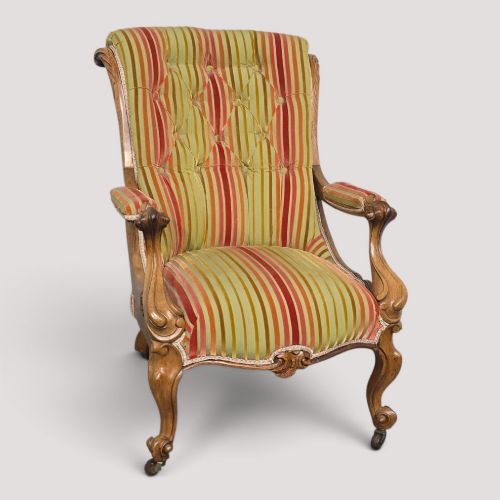

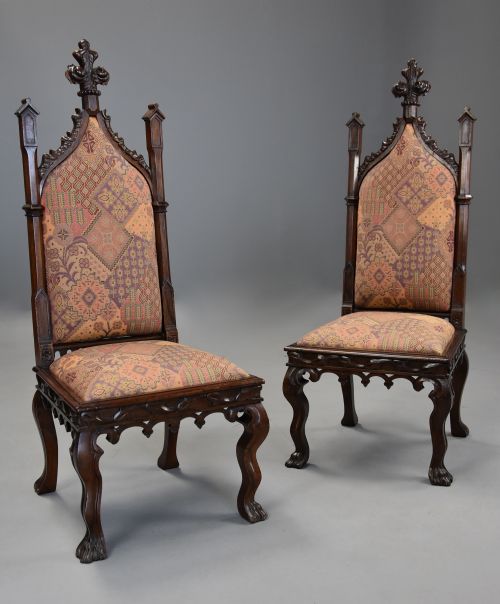
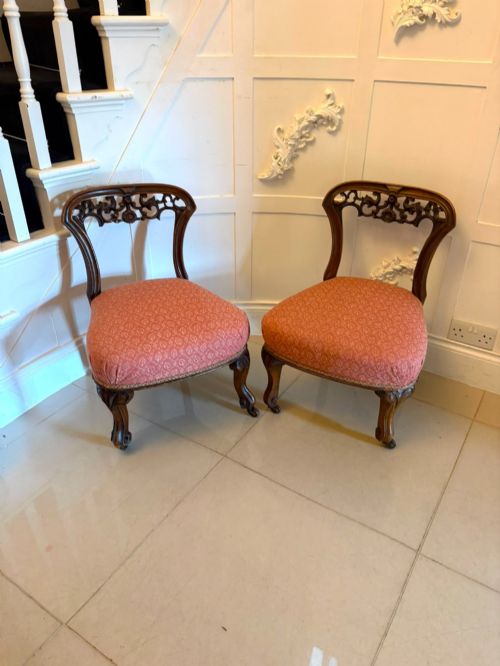
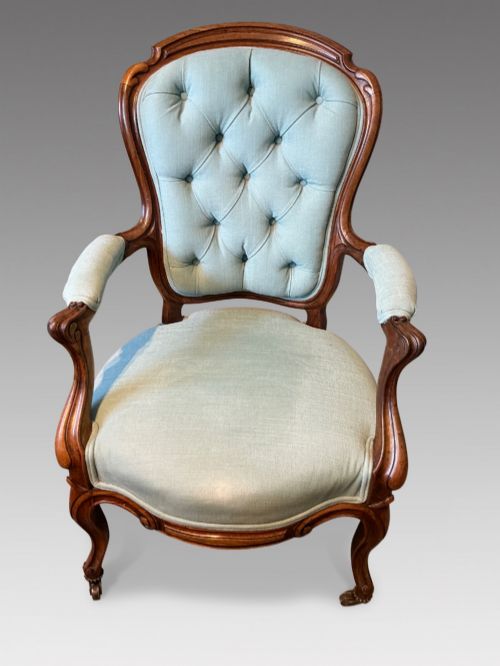

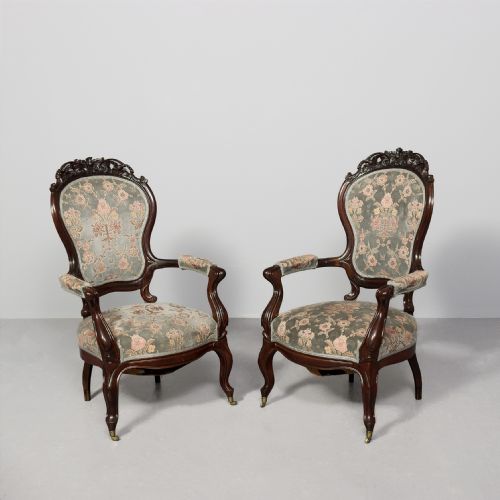

Victorian Carved Rosewood Chair
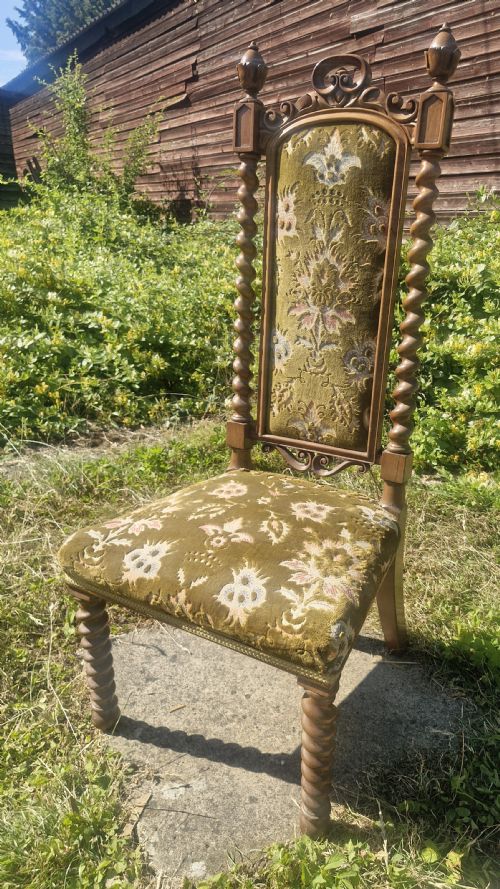
When you want a victorian carved rosewood chair, you find heavy timber frames shaped with floral motifs and covered in period textiles.
Victorian Carved Rosewood Chair
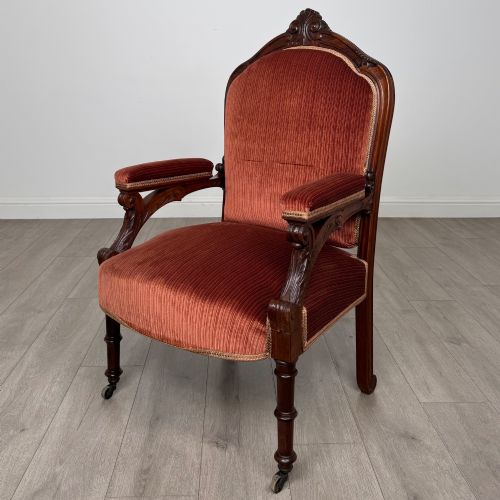
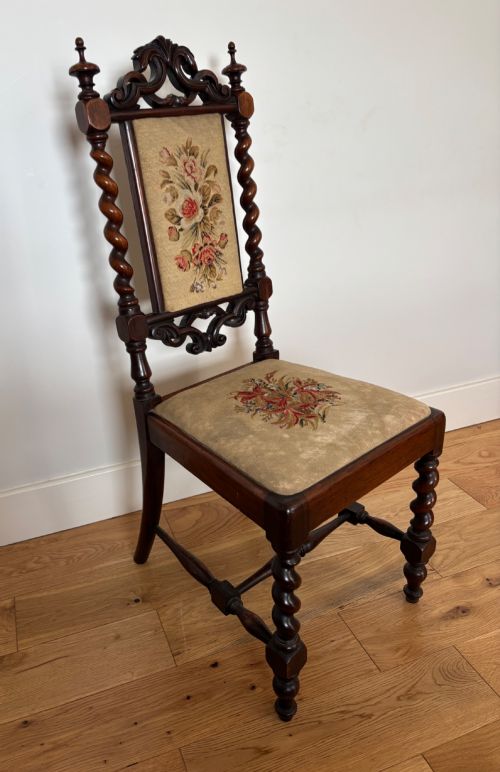
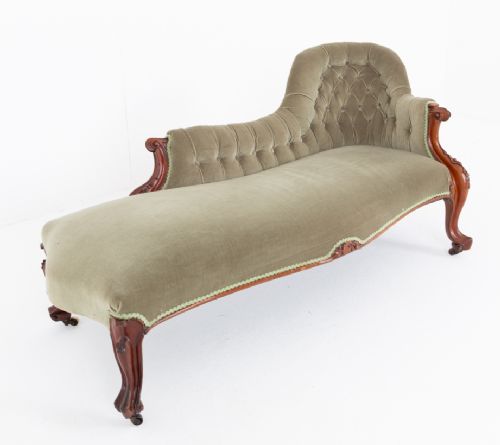
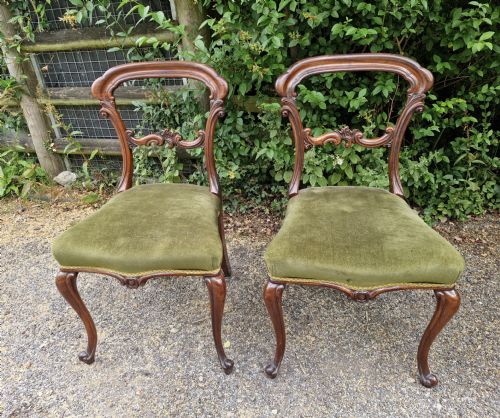
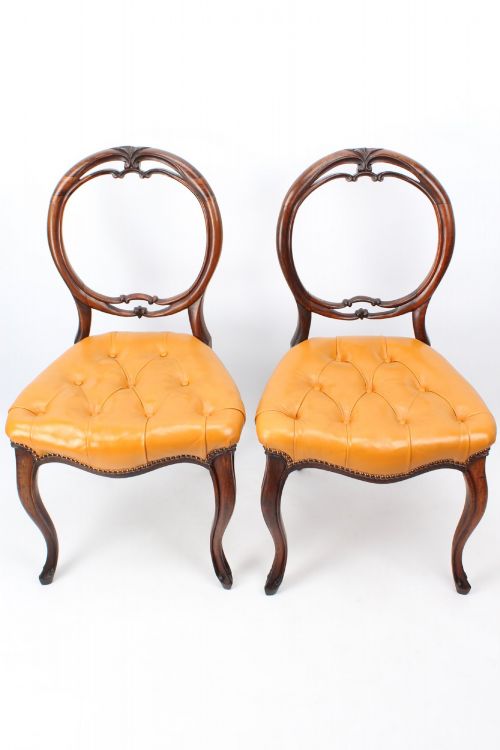
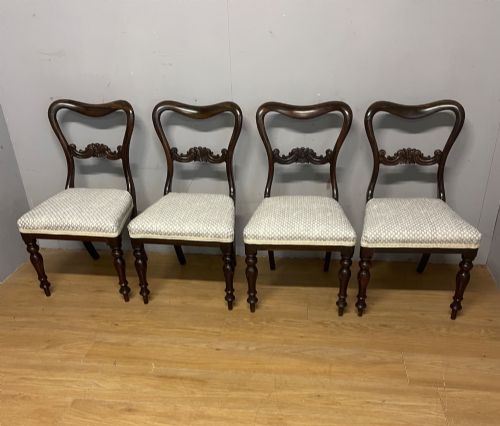
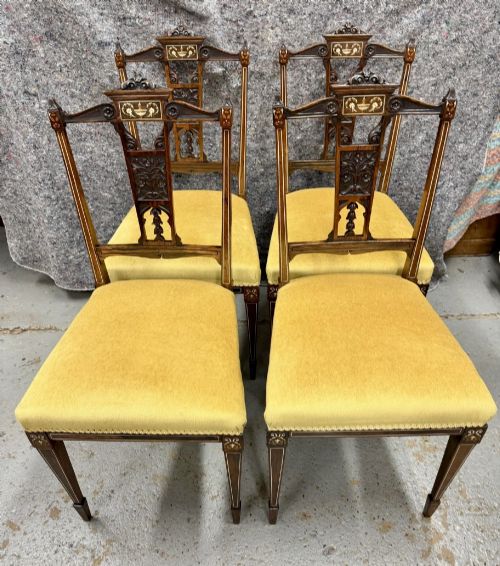
A buyer examining a victorian carved rosewood chair encounters several distinct forms, from dining sets and side chairs to library armchairs and chaise longues. The listings show heavy representation of balloon back dining chairs and open armchairs produced across the nineteenth century.
Makers utilised rich tropical timbers alongside decorative details such as barley twists, parcel gilding, and needlepoint or leather upholstery. Pieces emerge in styles spanning standard Victorian, Gothic Revival, and Rococo Revival, reflecting the changing tastes of the era.
Materials and construction
Workshops built these items using dense rosewood solids and veneers, which took deep hand-carved ornamentation along the showwood frames. Joinery relied on traditional methods to support the weight of the timber and the pressure applied to high backs and cabriole legs.
Upholstery involved internal webbing, stuffing, and outer covers of fabric, velvet, leather, or textile, often secured with rows of brass tacks or deep buttoning. Secondary woods were used for internal frames while the primary rosewood remained visible on the exposed carved portions.
Listings feature rosewood seating spanning the nineteenth century, with particular concentration around the 1850 and 1860 decades.
Assessing quality in rosewood seating
The standard of carving dictates the upper tier of these pieces, separating deep, crisp, hand-chiselled foliage from shallow, machine-cut patterns. The weight and grain density of the rosewood timber further distinguish finer workshop output from simpler commercial production.
Structural integrity of the joints and the preservation of the original showwood finish reveal the level of care a seat received over time. Sets maintaining matching grain patterns and uniform wood colour across multiple dining chairs command greater attention than mismatched groupings.
W.A. Willcocks
The Victorian Carved Rosewood Chair Glossary
- Rosewood
- A dense, dark timber featuring characteristic grain patterns and a heavy oily feel, utilised extensively for high-end nineteenth-century furniture frames.
- Balloon back
- A chair back shaped in a continuous oval curve resembling an inflated balloon, typical of mid-nineteenth-century dining and side seating.
- Cabriole leg
- A furniture leg featuring a double curve, typically arching outward and then bending inward toward a pad or scroll foot.
- Parcel gilt
- A surface treatment where specific carved details or motifs are partially highlighted with applied gold leaf.
- Showwood
- The exposed, polished wooden framework of an armchair or settee that remains visible around the upholstered sections.
Victorian Carved Rosewood Chair: Frequently Asked Questions
How do I clean rosewood furniture?
Dust the timber regularly with a soft cloth and avoid chemical sprays that damage the antique polish.
Nourish the exposed wood occasionally with appropriate wax to maintain the natural grain and deep colour.
Were these chairs used for dining?
Many examples on the market belong to large dining sets designed for formal nineteenth-century meals.
Smaller side chairs and armchairs served alternative functions in drawing rooms, libraries, and bedrooms.
How do I identify a Victorian piece?
Look for dense rosewood timber combined with characteristic revival styles like Gothic or Rococo motifs.
Construction methods, such as hand-cut joinery and period upholstery techniques, help confirm the nineteenth-century origin.
Can I reupholster an antique chair?
Many pieces survive with replacement fabric, and new upholstery allows modern owners to match existing interior schemes.
Retain traditional stuffing methods and materials where possible to preserve the structural profile of the frame.