
Victorian Carved Drawers
Victorian carved drawers combine utilitarian storage with elaborate ornamentation, offering robust construction and striking foliate or figurative detailing.
Victorian Carved Drawers
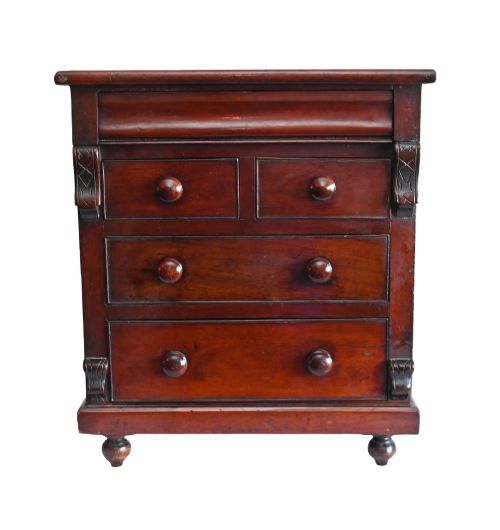
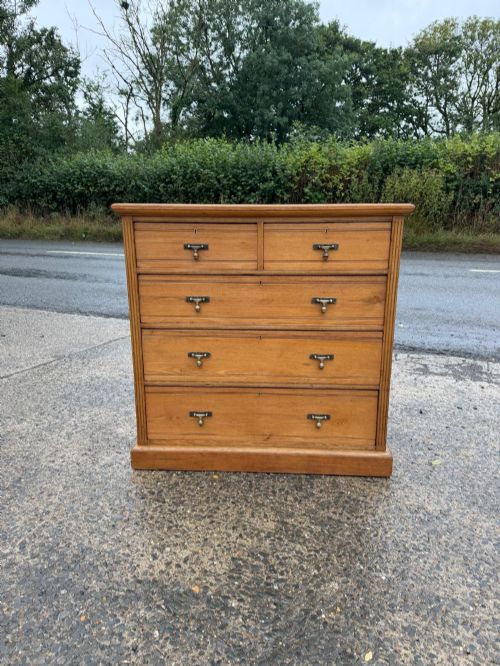
Victorian carved drawers encompass storage furniture produced during the nineteenth century, including chests of drawers, Wellington chests, and specialised desks fitted with multiple compartments. These pieces range from simple pine and oak utility items to heavy, highly decorated forms featuring distinctive Gothic Revival or Green Man motifs.
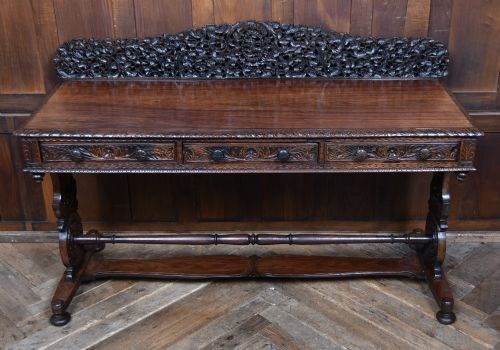
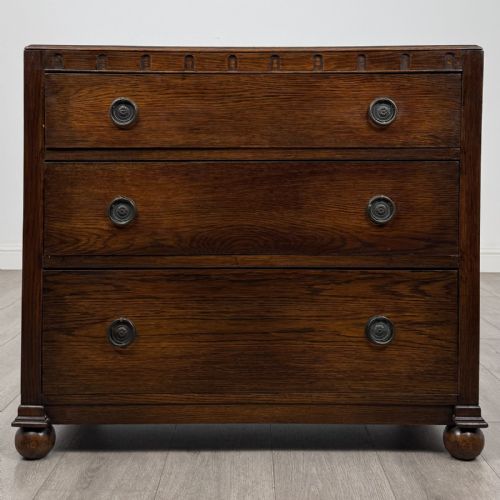
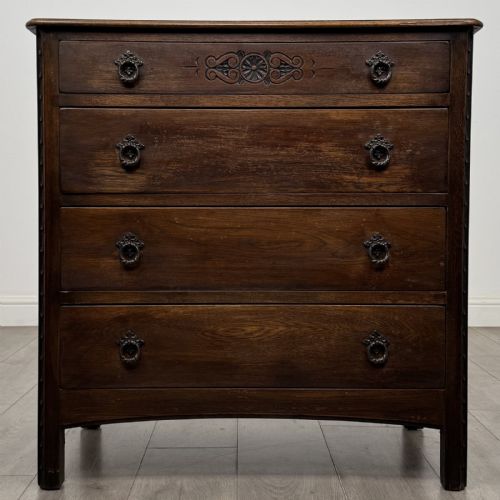
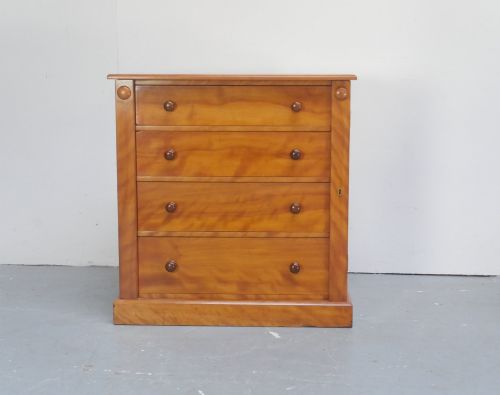
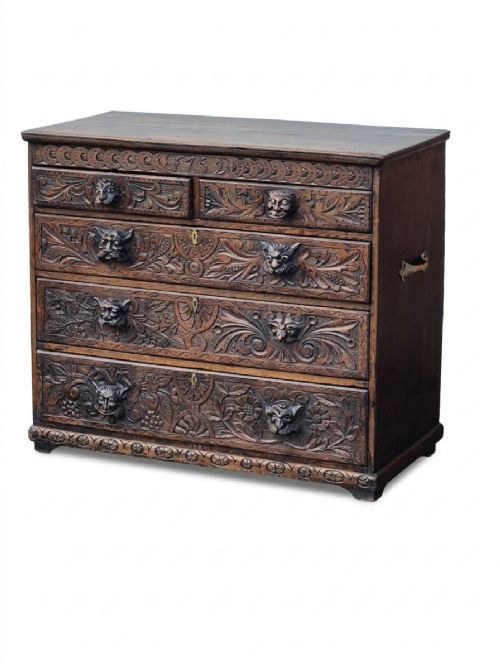
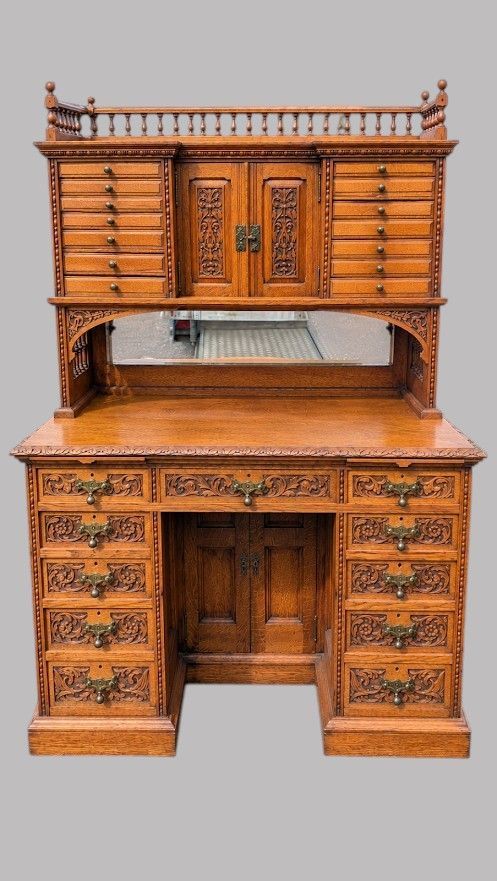
The version most commonly encountered on this page is the carved oak chest of drawers or Wellington chest, frequently dating from the 1860s to the 1890s. Such pieces often display deep relief carving, foliate details, and mask ornamentation upon drawer fronts and structural stiles.
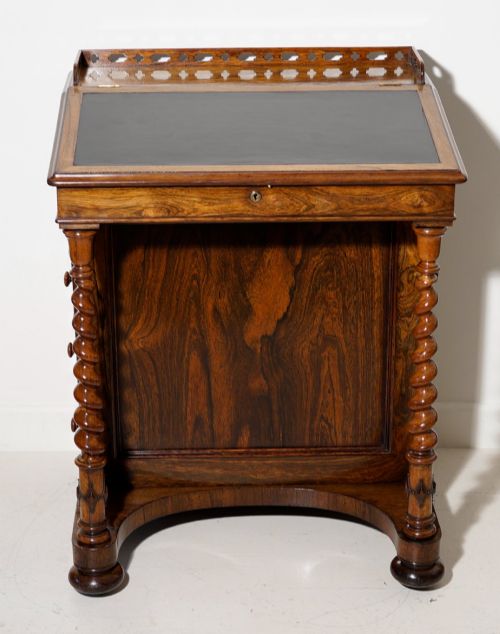
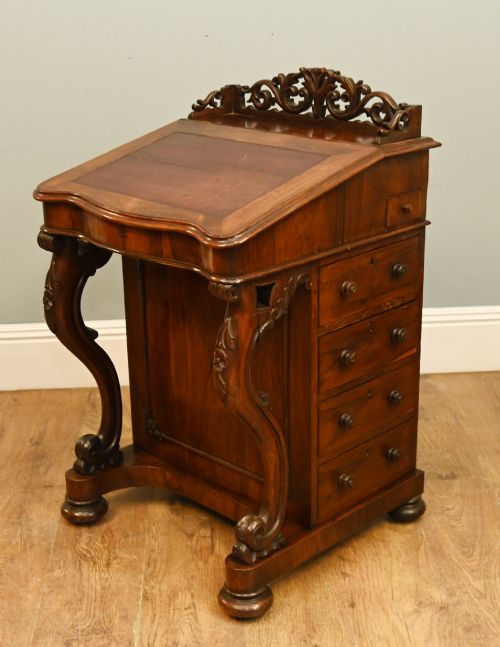
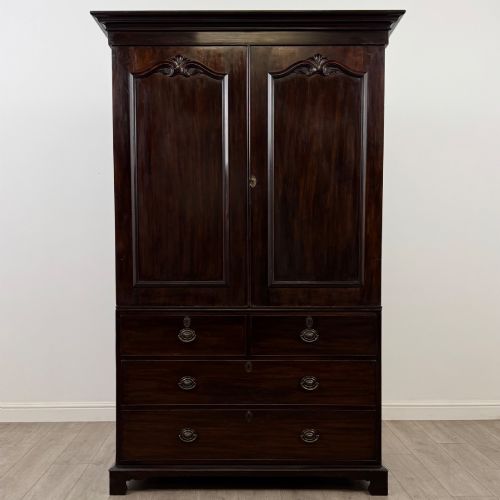
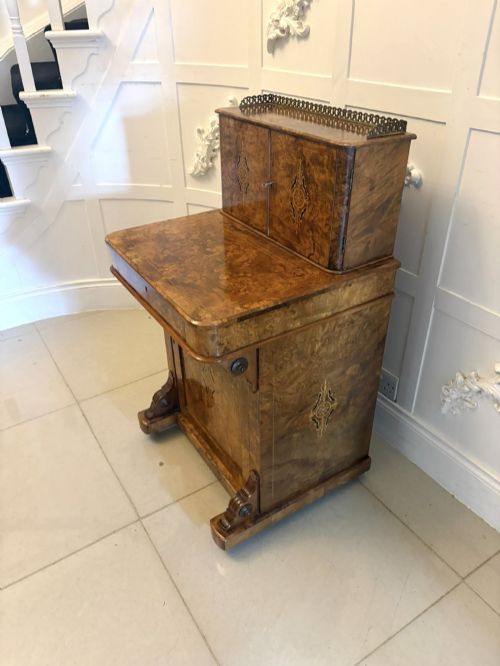
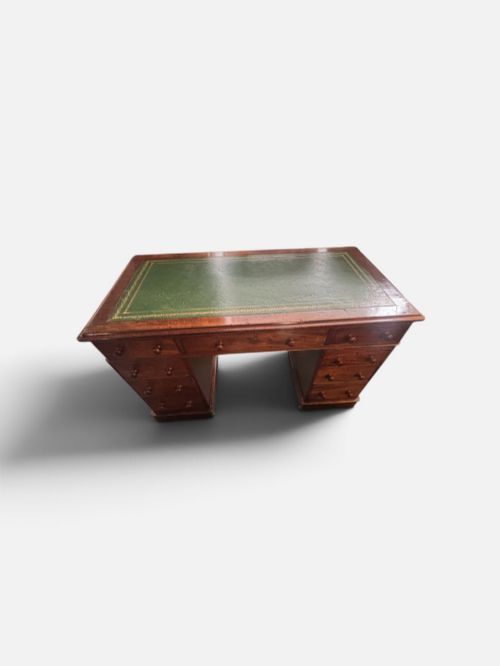
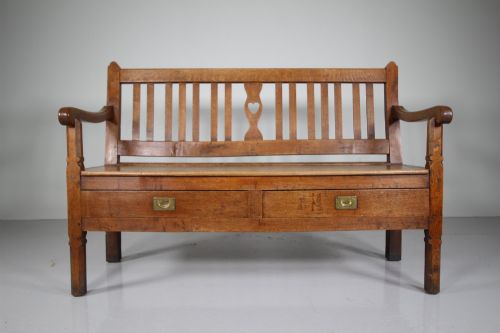
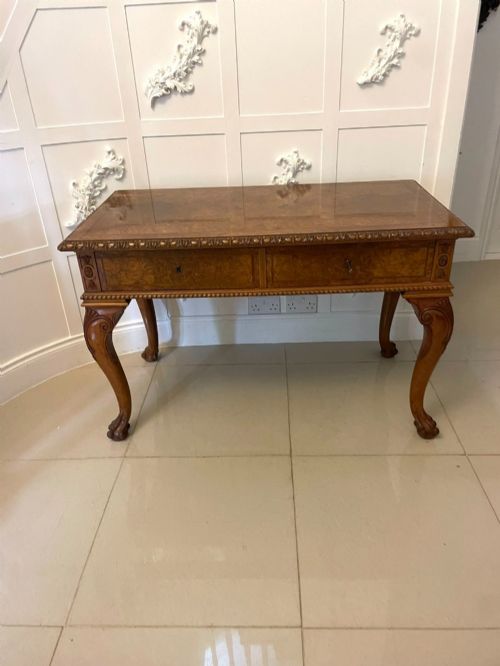
Beyond standard chests, search results for victorian carved drawers also yield kneehole desks, side tables, and compactum wardrobes incorporating drawer space alongside panelled cupboards. The materials vary widely from dark figured mahogany and burr walnut to regional oak and pine.
Materials and Construction Techniques
Cabinetmakers utilised dense timbers such as oak, mahogany, and walnut to support heavy hand-chiselled relief work without splintering. Burr walnut and figured mahogany veneers were frequently applied to primary display surfaces to achieve dramatic grain patterns.
Carving was executed entirely by hand using gouges and chisels, resulting in irregular, organic depth within foliate scrolls and grotesque masks. Drawer frames typically employed traditional dovetailed joints, while smaller secondary timbers like pine lined the interior drawer boxes.
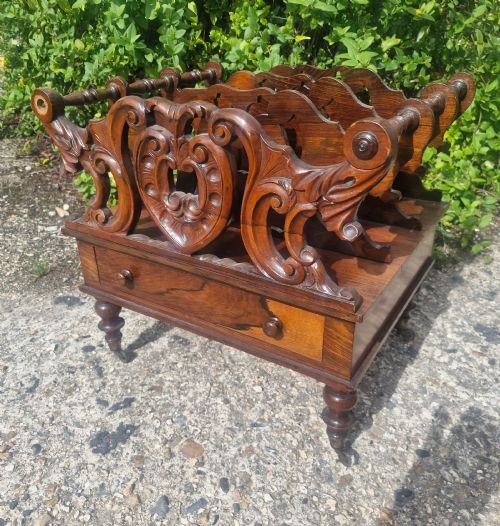
Listings feature woods including oak, mahogany, walnut, burr walnut, rosewood, satinwood, ash, and pine alongside brass and glass hardware.
Assessing Craftsmanship and Proportion
Structural integrity governs everyday utility, distinguishing solidly framed carcases with well-fitted, smoothly running drawers from warped constructions. Original hardware, such as turned wooden knobs, brass drop handles, and functioning locks with keys, preserves the unified integrity of the piece.
Mein of Kelso
The Victorian Carved Drawers Glossary
- Wellington chest
- A tall, narrow chest of drawers secured by a hinged locking stile on one side that fastens with a key. This locking mechanism originally protected valuable papers and garments in nineteenth-century townhouses.
- Green Man
- A sculptural architectural motif depicting a human face disgorged from foliage or composed entirely of leaves and vines. It appears frequently on nineteenth-century Gothic Revival furniture.
- Blind fretwork
- Carved ornamentation applied to a solid flat surface in geometric or interlaced patterns rather than pierced entirely through. This technique decorated friezes and cornices on case furniture.
- Kneehole desk
- A writing table featuring a central recess for the user's legs, flanked by two vertical banks of small drawers. These items became widely popular for domestic studies during the Victorian period.
- Serpentine shape
- A front profile characterised by a convex central curve flanked by concave sweeps towards the outer edges. This sophisticated contour required precise woodworking skills.
Victorian Carved Drawers: Frequently Asked Questions
What is a Wellington chest?
A Wellington chest is a tall, narrow set of drawers distinguished by a locking wooden bar that fastens down one vertical edge.
This design allows all the internal drawers to be secured simultaneously with a single key.
How do I identify Green Man carvings?
Green Man carvings display a human face surrounded by, or sprouting from, lush foliage, leaves, and vines.
They appear frequently on nineteenth-century oak furniture influenced by the Gothic Revival movement.
Which woods were used for these drawers?
Cabinetmakers employed dense hardwoods including oak, mahogany, walnut, and burr walnut for exterior visibility and structural strength.
Secondary woods like pine were often utilised for hidden interior components such as drawer linings and carcase backs.
How should I care for antique carved timber?
Keep wooden furniture away from direct heat sources and sudden temperature fluctuations to prevent timber shrinkage and veneer splitting.
Apply a microcrystalline wax periodically and buff gently with a soft cloth to maintain the surface sheen.
What defines Gothic Revival furniture?
Gothic Revival furniture incorporates architectural elements inspired by medieval buildings, such as pointed arches, quatrefoils, and heavy mouldings.
In Victorian pieces, these medieval details merge with domestic storage forms like side tables and wardrobes.