
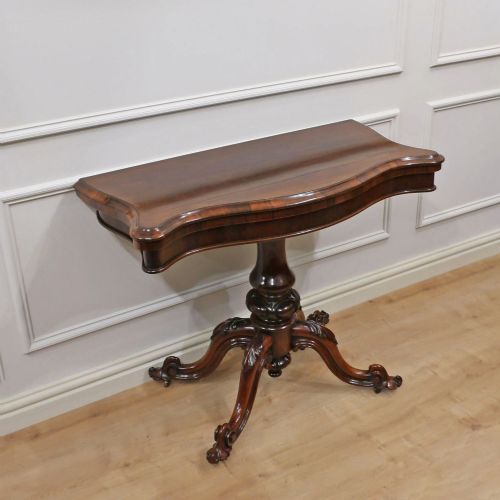
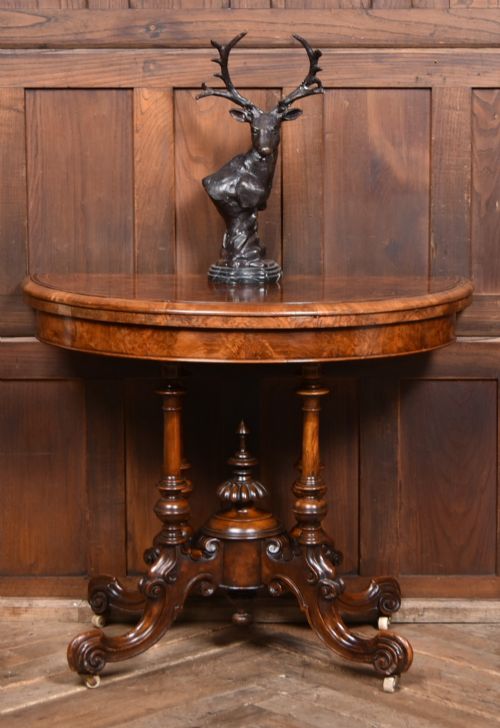
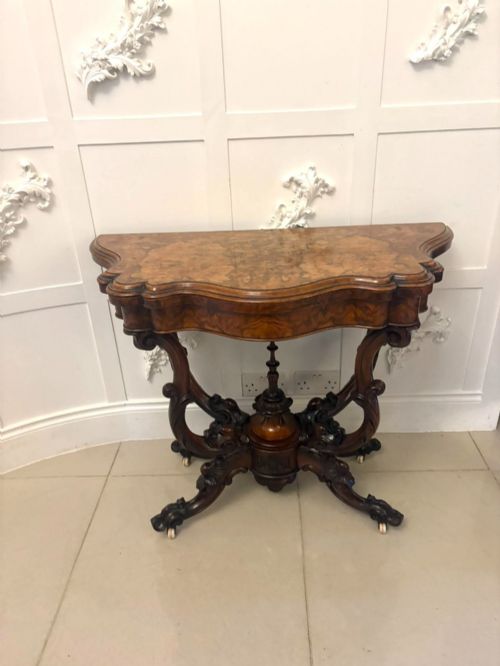
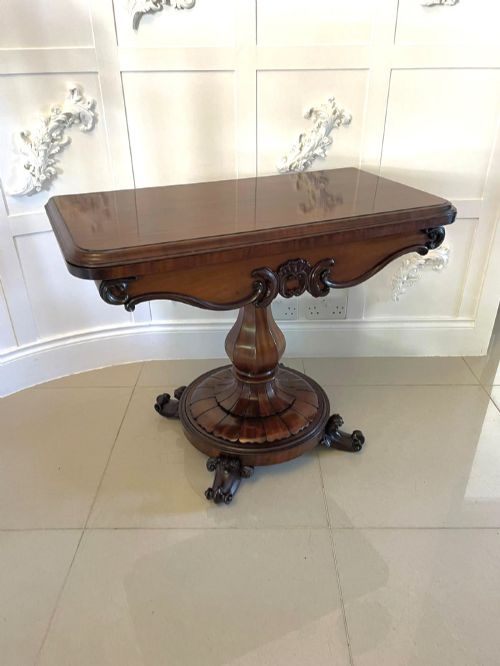

Victorian Carved Card Table
A victorian carved card table brings clever folding tops and rich timber grain to a drawing room, offering a functional surface that transforms for social play.
Victorian Carved Card Table
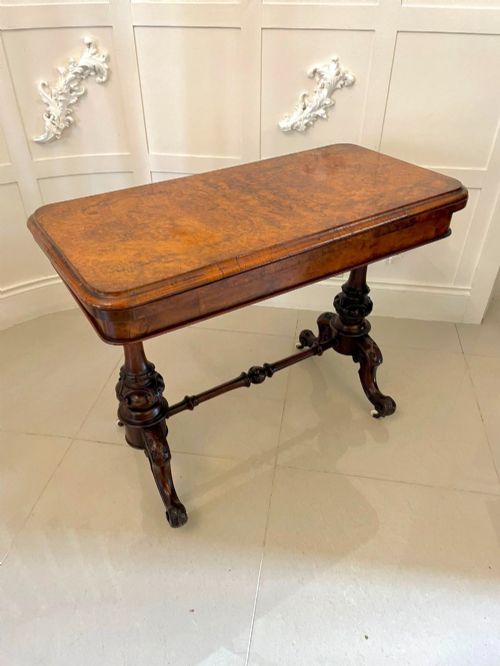
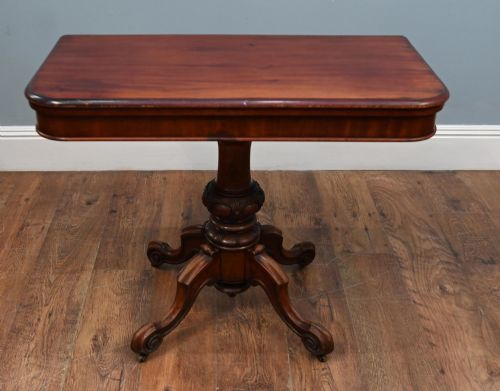
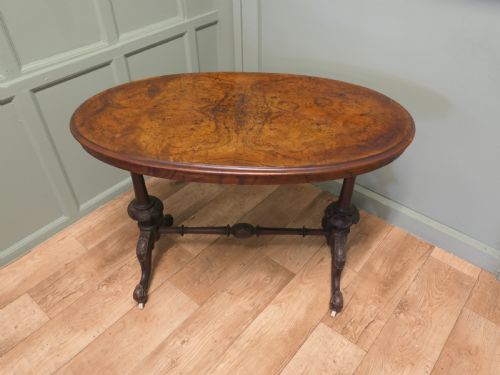
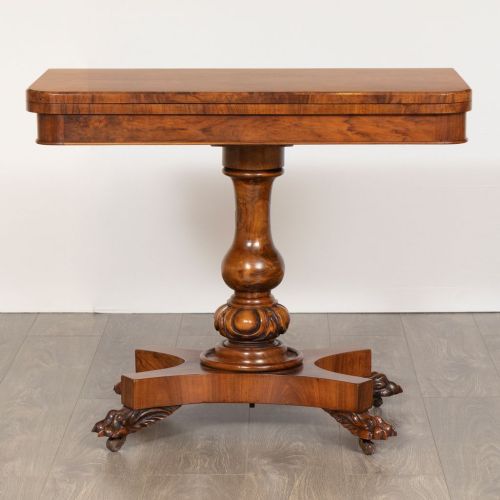
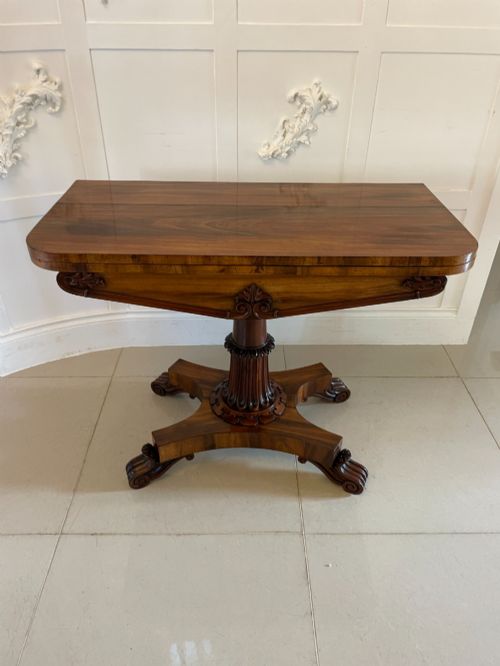
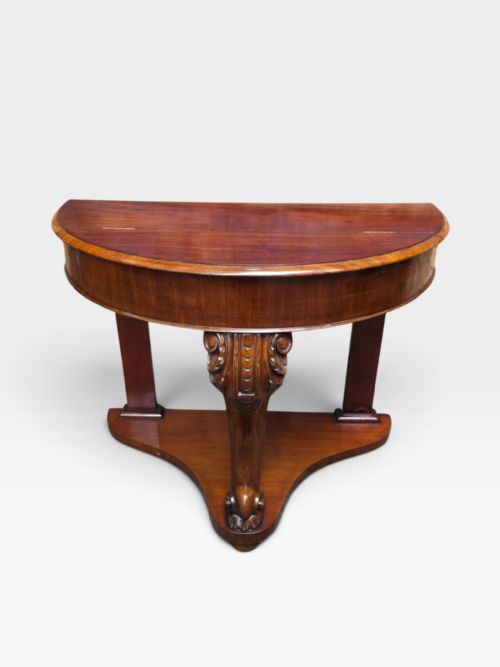
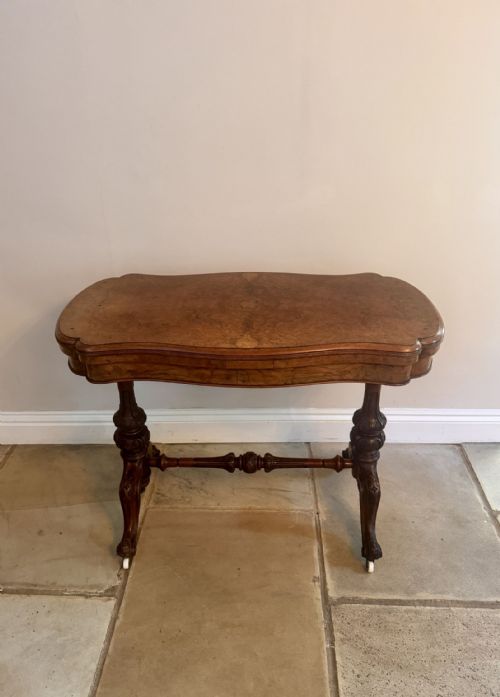
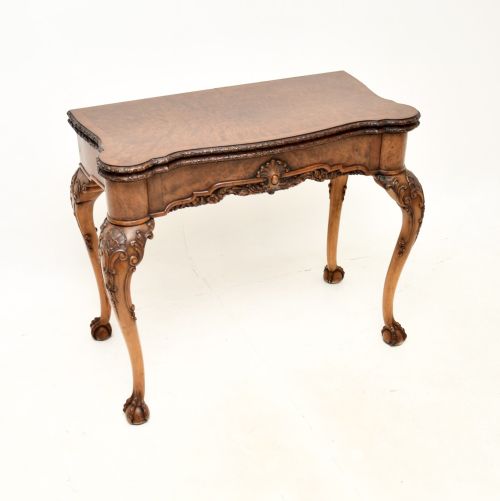
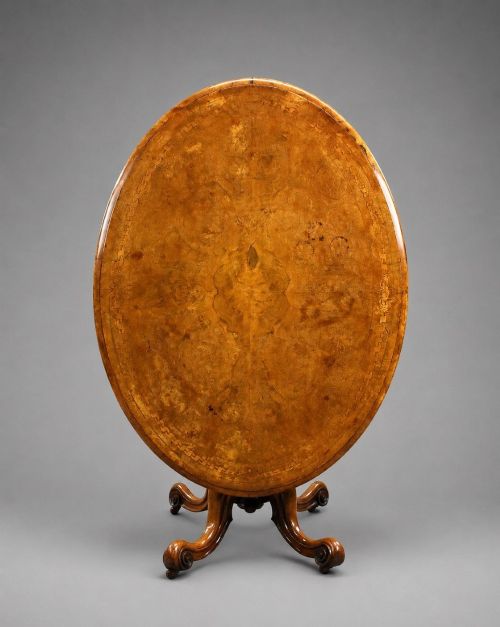
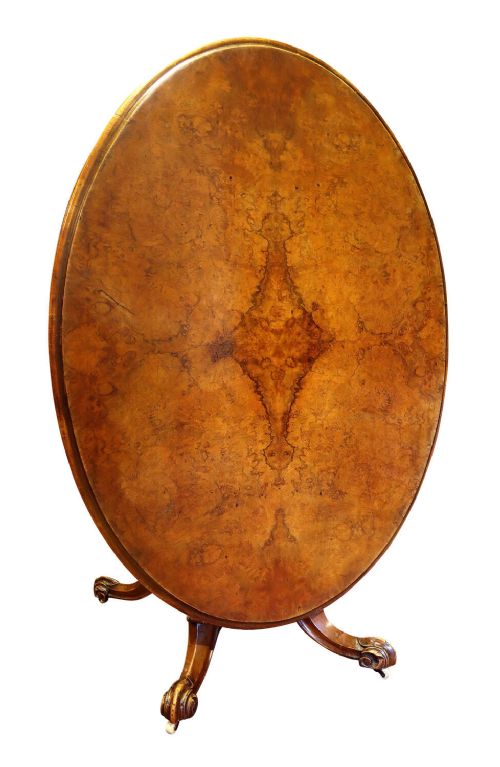
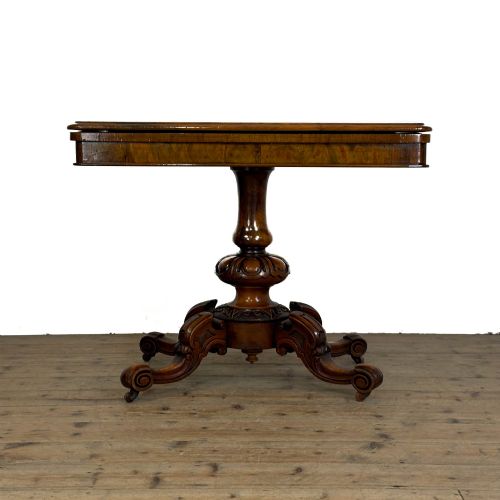
A victorian carved card table serves as a versatile piece of furniture designed for leisure, most frequently appearing in burr walnut, rosewood, or mahogany across this selection. These tables span the nineteenth century, utilising fold-over tops to convert from slim console surfaces into square or serpentine tables ready for cards and chess.
Makers and workshops produced various iterations including games tables, loo tables, and tea tables featuring carved pedestals, basket bases, or inlaid chess boards. The designs incorporate styles such as Rococo Revival and Regency, reflecting the diverse aesthetic preferences of the period.
Materials and Technique
Cabinet makers utilised dense hardwoods like mahogany and rosewood alongside decorative veneers including burr walnut to construct these tables. Surfaces often incorporated boxwood inlay and intricate hand-carved supports, pedestals, and bases.
Structural engineering focused on the turnover or fold-over mechanism, supporting a pivoting or swinging top that revealed a baize-lined interior surface for playing games.
Hidden compartments beneath the folding tops still occasionally hold stray bone counters from past parlour games.
Craftsmanship and Timber
The distinction between tiers rests upon the choice of timber veneer, such as highly figured burr walnut, and the depth and crispness of the hand carving on the pedestal and base. Superior examples display seamless alignment in their fold-over mechanisms and intricate details like boxwood inlay or figural mahogany grain.
Execution of the carved supports dictates the standard of the piece, where deeply undercut foliage and robust structural joinery elevate an ordinary table into a masterwork of nineteenth-century cabinet making.
James Shoolbred & Co.·Edwards & Roberts
The Victorian Carved Card Table Glossary
- Burr walnut
- A highly figured wood grain obtained from walnut tree growths, prized for its swirling patterns on table tops.
- Fold-over top
- A hinged surface design that doubles the table area when opened for dining or games.
- Loo table
- A large round table popular in the nineteenth century for the card game loo.
- Serpentine
- A gently undulating curved shape often seen on the edges of table tops.
- Console table
- A table designed to fit flush against a wall, frequently utilised as a base for a fold-over top.
Victorian Carved Card Table: Frequently Asked Questions
How do these folding tables work?
The top surface is hinged, allowing the upper leaf to rotate and fold out flat onto an extended frame or swinging leg. This creates a stable playing surface twice the depth of the closed console.
Inside, many pieces conceal a shallow compartment beneath the folding top used originally for storing playing cards and counters.
What woods are most common?
Walnut and burr walnut dominate the selection, offering rich brown tones and complex swirling grain patterns across the top surfaces. Rosewood and mahogany appear frequently as well, providing darker hues and sturdy structural integrity.
Secondary details often incorporate boxwood for fine inlay work, creating contrasting geometric borders around the primary timbers.
Are chess boards built into them?
Some variants include marquetry or inlaid chess and backgammon boards directly into the playing surface. These multi-purpose tables catered to various parlour games popular during the period.
Plain baize-lined surfaces appear just as often, intended primarily for card games like whist or loo rather than board games.
Where should I place one?
These tables sit neatly against a drawing room or hallway wall in their closed position, functioning as a slim console or side table. Opening the top requires clearance around the base, making them adaptable for occasional use when entertaining guests.
Positioning them away from direct sunlight and heat sources protects the polished veneer and delicate timber grain from drying out over time.