
Victorian Candle Holders Pair
When you search for victorian candle holders pair, you encounter matched pairs of nineteenth-century lighting forged in brass, silver plate, and bronze.
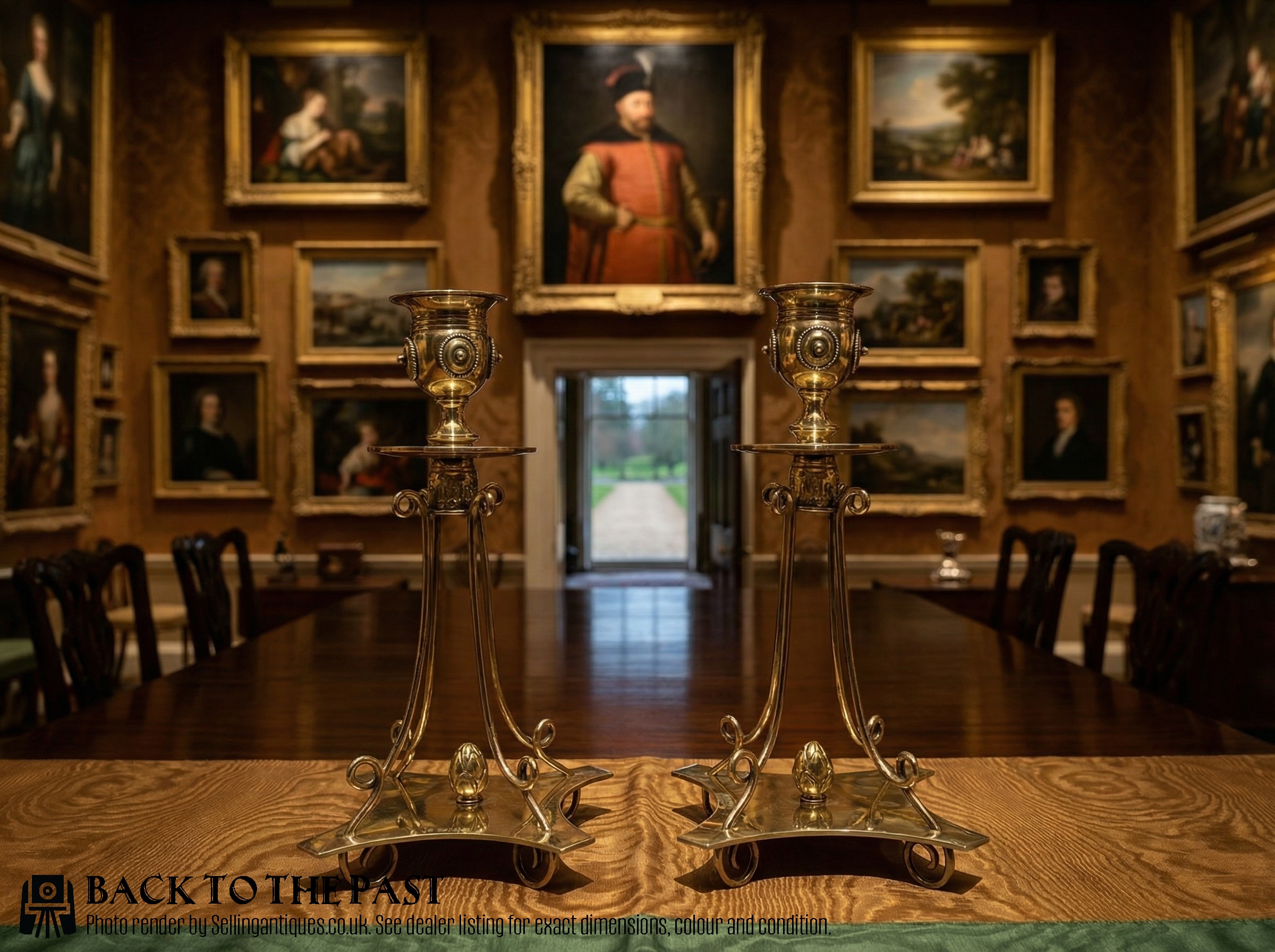
Victorian Candle Holders Pair
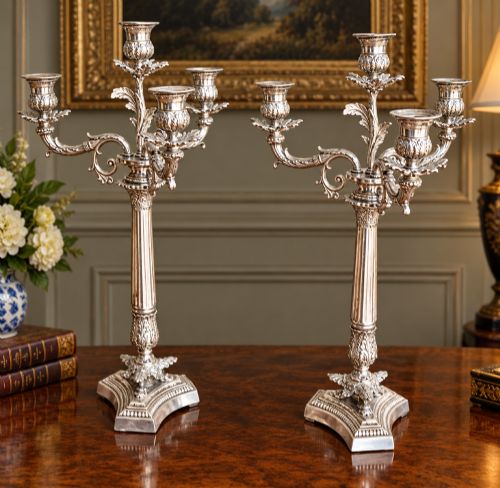
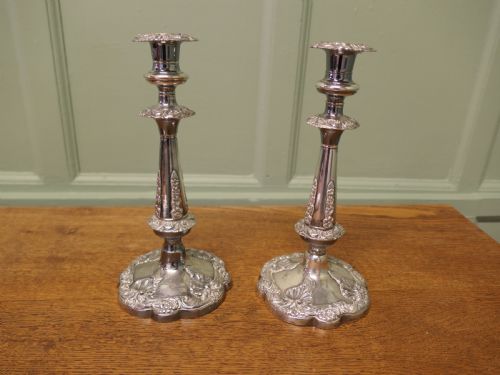
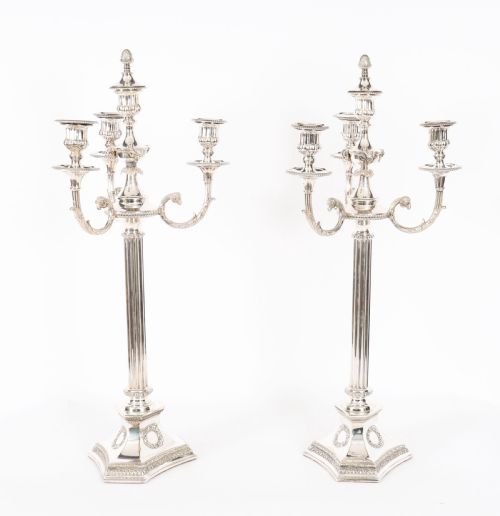
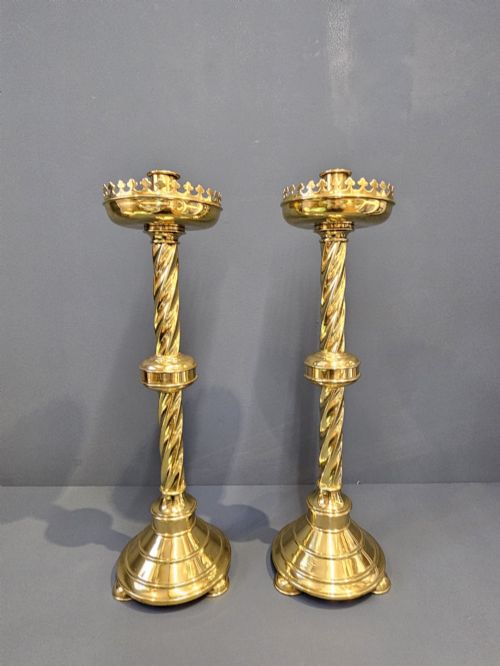
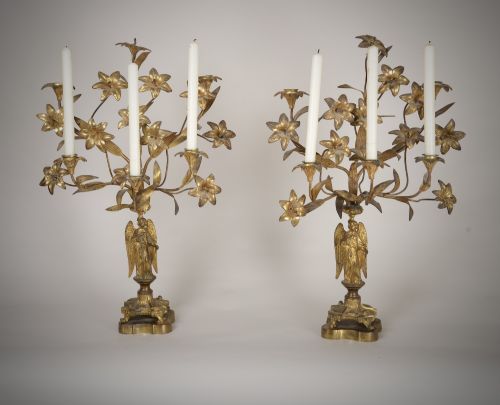
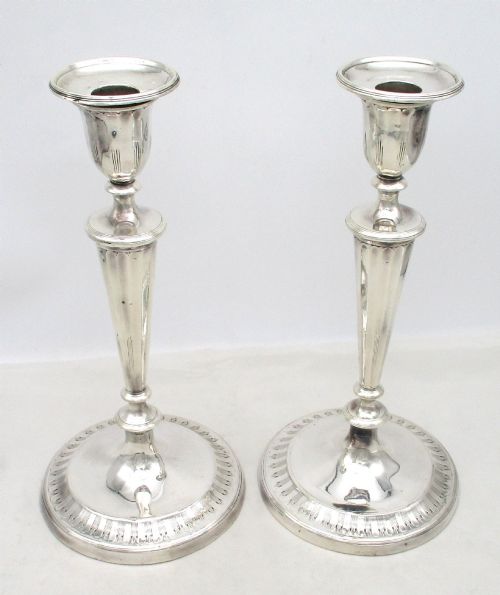
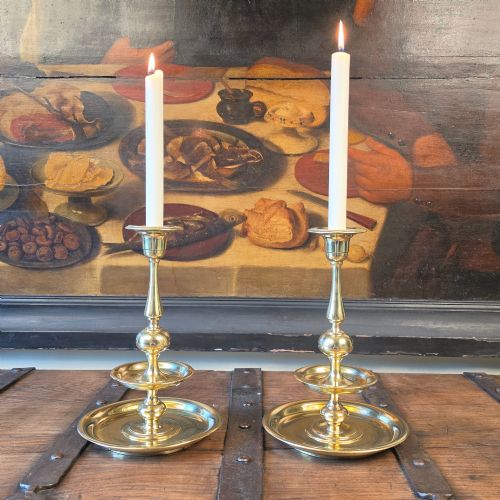
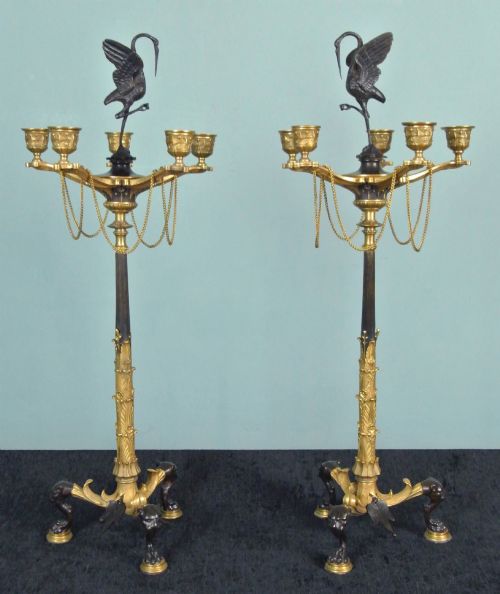
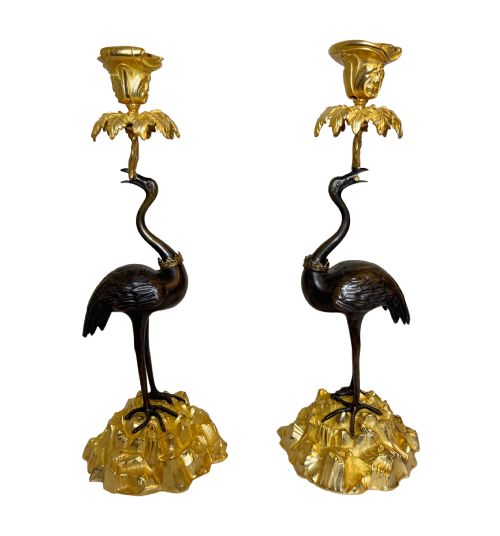
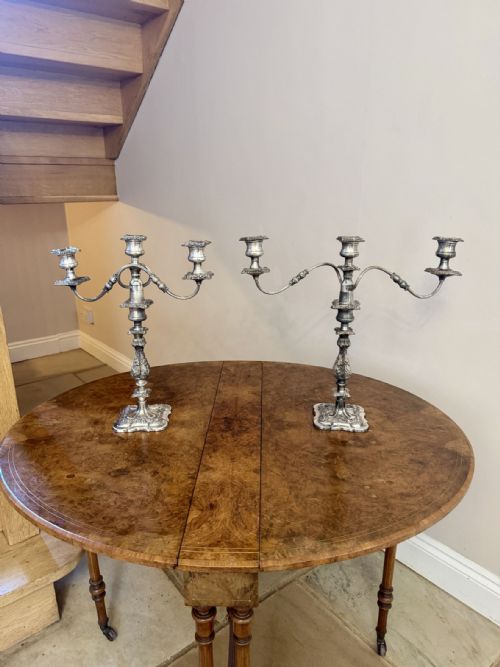
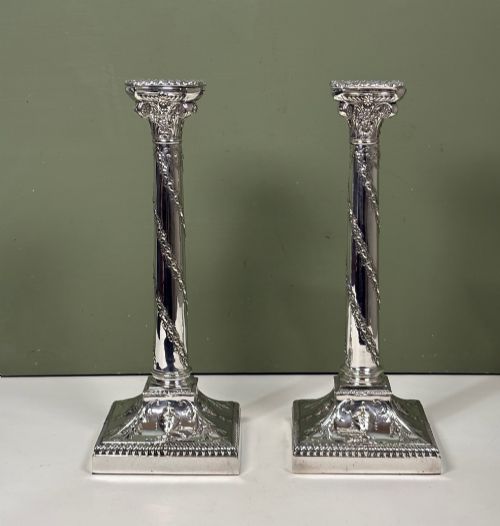
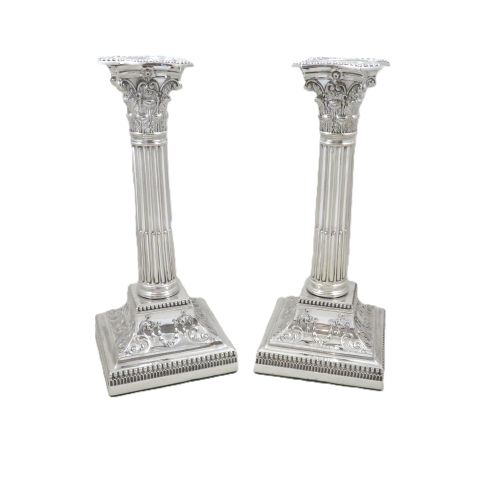
When buyers search for victorian candle holders pair, they find matched pairs of lighting apparatus designed for dining tables, mantelpieces, and halls. The selections on this page span simple domestic brass ejector sticks and silver-plated Corinthian columns to heavy bronze and ormolu candelabra.
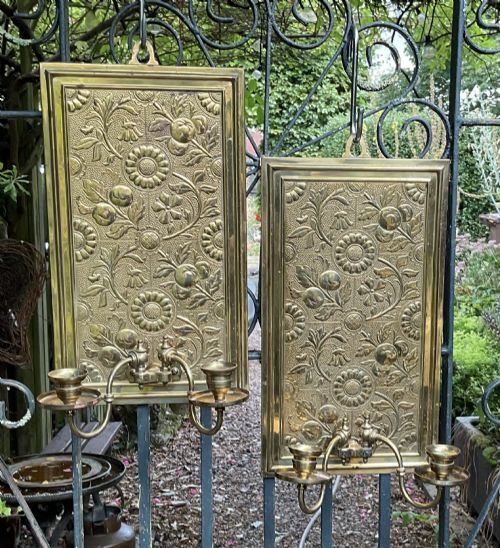
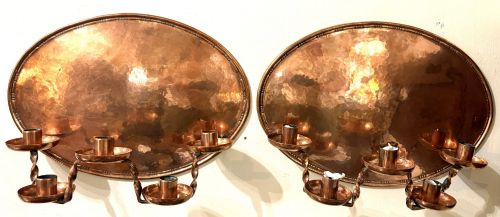
The most common examples met here are silver-plated and brass candlesticks dating from the middle to the late nineteenth century. Alongside standard candlesticks, the evidence includes multi-branch candelabra, wall sconces, glass table lustres, and chambersticks.
Originating predominantly from British workshops alongside French and continental makers, these pairs reflect the evolving domestic interiors of the Victorian era. They shift from classical revival forms to elaborate Gothic, Aesthetic Movement, and Arts and Crafts designs.
How they were made
Makers utilised casting, spinning, and plating techniques to produce these metal and glass objects. Brass and bronze components were frequently cast in parts before being chased, assembled, and combined with gilt or ormolu finishes.
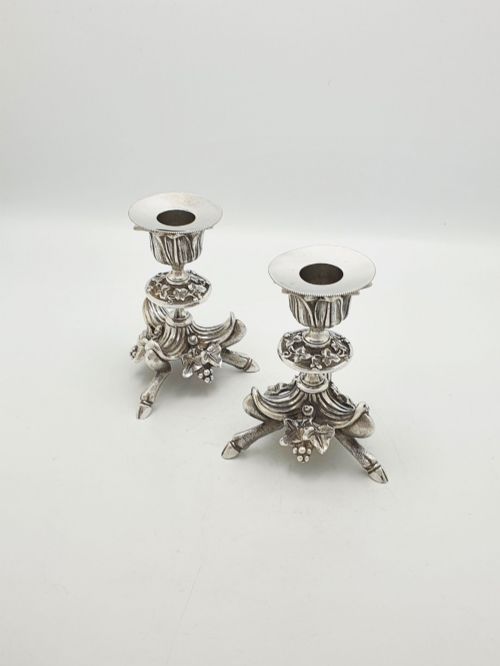
Silver plating on base metals involved early electroplating methods or fused plate processes, while high-end pieces utilised solid sterling silver. Decorative details incorporated applied elements such as champlevé enamel, marble bases, onyx inserts, and cut glass lustres.
Listings show metalwork ranging from simple nineteenth-century brass and pewter to ornate silver plate, bronze, and copper.
What varies in quality
The distinction between standard domestic production and exceptional workshop pieces lies in the crispness of the casting and the depth of the finish. Heavier metal gauge, finely articulated ornamentation, and intact original plating or gilding distinguish finer examples.
Subtleties in design execution, such as integrated figural motifs, decorative enamel work, or combined materials like bronze and marble, elevate certain pairs above mass-produced utilitarian counterparts.
Barbedienne·Bruce Talbert·Garrard & Co·Thomas Hope
The Victorian Candle Holders Pair Glossary
- Candelabra
- A branched lighting fixture designed to hold multiple candles simultaneously. These pieces often feature a central light surrounded by several arms.
- Ejector
- A concealed internal mechanism within a candlestick that pushes the candle stub upward for easy removal. This mechanical device is commonly found in mid-nineteenth-century brass examples.
- Lustre
- A decorative table ornament featuring glass pendants that refract candlelight. They are frequently rendered in pink or green glass during the Victorian period.
- Ormolu
- Gilded bronze ornamentation applied to decorative metalwork and furniture. The technique creates a rich gold-coloured surface finish on bronze foundations.
- Pricket
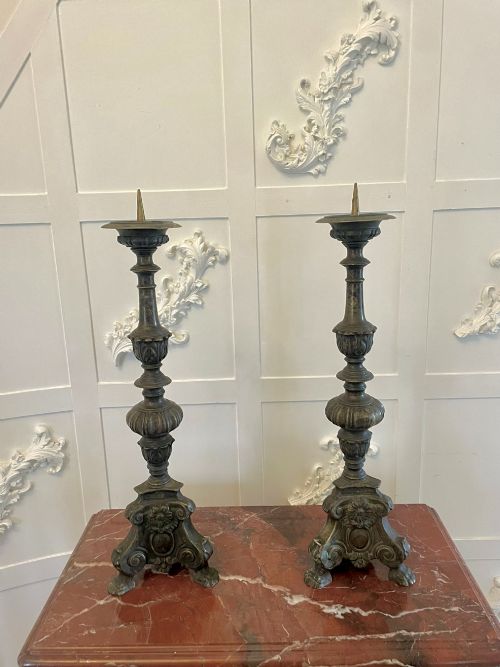
- A sharp spike on a candlestick designed to impale and secure a large candle. This form is frequently seen on church and gothic revival altar sticks.
Victorian Candle Holders Pair: Frequently Asked Questions
What is a chamberstick?
A chamberstick is a low candlestick fitted with a wide drip pan and a loop handle for carrying through a house at night. They were designed to light a path to the bedroom before electric lighting.
Victorian examples frequently incorporate a matching metal snuffer resting in a clip beside the socket.
How do I clean silver plated candlesticks?
Silver plated pieces require gentle cleaning with a soft cloth and a specialised silver cream to preserve the thin metal layer. Avoid harsh abrasive dips that strip away historical patination.
Regular dusting with a dry microfiber cloth is generally sufficient for day-to-day maintenance.
Where were these pieces used in a Victorian home?
Candle holders were placed on dining tables, mantelpieces, sideboards, and hallway consoles to provide functional illumination before gas and electric lighting became universal. Chambersticks lived on bedroom side tables.
Heavier bronze and ormolu pairs served primarily as decorative ornaments in formal reception rooms.