



Victorian Cabinet Bronze
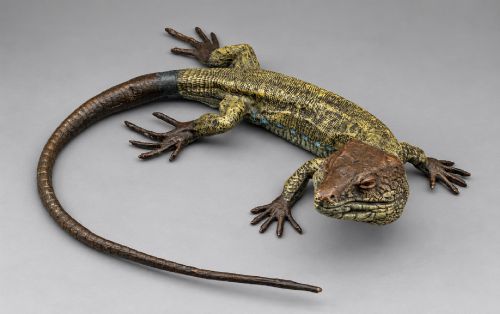
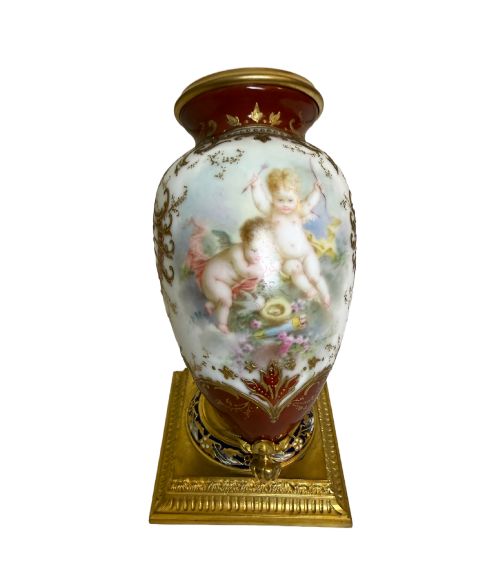
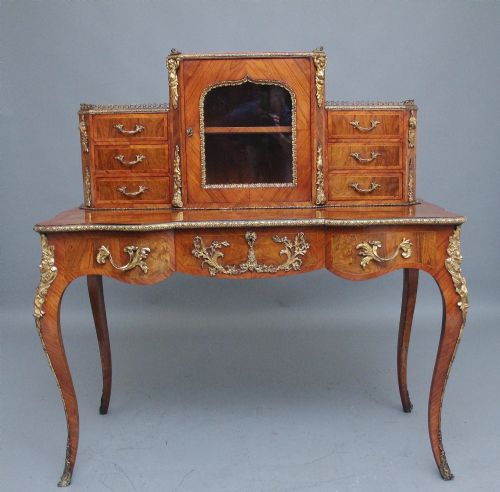
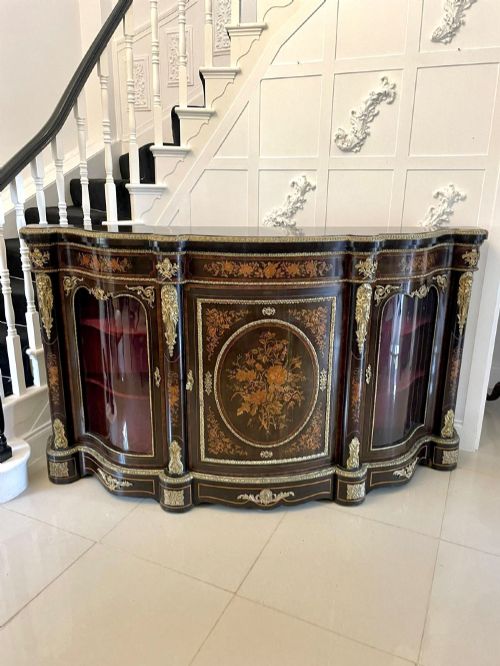
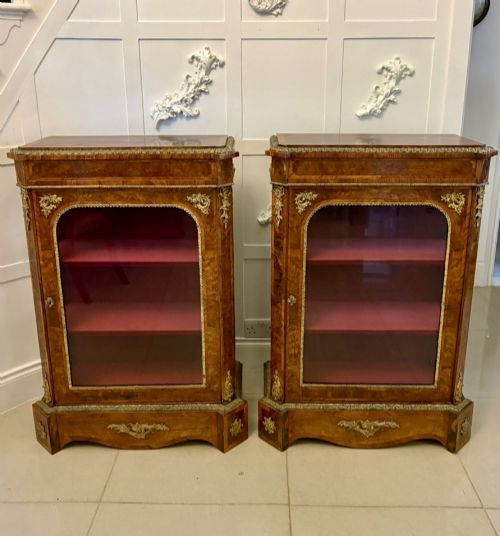
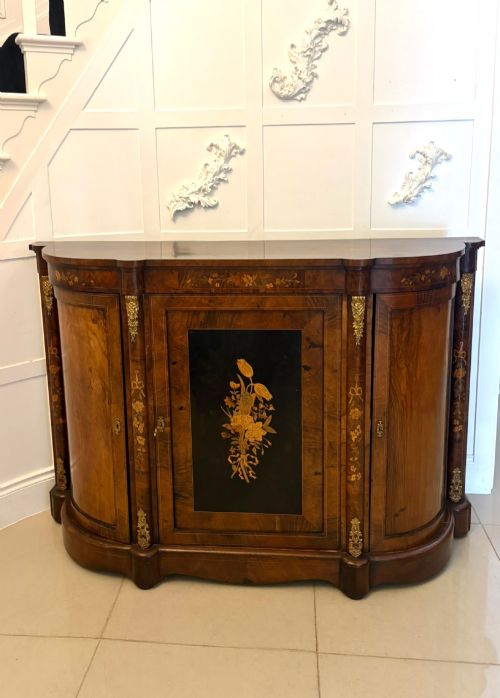
These pieces unite Victorian cabinet bronze work, bringing together timber display furniture and cast gilt metal mounts for interiors that demand presence.
Victorian Cabinet Bronze
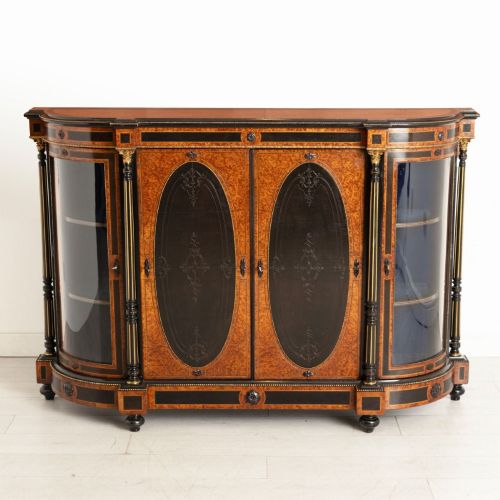
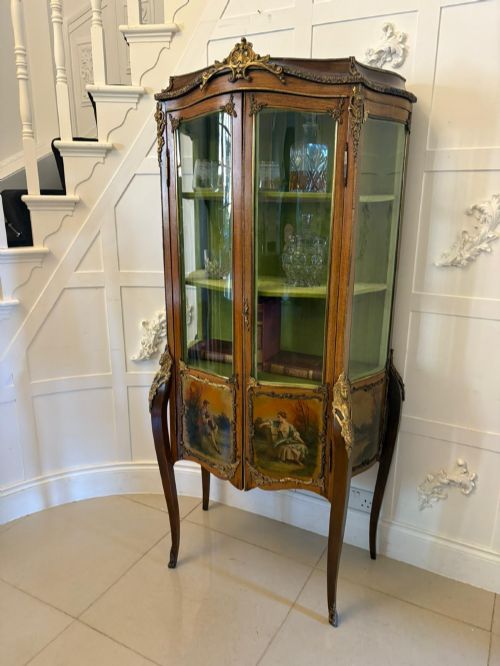
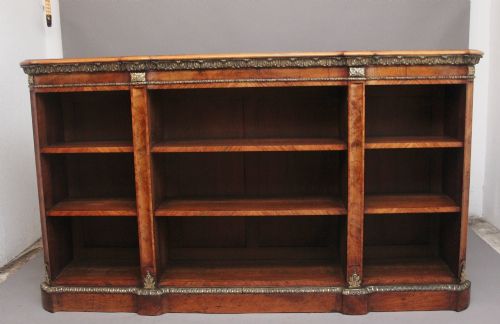
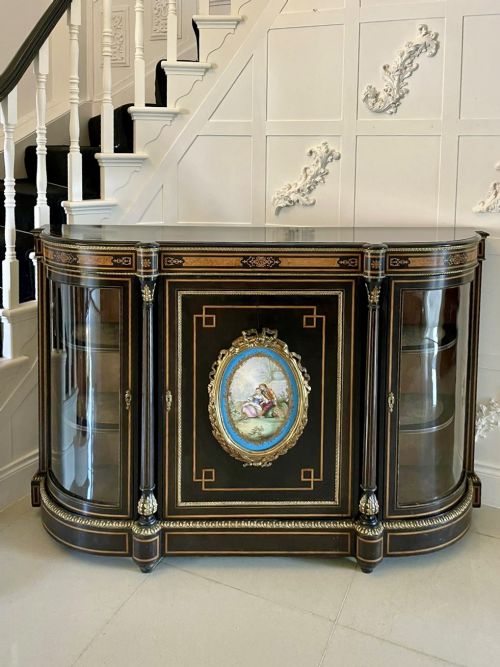
A search for Victorian cabinet bronze reveals a specific cross-section of nineteenth-century furniture where timber carcases meet cast metal enrichments. The pieces span credenzas, pier cabinets, display vitrines, and bookcases originating from English workshops and French ateliers across the nineteenth century.
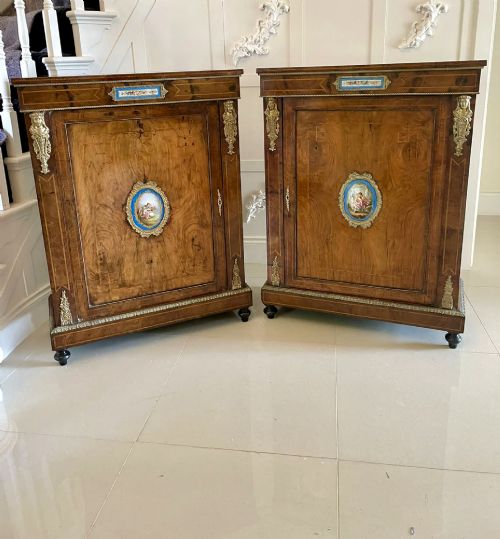
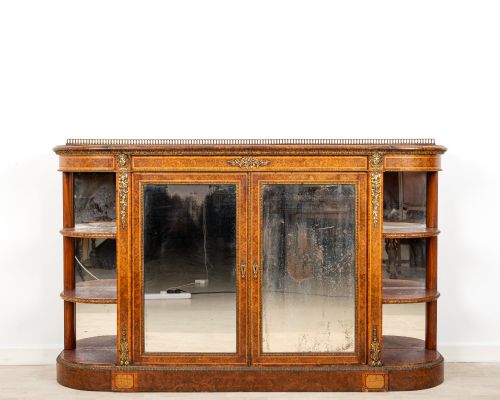
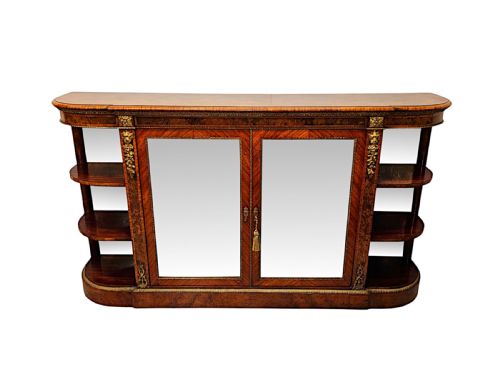
Burr walnut, amboyna, and ebonised woods dominate the construction, frequently accented with marquetry panels and porcelain plaques. Ormolu mounts and gilt bronze details define the character of these items, appearing on credenza friezes, pier cabinet corners, and vitrine doors.
Makers working within Victorian and French revival styles integrated bronze and ormolu into functional storage pieces designed for formal reception rooms. The intersection of cabinet-making and metal casting produces heavy, highly decorated furniture intended to catch ambient light.
Materials and Technique
Makers built solid carcases using walnut, kingwood, or satinwood, often applying veneers of burr walnut or amboyna to primary surfaces. Floral marquetry inlay utilising lighter and darker timbers created intricate surface patterns across doors and panels.
Cast gilt bronze and ormolu components were secured to the timber using threaded pins and screws, providing structural highlights to corners, borders, and feet. Marble tops, frequently white or variegated, were bedded onto the upper surfaces of cabinets and credenzas.
French ateliers employed Boulle work featuring brass and tortoiseshell alongside ebonised finishes, while English cabinet-makers utilised porcelain plaques mounted directly into the timber framework.
Victorian Cabinet Bronze Retail Price Guide 2026
Typical asking prices for victorian cabinet bronze among the pieces listed under this phrase on Sellingantiques today, from the lower quarter to the upper quarter. They describe what is for sale here now, not the wider market.
Current listings demonstrate a prevalence of burr walnut credenzas and pier cabinets enhanced with ormolu mounts across the Victorian and Napoleon III periods.
Assessing Quality
The refinement of the cast bronze and ormolu mounts distinguishes superior examples from standard production. Crisp chasing in the metalwork, where leaf and scroll details retain sharp edges and varied textures, separates better workshops from simpler ones.
The precision of the marquetry and the choice of timber veneers dictate the standing of a cabinet. Dense burr walnut figures and meticulously fitted floral inlays indicate skilled hand labour rather than mass-produced decoration.
Attribution to documented makers or prominent firms adds authority, supported by stamped signatures, brass tags, or distinct construction methods associated with known workshops.
Gillows·Johnstone and Jeanes·Gabriel Viardot·Edward Holmes Baldock·Maison Gagneau·Barbedienne
The Victorian Cabinet Bronze Glossary
- Ormolu
- Gilded bronze used for furniture mounts and decorative fittings. The process involves applying a gold amalgam to cast bronze before heating.
- Marquetry
- Inlay work using thin pieces of wood veneer to create decorative patterns and pictures on furniture surfaces. The technique requires precise cutting of various timber types.
- Credenza
- A low dining room sideboard or display cabinet often fitted with mirrored doors and enclosed shelving. Nineteenth-century versions frequently feature extensive ormolu mounts.
- Pier Cabinet
- A narrow display cabinet designed to fit the wall space between windows. These pieces typically incorporate glass doors and velvet-lined interiors.
- Vitrine
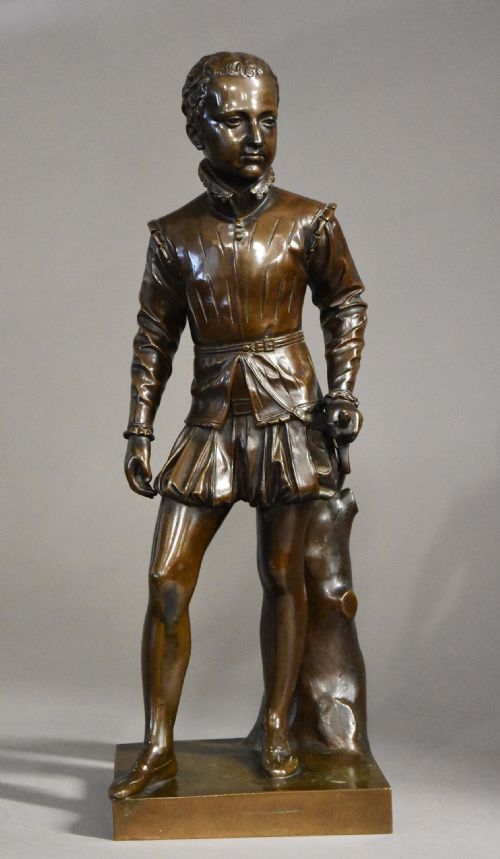
- A glass-fronted cabinet created for displaying porcelain, curiosities, and small bronze figures. French examples often utilise curved glass and gilt bronze frames.
Victorian Cabinet Bronze: Frequently Asked Questions
What is a Victorian cabinet bronze?
These items combine nineteenth-century timber furniture, such as credenzas and pier cabinets, with cast gilt bronze or ormolu mounts. The bronze elements serve as structural enrichment and decorative framing across the wooden carcase.
Such pieces represent the height of Victorian and French revival interior taste, merging cabinet-making with metalwork artistry.
Where were these cabinets placed originally?
Cabinets featuring bronze mounts stood in principal reception rooms, drawing rooms, and formal parlours of nineteenth-century homes. Their reflective glass panels and gilt metal details were intended to catch light from lamps and windows.
Pier cabinets occupied narrow wall spaces between windows, while larger credenzas anchored main reception walls.
How do I care for ormolu mounts?
Ormolu mounts require gentle dusting with a soft, dry brush to prevent dirt accumulation within the chased recesses of the bronze. Avoid chemical cleaners or abrasive cloths, which strip the original fire-gilt surface.
Maintaining stable room humidity protects the surrounding timber veneers and prevents the brass pins securing the mounts from loosening.
How do I distinguish French and English pieces?
French cabinets frequently exhibit Napoleon III or Louis Revival styles utilising ebonised woods, tortoiseshell, and elaborate Boulle work alongside heavy gilt bronze. English versions favor burr walnut, amboyna, and inlaid floral marquetry with restrained ormolu accents.
Maker stamps on the bronze or timber carcase often confirm the origin and workshop.