


Victorian Breakfront Furniture
Victorian breakfront furniture brings substantial architectural presence into a room, offering grand proportions in mahogany, walnut and rosewood.
Victorian Breakfront Furniture
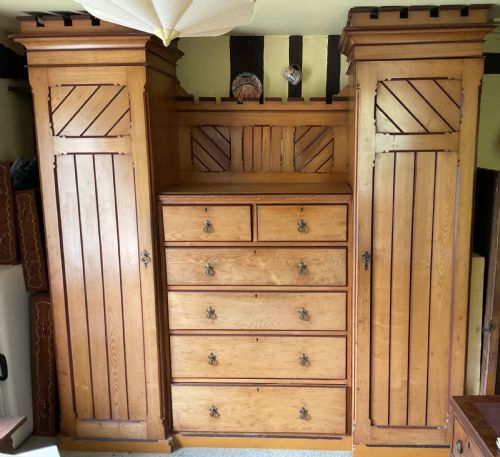
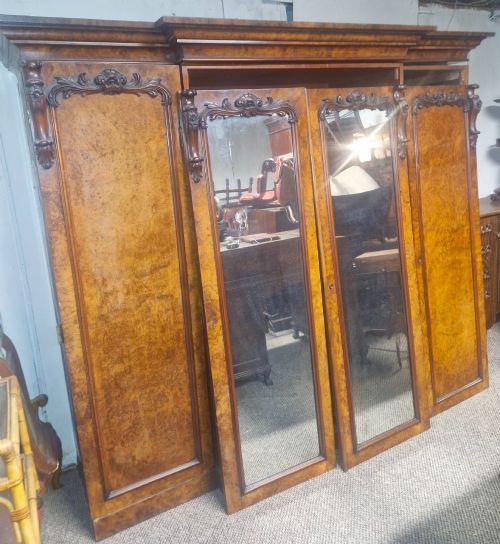
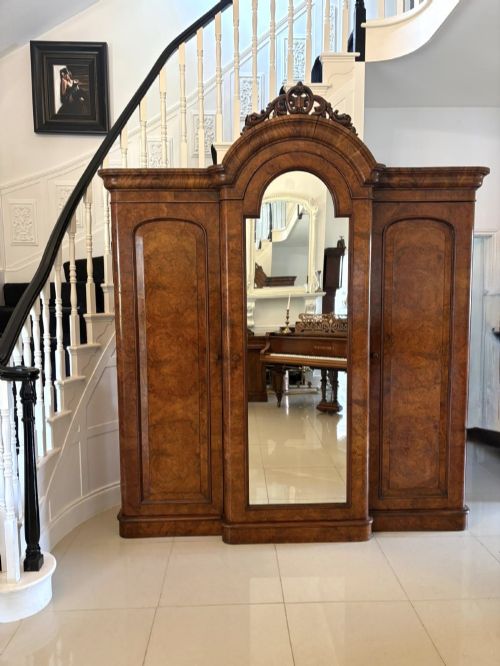
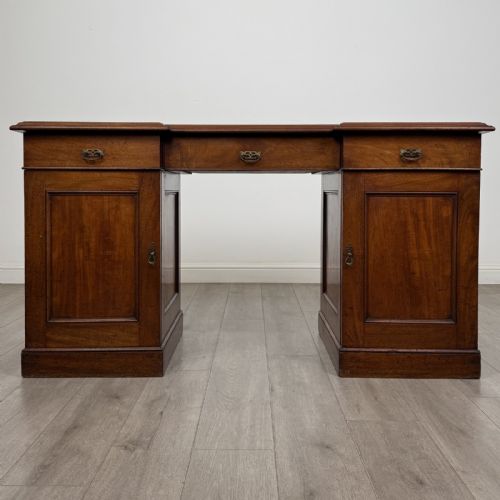
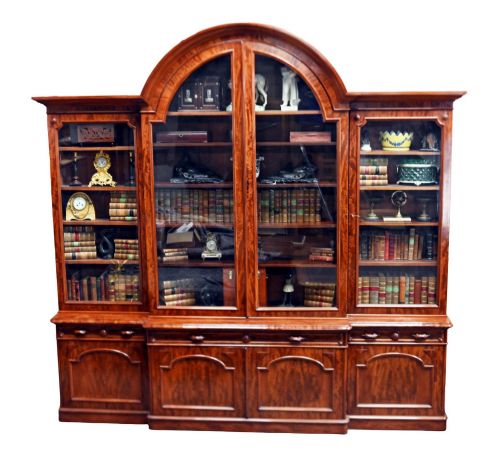
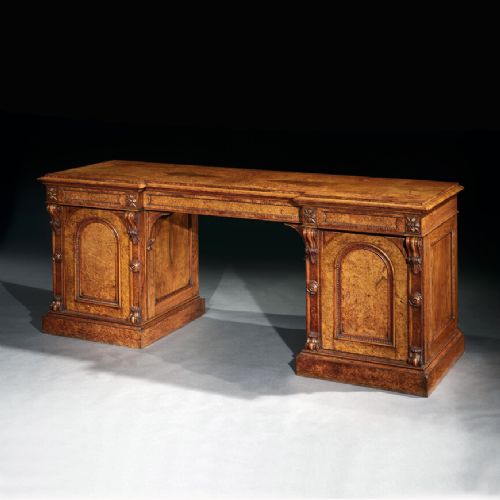
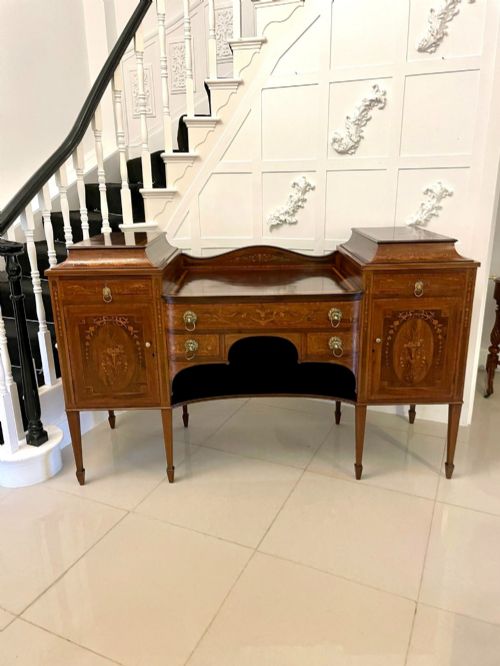
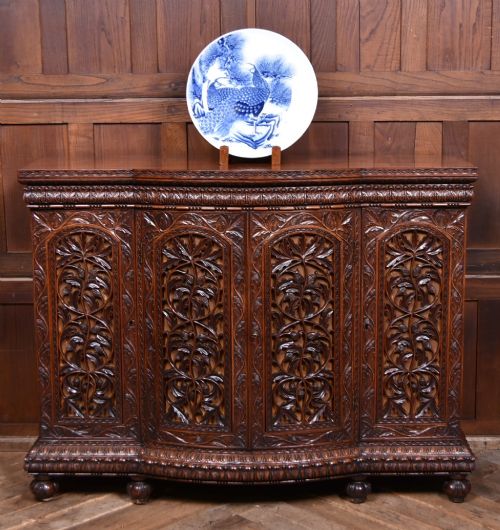
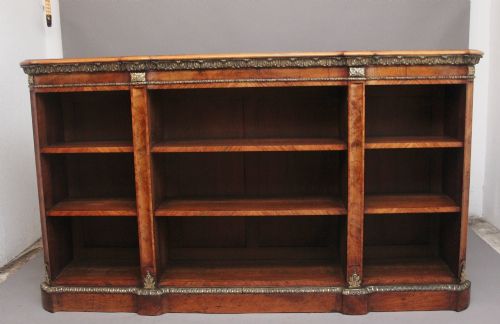
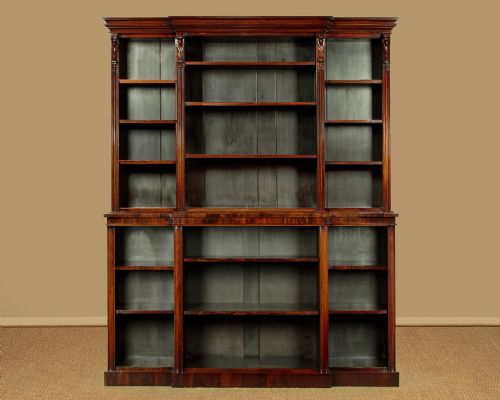
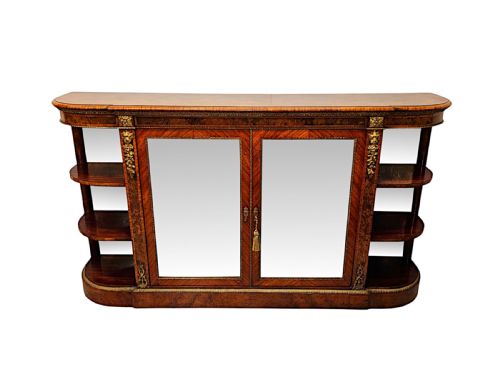
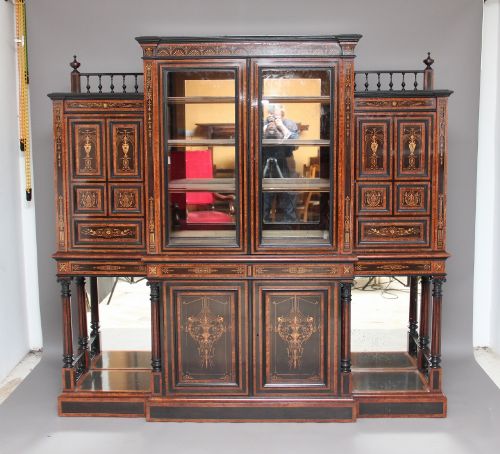
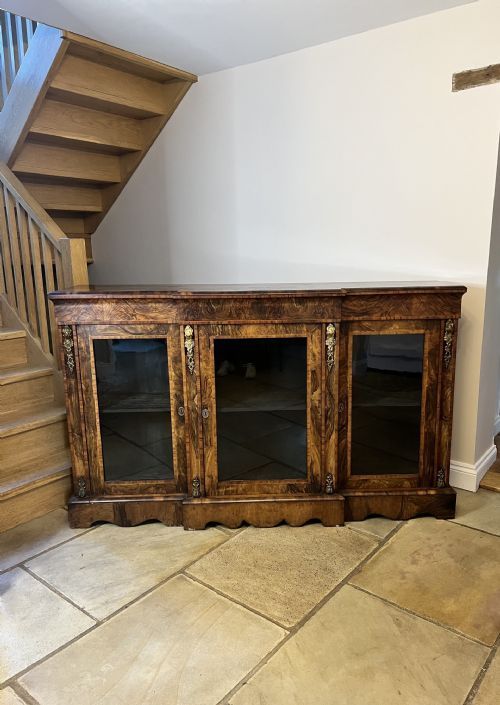
Victorian breakfront furniture comprises large bookcases, wardrobes, sideboards and credenzas distinguished by a central section that projects forward from the flanking wings. These impressive pieces originate predominantly from the nineteenth century, utilising dense timber to anchor substantial rooms with a formal architectural rhythm.
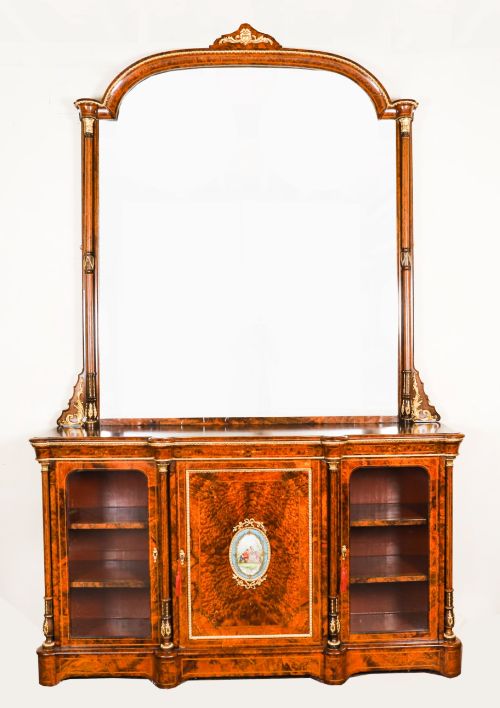
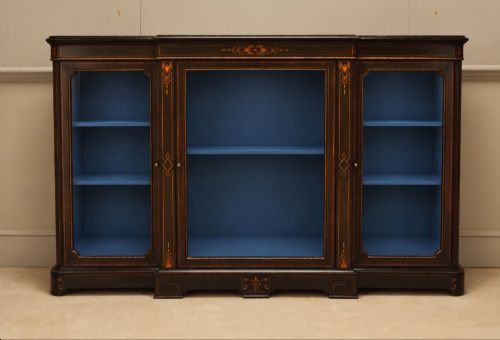
Bookcases and wardrobes dominate the current selection, constructed to fill high-ceilinged libraries and bedrooms with substantial storage and display capacity. Credenzas and sideboards also appear frequently, often incorporating mirrored backs or glazed doors alongside intricate marquetry inlay.
The aesthetic vocabulary stretches from strict Victorian Gothic Revival and Aesthetic Movement to Sheraton Revival and William IV styles. Makers utilised woods such as mahogany, burr walnut, rosewood and ebonised timber, frequently mounting the carcases with ormolu and brass details.
Materials and Construction
Cabinet makers built these pieces using solid carcases faced with figured veneers like burr walnut, padouk, pollard oak and mahogany. Artisans applied intricate marquetry inlay, brass mounts and parcel-gilt or ebonised finishes to the primary timber surfaces.
Glazing bars divided large glass panels in bookcases and vitrines, while credenzas incorporated ceramic Sevres plaques into ormolu mounts. Wardrobes and large bookcases were engineered to dismantle into modular sections to facilitate transport through domestic doorways.
Victorian Breakfront Furniture Retail Price Guide 2026
Typical asking prices for victorian breakfront furniture among the pieces listed under this phrase on Sellingantiques today, from the lower quarter to the upper quarter. They describe what is for sale here now, not the wider market.
The inventory records pieces attributed to major London and regional workshops, alongside Irish and Northern European examples.
Distinctions in Quality
Quality rests upon the selection of timber veneers, where highly figured burr walnut, pollard oak or matched mahogany display superior grain patterning across the projecting central sections. The crispness of hand-carved mouldings and the precision of inlaid marquetry distinguish standard production from exceptional cabinet work.
Interior secondary woods, dovetailed drawer construction and the integration of maker signatures or stamps indicate workshop origin. Hardware such as heavy brass handles, chased ormolu mounts and functional locking mechanisms reflect the original tier of manufacture.
Gillows·Hewetsons·Johnstone and Jeanes·Lamb of Manchester·Robert Strahan·Holland and Sons
The Victorian Breakfront Furniture Glossary
- Breakfront
- An architectural furniture format where the central section projects forward from the flanking wings. This configuration creates depth and visual rhythm across large bookcases and sideboards.
- Ormolu
- Gilded bronze mounts applied as decorative trim around doors, plaques and cornices. Makers utilised this technique to accent walnut and ebonised surfaces.
- Marquetry
- Fitted patterns of wood veneer and decorative materials assembled into pictorial or geometric designs. Craftsmen applied this technique across cabinet doors and friezes.
- Vitrine
- A glass-fronted display cabinet designed for porcelain and objects of curiosity. These pieces often feature mirrored backs and velvet-lined interiors.
- Credenza
- A low cabinet enclosed by doors, frequently featuring central glazed sections and flanking side cupboards. Nineteenth-century examples often incorporate marble tops and ormolu mounts.
Victorian Breakfront Furniture: Frequently Asked Questions
How do I assemble a breakfront wardrobe?
Many large Victorian wardrobes and bookcases were constructed to dismantle into modular components for transport. The central section, cornices, plinths and side wings bolt together internally.
Ensuring the piece rests on a level floor is essential before securing the internal fixings to prevent door alignment issues.
What is the difference between a credenza and a sideboard?
Sideboards generally feature a combination of drawers and cupboards designed primarily for dining room service and storage. Credenzas sit lower to the ground and often incorporate glazed display doors or Sevres porcelain plaques.
Both forms utilise projecting breakfront profiles to create distinct architectural facades.
How do I care for burr walnut veneer?
Burr walnut requires stable indoor humidity away from direct sunlight and heat sources to prevent the timber veneer from drying or splitting. Regular dusting with a dry, soft cloth maintains the polished surface.
Avoid silicone-based polishes and apply traditional beeswax sparingly to nourish the grain.
How do I date a Victorian breakfront bookcase?
Dating relies on examining stylistic indicators such as Gothic Revival pointed arches, Aesthetic Movement ebonised details, or earlier William IV proportions. Secondary woods, drawer construction methods and maker stamps also clarify the period of manufacture.
Construction techniques shifted from hand-cut dovetails towards machine assistance as the nineteenth century progressed.