



Victorian Brass Metalware
Victorian brass metalware brings domestic utility and exotic revival design into focus through cast brass, copper, and mixed metal vessels.
Victorian Brass Metalware
Victorian brass metalware comprises a diverse range of domestic and decorative items spanning the nineteenth century, with kettles, candlesticks, and tea urns forming the backbone of the selection. These pieces reflect both utilitarian kitchen functions and ornate decorative ambitions popular during the period.
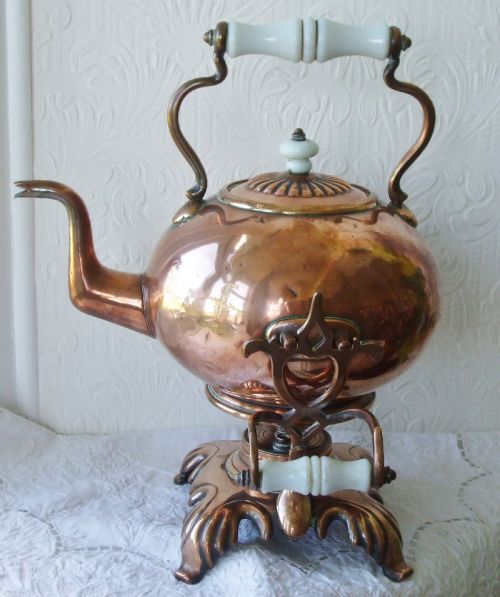
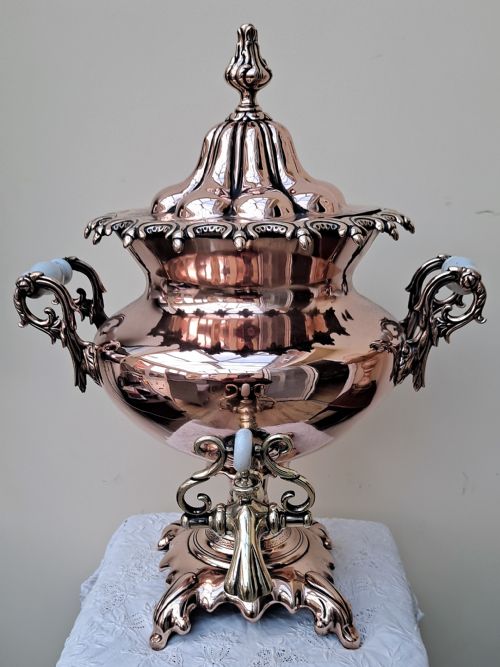
Buyers will most frequently encounter copper and brass kettles, samovars, and candlesticks originating from the mid to late nineteenth century. These domestic items demonstrate the heavy gauge metalwork typical of nineteenth century production.
Beyond standard domestic brassware, the selection extends to revival styles and imported metalware, including Mamluk revival cairoware, Persian engraved copper chargers, and Indian ceremonial bowls. These specialist pieces introduce mixed metals and complex surface engraving into the core category.
Materials and construction methods
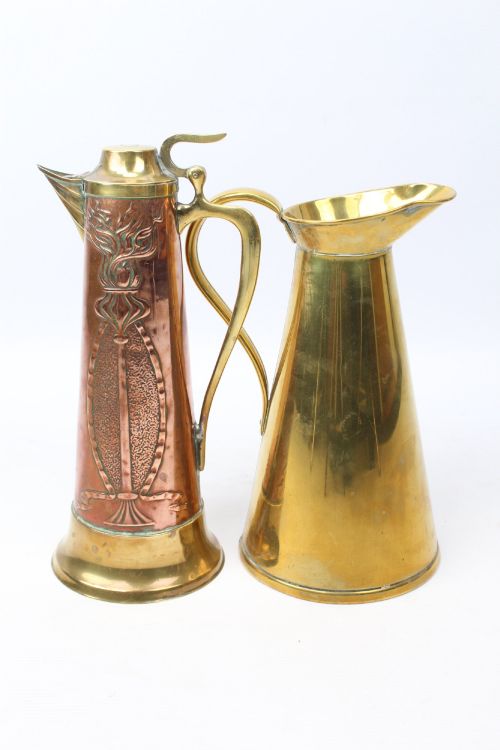
Makers utilised brass and copper as primary materials, frequently combining them within a single vessel to create tonal contrast between bodies and handles. Iron and bronze appear alongside wood and ceramic elements for handles, structural supports, and decorative inserts.
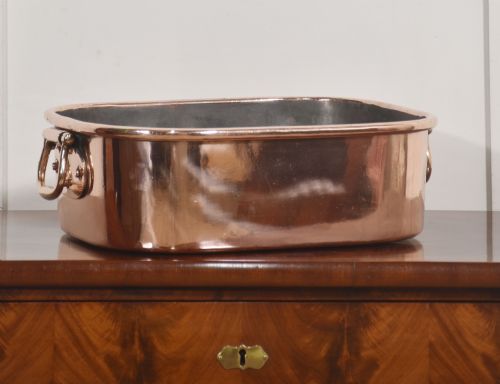
Construction methods relied on heavy casting, hand beating, and skilled panel assembly, supported by detailed surface engraving and mixed metal inlay. Items such as jam pails, warming pans, and spirit kettles demonstrate robust utilitarian construction paired with decorative finishing.
Victorian Brass Metalware Retail Price Guide 2026
Typical asking prices for victorian brass metalware among the pieces listed under this phrase on Sellingantiques today, from the lower quarter to the upper quarter. They describe what is for sale here now, not the wider market.
Listings feature nineteen-century brass, copper, and bronze items spanning domestic cookware to decorative urns.
Factors determining quality
Quality rests upon the weight of the metal and the crispness of the engraved or cast details, distinguishing robust utility pieces from lighter decorative wares. Substantial gauge brass and copper indicate superior manufacture, particularly in large vessels like samovars and trays.
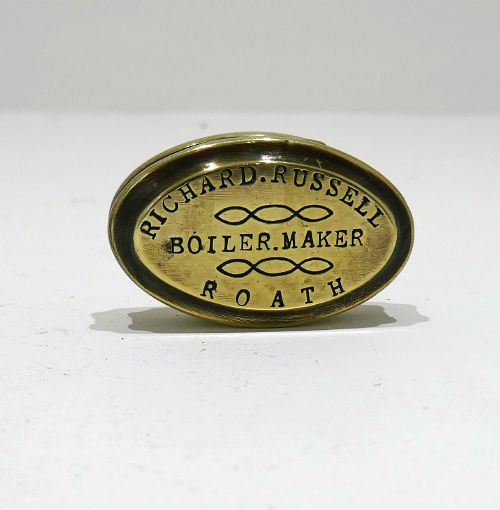
The refinement of mixed metal inlay and the presence of named maker marks or specialised regional motifs separate standard domestic items from exceptional examples. Finer pieces maintain structural integrity alongside intricate surface decoration without excessive wear.
Mappin & Co.
The Victorian Brass Metalware Glossary
- Cairoware
- Nineteenth century European and Middle Eastern mixed metalwork featuring intricate silver and copper inlay on brass or bronze grounds. This style emerged from a broader Victorian fascination with Islamic design.
- Samovar
- A heated metal container traditionally used to boil and heat water for tea, often featuring an internal vertical metal tube. Victorian examples in copper and brass frequently incorporated stands and spigots.
- Spirit kettle
- A water kettle mounted upon a metal stand equipped with a small spirit burner underneath. These pieces allowed water to remain heated at the tea table.
- Ejector candlestick
- A candlestick design containing an internal sliding mechanism to push out remnants of burnt wax candles. This mechanical improvement dates primarily to the nineteenth century.
- Jam pail
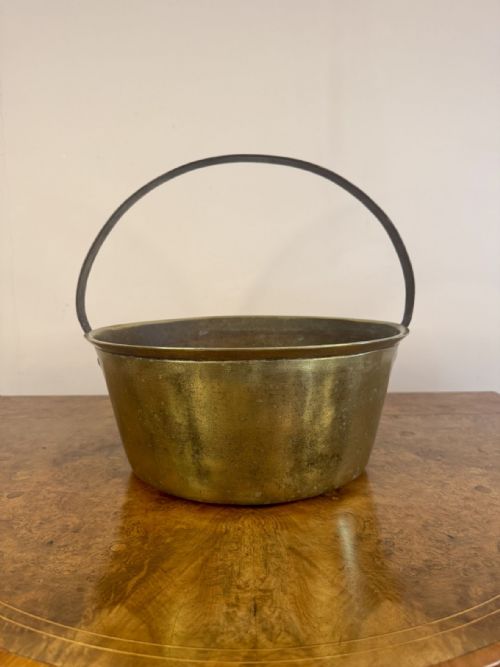
- A heavy brass or copper vessel designed for preserving fruit and boiling sugar. Surviving examples typically display thick rolled rims and sturdy bail handles.
Victorian Brass Metalware: Frequently Asked Questions
How do I clean antique brass and copper?
Maintenance requires gentle washing with warm soapy water to remove surface dust, preserving the natural aged patina developed over generations. Avoid harsh abrasive compounds that strip away historical surface character.
Regular soft cloth dusting maintains the metal without creating artificial brightness. The original dark oxidation often indicates proper age.
Were these metal items used daily?
Most domestic vessels performed heavy tasks in nineteenth century kitchens, from boiling water for tea to heating bedchambers with warming pans. Their robust construction ensured survival through active service.
Decorative items such as cairoware bowls and ceremonial vessels served primarily in drawing rooms. Utility wear patterns often distinguish kitchenware from parlour pieces.
How can I tell the period?
Stylistic indicators such as Aesthetic Movement motifs or Art Nouveau asymmetry provide clear chronological markers for late nineteenth century production. Construction marks, handle attachments, and metal gauges also assist in dating.
Mid century pieces tend toward heavier utilitarian forms, while later decades embraced revival styles and mixed metal surfaces. Examination of seams reveals manufacturing transitions from hand beaten to machine rolled sheets.
What is mixed metalware?
Mixed metalware combines brass, copper, silver, and other alloys within a single decorative object to create contrasting surface tones. Victorian artisans utilised this technique to emulate Eastern metalworking traditions.
Inlay work and applied mounts define these decorative trays, bowls, and chargers. The technique highlights the maker's skill in fusing disparate metals into a unified composition.