


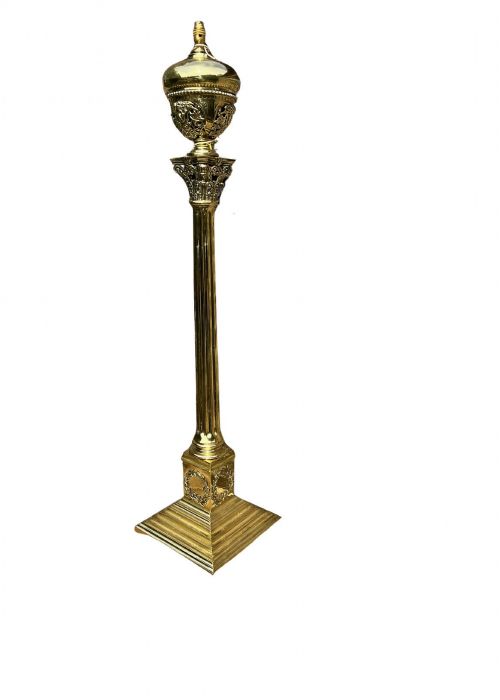


Victorian Brass Lamp Stand
When you want a victorian brass lamp stand, you are looking for a tall, substantial piece designed to illuminate period rooms with warmth.
Victorian Brass Lamp Stand
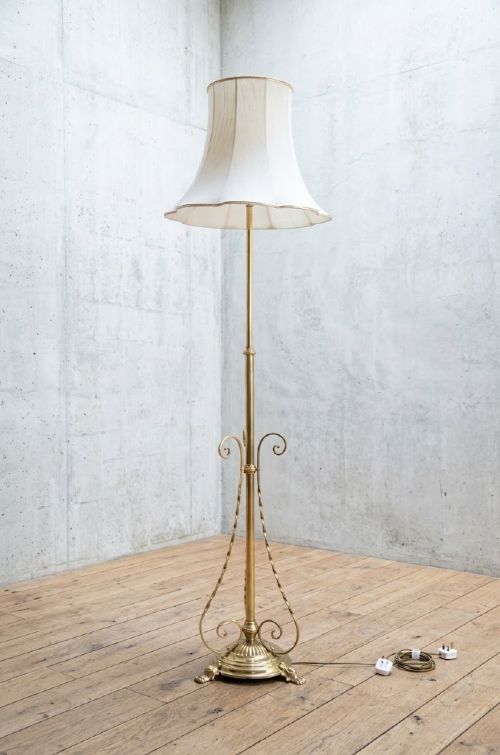
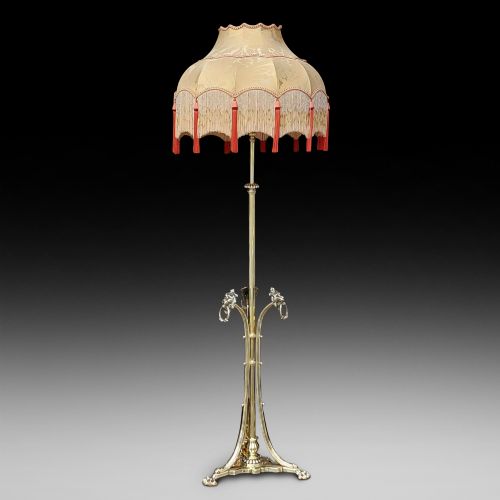
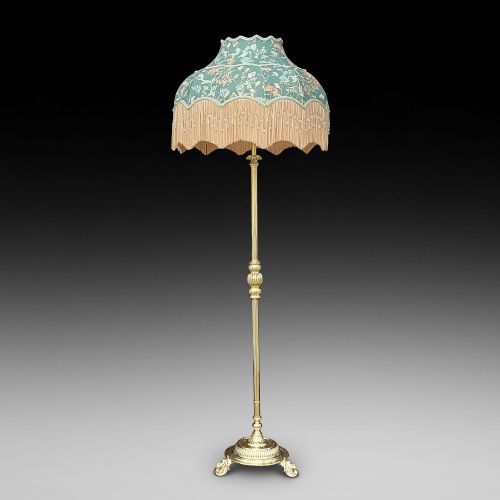
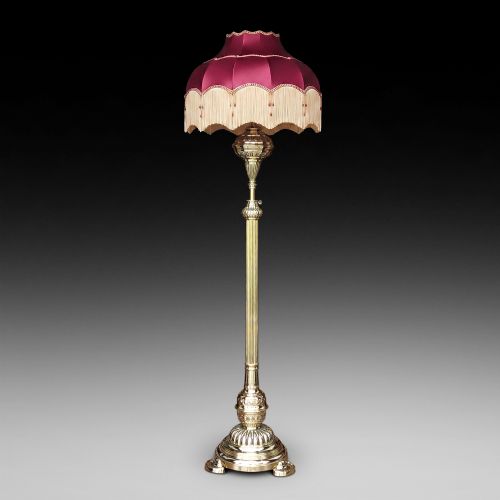
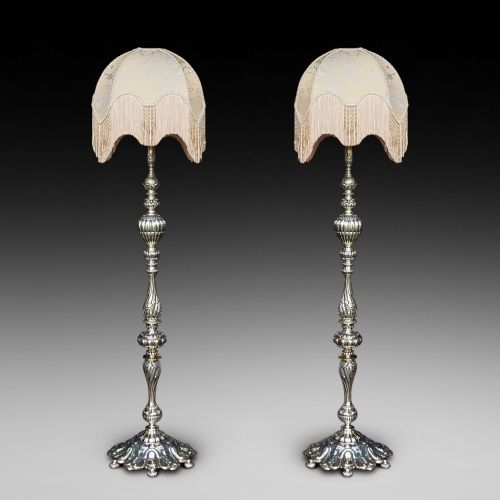
A victorian brass lamp stand typically takes the form of a floor-standing standard lamp, often engineered with telescopic height adjustment or Corinthian column shafts. These pieces originate predominantly from the Victorian era, alongside examples stretching into the Edwardian period and the early twentieth century.
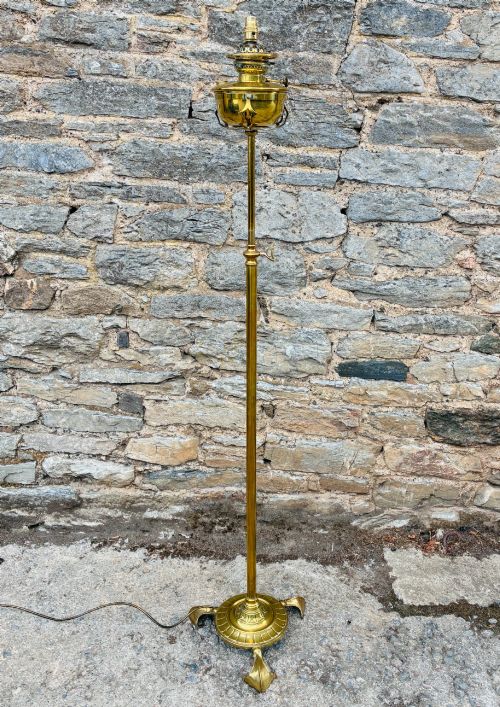
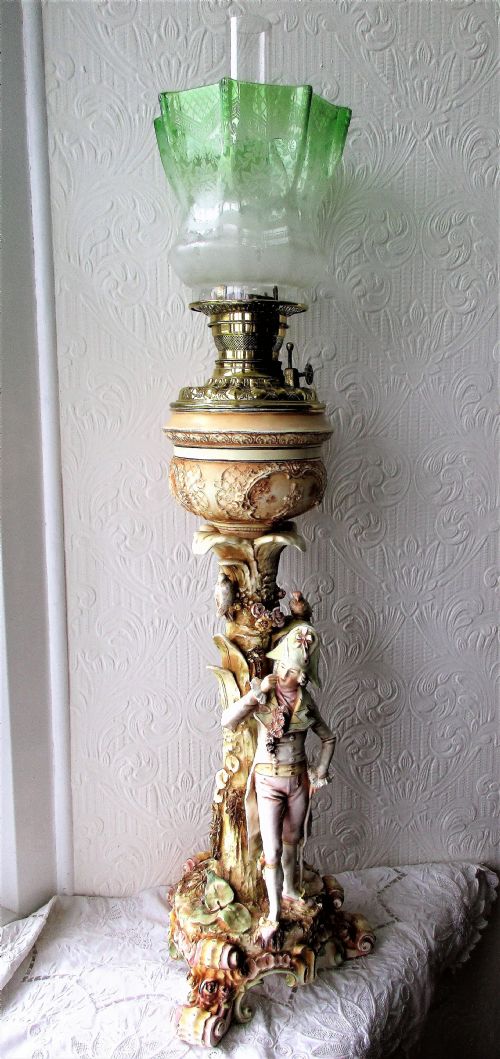
Beyond straightforward floor lamps, the selection includes pieces combined with occasional tables, plant stands, or converted oil lamps featuring glass reservoirs. Makers often utilised heavy bases, ranging from floral openwork designs to stepped classical plinths, to support the extended height.
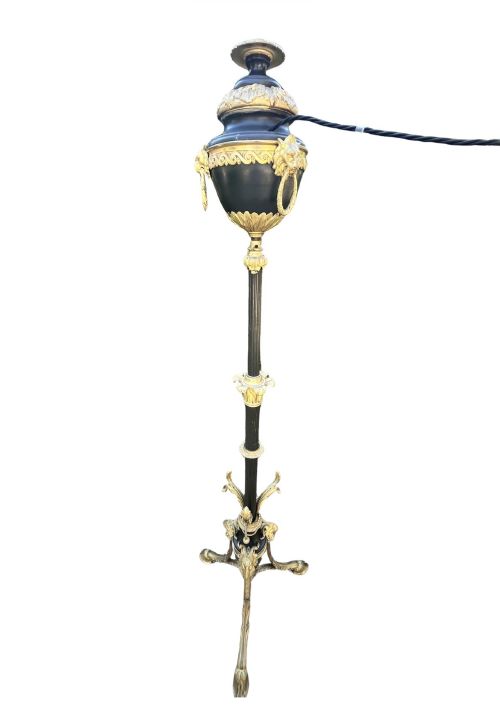
The dominant aesthetic draws heavily on Neoclassical, Arts and Crafts, and Art Nouveau movements. Buyers will encounter both austere column designs and ornate, French-influenced or figural variants meant to anchor a drawing room.
Materials and Construction
Brass serves as the primary structural metal, frequently paired with copper, gilt bronze, or cast iron for added weight and colour contrast in the base. Many standards incorporate functional mechanical elements, such as screw-keys and sliding brass tubes, allowing the shaft to extend.
Secondary materials enrich the stands, including inset marble tops, mahogany tiers, onyx columns, and porcelain figures. Shade options recorded in the archive feature coloured glass, including cranberry, vaseline, and duck egg blue variants, alongside fabric finishes.
Listings combine brass with copper, mahogany, marble, onyx, and coloured glass.
Assessment of Quality
Quality rests significantly on the casting weight and the precision of the engineering in telescopic mechanisms. Heavy, stable gauge brass with crisp fluting on Corinthian capitals sits at the top of the range, whilst lighter, unadorned tubes represent simpler production.
Detailing on the base and the integrity of secondary materials, such as genuine marble inserts or integrated occasional tables, elevate a piece. Maker attribution, particularly to established firms like Hinks, adds notable distinction to surviving standards.
Hinks of B'ham·W. Turner Lord and Co·Elkington and Co·WAS Benson
The Victorian Brass Lamp Stand Glossary
- Telescopic
- A shaft design featuring concentric tubes that allow the overall height of the lamp to be adjusted.
- Corinthian Column
- A classical column style topped with ornate acanthus leaf capitals, frequently utilised on Victorian standard lamps.
- Standard Lamp
- A heavy floor-standing lamp designed to project light over furniture without sitting on a table.
- Ormolu
- Gilded bronze mounts or fittings applied to decorative stands and occasional tables.
- Vaseline Glass
- A transparent yellow-green glass that glows under ultraviolet light, often found in period shades.
Victorian Brass Lamp Stand: Frequently Asked Questions
How do I raise a telescopic lamp?
Telescopic lamps usually feature a small key or thumb screw on the upper shaft. Loosening this screw allows the inner brass tube to slide upward to the desired height.
Once positioned, tighten the screw firmly to secure the weight of the fitting and shade against slipping.
Were these originally electric?
Most period examples started life as oil lamps fitted with burners and glass reservoirs. These were subsequently converted to electricity as domestic power became common.
When examining a piece, look for evidence of old wick mechanisms alongside modern internal wiring channels.
How do I clean antique brass?
Historic brass accumulates a dark oxidation known as patina, which many collectors prefer to leave undisturbed. Harsh chemical polishes strip this surface history and remove fine detailing.
Dust gently with a soft cloth and avoid abrasive pads that scratch the metal surface.