




Victorian Brass Inlaid Clock
A victorian brass inlaid clock brings remarkable precision and rich timber cases into a room, combining mechanical ingenuity with striking decorative detail.
Victorian Brass Inlaid Clock
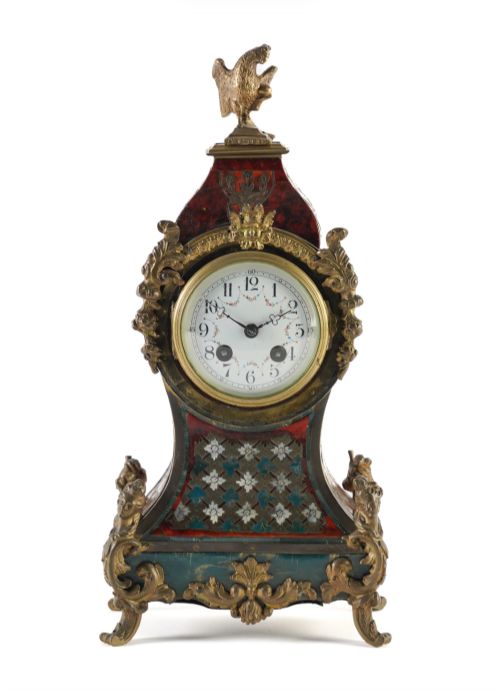
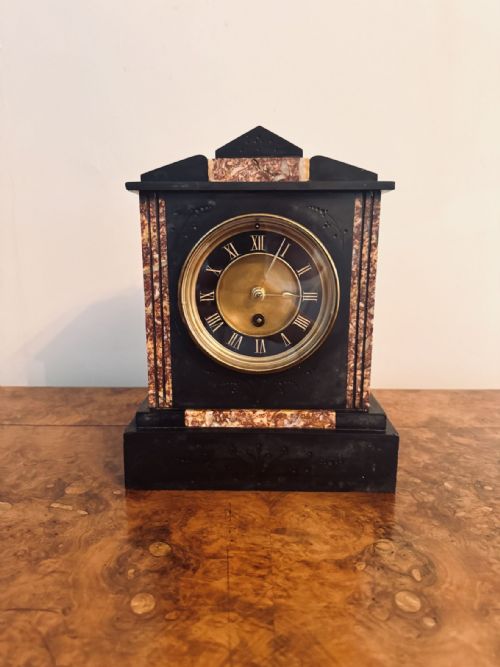
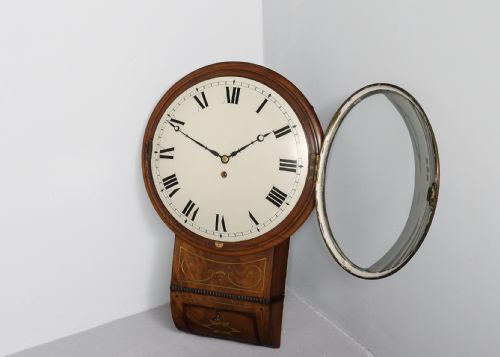
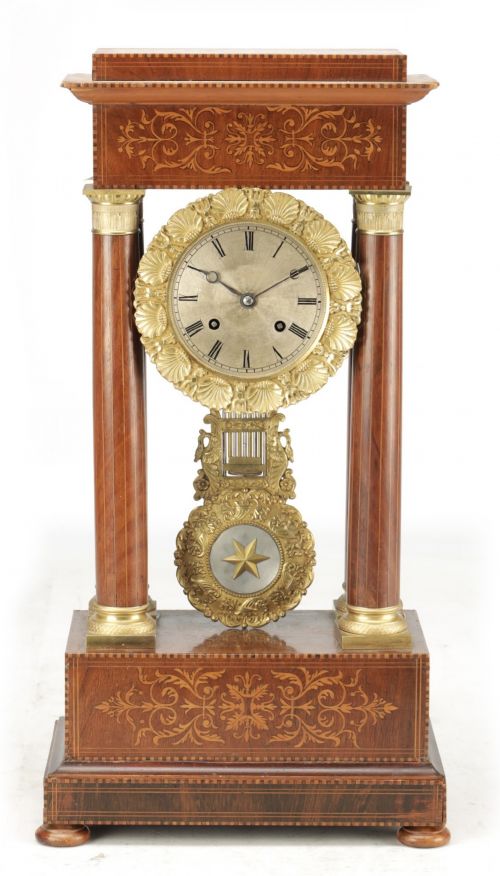
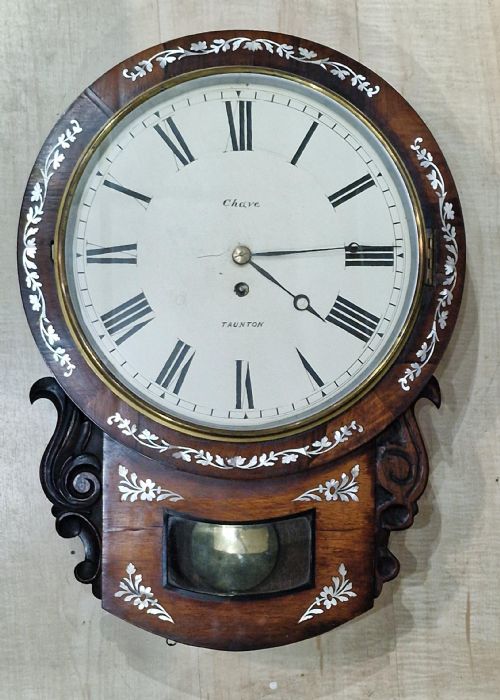
A victorian brass inlaid clock encompasses various timepieces designed for walls, mantels, and brackets, originating from nineteenth-century British and French workshops. The selection most commonly includes mahogany and rosewood drop dial wall clocks alongside elaborate mantel and portico pieces.
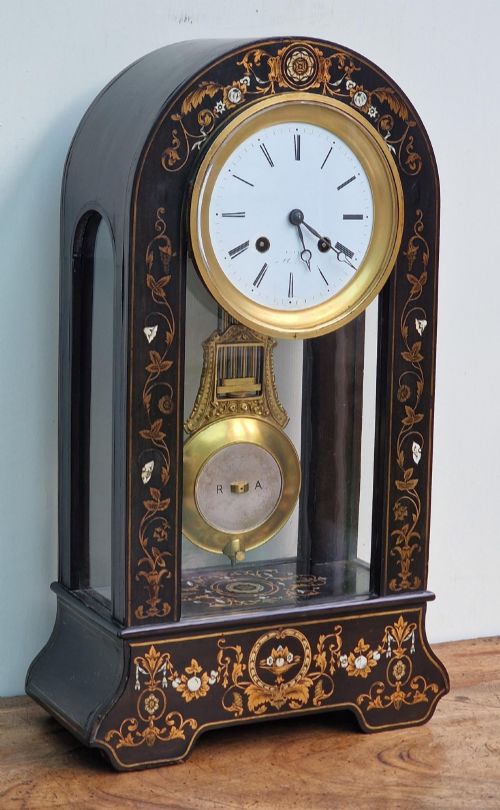
Makers housed these movements in traditional formats such as lancet, balloon, and architectural portico cases. Brass, mother-of-pearl, and tortoiseshell frequently adorn the timber surfaces to catch the light in domestic settings.
How they were made
Craftsmen built timber carcasses from dense hardwoods like mahogany and rosewood, applying precise brass inlay alongside contrasting woods such as boxwood and lemon wood. Boullework and marquetry techniques required intricate cutting of shell and brass to fit flush into prepared recesses.
Clockmakers fitted mechanical movements driven by fusee or spring mechanisms, paired with enamel dials protected beneath curved glass bezels. Ormolu mounts and marble plinths completed the heavier architectural pieces.
Victorian Brass Inlaid Clock Retail Price Guide 2026
Typical asking prices for victorian brass inlaid clock among the pieces listed under this phrase on Sellingantiques today, from the lower quarter to the upper quarter. They describe what is for sale here now, not the wider market.
Listings feature nineteenth-century timepieces utilising materials such as brass, glass, mahogany, rosewood, enamel, mother-of-pearl, boxwood, and ormolu.
What varies in quality
Quality rests upon the crispness of the brass cutting and the precision with which the inlay sits level within the timber grain. Finer examples display meticulous hand-engraving on dials and backplates rather than plain stamped components.
The sophistication of the internal movement dictates value, with twin-fusee and bell-striking configurations representing higher levels of horological skill than basic timepieces. Cabinet proportion and the selection of figured veneer also distinguish superior pieces.
Chave Taunton·Samuel Chave Taunton·Halliday and Rich Bridgwater·Bryson Edinburgh·Joseph Mansfield·Thomas A Paris·Wilkinson Leicester·Joseph Jump of London·Dent of London·Kleyser of London·Walker and Hall·Mark Bartley Bristol
The Victorian Brass Inlaid Clock Glossary
- Fusee
- A conical pulley used in spring-driven clocks to maintain even power to the train as the mainspring unwinds.
- Drop dial
- A wall clock featuring an extended wooden trunk below the circular dial, often housing a pendulum.
- Boulle
- A form of marquetry consisting of tortoiseshell and brass inlaid in contrasting patterns, named after a French cabinetmaker.
- Portico clock
- An architectural mantel clock supported by four columns, frequently housing the pendulum swinging within the central space.
- Ormolu
- Gilded bronze used for decorative mounts and feet on nineteenth-century clock cases.
Victorian Brass Inlaid Clock: Frequently Asked Questions
What is a fusee movement?
A fusee movement uses a conical drum to equalise the declining power of the mainspring as it unwinds. This mechanism helps the clock maintain consistent timekeeping throughout its running period.
Such systems indicate higher manufacturing standards and are commonly found in quality British wall and table clocks from the nineteenth century.
How do I wind my clock?
Clock winding requires inserting the appropriate key into the winding holes on the dial and turning it gently until resistance stops the motion. Care should be taken not to overwind the spring.
Most eight-day movements require weekly attention, while fusee timepieces operate reliably when maintained by a professional horologist every few years.
Where should I place a mantel clock?
Mantel and bracket clocks require a stable, level surface away from direct sunlight, excessive moisture, and temperature fluctuations. Placing them securely on a solid shelf or mantelpiece prevents vibrations that might affect the pendulum.
Allowing adequate clearance around the case ensures the bell or gong strikes clearly without acoustic interference from surrounding objects.
How do I distinguish French and British styles?
French models frequently incorporate architectural portico designs, boullework, or marble housings with decorative ormolu mounts. They often prioritize visual symmetry and ornate dial surrounds over strict utilitarian service.
British examples typically favour robust mahogany or rosewood cases with clear drop dials, fusee movements, and understated brass inlay aimed at domestic reliability.