



Victorian Brass Inlaid Caddy
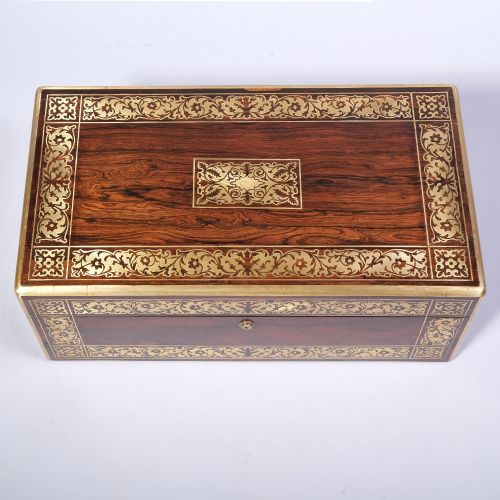
These Victorian brass inlaid caddy pieces offer heavy timber boxes lined with compartments for dry leaf, made to sit proudly on the parlour table.
Victorian Brass Inlaid Caddy
A victorian brass inlaid caddy is a lidded wooden container originally built to store and protect expensive dry tea leaves under lock and key. The examples seen here include classic sarcophagus shapes and rectangular boxes spanning the nineteenth century.
Most pieces on offer date from the Victorian period, though related forms in the listing include writing boxes, sewing boxes, and small scent caskets. These sturdy containers combine domestic utility with decorative display, reflecting the high status of tea in the nineteenth-century household.
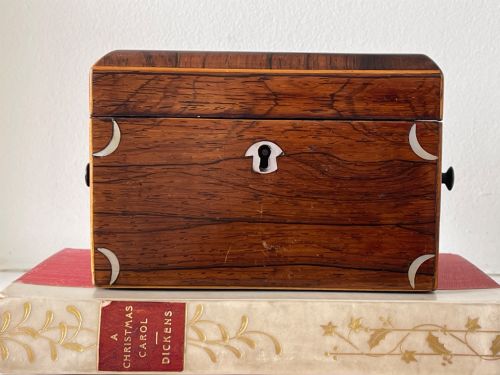
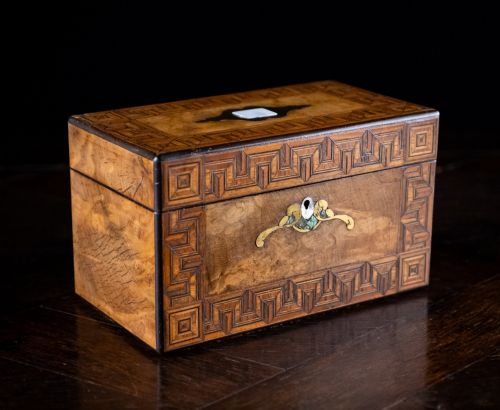
Makers frequently employed exotic timbers like rosewood and walnut as a dark ground for glittering brass lines, escutcheons, and mother of pearl cartouches. Buyers will also find earlier seventeenth-century style influences alongside French Napoleon III and Regency designs.
Materials and construction methods
Cabinetmakers constructed these boxes using dense hardwoods such as rosewood, walnut, and ebonised wood to form a stable carcass. Surfaces were often veneered with choice grains before channels were cut by hand to receive fine brass stringing and floral brass motifs.
Workers added contrasting highlights using mother of pearl and tortoiseshell inlay alongside tortoiseshell and buelle brass work, securing each tiny plate into the wood. Lids were fitted with working brass locks and hinges, whilst interiors frequently retained compartments or velvet-lined trays.
Victorian Brass Inlaid Caddy Retail Price Guide 2026
Typical asking prices for victorian brass inlaid caddy among the pieces listed under this phrase on Sellingantiques today, from the lower quarter to the upper quarter. They describe what is for sale here now, not the wider market.
Listings feature woods spanning rosewood, walnut, coromandel, and ebonised timber alongside brass and mother of pearl.
Judging quality and craftsmanship
Quality rests upon the precision of the brass inlay work and the choice of timber grain across the lid and sides. Finer boxes display tight, flush metalwork where the brass sits perfectly level with the surrounding rosewood or walnut without gaping joints.
The sophistication of internal fittings also separates standard production from superior workshops, seen in matched mixing bowls, intact foil linings, and working locks with original keys. The presence of secondary decorative materials like mother of pearl or fine boulle marquetry elevates the piece.
The Victorian Brass Inlaid Caddy Glossary
- Caddy
- A small box or chest once used for storing tea leaves. The word derives from catty, the Chinese pound weight.
- Boulle
- A style of marquetry using brass and tortoiseshell inlaid in contrasting patterns, named after the famous French cabinetmaker. It creates a shimmering metallic effect across the surface of the box.
- Sarcophagus
- A box shape featuring a convex sloping lid and heavy tiered base, mimicking classical stone tombs. This silhouette was immensely popular for grand nineteenth-century tea containers.
- Escutcheon
- A flat plate of brass surrounding a keyhole. It protected the surrounding wood from wear and often received delicate engraving.
- Marquetry
- Decorative patterns formed by fitting contrasting pieces of wood veneer, metal, or shell into a background panel. Skilled artisans cut these elements together to ensure tight, seamless joins.
Victorian Brass Inlaid Caddy: Frequently Asked Questions
What were tea caddies used for?
Tea was a costly commodity in the nineteenth century, kept securely locked away by the lady of the house. Servants brought the caddy to the parlour so tea could be measured out for guests.
The internal compartments separated different leaf varieties, whilst a central glass or metal mixing bowl allowed blends to be combined before brewing.
How do I care for rosewood and brass?
Keep wooden boxes away from direct sunlight and radiators to prevent the rosewood veneer from drying and cracking. Stable room humidity preserves both the timber and the underlying glue.
Dust the brass inlay gently with a soft cloth and avoid abrasive metal cleaners that can stain the surrounding wood grain.
Are keys usually included with these boxes?
Original nineteenth-century keys are scarce because they were easily lost over generations of domestic use. Many boxes retain their working locks even if the original key has vanished.
A specialist locksmith can often cut a replacement key if the mechanism remains functional.
How can I tell a Victorian box from a Regency one?
Regency boxes often feature bolder brass lion-mask ring handles and sarcophagus proportions influenced by classical antiquity. Victorian pieces tend towards denser overall marquetry, varied internal partitions, and darker timbers like walnut and coromandel.
Construction details inside the box, such as the style of hinges and paper linings, also help distinguish the decades.