
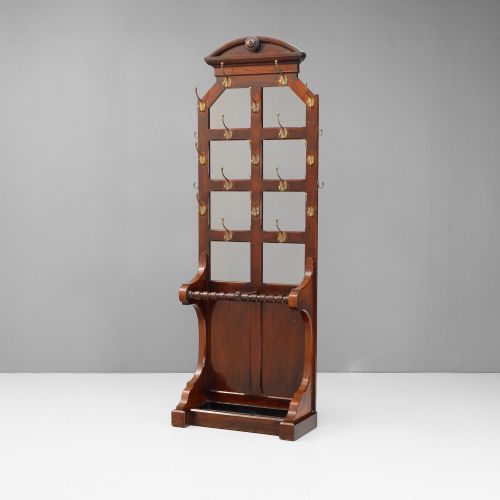


Victorian Brass Hat Stand
These Victorian brass hat stand pieces combine functional metalwork with rich timber frames to organise entranceways with genuine period utility.
Victorian Brass Hat Stand
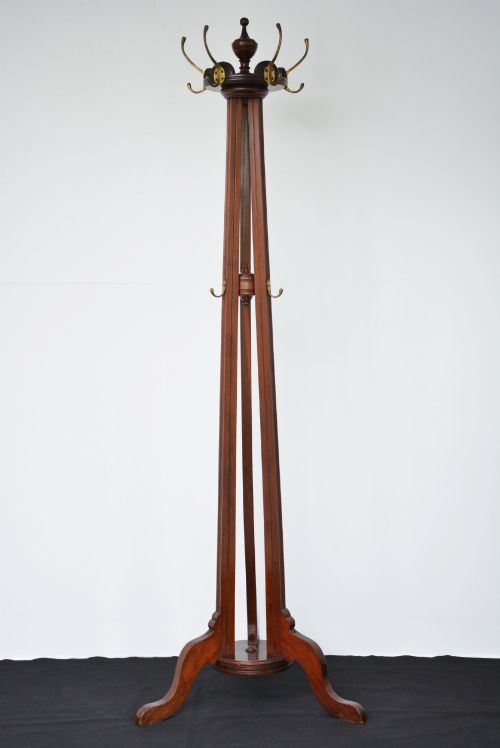
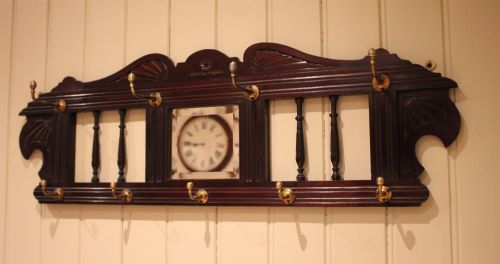
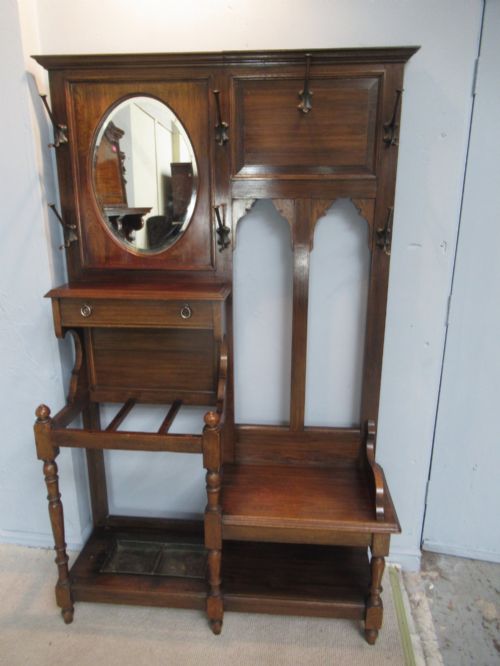
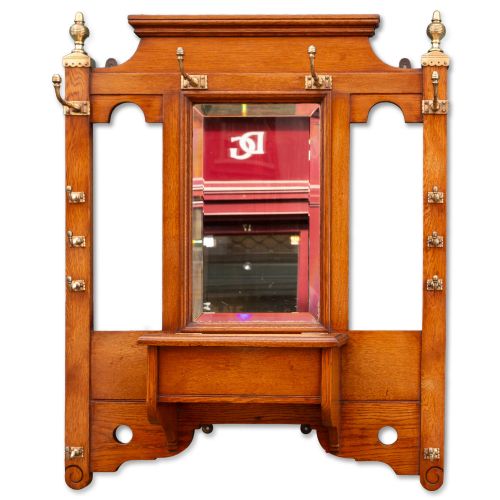
When you search for a victorian brass hat stand, you encounter a practical entranceway fixture designed to hold outerwear, headwear, and umbrellas in nineteenth-century hallways. The selection here spans compact wall-mounted brackets, freestanding timber hall stands, and portable countertop variants.
Most examples combine polished brass hooks with robust woods like mahogany, oak, and walnut. You frequently find pieces incorporating mirrors, ceramic elements, and cast iron bases dating from the Victorian and Edwardian eras.
Makers and designers of the period produced both domestic hall furniture and commercial haberdashery fittings. The forms range from simple brass coat hooks mounted on timber rails to large mirrored hallstands with integrated umbrella wells.
How they were made
Craftsmen built the structural frames using dense hardwoods such as mahogany, oak, and walnut, often shaping them with turned columns or carved brackets. These timbers provided the necessary weight and rigidity to support heavy garments without tipping.
Metal components typically consist of cast brass and polished brass hooks, sometimes paired with cast iron for added ballast in freestanding umbrella stands. Portmanteau designs integrate bevelled mirror plates and ceramic details alongside the metalwork.
Joinery methods relied on traditional wood-working techniques, securing metal hooks with screws directly into solid timber backboards or panels. Countertop and wall-mounted versions utilised sturdy mounting brackets to ensure secure attachment.
Object forms include wall-mounted coat racks, freestanding hallstands, countertop hat stands, and mirrored portmanteaus.
What varies in quality
The distinction between standard and superior pieces rests on the weight of the timber and the casting quality of the brass hardware. Heavier gauge brass and solid hardwoods indicate sturdier construction than lighter, veneered alternatives.
Finishing details such as bevelled mirror plates, ceramic inserts, and scalloped hook designs elevate the execution of individual pieces. Well-preserved original surfaces and robust structural frames demonstrate better long-term durability.
Jas. Shoolbred
The Victorian Brass Hat Stand Glossary
- Portmanteau
- A wall-mounted or freestanding hall fitting combining coat hooks, a mirror, and sometimes umbrella storage. These fixtures served as comprehensive entranceway organisers in nineteenth-century homes.
- Haberdashery
- Commercial shop fittings and display fixtures adapted for organising garments and accessories. These pieces often feature durable brass brackets and extended rails.
- Hallstand
- A large freestanding entranceway furniture piece incorporating a mirror, hat hooks, and a base for umbrellas. They were central to Victorian hallway decoration.
- Bevelled plate
- A mirror glass with an angled, polished edge that catches the light. This treatment signifies finer mirror production in period furniture.
- Cast iron
- A strong, heavy metal alloy utilised for structural bases and weight-bearing elements. It provides stability in freestanding coat and umbrella stands.
Victorian Brass Hat Stand: Frequently Asked Questions
What is a victorian brass hat stand?
A victorian brass hat stand is a functional hallway furnishing designed to hold hats, coats, and umbrellas using metal hooks mounted on wood or metal frames.
These pieces range from compact wall-mounted coat racks to large freestanding hallstands incorporating mirrors and umbrella wells.
How were these stands used originally?
Original nineteenth-century households placed these fixtures in entrance halls to receive outerwear from residents and visitors upon entry.
The integrated hooks held hats and coats, while lower sections or trays managed wet umbrellas and walking sticks.
Where should I place a hat stand?
These pieces suit entrance halls, boot rooms, and corridors where visitors remove coats and hats.
Freestanding models require sufficient floor space near a wall, while wall-mounted brass racks fit narrow hallways.
How do I care for brass and wood?
Maintain the timber frames with regular dusting and occasional wax application to preserve the polished wood surface.
Clean brass components gently to retain their metallic finish without stripping away historical character.
How do I identify a Victorian piece?
Victorian pieces display characteristic timber selections such as mahogany, walnut, and oak, paired with cast brass hardware and period joinery.
Details like bevelled mirror plates and traditional turnings help distinguish mid-to-late nineteenth-century manufacture from later reproductions.