





Victorian Brass Door Fitting
A victorian brass door fitting brings weight and genuine period character to an entrance, turning an everyday threshold into something substantial.
Victorian Brass Door Fitting
When you search for a victorian brass door fitting, you encounter architectural hardware designed to endure daily domestic use while displaying decorative ambition. The selections here centre on functional items that served nineteenth-century doorways, from robust knockers to intricate bell pulls.
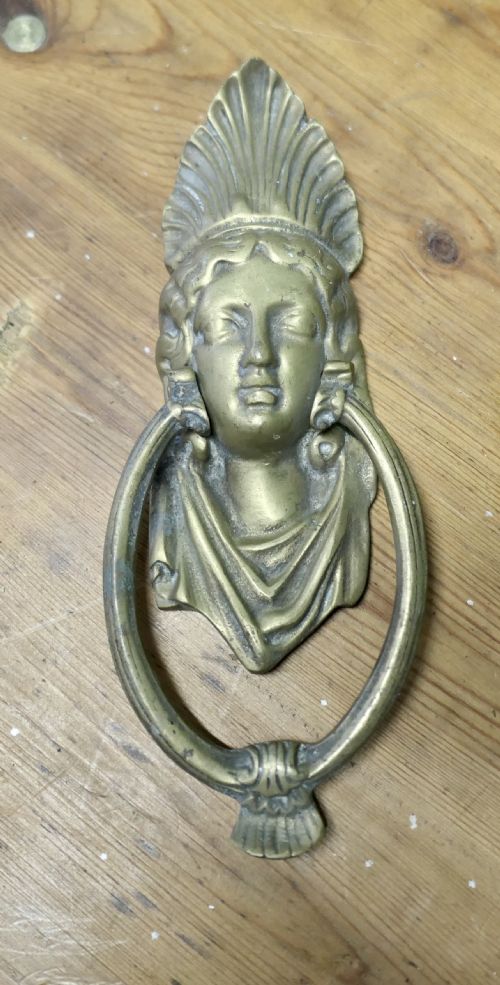
The most common forms on this page include heavy door knockers, frequently cast in motifs like the Maltese dolphin or classical caryatids, alongside operational bell pulls and matching hinges. These pieces span the nineteenth century, sometimes bridging into the early twentieth century with Art Nouveau touches.
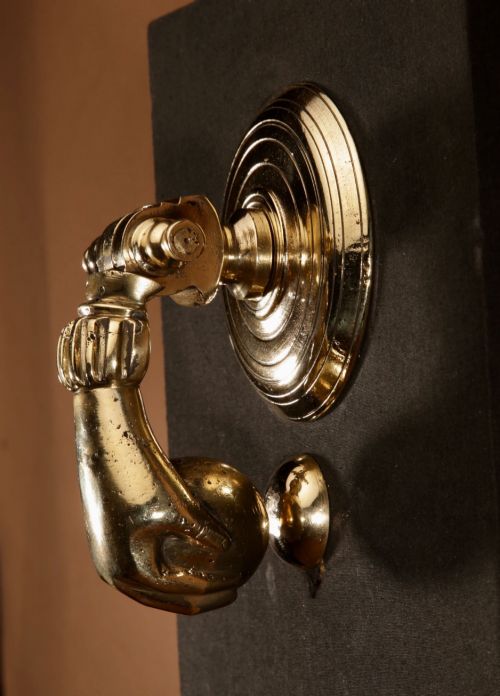
Beyond standard entry hardware, the listings encompass related domestic metalwork such as letter boxes and bell ringers. Buyers will also find distinct variations like the hand-shaped knocker or porcelain press buttons, demonstrating the period's diverse stylistic vocabulary.
Manufacturing Methods
Makers utilised brass and bronze, often casting the metal in sand moulds to achieve the heavy, solid components demanded by Victorian and Georgian doorways. This technique allowed for deep relief work and sharp architectural detailing on items like hinges and backplates.
Finishing involved hand-polishing and detailing, frequently pairing the cast brass with contrasting materials such as porcelain inserts or horn details. Hinges and letter boxes were assembled with robust mechanical integration to withstand continuous functional stress.
Victorian Brass Door Fitting Retail Price Guide 2026
Typical asking prices for victorian brass door fitting among the pieces listed under this phrase on Sellingantiques today, from the lower quarter to the upper quarter. They describe what is for sale here now, not the wider market.
Materials across these listings span solid brass, cast bronze, porcelain, and horn, paired with architectural ironmongery forms.
Evaluating Quality
Quality in these items rests upon the crispness of the casting and the thickness of the metal used in production. Finer examples display deep, deliberate carving in motifs like caryatids and dolphins, whereas lesser pieces soften in detail due to worn moulds.
The integrity of the original mechanism also dictates value, particularly in complex items like bell pulls and spring-loaded knockers. Well-preserved patination and the presence of matching striking plates elevate a piece above standard utilitarian hardware.
The Victorian Brass Door Fitting Glossary
- Caryatid
- A sculpted female figure serving as an architectural support. In door hardware, it forms the vertical grip of a knocker.
- Bell Pull
- A mechanical rod or lever mounted beside a door, connected by wires to a bell inside the house. Servants used these to summon assistance.
- Striking Plate
- The metal plate mounted on the door surface that receives the impact of a knocker. It protects the wood from repeated blows.
- Finial
- A decorative ornamental tip adorning the end of a hinge barrel. These often take acorn or urn shapes on nineteenth-century hardware.
- Maltese Dolphin
- A stylized aquatic mammal motif frequently utilised in Victorian marine and coastal architecture. It appears commonly on heavy brass door knockers.
Victorian Brass Door Fitting: Frequently Asked Questions
How do I clean brass hardware?
Wash the brass gently with warm soapy water and a soft cloth to remove surface dirt without stripping the historic patination. Avoid harsh chemical polishes that destroy the aged surface character.
Dry the metal thoroughly with a microfiber cloth to prevent water spotting. Leave the darker areas alone, as this accumulated age defines an antique fitting.
Can I install these on modern doors?
Most of these fittings adapt well to modern doors provided the timber thickness and screw placements match the historical fixings. Measure the spindle or bolt centres carefully before attempting installation.
Take care when tightening brass screws into seasoned or hard modern timbers. Pre-drilling pilot holes prevents snapping the old or replacement brass screws.
What is a bell pull?
A bell pull is an entryway mechanism connected by internal wires to a mechanical bell situated below stairs or in a kitchen. Visitors pulled the handle to announce their arrival.
In period homes, these sat beside the main entrance door as a precursor to the electric push button. They combine elaborate backplates with a pivoting handle or drop ring.
How do I date a brass fitting?
Examine the casting quality, fastening types, and stylistic motifs to determine the likely era of production. Georgian pieces often display simpler geometric lines, while Victorian items lean towards ornate figurative designs.
Look for tool marks on the reverse side, as hand-filed components generally indicate nineteenth-century manufacture. Patent dates or maker stamps, when present, provide a definitive timeline.