


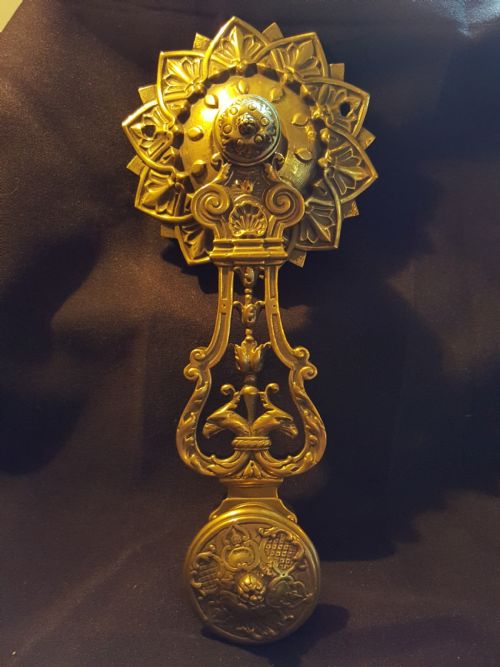


Brass Mechanical Bell Pull
These brass mechanical bell pull examples connect visitors to your door through sturdy metal levers shaped by Georgian and Victorian hands.
Brass Mechanical Bell Pull
A brass mechanical bell pull serves as architectural hardware designed to operate a domestic calling system from an exterior threshold. These items appear in Georgian and Victorian forms, functioning as door hardware or bell ringers.
You are most likely to meet cast brass examples on this page, alongside combinations featuring horn or gilded metal. The range spans simple Georgian door hardware to ornate French Rococo Revival bell ringers dated to eighteen hundred.
How they were made
Cast brass forms the primary structural substance across these pieces, providing the rigid durability required for frequent pulling. Artisans shaped this metal through casting techniques, creating both plain surfaces and elaborate ornamentation.
Certain designs incorporate horn or gilded metal accents to enhance the visual texture of the bell ringer. These materials are integrated into the hardware assembly to withstand daily domestic use.
Brass Mechanical Bell Pull Retail Price Guide 2026
Typical asking prices for brass mechanical bell pull among the pieces listed under this phrase on Sellingantiques today, from the lower quarter to the upper quarter. They describe what is for sale here now, not the wider market.
Listings span the Georgian and Victorian periods, incorporating materials such as brass, cast brass, horn, and gilded metal.
What varies in quality
The degree of ornamentation separates standard hardware from elaborate examples, with French Rococo Revival styles displaying intricate detailing. Simpler Georgian and Victorian profiles rely on clean casting lines and sturdy proportion.
Material variation also defines the tier of a piece, particularly where horn or gilded metal is combined with the base brass. Fully restored examples represent a different standard of readiness compared to unserviced hardware.
The Brass Mechanical Bell Pull Glossary
- Bell ringer
- Architectural hardware mounted beside an entrance to actuate an interior bell via mechanical linkage. These items range from simple levers to ornate decorative pulls.
- Georgian
- A design period spanning the eighteenth and early nineteenth centuries characterised by classical proportion and restraint. Pieces from this era often feature balanced brass casting.
- Victorian
- The style and period of the nineteenth century known for heavier ornamentation and revival influences. Hardware from this era includes ornate French Rococo Revival elements.
- Cast brass
- Molten metal poured into a mould to create rigid architectural components. This technique allows for both smooth profiles and deeply embossed decorative patterns.
Brass Mechanical Bell Pull: Frequently Asked Questions
How do these bell pulls work?
A mechanical bell pull operates through a rigid lever or pivoting arm connected to a wire or crank system inside the wall. When pulled from the outside, the mechanism tension triggers a bell located in the servant quarters.
These systems preceded electrical doorbells, relying entirely on metal linkages and pivot points to transmit the physical motion across the distance.
Where were they originally mounted?
These hardware pieces were installed on the exterior doorframe or adjacent masonry of grand houses and town residences. They positioned visitors to signal their arrival before entering the main hallway.
The placement required sturdy mounting to endure the repetitive strain of daily use by callers.
How do I tell Georgian from Victorian?
Georgian bell pulls generally exhibit cleaner lines and classical restraint inspired by earlier architectural traditions. They focus on balanced brass proportions without excessive surface clutter.
Victorian examples tend towards heavier casting and elaborate ornamentation, including French Rococo Revival motifs that showcase more exuberant surface relief.
Can I install an antique pull today?
Many historic bell pulls can be fitted to modern doors for decorative purposes or connected to compatible mechanical chimes. Restored examples offer functioning levers ready for integration into period properties.
Consulting a specialist hardware restorer ensures the internal pivot and mounting points remain secure for continuous operation.