


Victorian Brass Campaign Chest
The victorian brass campaign chest is a portable, modular piece built for officers on the move, combining robust timber with protective hardware.
Victorian Brass Campaign Chest
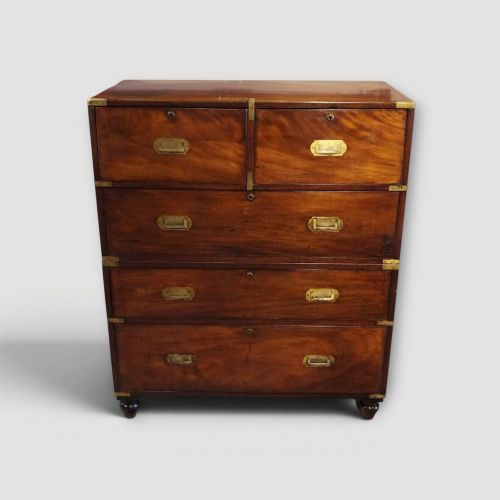
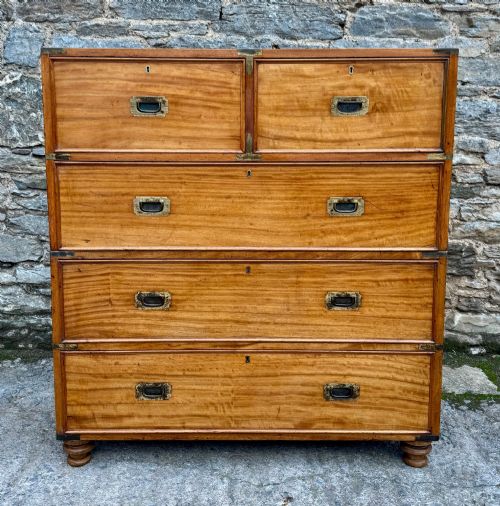
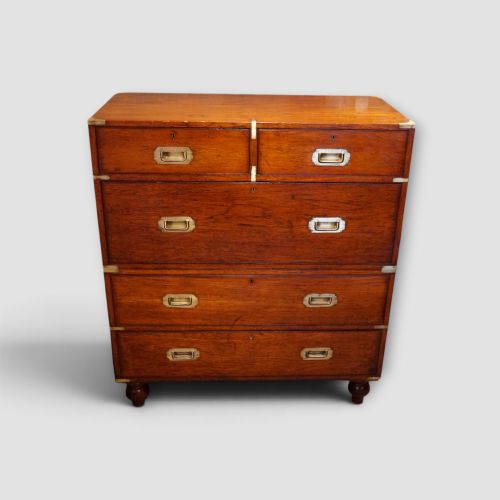
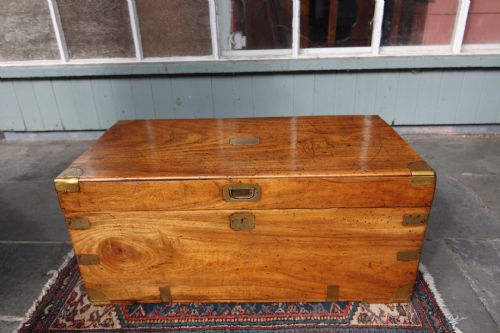
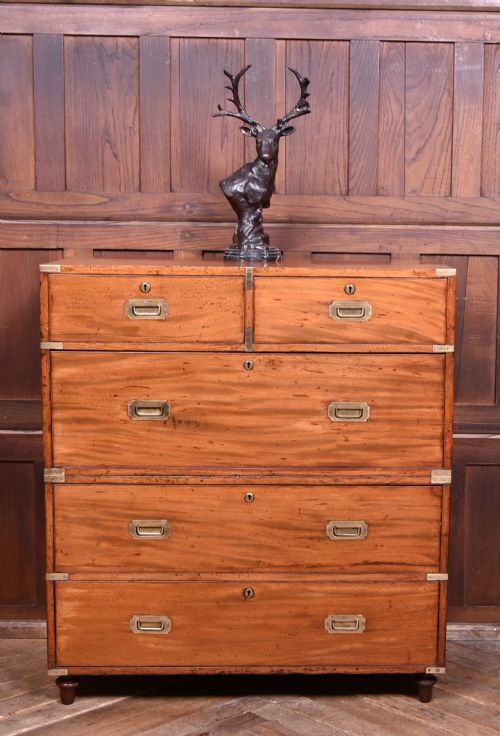
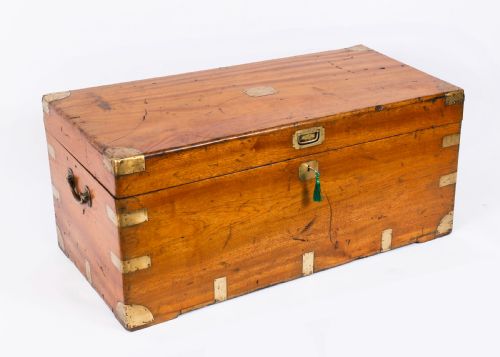
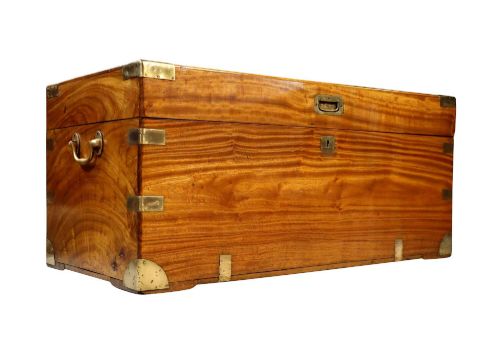
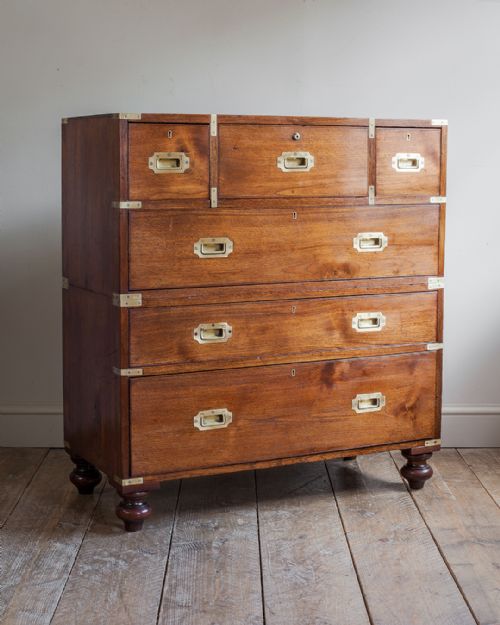
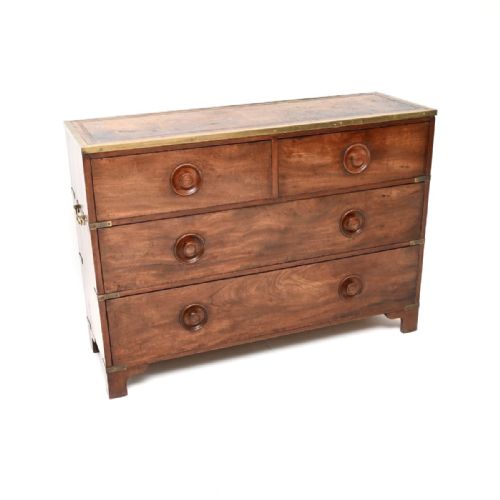
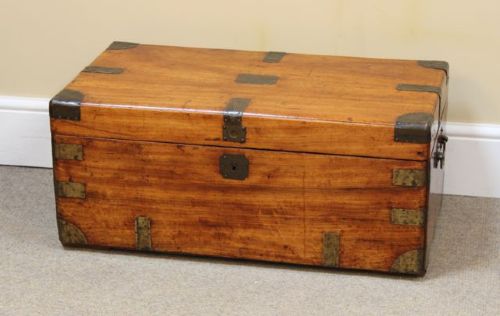
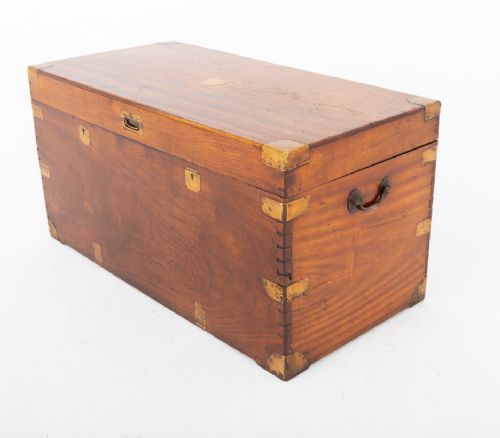
A victorian brass campaign chest is primarily a two-part chest of drawers designed for easy dismantling and transport during military service overseas. These pieces frequently appear in mahogany, teak, and camphor wood, reinforced with heavy brass corners, straps, and flush handles to endure rough handling on journeys.
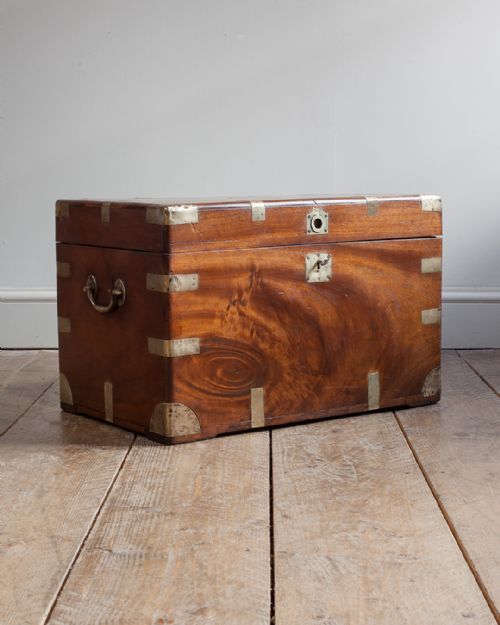
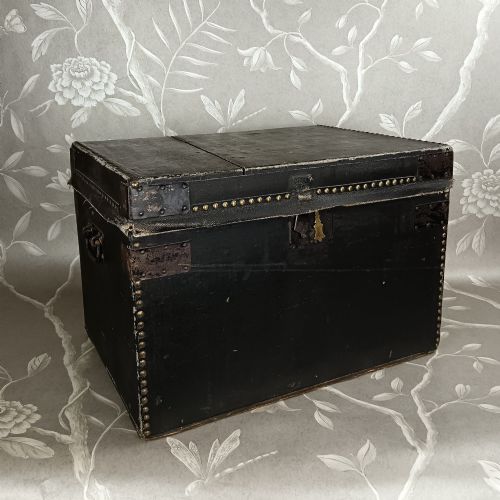
Beyond standard drawer configurations, variations include secretaire chests featuring drop-down writing desks, alongside simpler storage trunks and coffer forms. The construction prioritises modularity, separating into distinct stacked sections secured by threaded bolts or brackets.
How They Were Made
Cabinetmakers utilised dense timbers such as mahogany, teak, and camphor wood to resist warping in humid climates while maintaining structural integrity. These woods were joined using tight dovetail construction on the drawers to withstand constant travel.
Brass fittings, including corner braces, strapping, and recessed flush handles, were screwed into the exterior to protect vulnerable edges without adding snag points during transit.
Listings feature woods including mahogany, teak, camphor wood, and walnut, alongside brass and leather elements.
What Varies in Quality
The grade of timber and the complexity of the interior fittings distinguish standard utilitarian examples from more elaborate officer commissions. Figured grain variations in walnut or mahogany, alongside integrated secretaire drawers with pigeonholes and leather-lined writing surfaces, indicate finer manufacture.
The precision of the brass work matters considerably, particularly whether corner plates are neatly inset flush with the wood and whether the two modular sections align seamlessly when stacked.
Wm. Insall of Bristol·S. W. Silver & Co·Graves and Sons of Devonport·Arthur Foley & Son of Salisbury
The Victorian Brass Campaign Chest Glossary
- Flush handle
- A drawer pull set into a recessed cavity so it does not project beyond the face of the drawer. This prevents damage and snagging during transit.
- Secretaire chest
- A chest containing a fitted pull-out drawer with a drop-front writing surface and small interior compartments. It allowed officers to manage paperwork in the field.
- Camphor wood
- An aromatic timber frequently utilised in colonial campaign furniture to deter insects. Its distinctive scent often remains detectable.
- Brass bound
- Furniture reinforced along edges and corners with flat brass strips and corner pieces. This added strength against the impacts of travel.
Victorian Brass Campaign Chest: Frequently Asked Questions
Why are campaign chests built in two parts?
These chests divide into upper and lower sections to make loading onto pack animals, wagons, and ships manageable for travelling officers.
Once arrived at a destination, the sections stack together and lock securely into place for daily use.
What woods were commonly used for these chests?
Mahogany and teak provided heavy, durable frames capable of enduring tropical climates and rough handling without splitting.
Camphor wood appeared frequently in colonial contexts due to its natural resistance to insects and damp conditions.
How do I identify a secretaire campaign chest?
A secretaire incorporates a middle drawer that drops open on hinges to reveal a leather-lined writing deck and small pigeonhole compartments.
This provided officers with a portable desk while maintaining the external appearance of a standard chest of drawers.
Are brass corners original to the pieces?
Original brass corners and straps were countersunk flush into the timber to protect edges from impact during military campaigns.
Replacements or later additions often sit proud of the wood surface rather than sitting level with it.