

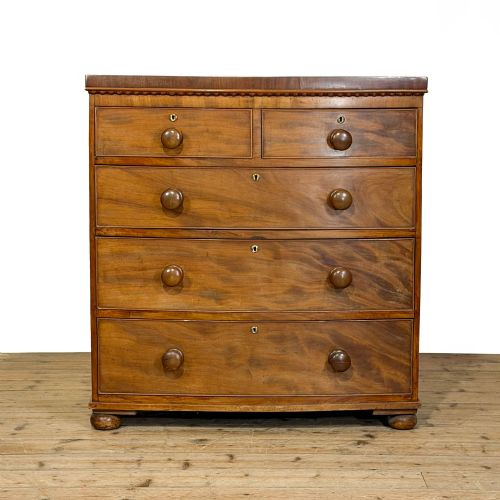
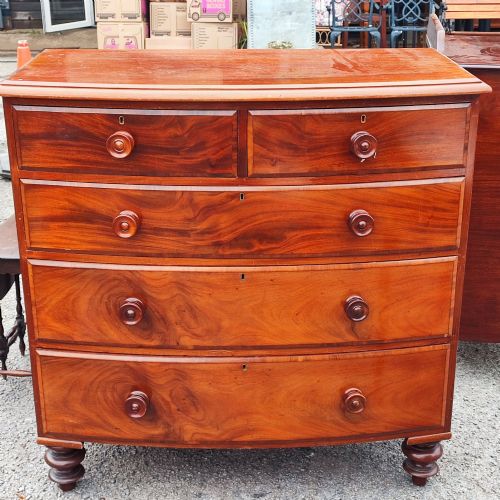
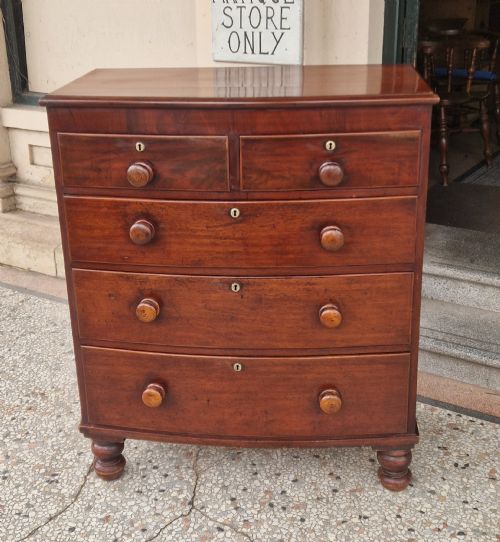
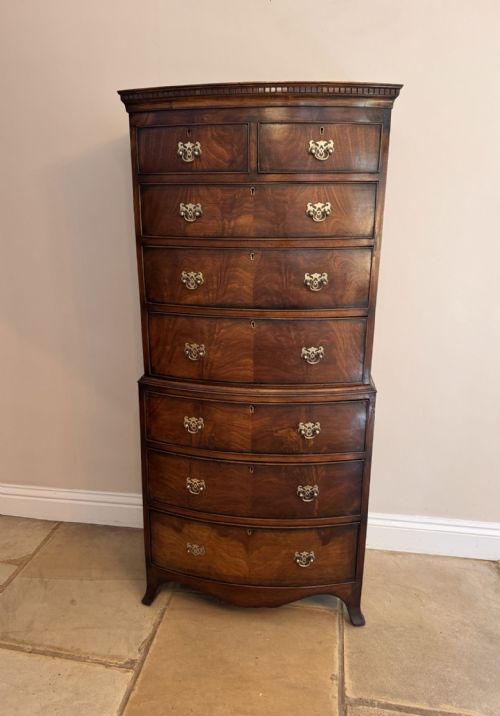

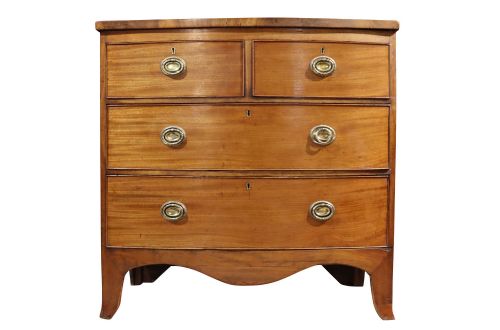


Victorian Bowfront Drawers
Victorian bowfront drawers are curved-front storage pieces defined by nineteenth-century mahogany timber and traditional cabinetmaking.
Victorian Bowfront Drawers
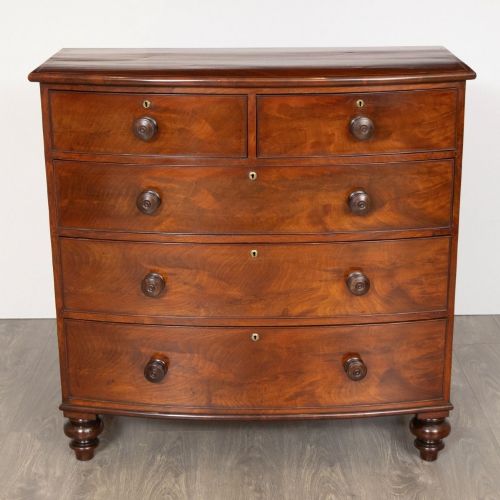
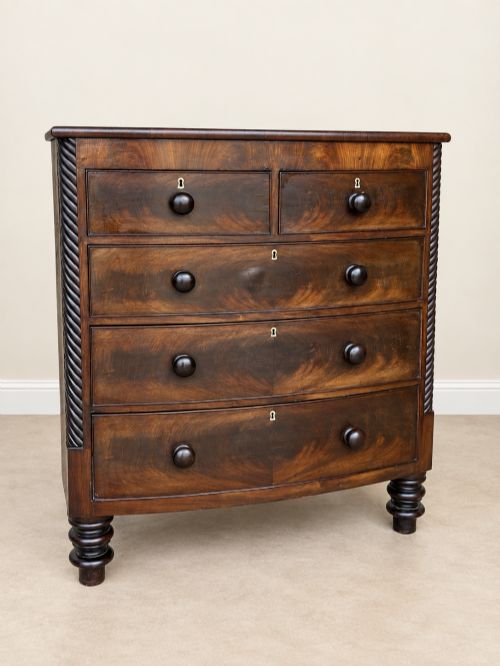
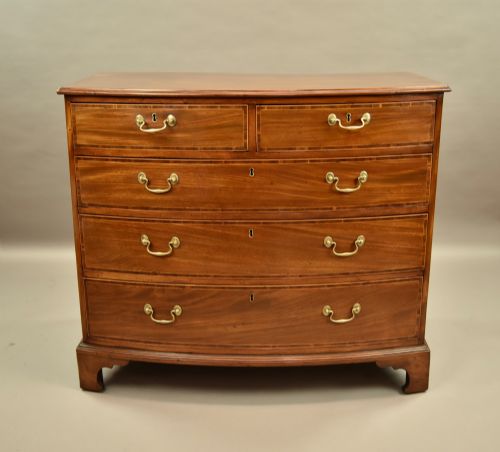
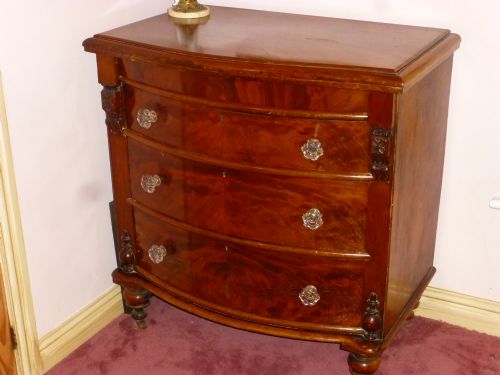
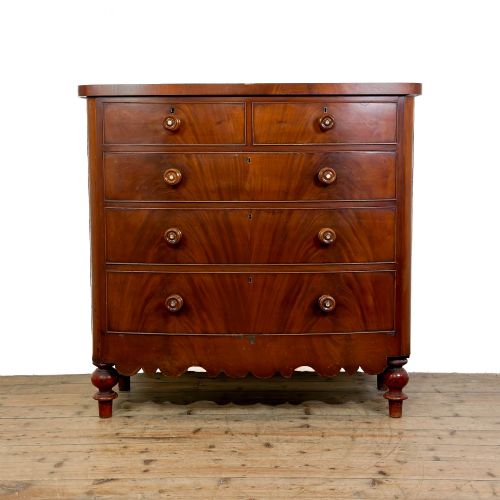
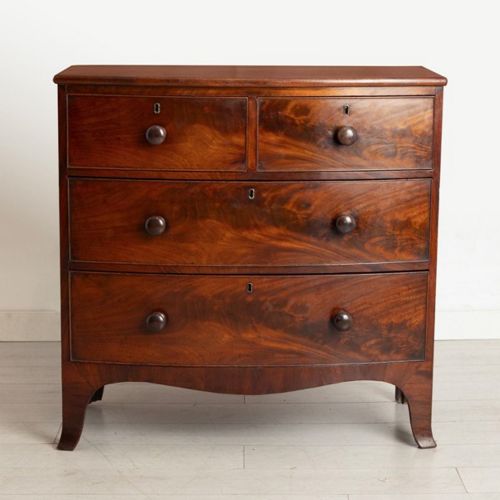
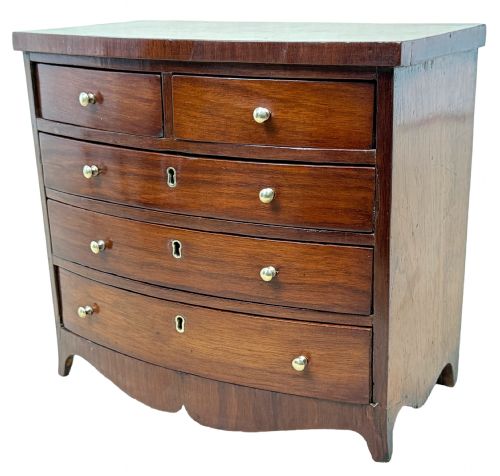
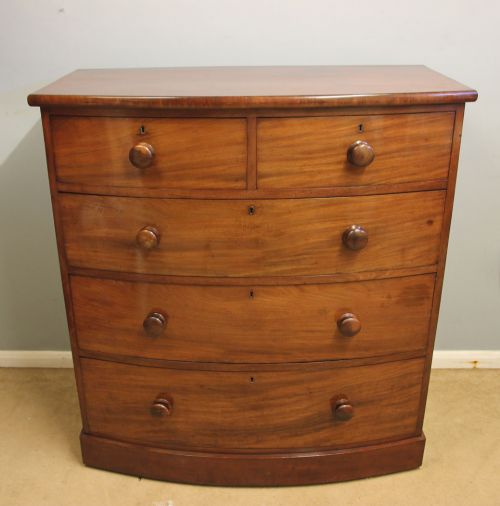
Victorian bowfront drawers encompass standard bedroom chests, smaller bedside forms, washstands and miniature examples shaped with a prominent curved front. The pieces appearing here span the nineteenth century, including specific decades from eighteen-forty to nineteen-ten, alongside styles referencing the Regency and Sheraton eras.
The primary forms found on this page are chests of drawers constructed in mahogany, ranging from large bedroom pieces to small or miniature versions. Cabinets, commodes and marble-topped washstands also appear alongside standard drawer configurations.
Materials and construction methods
Makers utilised mahogany solids and flame mahogany veneer applied across the curved carcases, occasionally incorporating satinwood inlay, brass hardware, bone, and mother of pearl details. Secondary timbers such as pine appear within the interior framing and drawer linings.
The characteristic curved front required careful bending and shaping of timber to achieve the distinct bowfront profile. Drawer construction frequently employed hand-cut joints alongside secondary elements like marble tops on specific washstand forms.
Victorian Bowfront Drawers Retail Price Guide 2026
Typical asking prices for victorian bowfront drawers among the pieces listed under this phrase on Sellingantiques today, from the lower quarter to the upper quarter. They describe what is for sale here now, not the wider market.
Some small chests conceal a secret drawer hidden within the upper moulding.
Distinguishing quality across pieces
The visual depth of the timber grain marks the division between standard examples and exceptional pieces, particularly where flame mahogany veneer is utilised. Highly figured veneers require precise matching across the curved drawer fronts.
Proportion and scale distinguish standard bedroom chests from miniature furniture or specialised pieces like commodes and Scotch chests. The integration of secondary materials, such as bone or mother of pearl escutcheons, indicates finer attention to detail.
The Victorian Bowfront Drawers Glossary
- Bowfront
- A furniture front that curves outward in a convex shape. This profile softens the rectangular lines typical of standard storage pieces.
- Flame mahogany
- A veneer cut from mahogany timber that produces a distinctive flamelike pattern. Cabinetmakers placed these highly figured veneers symmetrically across drawer fronts.
- Scotch chest
- A regional variety of chest of drawers often featuring a central top drawer flanked by smaller drawers. These pieces frequently incorporate column details and mahogany veneers.
Victorian Bowfront Drawers: Frequently Asked Questions
What are Victorian bowfront drawers?
These pieces are nineteenth-century storage furniture featuring a convex curved front built primarily from mahogany. They range from large bedroom chests to compact bedside cabinets and miniature items.
Cabinetmakers constructed them during the Victorian period, drawing upon Regency and Sheraton design traditions. Their curved profile distinguishes them from flat-front chests of the same era.
How do I identify a Scotch chest?
Scotch chests typically present a distinctive configuration with a deep central top drawer flanked by smaller side drawers. They often display bold mahogany veneer patterns.
These regional nineteenth-century pieces frequently include decorative columns or pilasters framing the drawer sections. Their proportions tend to be broader and heavier than standard chests.
Where were these chests used?
Original placement was primarily domestic, serving as bedroom storage for clothing and personal linens. Smaller versions functioned as bedside cabinets or miniature display pieces.
Washstands with marble tops served specialised washing functions in nineteenth-century dressing rooms. Today, these pieces adapt easily to modern living spaces as hallway or bedroom storage.
What materials are typical?
Mahogany is the dominant timber used in these pieces, appearing both as solid wood and as flame mahogany veneer. Secondary woods like pine appear inside drawer boxes and internal structures.
Hardware commonly includes brass pulls, while finer examples incorporate bone, mother of pearl, or satinwood inlay. Specific washstand variants integrate marble top surfaces.