


Victorian Bottle Holder
These heavy silver plated and glass pieces keep dinner tables steady and drinks contained, bringing a solid Victorian bottle holder into daily service.
Victorian Bottle Holder
When you search for a victorian bottle holder, you encounter items designed to secure and present wine, champagne, or spirits at the dining table. The pieces on this page span the Victorian and Edwardian periods, including silver plated wine coasters, tantaluses, and decanter stands.
The version you are most likely to meet is a silver plated wine bottle holder or coaster dating from the nineteenth century. These items often feature pierced metalwork or swing handles to serve bottles safely across the dining surface.
How they were made
Makers utilised silver plate over a base metal, alongside cut glass and heavy oak or mahogany frames, to build durable vessels for the table. Silver plating techniques involved fusing thin layers of silver to base metals or applying silver via early electroplating methods.
Wooden components like oak and satinwood were joined to hold crystal decanters securely, while brass and leather appeared in specific desk or travel items. Metalwork was frequently pierced, chased, or engraved to create ornate decorative patterns around the bottle housing.
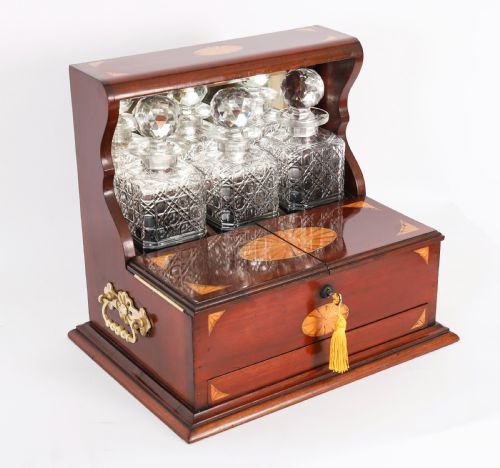
One extraordinary piece combines a writing box with a hidden bottle holder, keeping the ink well away from the claret.
What varies in quality
The standard of silver plating dictates the longevity of the piece, with thicker applications surviving decades of polishing without exposing the base metal beneath. Heavy gauge metal provides structural integrity, ensuring that wine coasters and tantalus frames remain rigid and balanced.
The fineness of the hand-pierced gallery work and the crispness of engraved decoration distinguish superior examples from plain production items. In multi-bottle sets, matching crystal decanters with original cut glass stoppers elevate the integrity of the ensemble.
Horton And Allday·Walker And Hall·Elkington·Rupert Favell And Co·Wade Wingfield Wilkins·Martin Hall And Co·Sampson Mordan
The Victorian Bottle Holder Glossary
- Silver Plate
- A thin layer of silver bonded or electroplated onto a base metal such as copper or nickel brass. This technique allowed makers to produce domestic silver-appearance wares at a lower cost than solid sterling silver.
- Tantalus
- A locking wooden or metal frame that secures decanters to prevent unauthorized access to the contents. The bottles cannot be removed until the locking bar is unlocked and lifted.
- Wine Coaster
- A small, flat-bottomed tray or basket designed to hold a wine bottle and protect the dining table from drips. Many examples feature wooden bases fitted with metal rims and green baize underneath.
- Old Sheffield Plate
- An early fusing technique where a sheet of silver is fused to a copper core before shaping. This method creates a durable material identifiable by thin lines of exposed copper along edges.
- Cruet Set
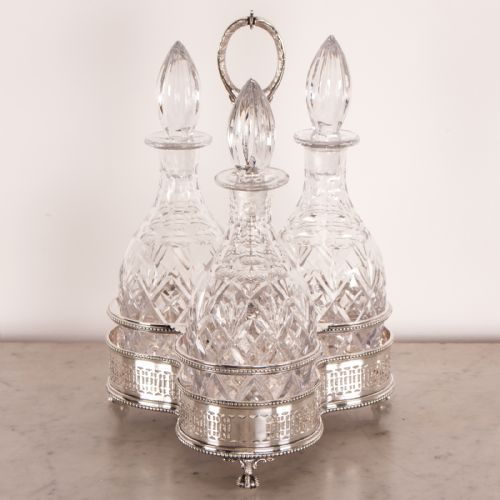
- A matched collection of glass bottles for condiments or oils held within a metal frame. These stands usually incorporate a central carrying ring and match the design language of bottle holders.
Victorian Bottle Holder: Frequently Asked Questions
What is a tantalus?
A tantalus is a locking frame designed to hold decanters of spirits securely on a sideboard. The frame locks the stoppers in place so the bottles cannot be opened or removed without a key.
Most examples date from the late nineteenth century and use oak or mahogany fitted with silver plated or brass hardware.
How do I clean silver plate?
Silver plated items require gentle cleaning with a specialist silver cloth or a mild, non-abrasive cream. Harsh scrubbing removes the thin layer of silver applied during manufacturing.
Avoid soaking items with wooden bases or leather casing in water to prevent warping or separating the materials.
Were these holders made for wine?
Many holders were manufactured specifically for wine and champagne bottles, either as single coasters or multi-bottle frames. Others served as stands for spirit decanters or soda water siphons.
Larger versions accommodate magnum bottles, while smaller ones suit standard table wines.
How do I date these pieces?
Dating relies on maker marks, style characteristics, and the manufacturing methods used on the metal and glass. Electroplated marks often become prominent after the mid-nineteenth century.
Heavier cast mounts and Old Sheffield plate construction typically point towards earlier nineteenth-century production.