
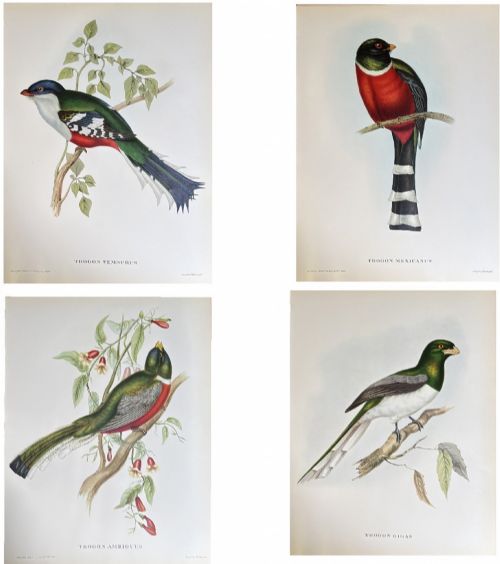
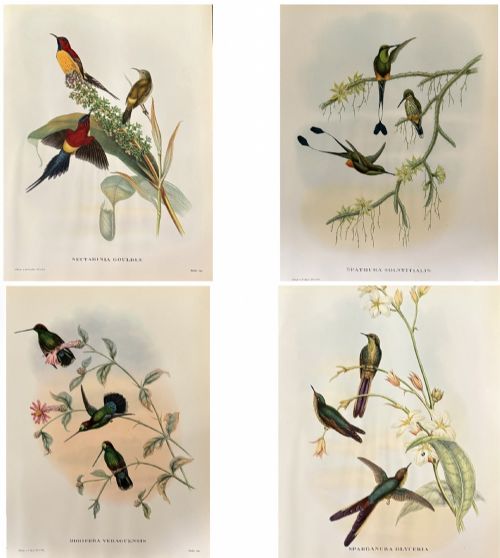
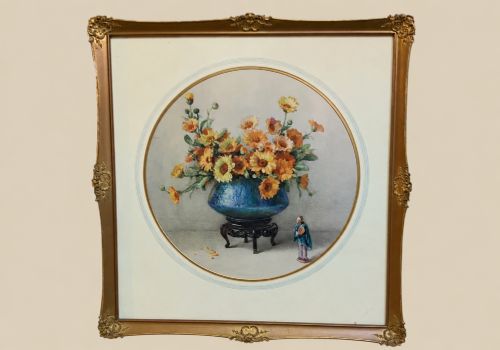
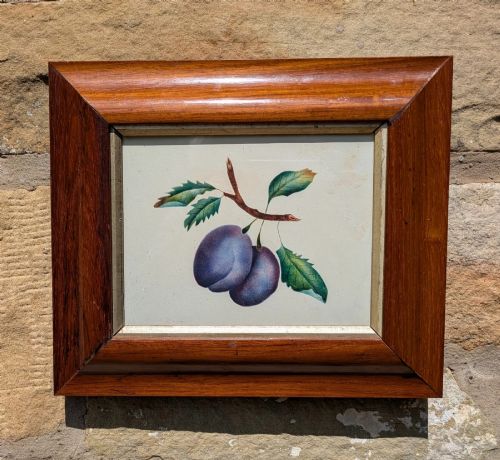


Victorian Botanical Prints
These Victorian botanical prints bring the quiet study of flowers, leaves and natural history straight onto the wall.
Victorian Botanical Prints
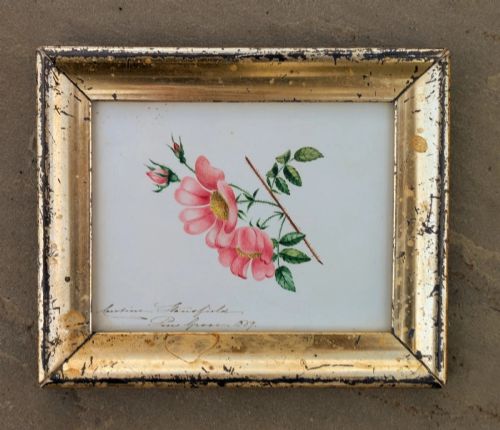
Victorian botanical prints capture the period's intense fascination with natural history, recording flowers, plants and scientific specimens with meticulous precision. When browsing this selection, you encounter hand-coloured engravings, detailed watercolours and framed prints originating across the nineteenth century.
The objects take various forms, from single framed botanical artwork and matching sets of engravings featuring insects and plants to larger studies of flowers like primroses and apple blossoms. These pieces reflect a time when scientific observation and home decoration intersected seamlessly.
Makers and artists such as John Curtis, Charlotte Isa James and Helen Cordelia Angell appear alongside anonymous plates sourced from contemporary horticultural publications. The selection ranges from modest nineteenth-century book illustrations to striking watercolours housed in rosewood frames.
Materials and Techniques
The foundation of these works is quality paper, paired with mediums such as watercolour, ink and lithographic or engraved printing techniques. Many plates received careful hand-colouring to enhance the natural hues of flowers and foliage.
Framing materials play a significant role in presentation, utilising wood, gilt wood, glass and occasionally velvet surrounds to protect and display the paper works. The combination of delicate ink lines with applied pigment creates the characteristic depth found in nineteenth-century plates.
Parrots, butterflies and beetles frequently share the botanical stage, proving the Victorians loved an insect photobomb.
Judging Quality
Quality rests in the precision of the draughtsmanship and the delicacy of the hand-colouring applied to the engraved or printed lines. Finer examples display botanical accuracy combined with artistic flair, whereas lesser items show hurried pigmentation or generalized forms.
The condition of the paper and the vibrancy of the original pigments dictate desirability over time. Intact framing, particularly period examples in wood or gilt, preserves the integrity of the artwork against environmental wear.
John Curtis·Charlotte Isa James·John Sherrin·Arthur Wardle·Helen Cordelia Angell
The Victorian Botanical Prints Glossary
- Engraving
- A printmaking technique where an image is incised onto a metal plate, holding ink to transfer fine, precise lines onto paper. This method allowed the minute detail required for accurate scientific illustration.
- Lithograph
- A planographic printing process using a stone or metal plate on which the image area attracts ink and the non-image area repels it. It became a primary method for producing multi-coloured botanical plates during the nineteenth century.
- Hand-coloured
- The practice of applying watercolours or tints by hand to a printed monochrome engraving or lithograph. This technique elevated mass-produced plates into individualized works of art.
- Natural history
- The scientific study of animals, plants and fungi, particularly through observation rather than experiment. Victorian interest in this field drove the production of detailed botanical and ornithological prints.
Victorian Botanical Prints: Frequently Asked Questions
How do I date a botanical print?
Dating relies on the paper quality, printing technique, typography and stylistic markers associated with specific nineteenth-century decades. Catalogues and publication dates on the margins often confirm the exact era.
Printers and publishers active during the period frequently stamped or signed their work, providing further clues to the precise year of creation.
Were these prints originally in books?
Many Victorian botanical prints originated as plates bound inside scientific journals, natural history compendiums and horticultural periodicals. They were later separated for framing and individual display.
Publishers often issued these plates unbound or in monthly parts for subscribers who subsequently commissioned bespoke frames.
How should I frame and display them?
Protect antique paper prints by using acid-free mounts and framing them behind glass to filter harmful ultraviolet light. Keep them away from direct sunlight and damp environments to prevent fading and foxing.
Displaying them in groups or matching sets emphasises their historical and aesthetic connection to nineteenth-century natural history collections.
What is hand-colouring?
Hand-colouring involves applying watercolour or tint by hand to a monochrome printed engraving or lithograph. Artisans used fine brushes to render realistic hues for petals, leaves and stems.
This meticulous process ensured each plate in an edition possessed unique variations while maintaining scientific accuracy.