



Victorian Bookshelves
Victorian bookshelves offer sturdy timber storage and display, bringing nineteenth-century craft directly into domestic libraries and sitting rooms.
Victorian Bookshelves
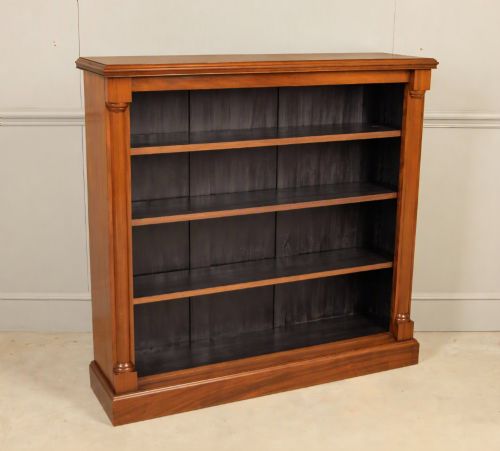
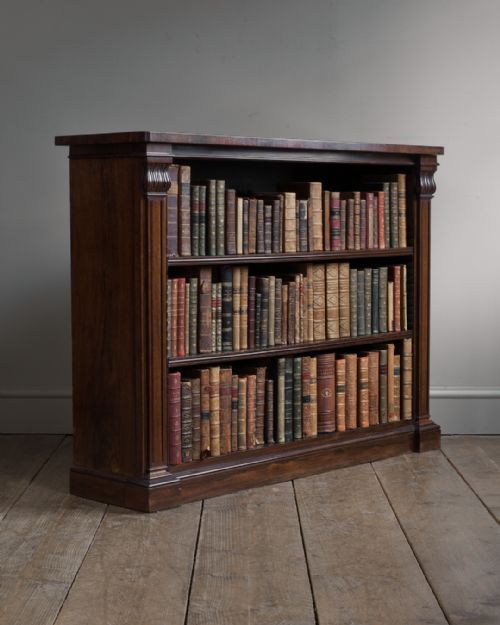
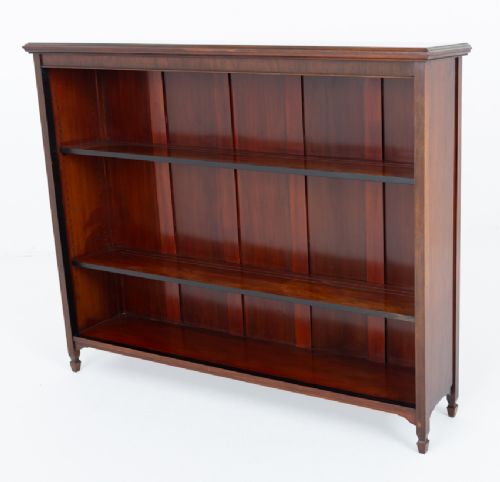
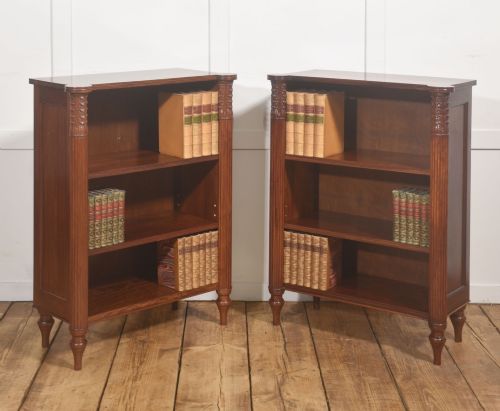
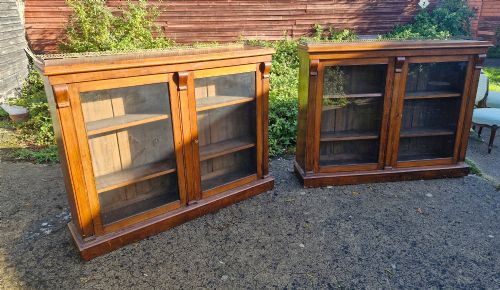
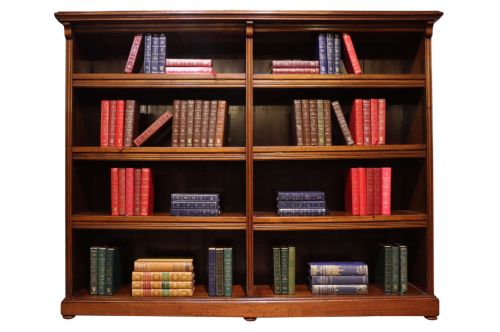
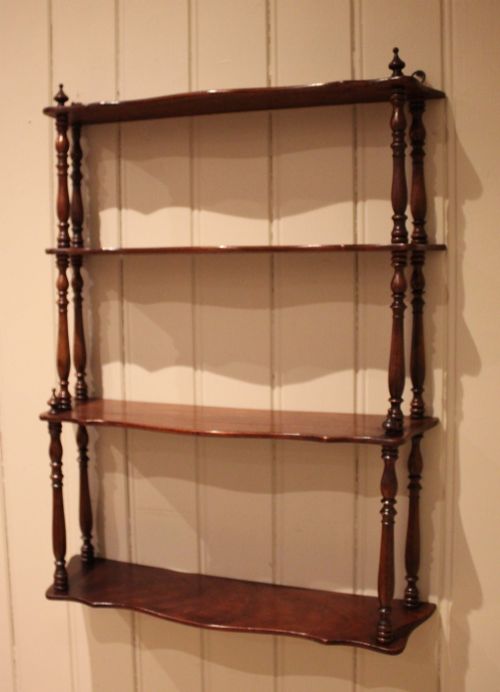
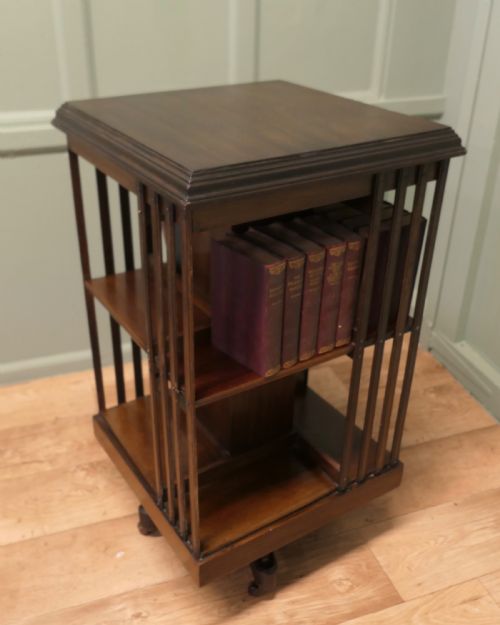
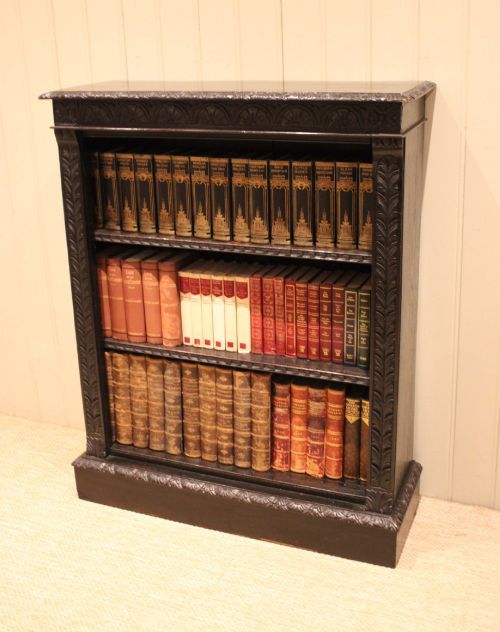
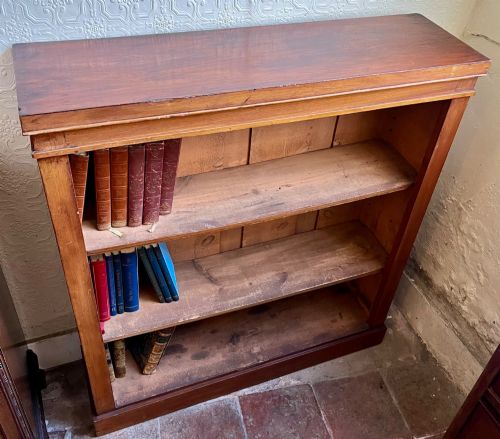
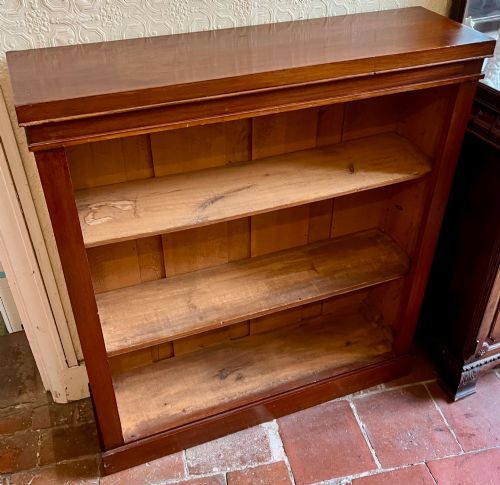
Victorian bookshelves combine practical storage with decorative display, appearing in forms from tall open library cases to wall-hanging shelves and revolving tables. Buyers searching for victorian bookshelves most frequently encounter open-fronted mahogany and oak formats designed for everyday utility.
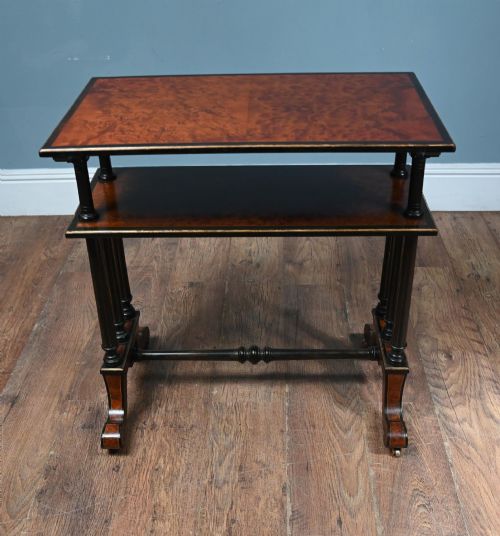
The selection ranges from compact dwarf cabinets and low bookcases to large multi-section breakfront pieces. Wall-mounted etageres and small whatnots provide lighter alternatives for displaying smaller collections.
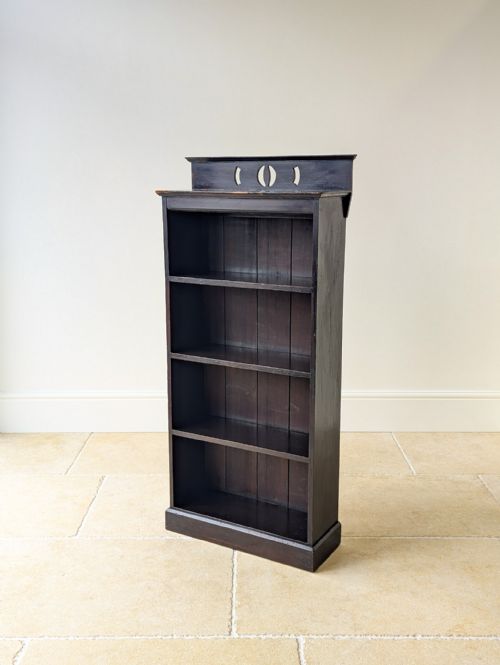
Dated examples span the nineteenth century, running from mid-century walnut and rosewood designs to late Victorian golden oak and aesthetic movement creations. Many incorporate adjustable shelving to accommodate varying book heights.
Materials and construction
Timbers dominate these pieces, with solid and veneered mahogany, oak, and walnut forming the primary structures. Workshops utilised burr walnut and rosewood for figured surfaces, occasionally adding brass galleries, ormolu mounts, and cast iron details.
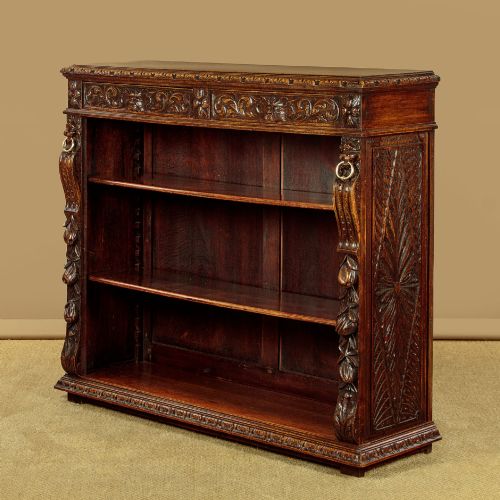
Joinery techniques relied on robust framing to support heavy book collections, integrating adjustable wooden shelf mechanisms and raised galleries. Carved ornamentation, inlaid banding, and ebonised finishes appeared on late nineteenth-century iterations.
Victorian Bookshelves Retail Price Guide 2026
Typical asking prices for victorian bookshelves among the pieces listed under this phrase on Sellingantiques today, from the lower quarter to the upper quarter. They describe what is for sale here now, not the wider market.
Some late nineteenth-century oak bookcases feature carved green men peering out from the woodwork to guard your reading collection.
Assessing construction and timber quality
Quality rests in the selection of timber figures, such as dense mahogany or rich burr walnut, and the crispness of any carved detailing. Superior pieces display thoughtful proportions, solid backing boards, and smoothly functioning adjustable shelf supports rather than crude mass production.
The integration of decorative elements like brass galleries, ormolu mounts, or subtle inlay work separates standard utility storage from finer cabinet work. Structural integrity in the joints and original timber patination ultimately dictate the standing of each piece.
Johnstone and Jeanes
The Victorian Bookshelves Glossary
- Open Bookcase
- A shelving unit without doors, designed for easy access to books. This is the most common format found in nineteenth-century rooms.
- Adjustable Shelves
- Shelving that can be moved to different heights using wooden ratchets or metal pins. This system accommodates books of varying sizes.
- Whatnot
- A set of open shelves for displaying ornaments and books, popular in the Victorian period. These often feature slender supports and multiple tiers.
- Brass Gallery
- A small decorative metal rail fitted around the top edge of a bookcase. It prevents items from sliding off the surface.
- Breakfront
- A piece of furniture where the central section projects forward from the side sections. This creates architectural depth and visual variety.
Victorian Bookshelves: Frequently Asked Questions
How do I choose the right size?
Measure your available wall space and check the depth of the shelves against your largest books. Low dwarf cases suit smaller rooms while tall library editions demand higher ceilings.
Consider whether you need enclosed lower cupboards or prefer an entirely open front for quick access.
What woods were commonly used?
Mahogany, oak, and walnut form the backbone of these pieces, often highlighted with burr walnut veneers or rosewood. Late century examples frequently utilise golden oak or ebonised finishes.
Selected models incorporate brass galleries and ormolu mounts for decorative effect.
Where should I place a revolving bookcase?
Revolving versions work well beside armchairs or in corners where stationary shelving cannot fit. Their rotating action provides access to multiple books from a single seating position.
Ensure there is enough floor clearance around the base for smooth rotation.