



Victorian Bird Lithograph
These Victorian bird lithograph prints bring nineteenth-century natural history illustration into modern rooms with bright colour and fine detail.
Victorian Bird Lithograph
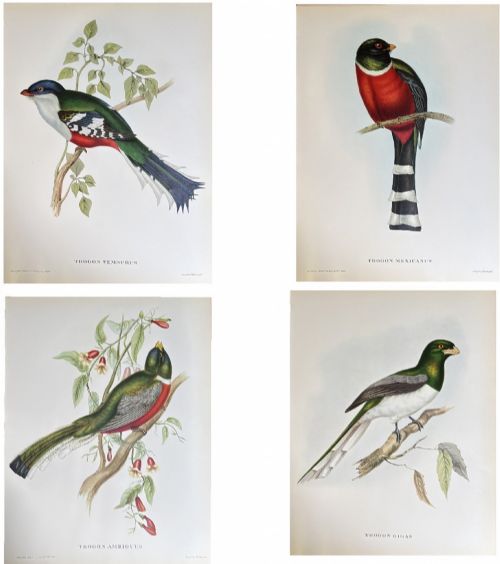
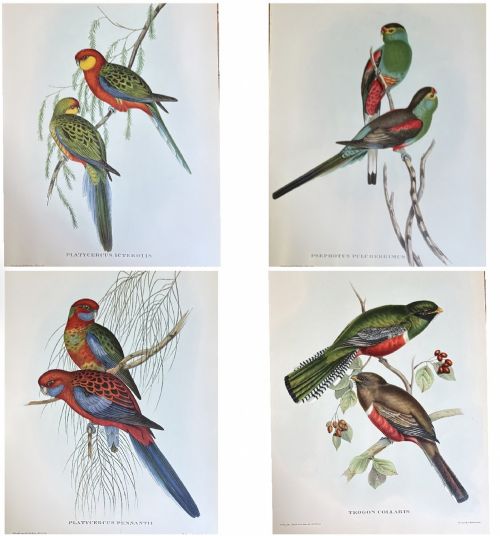
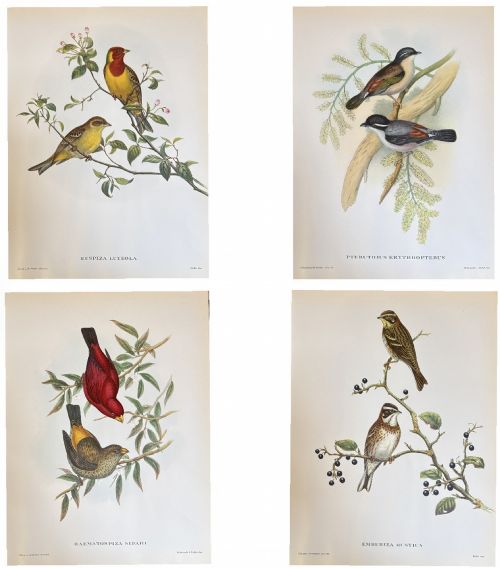
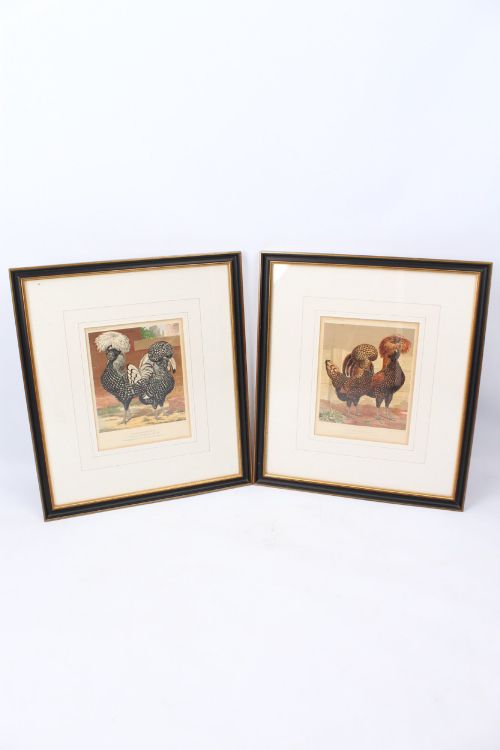
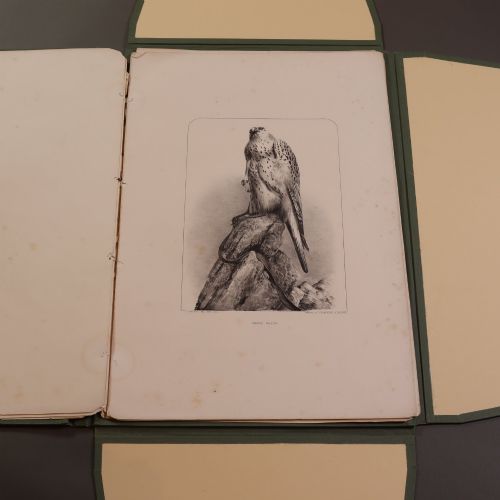
A victorian bird lithograph captures ornithological study through printed and sometimes hand-coloured imagery on paper. The selection includes framed pairs, sets of tropical birds, and individual studies of pigeons or tragopans.
Most examples date from the nineteenth century, though related prints span from the early eighteen-hundreds to mid-century reproductions of earlier works. Buyers encounter everything from simple framed wall art to sets of multiple plates intended for display together.
How they were made
These works rely on paper supports, printer's ink, and occasionally watercolour highlights applied by hand over the printed lines. Chromolithography allowed multiple ink colours to build up rich plumage and botanical backgrounds on the sheet.
Framed examples typically utilise wood surrounds, glass panes, and sometimes gold leaf accents to protect and finish the paper. Unframed sets retain their original margins and board backing from past folios or collections.
Victorian Bird Lithograph Retail Price Guide 2026
Typical asking prices for victorian bird lithograph among the pieces listed under this phrase on Sellingantiques today, from the lower quarter to the upper quarter. They describe what is for sale here now, not the wider market.
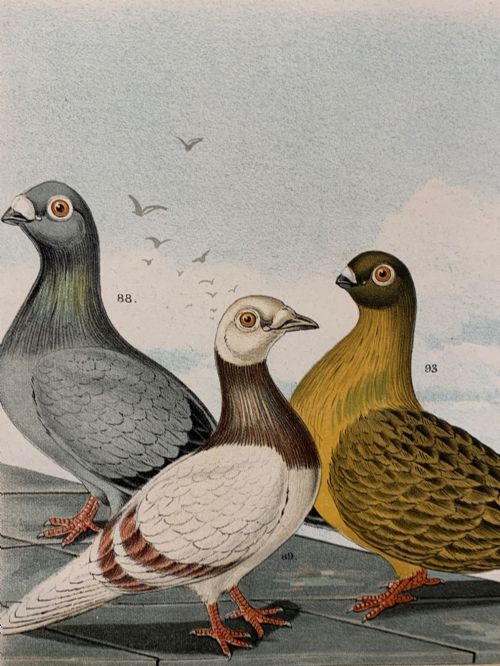
Even pigeons get their moment of high fashion when rendered in nineteenth-century ink and colour.
What varies in quality
Quality rests upon the crispness of the printing process and the precision of any added watercolour wash. Skilled hand-colouring brings depth to feathers and foliage that flat ink alone misses.
The completeness of sets and the condition of the paper surface also divide ordinary examples from better ones. Clean margins and original framing add context and preservation to nineteenth-century plates.
The Victorian Bird Lithograph Glossary
- Lithography
- A planographic printing method using a flat stone or metal plate on which image areas attract ink and non-image areas repel it. This technique enabled the mass production of detailed natural history illustrations.
- Chromolithography
- A colour lithographic process employing multiple stones or plates, one for each colour used in the design. It produced vibrant, multi-coloured plates like hanging birds.
- Hand-coloured
- A finished print enhanced with watercolour applied by brush after the initial impression. This added realism to feathers and natural surroundings.
- Folio
- A large book format or a collection of loose plates stored together. Many loose prints originate from disassembled volumes of natural history.
Victorian Bird Lithograph: Frequently Asked Questions
How should I hang these prints?
Keep them out of direct sunlight to protect the paper and any watercolour pigments from fading over time. Hanging them in dry rooms preserves both the mount and the wooden frame.
Grouping sets together, such as series of tropical birds or pigeon breeds, creates a balanced display on a wall. Ensure the glass does not press directly against the paper surface.
Are these original nineteenth century pieces?
The selection includes genuine nineteenth-century print runs alongside mid-twentieth-century printings after earlier artists. Examining the paper texture and ink application helps determine the age of the plate.
Checking the listing details clarifies whether a set dates to the eighteen-eighties or later reproduction periods. Both have distinct appeal for interior decoration and natural history collections.
Can I remove them from their frames?
Unframing prints requires care to avoid tearing old paper or damaging fragile board backings. Many examples come already unframed as sets ready for your own mounting choices.
If framing antique paper, consult a professional framer to use acid-free materials. This prevents yellowing and preserves the sheet for future years.
What subjects do the prints show?
The subjects range from tropical birds and tragopans to domestic chickens and pigeons. Natural history illustrators recorded these species with scientific precision and decorative balance.
Sets often feature specific ornithological studies grouped by family or region. This variety allows collectors to focus on particular birds or aesthetic colour palettes.