





Victorian Bird Jewelry
These Victorian bird jewellery pieces capture nature in gold, silver, pearl, and carved wood.
Victorian Bird Jewelry
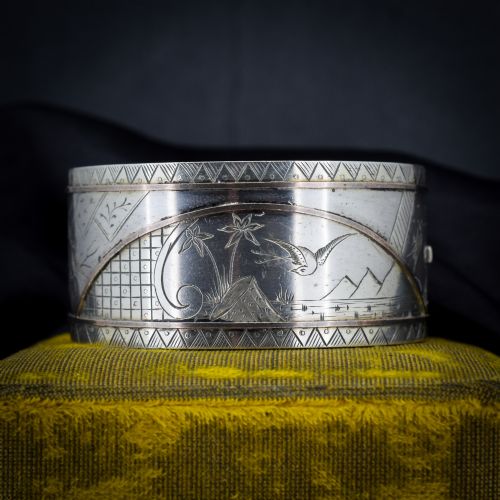
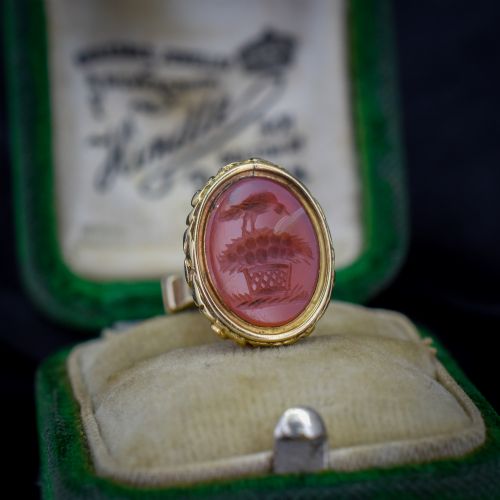
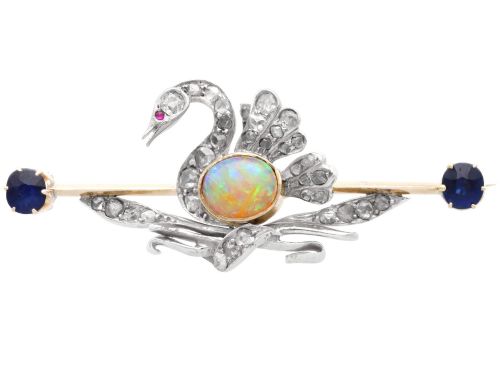
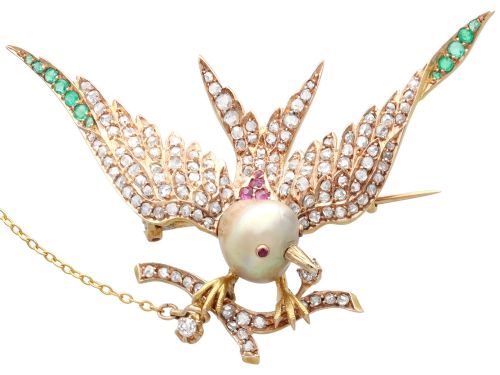
Victorian bird jewellery encompasses wearable ornaments and decorative storage boxes depicting avian subjects from swallos and doves to ducks and birds of paradise. Buyers exploring victorian bird jewellery encounter brooches, lockets, earrings, bangles, and caskets created during the nineteenth and early twentieth centuries. These items reflect a fascination with the natural world expressed through precious metals and gemstones.
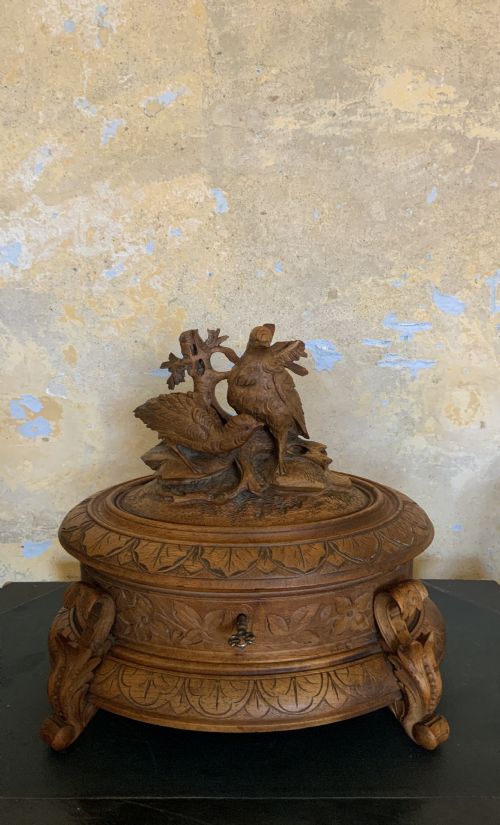
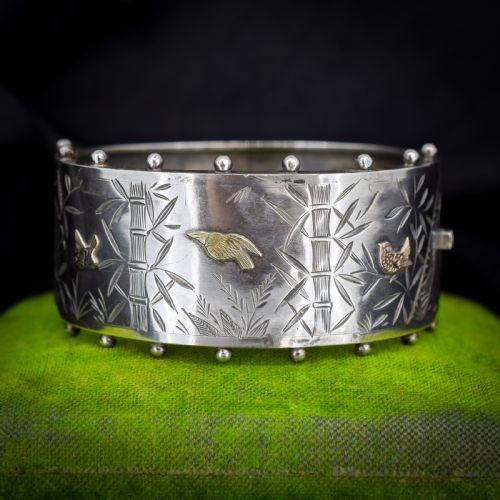
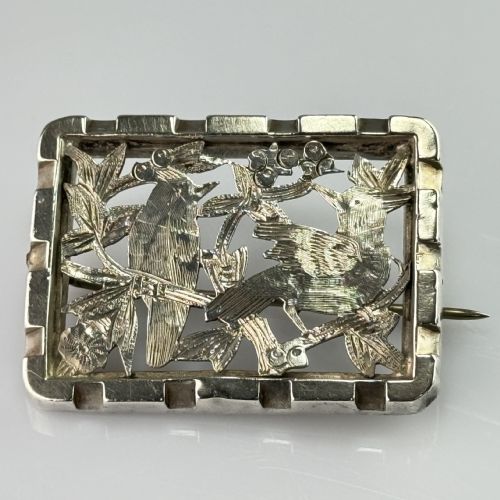
The selections span distinct stylistic movements including the Aesthetic Period and Black Forest woodcarving traditions. Brooches formed from gold and silver dominate the offerings, frequently incorporating seed pearls, diamonds, rubies, and turquoise. Alongside wearable pieces, the category includes functional boxes featuring bird motifs rendered in inlay or carving.
Origins stretch across European workshops, taking in British goldsmith work, French decorative boxes, and Italian micro mosaics. Pieces range from delicate 15ct gold swallow bar brooches to substantial walnut and bird's eye maple jewellery caskets. Each form demonstrates how artisans translated feathered subjects into enduring ornaments and receptacles.
How they were made
Jewellery pieces rely upon yellow gold, sterling silver, and 15ct or 18ct gold alloys as foundations for gemstone settings and chased engraving. Artisans mounted rose-cut diamonds, rubies, sapphires, emeralds, opals, and turquoise alongside natural pearls and seed pearls to render plumage and eyes. Enamel work also appears on select items to add colour and naturalistic detail to bird motifs.
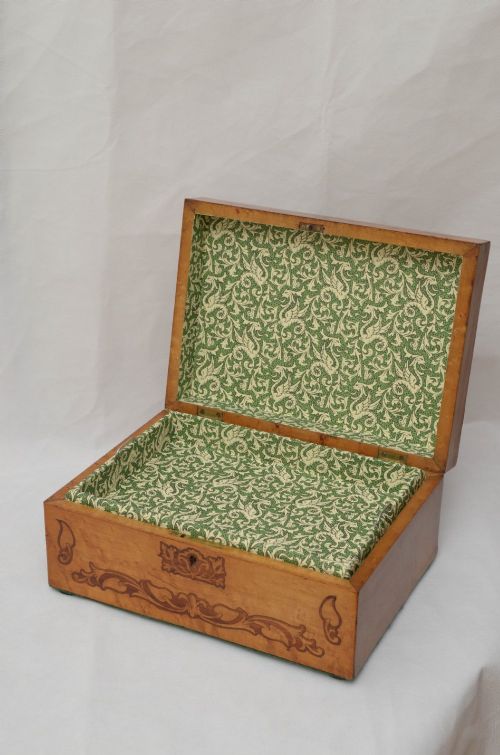
Wooden boxes utilise walnut, bird's eye maple, ebony, and tulipwood, shaped into caskets and jewellery boxes through precision joinery and inlay techniques. Carved Black Forest items demonstrate deep relief woodcarving where avian figures emerge from the timber surface. Metalwork combines casting, engraving, and stone-setting by hand to achieve dimensional forms.
Victorian Bird Jewelry Retail Price Guide 2026
Typical asking prices for victorian bird jewelry among the pieces listed under this phrase on Sellingantiques today, from the lower quarter to the upper quarter. They describe what is for sale here now, not the wider market.
Swallows dominate the flock, forever frozen mid-flight in gold, silver, and wood.
What varies in quality
Quality reveals itself in the finesse of the carving or metalwork and the selection of materials. Finely articulated feathers, crisp chasing, and secure gemstone settings distinguish superior pieces from simpler productions. In wooden caskets, the depth of the relief carving and the precision of the tulipwood inlay set the finest examples apart.
The choice and matching of gems, such as diamonds, rubies, pearls, and turquoise, influence the character of wearable items. Superior brooches and lockets display balanced proportions and harmonious stone placement that enhance the naturalism of the bird subject.
The Victorian Bird Jewelry Glossary
- Black Forest
- A style of woodcarving originating in the-Swiss and German border regions, known for highly detailed depictions of animals and foliage in walnut and other woods. Pieces often take the form of caskets and boxes featuring dimensional birds.
- Micro mosaic
- An intricate decorative technique using tiny coloured glass tesserae to form pictorial scenes, frequently employed in Italian earrings and pendants depicting doves. Each tiny piece is set into a metallic matrix to create the image.
- Seed pearl
- Very small natural pearls, often un-drilled or half-drilled, used extensively in clusters to outline bird bodies and wings on nineteenth-century brooches.
- Rose-cut diamond
- An antique gemstone cut featuring a flat base and a domed crown faceted with triangular shapes, common in Victorian and Edwardian cluster jewellery.
- Aesthetic Movement
- A late nineteenth-century design style emphasising visual beauty over narrative or moral function, reflected in silver lockets and brooches with stylised natural motifs.
Victorian Bird Jewelry: Frequently Asked Questions
What is Victorian bird jewelry?
Victorian bird jewellery comprises decorative items and personal ornaments featuring avian themes made during the nineteenth and early twentieth centuries. The category spans brooches, lockets, earrings, bangles, and carved wooden boxes.
Craftsmen utilised gold, silver, diamonds, pearls, and carved woods to portray swallows, doves, ducks, and birds of paradise. These objects served as both fashionable accessories and decorative receptacles.
How do I style a bird brooch?
Bird brooches work well pinned to lapels, collars, or scarves, functioning as focal points on tailored jackets or knitted garments. Items like swallow bar brooches pair easily with contemporary attire while retaining their nineteenth-century character.
Consider the scale of the piece and the weight of the fabric when selecting placement. Lighter gold and pearl designs suit delicate silks, while heavier silver and gemstone configurations anchor sturdier wools.
What materials are used in these boxes?
Wooden boxes and caskets employ timbers such as walnut, ebony, bird's eye maple, and tulipwood for structural bodies and decorative inlay. Carved Black Forest examples feature deeply sculpted bird and foliage motifs directly into the solid wood.
Interiors often retain fitted compartments for storing jewellery, sometimes complemented by marquetry or contrasting wood veneers on the exterior surfaces.
How do I date a piece?
Dating relies upon stylistic markers, material standards, and manufacturing techniques recorded across the periods. Victorian items often feature substantial gold work and natural pearl clusters, while Edwardian examples favour lighter platinum or gold bar settings with rose-cut diamonds.
Box construction and inlay styles also provide clues, distinguishing mid-nineteenth-century work from later Black Forest or Edwardian productions.